Top

Hong Kong spot BTC ETFs record second day of outflows

Markets·May 11, 2024, 3:01 AM

Hong Kong's spot Bitcoin exchange-traded funds (ETFs) encountered their second day of net outflows since their launch on April 30.


According to data published by crypto trading data platform SoSo Value, in excess of 90 BTC exited the Hong Kong ETFs on May 9. The data indicated that China Asset Management's spot Bitcoin ETF observed an outflow of 80.16 BTC, while the Bosera HashKey Bitcoin ETF recorded a lesser outflow of 10 BTC. Meanwhile, Hong Kong’s third spot Bitcoin ETF offered by Harvest Global registered zero flows.
https://asset.coinness.com/en/news/3ad2dc5d1497567fb499f10199eaed3e.webp
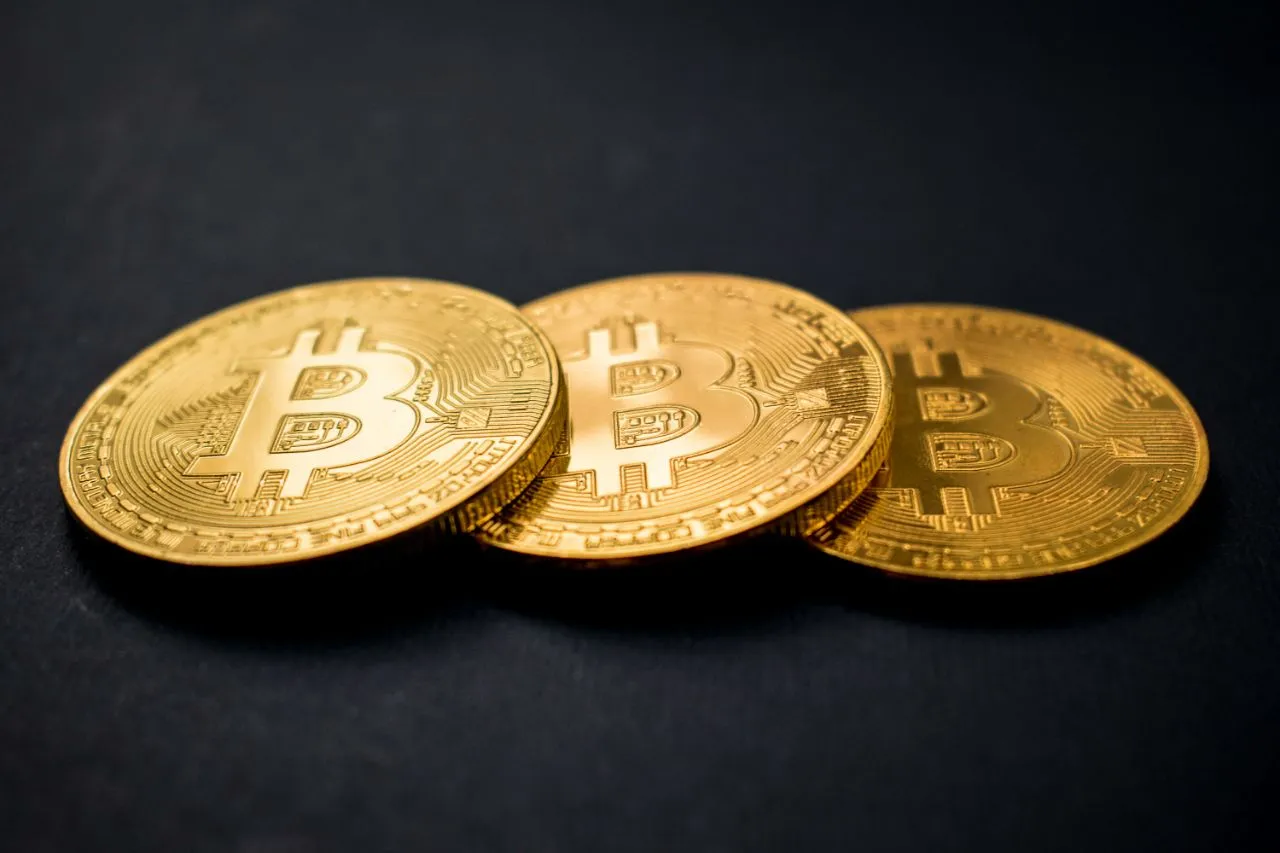
Photo by Dmytro Demidko on Unsplash

These daily net outflows follow a trend of net inflows that had developed in the preceding days, with the three ETFs collectively witnessing net inflows of 101.6 BTC on Wednesday and 99.99 BTC on Tuesday.


As of Thursday, the three ETFs, managed by ChinaAMC, Harvest Global and Bosera with HashKey, held approximately 4,260 Bitcoin, with total net assets reaching $261.45 million, marking an increase from $247.7 million on the first day of trading.


The total trading volume for the three ETFs amounted to $2.06 million on Thursday, a decline from $2.67 million the day prior and a significant drop from the $9.74 million recorded on April 30, according to SosoValue data.


This recent outflow represents the second day of net outflows from these products since their launch on April 30.   The initial day of outflows occurred on May 6, with 75.36 BTC flowing out of the products. This marked the first setback for Hong Kong's Bitcoin ETFs following their launch on April 30.  The outflows on that occasion primarily stemmed from the China Asset Management Bitcoin ETF, while other Hong Kong-based products saw no flows.


Potential Stock Connect addition

Many commentators had expected these Hong Kong-based products to see inflows from mainland China. While that hasn’t materialized yet, Harvest Global CEO Han Tongli said that he doesn’t rule out the addition of its Bitcoin and Ether ETF products to Stock Connect. 


Shanghai Hong Kong Stock Connect is a cross border investment channel that would open access to these products to investors that ordinarily invest in and trade products and equities listed within the Shanghai Stock Exchange (SSEC). Tongli made the suggestion to the South China Morning Post (SCMP)  while attending the Bitcoin Asia conference. He suggested that such an addition is a possibility if all goes smoothly over the course of the next two years.


U.S. product outflows

In the U.S., spot Bitcoin ETFs also saw net outflows on Thursday, amounting to $11.29 million. Farside data indicates that the Grayscale Bitcoin Trust (GBTC) witnessed a substantial $43.4 million redemption, marking its largest single-day outflow since May 2, totaling $17.5 billion in outflows overall.


BlackRock’s IBIT has now accumulated $15.4 billion in total inflows. Additionally, other top-performing ETFs — Bitwise (BITB), Fidelity (FBTC) and ARK (ARKB) — also experienced inflows. In total, U.S. ETFs have witnessed $11.7 billion in cumulative net inflows.


More to Read
View All
Web3 & Enterprise·

Jan 13, 2024

Telcoin makes users whole in exploit recovery

Singapore-regulated Telcoin, a developer of financial applications for mobile users, has successfully restored user balances following an exploit that saw approximately $1.2 million worth of funds transferred from affected accounts.Photo by Martin Sanchez on UnsplashUnauthorized withdrawal of assetsThe incident, which occurred in late December, was attributed to an error in the interaction between Telcoin's digital wallet and a proxy contract on Polygon. In a blog post which was published on Wednesday, the company shared a full post-mortem analysis report which it commissioned Hong Kong-based blockchain security firm BlockSec to carry out, relative to the exploit. The fault in the proxy contract's implementation caused a technical conflict that allowed for the unauthorized withdrawal of assets. Fortunately, no admin keys were compromised, ensuring that the broader Telcoin ecosystem remained unaffected. In response to the security breach, Telcoin took action by immediately freezing the use of its application as a precautionary measure. The team initiated an investigation and committed to releasing updates promptly to address the issue and restore normalcy. The identified address associated with the exploit was 0x35d2775e5f95596509951b140d68fc5b9185ff98. TEL token freefallDespite the initial market turbulence, with the price of the Telcoin (TEL) token plummeting, the cryptocurrency has demonstrated resilience. On Dec. 25, TEL fell from a peak price of $0.00235146 to $0.00122535, representing a 48% decrease. At the time of writing, the price has slightly rebounded, trading at $0.001335. Nevertheless, it's still down 40% over the course of the past month's trading. In a social media direct message to CoinDesk recently, Telcoin's founder and CEO, Paul Neuner, expressed pride in how his team responded to the issue, stating: “Making the decision to preemptively restore affected user wallets from our company treasury was a no-brainer, and I’m proud of the team for making that happen in record time.” Regulatory standingTelcoin's regulatory standing played a crucial role in instilling confidence during this challenging time. Although headquartered in Tokyo, the company is regulated in Singapore as a Major Payment Institution (MPI) by the Monetary Authority of Singapore (MAS). The firm is also registered and regulated in other global markets, including Canada and Australia. Telcoin maintains offices in Singapore, Tokyo, Dubai and Los Angeles. The company had been active in trying to shape regulation in the United States in 2023, with company executives having made repeated visits to Washington D.C. to meet with Financial Services Committee members and staffers on Capitol Hill. In April of last year, the company extended its service offering to the European market, starting out initially in Lithuania.It appears that the restoration of Telcoin's application services led to a significant boost in user confidence. The company reported a 400% increase in deposits compared to the previous month. Users responded favorably to Telcoin's swift resolution of the security breach, with a ratio of $3.60 being deposited for every $1 withdrawn in the first day since the service restoration. Telcoin's measures, collaboration with security experts and the surge in user deposits appear to have resulted in a resilient recovery. The saga highlights the importance of prompt and transparent responses in maintaining trust in the face of crypto security issues.  

news
Policy & Regulation·

Sep 04, 2023

AIITONE Launches PoC Platform for Security Token Projects in South Korea

AIITONE Launches PoC Platform for Security Token Projects in South KoreaAIITONE, an augmented reality firm in South Korea, announced today its launch of a proof-of-concept (PoC) platform aimed at facilitating the security token projects of securities and financial companies.Photo by Shubham’s Web3 on UnsplashTechnological validation for STO projectsAIITONE’s security token offering (STO) PoC platform serves to conceptually validate technological aspects before the implementation of specific projects. This solution validates business concepts by enabling a systematic connection among various entities, including security token issuers, account management institutions (issuance intermediaries), the total supply management institution (the Korea Securities Depository), investors, securities companies, over-the-counter (OTC) brokerages, and financial companies.Through this platform, AIITONE’s clients will have the capability to conduct PoC studies for both primary and secondary markets. Businesses with an interest in security token operations can test in advance the entire lifecycle of an STO. This encompasses activities such as security token assessment, subscription, allocation, issuance, distribution, and eventual burn. Assessing technical requirements prior to embarking on a security token project is expected to not only save time but also mitigate risks.Versatile support for industry playersAccording to an AIITONE official, the firm’s STO PoC platform is highly effective, considering it offers a wide range of support, spanning from security token product planning to networking assistance for platform and infrastructure development. The official also expressed their expectations that the platform’s versatility is poised to attract many securities and financial companies as potential customers.Meanwhile, AIITONE aims to offer a comprehensive STO solution encompassing a range of features, such as STO PoC consulting, industry trend assessment, and risk management capabilities.

news
Policy & Regulation·

Sep 03, 2024

Qatar’s QFC launches digital assets framework

The Qatar Financial Centre (QFC), a business and financial center located in the Qatari capital, Doha, has announced that the Qatar Financial Centre Authority (QFCA) and the Qatar Financial Centre Regulatory Authority (QFCRA) have launched the QFC digital assets framework. In a press release published to the QFC website on Sept. 1, the project set out details of its QFC Digital Assets Framework 2024.Photo by 拜耳 闫 on UnsplashIndependent economic zoneThe QFCA and the QFCRA both act in a regulatory capacity relative to the financial center. The QFC is an economic zone, which operates independently from the rest of the country. With that, it has its own legal, tax, regulatory and business framework. The initiative is similar in this respect to projects located within its Middle Eastern neighbors, the United Arab Emirates (UAE), such as RAK DAO in Ras al Khaimah and Abu Dhabi’s international financial center, the Abu Dhabi Global Market (ADGM). The QFC incentivizes international startups to base themselves within the economic zone by allowing full foreign ownership and 100% repatriation of any profits made by the established entity, with a low rate of 10% taxation applied to those profits. In its press release, the QFC claimed that the framework establishes the legal and regulatory foundation for digital assets, including the process of tokenization, legal recognition of property rights in tokens and their underlying assets, custody arrangements, transfer and exchange.  Providing for a transparent ecosystemAdditionally, the framework provides for the legal recognition of smart contracts. The QFC claims that the framework will ensure a “secure and transparent digital asset ecosystem,” in accordance with international standards and best practices.  The financial center established its Digital Assets Lab in October 2023. Since then, it has welcomed in more than 20 startups, with those entities at various stages in terms of developing, testing and commercializing their products and services. The project outlined that the digital assets framework was developed simultaneously, alongside the operation of the QFC Digital Assets Lab, with industry engagement and collaboration arising as a consequence, having played a role in the framework’s development. His Excellency, Sheikh Bandar bin Mohammed bin Saoud Al Thani, the Qatari Central Bank governor, commented on the development, stating: “Launching the 2024 Digital Assets Regulations marks a significant milestone in our journey towards realising the Third Financial Sector Strategy.” The central bank governor added that the project was aligned with Qatar’s endeavor to achieve specific digital transformation goals. Sovereign wealth fund rumorsRumors had emerged in December 2023 that Qatar’s sovereign wealth fund was driving a Bitcoin price surge. While those rumors weren’t substantiated subsequently, this latest development has once again led to some market commentators considering the prospect of one of the world’s largest sovereign wealth funds investing in Bitcoin. Pseudonymous crypto influencer “MartyParty,” who has over 110,000 followers on X, commented on the development, adding that “[The Qatar Investment Authority (QIA) has] been very interested in #Bitcoin and other digital assets and are huge investors in technology.” Back in 2021, QIA CEO Mansoor Bin Ebrahim Al Mahmoud stated at the Qatar Economic Forum that crypto needed to mature before the $500 billion wealth fund would establish a view about investing in the space.

news
Loading
