Top

Japan’s Cryptoasset Group Proposes Self-Regulatory Reforms for IEO System

Policy & Regulation·September 26, 2023, 7:43 AM

The Japan Cryptoasset Business Association (JCBA) has revealed a preliminary draft advocating for reforms in self-regulation to bolster the soundness of the initial exchange offering (IEO) system. This draft has been submitted to the Japan Virtual and Crypto Assets Exchange Association (JVCEA).

IEOs serve as a mechanism enabling various enterprises to accrue funds and broaden their user base by orchestrating token sales on cryptocurrency exchanges for Web3 projects. This fundraising method holds the potential to enhance trust as crypto exchanges, supervised by the Japanese Financial Services Agency, undertake evaluations of project feasibility and maintain ongoing oversight.

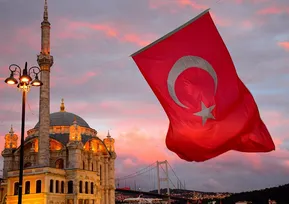
Photo by Takashi Miyazaki on Unsplash


Positive regulatory developments

The ameliorating regulatory landscape is also a positive development, highlighted by this year’s tax law amendment, which grants exemptions to enterprises’ self-issued tokens from year-end corporate taxation. In Japan, four IEOs have been conducted so far, with the inaugural IEO amassing over 900 million yen (approximately $6 million). The cumulative amount from the four IEOs has surpassed 4.4 billion yen. However, given that the IEO is a relatively nascent fundraising method, improvements in token price stability and operational modalities are required to ensure that businesses and users can engage with it confidently.


Enhanced user protection

Against this backdrop, JCBA, an organization comprised of various enterprises involving virtual assets and Web3, has been discussing the direction of the IEO system from a corporate viewpoint since May of this year. Establishing price stabilization measures and selling restrictions within the Japanese IEO system will contribute to user protection by allowing investors to manage their assets under domestic regulations. JCBA stated that users will find domestic exchanges more secure in comparison to foreign ones.

As this proposal represents an initial draft, deliberated and formulated only within the JCBA, the group intends to consult and assess the feasibility of the self-regulatory rules with each pertinent organization as necessary.


Four key points

The document submitted by JCBA to JVCEA presented four key points concerning the IEO. Pertaining to pricing, it suggested the diversification of calculation methods customized to each project and the specification of price-related disclaimers. On liquidity, it posited that liquidity objectives should be established at the time of listing, and an environment conducive to securing liquidity should be developed. JCBA also pointed out the necessity of establishing rules for price stabilization measures at the time of listing. Finally, regarding selling restrictions, it was noted that both token issuers and exchanges should adhere to a minimum three-month lock-up period for tokens.


More to Read
View All
Web3 & Enterprise·

Aug 24, 2023

Dunamu’s Luxury Watch Trading Platform Thrives with Blockchain Edge

Dunamu’s Luxury Watch Trading Platform Thrives with Blockchain EdgeViver, a luxury watch trading platform and subsidiary of Dunamu, which operates the Upbit cryptocurrency exchange in South Korea, has been experiencing continued success amidst an ever-growing interest in luxury items as real-world assets and lucrative investment drivers.Photo by Christian Wiediger on UnsplashLeveraging blockchain technology and a showroom experienceThis success can be attributed to the platform’s commitment to taking advantage of Dunamu’s cutting-edge blockchain technology and infrastructure, setting it apart from other luxury platforms and boosting competitiveness in the market.Another major factor is the Viver showroom in Gangnam, southern Seoul, which allows visitors to try on and purchase watches, get their own watches polished and checked, and speak with a professional watch curator.Moon Jae-yeon, CEO of Viver, unveiled plans to surpass global competitors like the US’ Watchbox and Europe’s Chrono24 within five years by growing the app into a global vertical commerce platform focused on luxury watches.Rolex’s finest dominate Viver’s diverse collectionIndeed, Viver has become a popular trading hub for timepiece enthusiasts and investors across the country, and the platform recently revealed in a special article for its 100th magazine issue that its best-selling watch is the Rolex Submariner — a globally renown line of high-end divers’ wristwatches.Different models from the Submariner line have taken up the top three ranks of most sold watches. Coming in first is the Submariner Date in Oystersteel, priced at KRW 16.5 million (approximately $12,500) on Viver, which accounted for 16.5% of total sales. Following close in second place with just two fewer watches sold and a 16.2% share of sales is the Submariner in Oystersteel, which is set apart by its lack of a date indicator. Last but not least, the Submariner Date in Oystersteel and yellow gold took up 13.7% of sales.The watch sold the fastest on the platform was the Rolex Datejust 41 in Oystersteel and white gold. Sporting the iconic Jubilee bracelet and fluted bezel, the timepiece took just a minute and 42 seconds from registration to sale.Though Rolex has evidently claimed its superlative title as the platform’s most popular brand, Audemars Piguet secured its own as the most expensive. The priciest timepiece to ever be sold on Viver is the Royal Oak model for KRW 130 million.Exponential growthThe platform also added four new brands in June — Patek Philippe, Omega, Cartier, and Vacheron Constantin. Consequently, total transaction value, product registrations, and product purchases in July increased by 34%, 116%, and 36%, respectively.As a result of these combined efforts, both monthly trade count and transaction volume on Viver have spiked by more than 15 times since its establishment last August, while the number of users has grown by about 10 times over the past year.The number of products directly registered by sellers also increased by about 30 times compared to the first month since the platform’s launch.

news
Policy & Regulation·

Nov 28, 2023

Korea considers legal recognition of virtual assets as trust assets for investor protection

Korea considers legal recognition of virtual assets as trust assets for investor protectionSouth Korea’s Ministry of Justice (MOJ) is assessing whether customers’ virtual assets on cryptocurrency exchanges should be legally recognized as trust assets. This classification would give users priority in claiming their virtual assets in case of an exchange’s bankruptcy, thus strengthening investor protection. There’s a noted concern about potential disputes in such bankruptcy situations, as users’ digital assets are typically considered to be in the custody or storage of these platforms.Photo by Daniel Bernard on UnsplashLegal study by Seoul National UniversityAccording to a Tuesday report by local news outlet ChosunBiz, citing industry and legal sources, the MOJ has initiated a legal study on this subject. The research is being conducted by the Seoul National University R&DB Foundation, which started the project earlier this month.Through this study, the MOJ is expected to examine the legal classification of cryptocurrency as property. This review is significant because, for cryptocurrencies to be held in a trust, they must be legally recognized as property. Meanwhile, the upcoming Virtual Asset User Protection Act, set to come into effect next July, mandates that only cash deposits made by users be segregated from the assets of the exchange itself.In Korea, under the current provisions of the Capital Markets Act, virtual assets are not recognized as being held in a trust. Instead, staked cryptocurrencies are seen as being under custodial management or storage. In such arrangements, only a debtor-creditor relationship concerning virtual assets is acknowledged, differing from the legal framework of a trust.Prioritization of rightsIf a cryptocurrency exchange becomes insolvent and enters liquidation, the current legal framework could end up prioritizing the rights of the exchange’s creditors or shareholders over those of the crypto investors. This situation has faced criticism for its inadequate protection of investors. However, if the crypto assets were considered to be held in trusts, it would enable users to acquire “rights to foreclose outside bankruptcy.” This means users would have the right to receive priority reimbursement for their crypto assets, offering them a higher level of protection in the event of an exchange’s bankruptcy.Regarding this development, an official from the MOJ said that while the study is a fundamental legal review focused on exploring ways to protect users through the application of trusts for various cryptocurrency transactions, including those involving decentralized finance (DeFi), it is too early to provide specific details at this stage.

news
Policy & Regulation·

Nov 02, 2023

Turkey crafts new crypto regulations with FATF grey list removal objective

Turkey crafts new crypto regulations with FATF grey list removal objectiveIn an effort to secure removal from the Financial Action Task Force’s (FATF) “grey list,” Turkey is in the process of crafting new regulations governing crypto assets.The FATF, established by the Group of Seven (G7) advanced economies, serves as a guardian of the international financial system. It’s an international organization dedicated to combating financial crimes, which added Turkey to its “grey list” in 2021. In 2019, it cautioned Turkey about significant deficiencies in procedures for freezing assets linked to terrorism and the proliferation of weapons of mass destruction.Photo by Michael Jerrard on UnsplashCrypto compliance for FATF upgradeTurkish Finance Minister Mehmet Simsek recently discussed this matter with a parliamentary commission, according to a report published by Reuters. Simsek highlighted the FATF’s evaluation of Turkey’s adherence to 39 out of the 40 standards set by the organization. The single outstanding issue pertains to crypto assets, and Simsek revealed plans to introduce a crypto assets law in parliament to address this concern. However, he did not delve into specific legal changes.The Turkish government is taking action to align with international standards and remove the shadow of the “grey list.” The Turkish Presidential Annual Program for 2024, as published in the Official Gazette of the Republic of Turkey on October 25, outlines a commitment to establish comprehensive cryptocurrency regulations in the country by the end of 2024. Within the extensive 500-page document, Article 400.5 sets the goal of providing clear definitions for crypto assets, potentially subjecting them to taxation in the future.Additionally, the document seeks to establish legal definitions for crypto asset providers, including cryptocurrency exchanges. However, it refrains from specifying the finer details of the upcoming regulatory framework.Crypto popularityTurkey has been an outlier in terms of cryptocurrency use by comparison with many of its international peers. A report by KuCoin earlier this year validated that reality, indicating a significant increase in the number of crypto investors in Turkey over the course of the previous 18 months. In the aftermath of a devastating earthquake which hit the country on Feb. 6, crypto was reported to have been used as a means to get aid to those affected quickly and easily.However, developments in the crypto space have also included difficulties. It was reported in July that the use of crypto for the earthquake relief effort in Turkey was also being used as a cover by an affiliate of the terrorist group ISIS to launder money and receive funding. Turkish users of the Thodex crypto exchange platform were the victims of fraud in 2021, with the founders of that business having been sentenced for that fraud in September. In 2021 the country moved to ban crypto payments against a background that has seen the Turkish lira experience hyper-inflation.CBDC developmentTurkey’s central bank has been making strides in the digital currency arena, successfully conducting the initial trial of its central bank digital currency (CBDC), the digital lira, by December 2022. The central bank has expressed its intention to continue testing and exploring digital currency development throughout 2024.The move to enhance regulation and compliance in the crypto sector in Turkey aligns with global efforts to ensure transparency and accountability in financial systems.

news
Loading