Top

Zodia Markets Achieves Crypto Broker-Dealer Approval in UAE

Web3 & Enterprise·September 07, 2023, 3:44 AM

Zodia Markets, the London-based digital asset marketplace backed by Standard Chartered Ventures, has achieved the milestone of receiving In-Principle Approval (IPA) to operate as a cryptocurrency broker-dealer in Abu Dhabi’s over-the-counter (OTC) market.
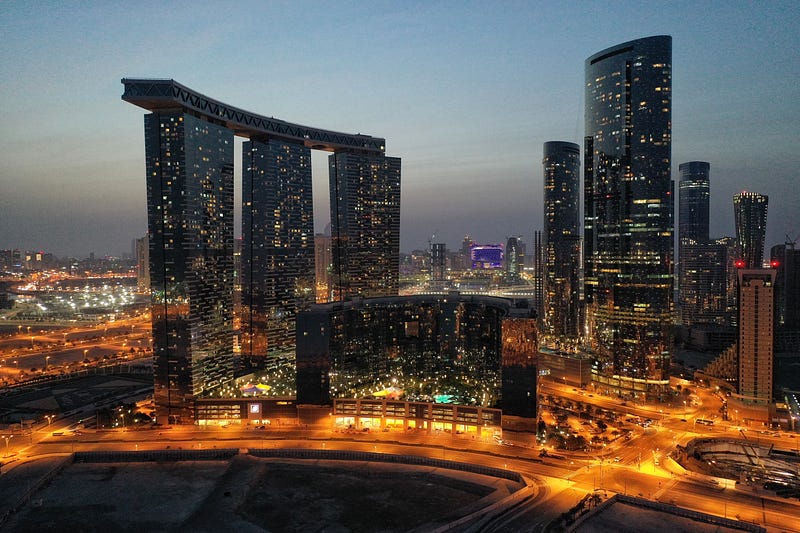
Photo by Kamil Rogalinski on Unsplash


ADGM green light

That’s according to a press release published by Zawya, a business intelligence media outlet that covers the Middle East and North Africa (MENA) region. The regulatory approval comes from the Abu Dhabi Global Market (ADGM), a renowned financial hub in the United Arab Emirates (UAE).

Salem Mohammed Al Darei, CEO of the ADGM Authority, extended his congratulations to Zodia Markets on this achievement and welcomed them into the ADGM ecosystem. The In-Principle Approval marks the third step in a comprehensive five-stage application process outlined by ADGM. The subsequent stages involve securing final approval and undergoing an “operational launch” test to ensure seamless functionality, with a need to follow ADGM’s guidance meticulously.

“The harmony of traditional and new-age finance in Abu Dhabi with an international leading digital asset firm such as Zodia Markets that is backed by the well-established Standard Chartered will contribute to further enhancing the attractiveness of ADGM as a preferred destination for global entities,” Al Darei stated.


Expanding global footprint

Zodia Markets’ strategic decision to enter the UAE market aligns with the growing prominence of the UAE in the digital assets industry. This move compliments Zodia Custody’s decision to launch a crypto custodian service in the UAE emirate of Dubai back in May. While both businesses are independent of each other and fully segregated, they share the very same parent company in Standard Chartered.

At the time, a memorandum of understanding (MoU) was signed by parent company Standard Chartered alongside the Dubai International Financial Center (DIFC).

This latest move bolsters the geographical presence of Zodia Markets but also provides institutional investors in the Middle East and Africa with convenient access to the world of digital assets, thereby strengthening the company’s global footprint in the digital asset space.

News of the firm’s intentions to enter the UAE market emerged last November. The company’s thinking at the time was that it could exploit an opportunity to expand in the MENA region due to more progressive regulation while the US and Europe were perceived to be developing at a much slower pace from a regulatory point of view, making them unattractive comparatively.

ADGM has been at the forefront of shaping the regulatory landscape for companies involved in virtual assets. In April, it put forward a legal framework for decentralized tech. As part of its commitment to fostering innovation, ADGM recently granted permission for the operation of a virtual asset platform named M2 and issued a license to the cryptocurrency exchange Rain in July.

Usman Ahmad, CEO of Zodia Markets, articulated the company’s mission, stating:

“Our goal is to provide institutions seamless access to trade digital assets without compromising on the standards and controls that exist in traditional financial markets.”

Zodia Markets is a joint venture between Standard Chartered and Hong Kong-based digital assets platform OSL, which also expressed its enthusiasm for the In-Principle Approval.


More to Read
View All
Web3 & Enterprise·

Jan 13, 2024

Telcoin makes users whole in exploit recovery

Singapore-regulated Telcoin, a developer of financial applications for mobile users, has successfully restored user balances following an exploit that saw approximately $1.2 million worth of funds transferred from affected accounts.Photo by Martin Sanchez on UnsplashUnauthorized withdrawal of assetsThe incident, which occurred in late December, was attributed to an error in the interaction between Telcoin's digital wallet and a proxy contract on Polygon. In a blog post which was published on Wednesday, the company shared a full post-mortem analysis report which it commissioned Hong Kong-based blockchain security firm BlockSec to carry out, relative to the exploit. The fault in the proxy contract's implementation caused a technical conflict that allowed for the unauthorized withdrawal of assets. Fortunately, no admin keys were compromised, ensuring that the broader Telcoin ecosystem remained unaffected. In response to the security breach, Telcoin took action by immediately freezing the use of its application as a precautionary measure. The team initiated an investigation and committed to releasing updates promptly to address the issue and restore normalcy. The identified address associated with the exploit was 0x35d2775e5f95596509951b140d68fc5b9185ff98. TEL token freefallDespite the initial market turbulence, with the price of the Telcoin (TEL) token plummeting, the cryptocurrency has demonstrated resilience. On Dec. 25, TEL fell from a peak price of $0.00235146 to $0.00122535, representing a 48% decrease. At the time of writing, the price has slightly rebounded, trading at $0.001335. Nevertheless, it's still down 40% over the course of the past month's trading. In a social media direct message to CoinDesk recently, Telcoin's founder and CEO, Paul Neuner, expressed pride in how his team responded to the issue, stating: “Making the decision to preemptively restore affected user wallets from our company treasury was a no-brainer, and I’m proud of the team for making that happen in record time.” Regulatory standingTelcoin's regulatory standing played a crucial role in instilling confidence during this challenging time. Although headquartered in Tokyo, the company is regulated in Singapore as a Major Payment Institution (MPI) by the Monetary Authority of Singapore (MAS). The firm is also registered and regulated in other global markets, including Canada and Australia. Telcoin maintains offices in Singapore, Tokyo, Dubai and Los Angeles. The company had been active in trying to shape regulation in the United States in 2023, with company executives having made repeated visits to Washington D.C. to meet with Financial Services Committee members and staffers on Capitol Hill. In April of last year, the company extended its service offering to the European market, starting out initially in Lithuania.It appears that the restoration of Telcoin's application services led to a significant boost in user confidence. The company reported a 400% increase in deposits compared to the previous month. Users responded favorably to Telcoin's swift resolution of the security breach, with a ratio of $3.60 being deposited for every $1 withdrawn in the first day since the service restoration. Telcoin's measures, collaboration with security experts and the surge in user deposits appear to have resulted in a resilient recovery. The saga highlights the importance of prompt and transparent responses in maintaining trust in the face of crypto security issues.  

news
Web3 & Enterprise·

Mar 13, 2025

SGX to list Bitcoin perpetual futures in H2

Singapore Exchange Limited (SGX), the city-state’s primary asset exchange, is in the process of establishing Bitcoin perpetual futures trading on the platform.Photo by Kanchanara on UnsplashInstitutional product offeringAccording to a report published by Bloomberg earlier this week, the exchange platform intends to launch Bitcoin futures sometime during H2 2025. The product launch will be subject to regulatory approval from the Monetary Authority of Singapore (MAS). A spokesperson for the company told Bloomberg that the product offering will be geared exclusively towards institutional investors and traders in an effort to “significantly expand institutional market access.” Retail access to the product will be prohibited. Once launched, these Bitcoin perpetual futures contracts, being offered through a traditional finance (TradFi) outfit like SGX, will help to blur the lines between TradFi and the emerging crypto sector. Perpetual futures have no expiry date. They offer a means for traders to bet on price changes in an underlying asset while doing away with the need to take ownership of the asset itself. Cautious approachSGX has been cautious in listing crypto assets and derivative products. Last year the firm’s CEO, Loh Boon Chye, said that the time was not yet right for such listings.  His concern back then was that any such product launches would need “sustainable ecosystem support,” adding that “that means demand, that means governance, that means structure.” While spot Bitcoin exchange-traded funds (ETFs) had been approved in the United States at that point, there has been much further development in the crypto-sphere since then, following the election of a pro-crypto administration in the U.S. That event has had knock-on effects globally. Singapore’s SGX isn’t the only traditional exchange platform to respond. Japanese futures exchange, the Osaka Dojima Exchange (ODEX), is gearing up to file an application with the Financial Services Agency (FSA) to list a Bitcoin futures product later this month. Closer to home, an American digital asset marketplace that focuses on institutional trading, EDX Markets, has plans to introduce Bitcoin perpetual futures products to the Singaporean market, according to a report which emerged in January. In May 2024, EDX launched EDXM Global, a settlement platform, in Singapore. This product launch by SGX serves the purposes of decision-makers in Singapore, who have been trying to position the city-state as a digital asset industry hub. Additionally, the move will bring greater acceptance of the digital assets sector from traditional market participants. Crypto perpetual futures contracts were first pioneered by crypto derivatives exchanges like BitMEX back in 2016. Since then, other crypto-native platforms like Binance and OKX have offered these products. In the case of unregulated offshore exchanges, the products have proven to be controversial, as at times, they have been used in a manner that has exposed market participants to counterparty risk. Failed crypto exchange FTX, together with its sister company Alameda Research, relied on the products in their trading activities. SGX, as a seasoned, regulated TradFi operator, which holds an Aa2 rating from Moody’s, is likely to prove to be a more palatable option for institutional players.

news
Web3 & Enterprise·

Feb 06, 2024

Animoca Brands makes key appointment to drive Japanese market expansion

Animoca Brands Japan, a key subsidiary of Hong Kong-headquartered Web3 investor Animoca Brands, has welcomed Kensuke Amo as its Chief Operating Officer (COO) to spearhead the company's growth in Japan. Industry credentialsAmo, a seasoned industry veteran who previously served as the managing executive officer at Japanese bitcoin wallet and exchange service Coincheck, officially assumed his role as COO last Thursday. With a proven track record in launching NFT businesses and steering new crypto asset ventures, Amo played a pivotal role at Coincheck. During his tenure as an executive officer from 2020, he pioneered initiatives such as Japan's first NFT marketplace for crypto asset exchanges and an inaugural initial exchange offering (IEO). In a social media post, Amo stated that in the role, he “will be committed to doing [his] best to contribute [to] Web3 technology [so that it takes] root in society.” In 2022, Amo ascended to the leadership position at Coincheck, where he led the NFT business and metaverse business, heading three distinct web domains. His involvement in the expansion of "The Sandbox" and "Otherside" in Japan, stemming from the partnership between Coincheck and Animoca Brands in 2020, further underscores his influence in the sector.Photo by Richard Tao on UnsplashJapanese market expansionRegulatory headwinds in the United States in 2023 led to the company pivoting and focusing on non-U.S. markets. It became clear later in 2023 that the company had a specific interest in growing its business in Japan when Animoca Brands Japan acquired an equity share in Cool Cats Group, an NFT-related project. That deal also implicated a collaboration with Animoca’s digital experience label, KLKTN. As Animoca Brands Japan strategically aligns itself within Animoca Brands' larger framework, Kensuke Amo aims to leverage the company's extensive assets and network, including over 400 portfolio companies. His mission involves combining his expertise in business and rule-making within the Japanese Web3 industry to facilitate the integration of Web3 into society. Commenting further on his appointment, Amo expressed his commitment to advancing the Web3 landscape in Japan. He stated: “As a strategic subsidiary of Animoca Brands, Animoca Brands Japan will make the most of its assets and network, including its more than 400 portfolio companies, while combining its knowledge and experience in business and rule-making in the Japanese Web3 industry.” Established in 2021, Animoca Brands Japan has played a crucial role in supporting Japanese intellectual property and content holders in their global Web3 expansion efforts. The company secured an undisclosed investment from Mitsui & Co., one of Japan’s largest trading companies, in June. Daisuke Iwase, the CEO of Animoca Brands Japan, expressed optimism about the collaboration with Kensuke Amo, emphasizing his leadership in the realms of crypto assets, NFTs and the metaverse in Japan. Amo’s industry involvement extends beyond Animoca Brands Japan, as he currently advises the Japan Cryptoasset Business Association (JCBA), Shibuya-ku Startup Ecosystem, Web3 project "OASIS" and real estate information service company LIFULL Co., Ltd. Additionally, he is the author of "Textbook of NFT" and "Non Fungible Me." 

news
Loading