Top

Nomura’s Crypto Subsidiary Secures Dubai VARA License

Policy & Regulation·August 02, 2023, 12:04 AM

Laser Digital Middle East FZE, the digital asset subsidiary of Japanese global financial services group Nomura, has successfully obtained an operating license from Dubai’s Virtual Asset Regulatory Authority (VARA).

This significant development, announced via a statement published to Laser Digital’s website on Tuesday, comes as part of Nomura’s strategic efforts to make a strong presence in the digital asset space.

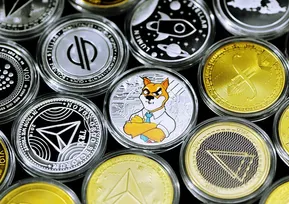
Photo by Paul MARSAN on Unsplash


Opportunity to expand services

The newly acquired Virtual Asset Service Provider (VASP) license empowers Laser Digital to offer broker-dealer services and provide virtual asset management and investment solutions within the emirate. Additionally, the license will enable the company to carry out trading and asset management operations in the near future. This could potentially include the provision of over-the-counter (OTC) services, together with a diverse range of digital asset investment products.

Jez Mohideen, the CEO of Laser Digital, expressed his confidence in VARA’s meticulous and collaborative process, which assures institutional investors looking to get involved in this emerging asset class. “We are very grateful to VARA for approving our Operating License. VARA’s thorough and consultative process provides institutional investors with the assurance they require to engage in this asset class. With the license now in place, we are looking forward to Laser’s growth over the coming years,” he stated.

Established in September 2022 under the guidance of Nomura, Laser Digital was the brainchild of Steven Ashley, the former head of Nomura’s wholesale division, alongside Mohideen, who served as the firm’s former Chief Digital Officer and Co-Head of Global Markets for Europe, Middle East, and Africa (MENA). The company is headquartered in Switzerland, with sub-offices located in Dubai and London.

Dubai’s rapidly growing crypto ecosystem has garnered global attention, especially after the establishment of its own virtual asset rules and the formation of VARA in March 2022. In February, the regulatory body issued the “Full Market Product Regulations,” comprising four compulsory rulebooks and activity-specific guidelines that delineate the framework for Virtual Asset Service Providers (VASPs).


Following in Binance’s footsteps

Laser Digital’s recent achievement coincides with Binance’s continuous efforts to solidify its presence in the United Arab Emirates. Its license award comes hot on the heels of Binance having achieved the same milestone. On Monday, Binance’s Dubai subsidiary, Binance FZE, received an operational Minimum Viable Product (MVP) from VARA, granting it permission to operate cryptocurrency exchange and virtual asset broker-dealer services locally.

Apart from Binance, only two other entities, digital asset custodians Komainu MEA and Hex Trust MENA FZE, currently hold operational MVP permits in the region. Notably, crypto exchange BitOasis also secured a conditional license but it has faced a suspension from VARA for non-compliance with mandated conditions.

Laser Digital’s successful licensing and entry into Dubai’s crypto landscape further enrich the diversity of players in the region’s digital asset market. The involvement of reputable financial institutions like Nomura contributes to the establishment of a robust and well-regulated ecosystem in the United Arab Emirates. The license paves the way for Laser Digital to serve institutional investors and individual clients alike, offering innovative digital asset solutions while complying with the region’s regulatory standards.


More to Read
View All
Web3 & Enterprise·

Jan 09, 2024

Japanese e-commerce giant Mercari planning bitcoin payments

Mercari, one of Japan's leading e-commerce platforms, has declared its intention to accept bitcoin payments starting from June of this year. The decision, which was reported by Japanese financial media outlet Nikkei on Friday, outlines that the processing of bitcoin payments will be managed through Mercari's Tokyo-based crypto subsidiary, Melcoin.Photo by Dmytro Demidko on UnsplashSeamless BTC conversionIt's noteworthy that Melcoin will convert all BTC payments into yen, ensuring vendors receive fiat currency despite the buyer's choice of bitcoin for payment. While the company won't display prices in bitcoin, listing items for sale in fiat yen, customers will have the option to select BTC as a payment method during the purchase process on the platform. In recent months, Mercari has introduced various crypto-related products, including the Mercari bitcoin crypto trading service. This service allows users to buy and sell bitcoin using the proceeds from their sales on the platform. The integration of a loyalty points system further enhances the crypto trading experience, enabling Mercari users to exchange their points for bitcoin. Remarkably, Mercari announced that its bitcoin trading service surpassed the 1 million user milestone in October, just seven months after its launch. At the time of the launch of the trading service, the company outlined that it would “make bitcoin more accessible to people who have never tried crypto trading before.” Notably, around 80% of the crypto users on Mercari had no prior experience with crypto-asset trading in June of the previous year. Expanding its crypto-related offering to include bitcoin payments unleashes much more potential relative to crypto adoption. 22 million monthly usersEstablished in 2013, Mercari has evolved into Japan's largest community marketplace platform, boasting 22 million monthly users as of July 2023. It’s a flea market application, making it a consumer-to-consumer platform that could play a significant role in bringing about bitcoin adoption in Japan among ordinary people. The company has also expanded its footprint internationally, with a particular focus on Europe. Market observers have labeled Mercari's crypto service, along with a competitor operated by Rakuten, as a potential "gateway" for bitcoin and crypto investors and traders. Rakuten, another major Japanese e-commerce platform deeply involved in the crypto space for an extended period, operates the Rakuten Wallet crypto trading service. Like Mercari, Rakuten has integrated its loyalty points program with its crypto arm, allowing users to trade their points for crypto-assets. Rakuten had also emerged last year among a shortlist of Asian companies expressing an interest in purchasing failed crypto exchange FTX. A recent survey highlighted the growing influence of these e-commerce giants in the crypto space. Japanese individuals who entered the coin trading scene towards the end of 2022 overwhelmingly favored either Mercari's bitcoin trading app (24.7%) or Rakuten's Rakuten Wallet platform (24.2%). This revelation dealt a blow to traditional crypto exchanges, with bitFlyer, the long-standing market leader, securing the third position with a share of 11.3%. This move contributes towards a more progressive crypto environment in Japan, where lawmakers recently indicated a willingness to consider making tax rules more accommodative of the crypto sector.

news
Policy & Regulation·

Jun 30, 2023

Audit Finds Excessive Pay Features on China’s e-CNY Project

Audit Finds Excessive Pay Features on China’s e-CNY ProjectChina’s Digital Currency Research Institute, responsible for developing the digital yuan, has come under scrutiny for its excessive pay rises, which exceeded the typical limit for central government departments by eight times, according to a recent audit report. The report, released by the National Audit Office, sheds light on the inner workings of the institute, which oversees China’s widely used central bank digital currency (CBDC).Photo by Eric Prouzet on Unsplash28 percent pay risesIn 2020, employees at the institute received an average salary increase of around 28%, a significant bump compared to the typical government limit. Despite its influential role, the Digital Currency Research Institute maintains a low profile, lacking an official website and public disclosure of its payroll size, budget, and organizational structure.Since the substantial pay increases in 2020, the institute’s growth appears to have accelerated. Job postings indicate that the institute embarked on a hiring spree in the past year, with positions ranging from Beijing-based software engineers for Google’s Android mobile operating system to cloud platform engineers in Suzhou and blockchain experts in Shenzhen.While the Digital Currency Research Institute is among several government agencies flagged for financial irregularities in the audit report, it is essential to note that the institute plays a crucial role in advancing China’s digital yuan project.Ongoing trialsOver the past four years, trials of the digital yuan, known as e-CNY, have rapidly expanded. Currently, there are 26 pilot cities and 5.6 million merchants accepting the CBDC, accessible through official apps and third-party payment systems such as Alipay and WeChat Pay.Despite the progress made in trial deployments, there is no official timeline for the official launch of the digital yuan. The e-CNY has already demonstrated its utility in various contexts. For instance, in major cities like Beijing, Shanghai, and Chengdu, subway riders can utilize e-CNY as a payment option through local transport apps. Moreover, passengers in eastern Zhejiang province can now use the official e-CNY wallet app to pay for the metro, even without an internet connection.While some cities have started exploring the use of e-CNY for bank loan and utility bill payments, the overall adoption of the digital yuan remains relatively slow. The amount spent using e-CNY is still a fraction of the massive 500 trillion yuan in mobile payments made in China last year. Consumers perceive little difference between e-CNY and traditional payment channels when using popular mobile payment apps.Jiangsu Province is establishing use of the digital yuan within its education system. Meanwhile, in the eastern city of Changshu, local administrators are starting to pay civil servants in e-CNY. To encourage wider acceptance and adoption, it will be crucial to further develop the infrastructure and address the concerns of businesses and consumers.As trials continue, it is expected that the digital yuan will play an increasingly significant role in China’s financial landscape, offering new opportunities while transforming the way transactions are conducted.

news
Web3 & Enterprise·

Sep 02, 2023

HashKey’s New $100M Fund to Prioritize Altcoins

HashKey’s New $100M Fund to Prioritize AltcoinsHashKey Capital, the investment arm of Hong Kong-based crypto firm HashKey Group, is embarking on a new investment journey with the launch of a fund that predominantly targets major altcoins.Photo by Kanchanara on Unsplash50% altcoin allocationIn a recent interview with Reuters, Jupiter Zheng, the Portfolio Manager of the fund, revealed that less than 50% of the fund’s allocation will be directed towards Bitcoin (BTC) and Ethereum (ETH), the two largest cryptocurrencies.The fund has already garnered attention from potential clients, primarily high-net-worth individuals and investment firms catering to affluent, high-net-worth Asian families. Zheng underscored the fund’s commitment to diversifying investment strategies, which he believes is necessary as a consequence of the Hong Kong stock market’s recent weakness.“We see untapped demand from professional investors who wish to chase above-market returns in crypto,” Zheng noted, suggesting that the allure of crypto assets is becoming increasingly appealing to traditional investors.$1 billion assets under managementHashKey Capital has $1 billion in assets under management, and the firm has set an ambitious target of raising $100 million for the newly launched fund within the next 12 months. This allocation strategy also includes a portion of the fund’s holdings in cash, allowing for flexibility in navigating the dynamic and volatile cryptocurrency market.In addition to forging ahead with crypto investments, the company is actively establishing distribution channels with offshore Chinese financial institutions, expanding its reach and influence in the digital asset space.Positive market outlookZheng remains optimistic about the crypto market’s future, expressing confidence that cryptocurrency prices are finding stability as industry liquidity improves. He cited several factors contributing to this stabilization, including the plateauing of US interest rates and the growing interest of large US asset managers in filing for spot Bitcoin ETFs, indicating a maturing and evolving industry sector.Responding to news of the new fund, Ryan Selkis, CEO and Founder of crypto market intelligence firm Messari, said that he expected other funds to follow suit in 2024 given that “there’s a ton of inefficiency and mispricing in assets 50–500 by market cap.”HashKey’s progression in the crypto investment space can be traced back to its acquisition of a Type 9 asset management license from Hong Kong’s Securities and Futures Commission last year. This license granted HashKey the ability to manage portfolios exclusively composed of virtual assets, laying the groundwork for its latest venture. It has since secured Type 1 and Type 7 licenses and recently started offering its products to retail investors in Hong Kong, being one of the first to do so.Funding roundEarlier in the year, the company successfully closed a $500 million investment round for a fund dedicated to infrastructure, tooling, and applications that drive the widespread adoption of blockchain and crypto technologies. In April, it launched a wealth management service in response to demand from investors who were looking to gain exposure to digital assets.Hong Kong’s welcoming stance towards cryptocurrencies and its proactive approach to addressing market demand for alternative assets have played a pivotal role in attracting digital asset firms. The city’s Securities and Futures Commission (SFC) has been granting licenses to crypto exchanges in alignment with its new licensing framework, opening up opportunities for retail investors to trade “large-cap tokens” on licensed platforms while implementing safeguards like knowledge tests, risk profiles, and reasonable exposure limits.

news
Loading