Top

Korea Fintech Industry Association Establishes Council for Security Tokens

Web3 & Enterprise·July 07, 2023, 6:06 AM

The Korea Fintech Industry Association (KORFIN) has recently held a successful kickoff meeting to launch the Fintech Council for Security Tokens. Comprised of 18 members specializing in security token-related fields, including blockchain technology and fractional investments, the council aims to expand its membership by inviting more enterprises interested in security token projects.

Current participants in the council include The Seed Partners, a venture capital firm; Lucentblock, a blockchain-based real estate securities platform provider; and Leadpoint System, a blockchain tech developer.

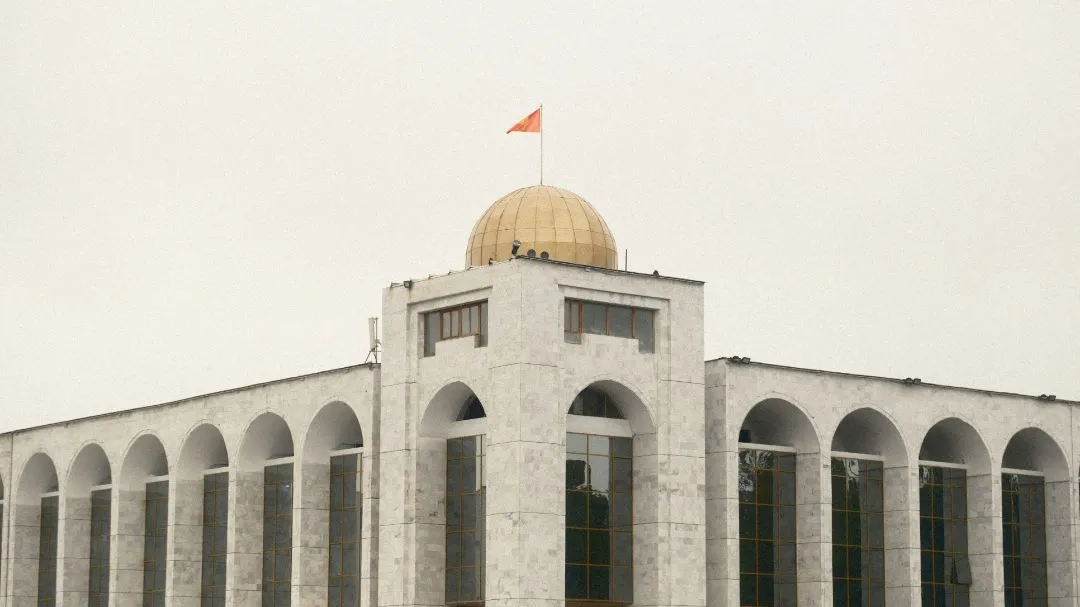
Photo by Ethan Brooke on Unsplash


Activities for ecosystem growth

The purpose of the council is to foster the growth of the security token ecosystem by undertaking various activities. These activities encompass engaging in discussions to strengthen the security token industry, conducting research on policy development, and seeking expert consultations.


Promoting innovation

Lee Keun-ju, the President of KORFIN, expressed the association’s commitment to supporting fintech companies in realizing their innovative ideas in the industry. In line with this commitment, KORFIN will organize a range of events, including educational courses and seminars, to facilitate knowledge sharing and enable fintech companies to establish valuable business network connections.


Growing enthusiasm

Since the Korean Financial Services Commission (FSC) authorized the issuance and trading of security tokens in February, the interest in security tokens has gained momentum within the country. This growing enthusiasm aligns with the global trend, as highlighted in a 2022 report by Boston Consulting Group (BCG) and Singaporean investment platform ADDX, which projected that the global market for illiquid tokenized assets would hit $16 trillion by 2030.

More to Read
View All
Policy & Regulation·

May 30, 2023

bitFlyer Moves to Comply With Travel Rule

bitFlyer Moves to Comply With Travel RulebitFlyer, a Tokyo-based Bitcoin exchange and marketplace, has taken steps to comply with the travel rule, an anti-money laundering measure promoted by Paris-based global financial crime watchdog, the Financial Action Task Force (FATF).The rule necessitates the exchange to pass on customer data to a recipient exchange where the crypto transaction involves a value of greater than $3,000.Photo by Ivan Babydov on PexelsImplementing TRUST technologyThe company announced on Tuesday that these measures, which went into effect in the afternoon local time, include restrictions on transfers from the exchange to platforms that do not comply with the Travel Rule Universal Solution Technology (TRUST). This technology was initiated by Coinbase, the US-based crypto exchange, to ensure that firms adhere to FATF’s requirements. The mechanism is a product of the collaboration of Coinbase alongside leading crypto exchanges such as Kraken, Gemini, BitMEX, Bittrex, Okcoin, and others.To enforce these measures, bitFlyer has established notification requirements for receiving and sending crypto to TRUST-compliant platforms in a list of 21 countries. The list includes Japan, Israel, Gibraltar, Hong Kong, the Bahamas, and Switzerland. Additionally, bitFlyer has limited transfers to compliant platforms in these countries to TRUST-compatible crypto assets such as bitcoin (BTC), ether (ETH), and several ERC-20 tokens.On the other hand, transfers to and from countries not on the list, as well as transfers to private self-custodied wallets, can be conducted using any crypto asset available on the bitFlyer platform.Compliance with Japanese legislationWhile the exchange refers to travel rule compliance relative to 21 countries, it’s unlikely to be a coincidence that the Japan-headquartered company has implemented this compliance measure a couple of days before Japan is set to introduce a FATF travel rule compliance requirement which comes into effect on June 1.These measures align with Japan’s recent commitment to implementing FATF’s travel rule, which requires the sharing of crypto transaction information between platforms. The watchdog had urged advanced economies in the G7 to take the lead in combating money laundering through digital assets.Increasing regulatory demandsIt is worth noting that bitFlyer’s US unit recently faced a fine from US financial regulator, the New York State Department of Financial Services (NYDFS), due to its failure to meet cybersecurity requirements. The incident highlighted the increasing scrutiny and regulatory demands placed on crypto exchanges to ensure the security and compliance of their operations.By aligning itself with the FATF Travel Rule and implementing these restrictions, bitFlyer aims to enhance its anti-money laundering efforts and contribute to global efforts to combat financial crimes in the crypto space, helping to steer itself clear of potential issues with global regulators.As the crypto industry continues to evolve, regulatory frameworks and standards are being established to address concerns regarding money laundering and illicit activities. Compliance with such regulations is essential for crypto exchanges to foster trust among users, attract institutional investors, and contribute to the overall maturation and legitimacy of the crypto ecosystem.

news
Web3 & Enterprise·

Jun 26, 2023

Wemade Unveils Blockchain-Powered Platform for Various Communities

Wemade Unveils Blockchain-Powered Platform for Various CommunitiesSouth Korean gaming company Wemade today unveiled their latest creation, Wepublic, a blockchain-powered platform for various communities. The objective of Wepublic is to establish a transparent and trustworthy digital society on the WEMIX3.0 Mainnet.Photo by Pixabay on PexelsFrom political parties to NGOsInitially built as a fundraising platform, Wepublic caters to entities of any scale or domain, be it political parties, religious groups, or non-profit organizations. Wepublic is committed to transforming itself into a platform for everyone.By leveraging blockchain, Wepublic ensures that all information and records stored on the platform are transparent, making them immune to counterfeiting and diversion. Furthermore, Wepublic is dedicated to fostering inclusivity and democratic decision-making. Every member within a group on Wepublic has the ability to engage in organizational activities and contribute to fair decision-making processes.Four proof protocolsIn the near future, Wepublic will introduce the “Wepublic Wallet,” enabling users to create or participate in decentralized autonomous organizations (DAOs). To ensure transparency and reliability of DAO operations, Wepublic relies on four proof protocols. These protocols serve to verify user identities, credentials, account balances, and the outcomes of governance processes.The first protocol utilizes decentralized identifiers (DIDs) to safeguard personal information, prioritizing user privacy and security. The second protocol employs soulbound tokens (SBTs) to effectively manage groups within the platform. The third protocol provides visibility into account balances and transaction records, adding an additional layer of transparency. Lastly, the fourth protocol ensures the transparent recording of all governance processes on the blockchain, promoting accountability and trust.

news
Web3 & Enterprise·

Oct 31, 2023

Korean Crypto Exchange Giants Lead Market Expansion With Increased Listings

Korean Crypto Exchange Giants Lead Market Expansion With Increased ListingsSouth Korea’s top three cryptocurrency exchanges Upbit, Bithumb and Coinone have all increased the number of cryptocurrencies they listed for trading this year compared to last year, making them responsible for leading the market’s activity and expansion.Photo by Maxim Hopman on UnsplashDynamic shifts in listing and delisting trendsA recent analysis by local news outlet News1 on the number of cryptocurrencies listed and delisted this year on the country’s major fiat-to-crypto exchanges Upbit, Bithumb, Coinone, Korbit and Gopax — listed in order of market share size — revealed that Upbit and Coinone have increased their number of listings and delistings compared to last year.The remaining three exchanges, on the other hand, showed differing results. Bithumb increased its number of listings by 47 compared to the number listed last year, while delistings decreased by three, and Gopax listed eight fewer tokens and delisted one more token. Meanwhile, Korbit’s listings decreased by 37 tokens, while delistings decreased by only one.Among the five exchanges, Bithumb listed the highest number of new cryptocurrencies this year, with 80 new currencies in total added as of Monday (local time). This represents a more than double increase compared to the 33 currencies added last year. It is also 18 more than Coinone’s 62 new currencies and 50 more than Upbit’s 30.Differing approaches based on situational factorsGopax and Korbit have taken a more conservative approach compared to Upbit, Bithumb, and Coinone, which have been more aggressive in their listing strategies. In particular, as of Oct. 4, Bithumb has also been offering free transaction fees in an effort to regain its market share. This aggressive approach can be interpreted as an effort to weather the recent crypto winter, although it hasn’t been very successful.Conversely, the exchange that delisted the most cryptocurrencies this year was Coinone, with 38 taken down as of Monday, marking a significant increase compared to last year when it delisted 26. This can be accredited to the platform’s efforts to improve its reputation and operating system following an incident earlier this year where two former employees were booked for taking bribes in exchange for listing certain cryptocurrencies. Coinone CEO Cha Myung-hun subsequently issued an apology and pledged to take proper measures to prevent such an event from recurring. Since then, the exchange has been actively looking into carrying out delistings tied to issues like the amount of currency in circulation or market price manipulation.Bithumb and Upbit came in second and third for most delistings this year, with 22 and 18, respectively.However, Korbit showed the least fluctuation in the number of listings and delistings this year — nine and three, respectively — among the five exchanges. This is a sharp contrast owing to its conservative listing policy. Speculation suggests that the platform might adopt a more aggressive stance if market conditions improve in the second half of the year.On the other hand, Gopax listed 10 tokens and delisted eight tokens. The exchange has notoriously been dealing with operational difficulties due to regulatory roadblocks despite optimistic outlooks after its acquisition by Binance, one of the world’s most prominent exchanges. Along with the recent appointment of Cho Young-joong as the new CEO of CityLabs, the company that acquired an 8.55% stake in Gopax, the exchange has been working on resolving regulatory issues and improving the state of operations.

news
Loading