Top

Thai SEC Implements Measures to Protect Crypto Investors

Policy & Regulation·July 04, 2023, 12:47 AM

In response to the crypto lending crisis that unfolded in 2022, prompting companies like BlockFi and Celsius to declare bankruptcy, Thailand’s Securities and Exchange Commission (SEC) has introduced new regulations aimed at safeguarding investors in the digital assets space.

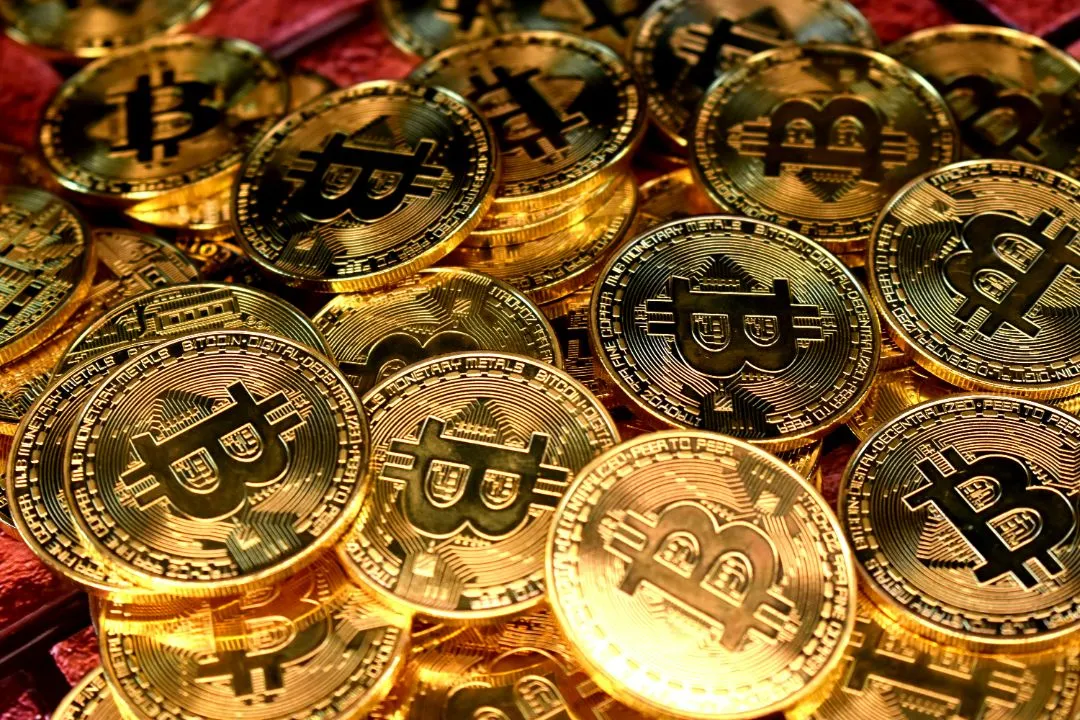
Photo by Jakob Owens on Unsplash


Disclosing risk warnings

The guidelines, issued on Monday, require digital asset service providers to provide comprehensive warnings that emphasize the risks associated with cryptocurrency trading. All platforms must prominently display a message stating: “Cryptocurrencies are high risk. Please study and understand the risks of cryptocurrencies thoroughly, because you may lose the entire investment amount.” Prior to utilizing the service, users must consent to and acknowledge the risks.


Crypto lending prohibition

In addition to the risk disclaimer, the new guidelines explicitly forbid service providers from using customer funds for lending or investment purposes. This ban on crypto lending services prevents platforms from offering any returns on deposited crypto to customers. By implementing these measures, the Thai SEC aims to enhance investor protection and shield investors from the risks posed by lending services. The regulations are scheduled to take effect at the end of the month.

Today’s guidelines are the product of months of deliberation. Discussions surrounding investor protection regulations commenced on September 1, 2022, when the SEC acknowledged the necessity for security warnings by cryptocurrency businesses to disclose the risks associated with trading digital assets. The prohibition on digital asset operators offering deposit-taking and lending services was deliberated during meetings held on December 1, 2022, and May 11, 2023.


Response to crypto platform failures

The introduction of these investor protection rules follows a significant crisis in the crypto lending sector that unfolded during the bear market of 2022. Several crypto lending firms, which had collected billions of dollars in customer deposits by promising substantial returns, collapsed during this period. Prominent lending companies such as Celsius and BlockFi filed for bankruptcy, resulting in investors’ funds being trapped in lengthy bankruptcy proceedings.

The Thai SEC’s proactive approach in implementing these regulations reflects the growing concern for investor welfare within the cryptocurrency industry. By requiring clearer risk disclosures and prohibiting the use of customer assets for lending and investment, the SEC aims to instill greater confidence and transparency in the digital asset service sector.


Crypto academy

Thailand’s SEC has run other initiatives in efforts to better protect investors. In January the Commission launched the SEC Crypto Academy, an e-learning course. The objective of that initiative was to provide investors with a basic understanding of the digital assets space prior to investing. At the time of the launch of the course, the SEC said that “the more you know your investments, the less risk you will have.”

These latest regulations not only serve as a protective measure for Thai investors but also set an example for other jurisdictions to evaluate and enhance their own regulatory frameworks. As the crypto industry continues to evolve, prioritizing investor protection becomes crucial in fostering a more sustainable and responsible ecosystem.

More to Read
View All
Policy & Regulation·

Aug 01, 2023

Bank of Korea Explores Jeju, Busan, and Incheon for Citizen-Centric CBDC Pilot Test

Bank of Korea Explores Jeju, Busan, and Incheon for Citizen-Centric CBDC Pilot TestThe Bank of Korea (BOK) is reportedly reviewing three potential locations for a pilot test of a citizen-centric payment system utilizing the Korean Won central bank digital currency (CBDC). Instead of choosing Seoul, the nation’s capital city, the BOK is considering Jeju, Busan, and Incheon for the pilot. That’s according to local tech news outlet IT Chosun.The three cities have been selected as possible testbeds, and discussions with commercial banks are ongoing to move the project forward. Once a city is chosen, the BOK will collaborate with local retailers, including hypermarkets, to test the CBDC payment and distribution system.Photo by Ethan Brooke on UnsplashRegional currency modelThe CBDC test will be limited to a specific area, operating similarly to regional currencies issued by municipal governments to stimulate local economies. The CBDC wallet app will be available to all citizens, but its usage will be restricted to retailers in the designated area. Presently, Jeju, Busan, and Incheon already have their own regional currencies managed by local banks and financial institutions.However, implementing the CBDC system poses technical challenges. In remote tests last year, the BOK discovered that transaction speeds for small transfers were slower compared to traditional payment processing providers in regions outside the Seoul Metropolitan Area.Against this backdrop, the BOK seeks to recruit an unusually large number of tech experts in order to build a large-scale system for small payments. The bank has been actively hiring individuals for this purpose since the beginning of the year.CBDC test next yearWith the test scheduled for next year, the BOK aims to promptly select the test destination based on the system’s expected performance, estimated user numbers, and potential economic impact.While Busan is more or less shunned due to its large population, Jeju is emerging as a preferred choice. However, the final decision has been tentatively postponed due to internal issues within the BOK.Following the pilot test results, the BOK may gradually broaden the scope of the CBDC system. Meanwhile, in a similar development, China began its CBDC pilots in 2020 and has now expanded its CBDC use to 26 cities across 17 provinces.According to a BOK official, the Korean central bank is making seamless preparation for the test and engaging in discussions with commercial banks to explore their operating models and devise effective implementation strategies.

news
Markets·

May 08, 2024

Hong Kong's spot Bitcoin ETFs experience first daily outflows 

On Monday, Hong Kong's spot Bitcoin exchange-traded funds (ETFs) marked their first cumulative daily Bitcoin outflows, with the sole occurrence arising from China Asset Management's (ChinaAMC) ETF. ChinaAMC's spot Bitcoin ETF witnessed an outflow of 75.36 Bitcoin, while the other two ETFs reported zero inflows. This development comes after these ETFs debuted on the Hong Kong Stock Exchange on April 30.Photo by Kanchanara on UnsplashInsights into daily trading dynamics and metricsOn their inaugural trading day, the three funds garnered an inflow of 3,910 BTC, as per data from SoSo Value. However, it's important to note that shares acquired through in-kind subscriptions of physical Bitcoin are not counted as U.S. dollar-based cash flows in SoSo Value's daily net inflow statistics. Instead, SoSo Value employs the Bitcoin-inflow metric, measuring the actual flow of Bitcoin into or out of all ETFs on a given trading day. As of Monday, the combined holdings of the three ETFs stood at approximately 4,150 Bitcoin, with total net assets reaching $266.8 million from $247.7 million on the debut day, according to SoSo Value data. Farside Investors' data corroborated similar findings, indicating an outflow of $4.9 million from ChinaAMC's spot Bitcoin ETF on Monday, while the other two ETFs saw no inflows. Trading volume and market activityDespite the outflows, the total trading volume for the three ETFs surged to $8.6 million on Monday, up from $8.01 million the previous Friday, according to SoSo Value data. Meanwhile, in contrast, spot Bitcoin ETFs in the United States witnessed a net inflow of $217.06 million on the same day, with Grayscale's GBTC fund registering its second consecutive daily net inflow.

news
Policy & Regulation·

Oct 24, 2025

U.S.-sanctioned Huione Group suspected of supporting crypto transactions in Korea

A Cambodia-headquartered financial group recently cut off from the U.S. financial system is suspected of having operated in South Korea, raising fresh questions about cross-border crypto and currency flows tied to the group. According to the Dong-A Ilbo, which cited data from the Korea Customs Service (KCS), Huione Group—now sanctioned by the U.S. Treasury Department’s Financial Crimes Enforcement Network (FinCEN)—appears to have run a currency exchange in Seoul from 2018 to July 2024. The outlet reported that a banner on the premises displayed a logo identical to Huione’s, prompting suspicions about its ownership and control.Photo by Aleksandar Pasaric on PexelsTies to North Korean hackersThe exchange reported conducting roughly $20,000 in annual currency conversions during that period, excluding cryptocurrency transactions. The timeline overlaps with a period in which Huione Group reportedly received $150,000 in cryptocurrency from the North Korean hacking group Lazarus.  Connections also extend to Cambodia. Panda Bank—a local lender that shares a building with Huione subsidiaries—supports USDT transactions originating from South Korea. Panda Bank director He Yanming is listed as the owner of Huione Crypto, a virtual asset service provider (VASP), suggesting potential links between operations in Seoul and Phnom Penh. These developments come against the backdrop of a U.S. investigation disclosed in May, in which FinCEN said Huione’s business networks, including payments arm Huione Pay, collectively laundered at least $4 billion in illicit proceeds between August 2021 and January 2025. Crypto used in $2.6B illegal conversionsMeanwhile, recent KCS data also shows a rise in illegal currency conversions involving cryptocurrency by foreign nationals. The Korea Economic Daily reported conversions totaling 432 billion won ($302 million) in 2021, climbing to 836 billion won ($584.5 million) in 2023 and 956 billion won ($668.4 million) last year. Over the past eight years, the total amount involved in such cases reached 3.7 trillion won ($2.59 billion) across 28 instances. By value, Chinese nationals accounted for 84.1% of the total, followed by Australians (11.1%), Vietnamese (3.2%), and Russians (1.6%). The growing prevalence of cryptocurrency in illicit activity parallels a broader surge in crypto investment within the country. Many South Koreans have turned to digital assets, often with home ownership as a long-term goal. Trading on local exchanges, Bloomberg reported, is heavily skewed toward more volatile altcoins, which make up more than 80% of total volume.  That stands in contrast to global markets, where investors largely focus on Bitcoin and Ethereum, which together make up more than half of overall trading. The momentum in local crypto investment intensified after Donald Trump’s U.S. presidential victory, with crypto trading in Korea reaching $27 billion in December 2024, about 80% of turnover on the KOSPI stock index. The investigation underscores the growing challenge for regulators in tracking and containing cross-border financial networks that rely on cryptocurrency and informal money transfers. As crypto adoption deepens in South Korea and scrutiny widens abroad, authorities find themselves navigating an increasingly intricate intersection of financial opportunity, enforcement, and risk. 

news
Loading