Top

India’s RBI Cites Stablecoin Risks With Call for Global Regulation

Policy & Regulation·June 29, 2023, 7:06 AM

In its latest Financial Stability Report released on Wednesday, the Reserve Bank of India (RBI) expressed concerns about the potential harm stablecoins could inflict on emerging markets and developing economies (EMDE).
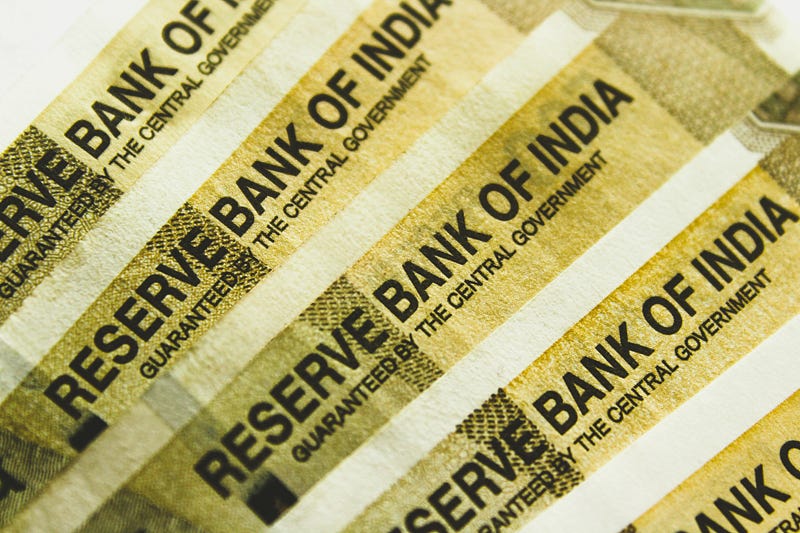
Photo by rupixen.com on Unsplash


Perennial critic

The RBI has been a consistent critic of cryptocurrencies, but particularly so in the case of stablecoins, from an EMDE perspective. However, the lack of authenticated data and inherent data gaps in the crypto ecosystem hindered a comprehensive assessment of financial stability risks.

According to the report, one of the ways stablecoins could pose a threat to an EMDE is through currency substitution. Since the underlying assets of stablecoins are generally denominated in freely convertible foreign currencies, the widespread adoption of stablecoins could lead to currency mismatches on the balance sheets of banks, firms, and households, resulting in an increased risk to the economy.


Monetary policy headache

Furthermore, the presence of stablecoins in the economy could create challenges for an EMDE’s central bank in setting domestic interest rates and managing liquidity conditions. The decentralized, borderless, and pseudonymous characteristics of crypto-assets make them potentially attractive instruments for circumventing capital flow management measures.

Another concern highlighted by the RBI is that stablecoins could undermine credit risk assessment and interfere with banks’ ability to mobilize money and create credit by offering an alternative to the domestic financial system. Additionally, the report emphasized the difficulty in tracking peer-to-peer transactions, on the basis that they increase the potential for illicit activities.

In light of these risks, the RBI reiterated its call for global coordination and regulation. It emphasized the need for a globally coordinated approach to analyze the risks posed to EMDEs compared to advanced economies (AEs). As India holds the G20 presidency, one of its priorities is to establish a framework for the global regulation of unbacked crypto-assets, stablecoins, and decentralized finance (DeFi).


Establishing a CBDC

While the RBI has been cautious about cryptocurrencies, it has shown more enthusiasm for central bank digital currencies (CBDCs). In November, the RBI launched a wholesale digital rupee pilot project. It followed that up in February with a retail digital rupee pilot project. In March, it signed an agreement with the Central Bank of the United Arab Emirates to study a CBDC bridge aimed at facilitating trade and remittances.

By calling for global regulation and highlighting the risks associated with stablecoins, the RBI aims to foster a safer and more secure environment for financial transactions while exploring the potential benefits of CBDCs in facilitating trade and remittances.

As the discussions around stablecoins and CBDCs continue, we’re likely to see ever greater collaboration between regulators, policymakers, and international organizations with a view towards establishing a comprehensive regulatory framework that addresses the challenges and harnesses the potential of digital assets on a global basis.


More to Read
View All
Markets·

Apr 27, 2023

Yuan Surpasses Dollar in China Cross-Border Trade

Yuan Surpasses Dollar in China Cross-Border TradeThere has been a lot of talk in recent weeks and months about the continued use of the US dollar as the global reserve currency and newly published data from Beijing now demonstrates that the Chinese yuan became the most widely used cross-border currency in China for the first time in March.©Pexels/VOLKAN SORKUNErosion of dollar dominanceOver the course of the month of March, the US dollar was used in 46.7% of cross border transactions. That’s down 1.1% on the preceding month. Meanwhile, the yuan was the currency of choice in cross border Chinese trade last month, used in 48.4% of all cross border transactions.While this may seem impressive and it is encouraging for the Chinese authorities, it is still just a drop in the ocean when compared with the overall global cross border transaction statistics. Data produced by international financial messaging service, SWIFT, demonstrates that while the yuan’s share of global currency transactions relative to trade finance increased to 4.5%, that’s just a drop in the ocean. The same data set reveals that the US dollar accounted for around 84% of global cross border transactions in March.While it’s unlikely that the US dollar will be usurped in its global reserve currency role over the short to medium term, certain cracks are beginning to emerge that serve to weaken the leading fiat currency. According to a recent report by emerging market focused management firm Eurizon SLJ Capital, the dollar demonstrated a decline in reserve currency use of 8% in 2022. Since 2016, the leading international currency has declined in use on an adjusted basis by 11%. It also emerged this week that Argentina will begin to pay China in yuan for imports. The move comes at a time when the South American country is experiencing an acute shortfall in its dollar reserves following a drought-induced decrease in agricultural exports which would have ordinarily brought more dollars into the country’s coffers.SanctionsIn the case of Russia, China’s yuan replaced the US dollar in monthly trading volume in February for the first time, according to data compiled by Bloomberg. The emergence of the Russia Ukraine conflict in 2022, and more specifically the United States’ response to Russia as a consequence of the conflict, appears to have led to major change in terms of dollar use. Prior to the invasion, the trading volume of the Chinese yuan in Russia was negligible.The United States introduced a raft of sanctions that made it difficult for Russian banks and Russian corporations to trade internationally. It also confiscated sovereign funds held in US dollars belonging to Russia.It’s thought that this move has had wider repercussions as other nations have started to feel increasingly insecure in holding US dollars against that background. The logic is that any potential conflict between a nation and the United States could lead to a similar outcome. The US may have crossed a line that destroys confidence in other countries’ use of the US dollar.Implications for cryptocurrencyWhile these weaknesses in the global reserve status of the US dollar are unlikely to lead to its demise in that role any time soon, they may well be a bellwether of what plays out over the longer term. US dollar weakness is one aspect. Set against that, it’s hard to imagine the yuan being so dominant as to ever be the leading world currency relative to international trade.It’s far more likely that we may see several global ‘reserves’ share the role in the longer term. Bitcoin has been mentioned in the past as a candidate for this role given that it is not associated with any one nation. However, its current market capitalization and trading volume is minuscule by comparison with what would be required of a global reserve currency. That said, in a future where various currencies play a part in holding that reserve status, Bitcoin could very well see a modest but increasingly significant increase in its use for global trade purposes in the years ahead.

news
Web3 & Enterprise·

Sep 14, 2023

Raon Whitehat Launches Cloud-Based NFT Wallet for OmniOne Marketplace

Raon Whitehat Launches Cloud-Based NFT Wallet for OmniOne MarketplaceSouth Korean tech security firm RaonSecure announced Thursday that its subsidiary Raon Whitehat has launched a cloud-based NFT wallet service on the OmniOne NFT marketplace, specializing in utility NFTs that are backed by tangible assets like gold.Photo by C Dustin on UnsplashMore secure and convenientUsers can easily create an account for the OmniOne NFT cloud wallet by entering a username and password. This cloud-based solution offers advantages over mobile app-based NFT wallets, which can present occasional inconveniences. In scenarios involving app deletion, device change, or device loss, one faces the cumbersome task of reinstalling the application and going through the authorization process again. In contrast, the cloud wallet provides a more seamless experience. NFTs are securely stored in the cloud and can be accessed from any device, requiring only the recollection of a username and password.Transferring NFTsIndividuals who have NFTs stored within their current app-based NFT wallet can create a new cloud wallet account and proceed to transfer their NFTs from the existing app-based account to the new cloud account by utilizing the “Send as Gift” feature.RaonSecure CEO Lee Soon-hyung announced that users are now able to store their gold-backed NFTs, purchased from the OmniOne NFT marketplace, in the cloud wallet. He explained that this development addresses the issue of potential NFT asset loss due to app deletion or device loss.Furthermore, Lee emphasized that Raon Whitehat is dedicated to introducing more innovative services in the future. These services will prioritize user convenience and security, specifically in the storage of diverse digital assets like NFTs and certification badges.

news
Web3 & Enterprise·

Jul 17, 2023

Blockchain Firm NEOPLY Rebrands as Neowiz Partners to Focus on Investment

Blockchain Firm NEOPLY Rebrands as Neowiz Partners to Focus on InvestmentNeowiz Holdings, a South Korean investment holding company, announced today that its blockchain subsidiary NEOPLY held an extraordinary general meeting of shareholders and rebranded itself as Neowiz Partners, according to local news outlet News1. Upon this name change, the company will participate as a liquidity provider in the industry through strategic partnerships with investment firms such as venture capital firms and private equity funds.Photo by Precondo CA on UnsplashAbu Dhabi’s supportEarlier, it was revealed that Neowiz Partners became a part of the Innovation Programme offered by the Abu Dhabi Investment Office (ADIO) in the United Arab Emirates (UAE). This program offers incentives to various businesses operating in high-growth areas like financial services and technology.Diverse portfolioUnder its new name, Neowiz Partners aims to build a diverse portfolio of investments in promising companies committed to emerging technologies such as artificial intelligence (AI) and robotics. This strategic move is intended to foster future growth and seize the potential offered by these innovative sectors.Neowiz Partners’ global headquarters, known as H-Lab, located in the Abu Dhabi Global Market (ADGM), will oversee investment and management related to its blockchain businesses. Meanwhile, the operations of these blockchain projects will continue to be managed by NEOPIN, a subsidiary of H-Lab and a CeDeFi protocol that operates as a one-stop solution for those seeking a non-custodial wallet.Earlier reports highlighted NEOPIN’s achievement in launching Korea’s first liquid staking products for ETH. This approach enables users to deposit their cryptocurrencies into a staking pool and receive liquidity provider tokens in return. These tokens can then be deposited again to generate additional yields.On the occasion of this renaming, Neowiz Partners will establish itself as a dedicated investment company, while H-Lab will concentrate on serving the blockchain industry and associated ventures.

news
Loading