Top

Atomic Wallet Hacker Uses Lazarus Crypto Mixer

Web3 & Enterprise·June 07, 2023, 12:27 AM

The stolen cryptocurrency from the recent $35 million hack of Atomic Wallet is already being moved to a crypto mixer favored by North Korea’s notorious cyber-hacking group.
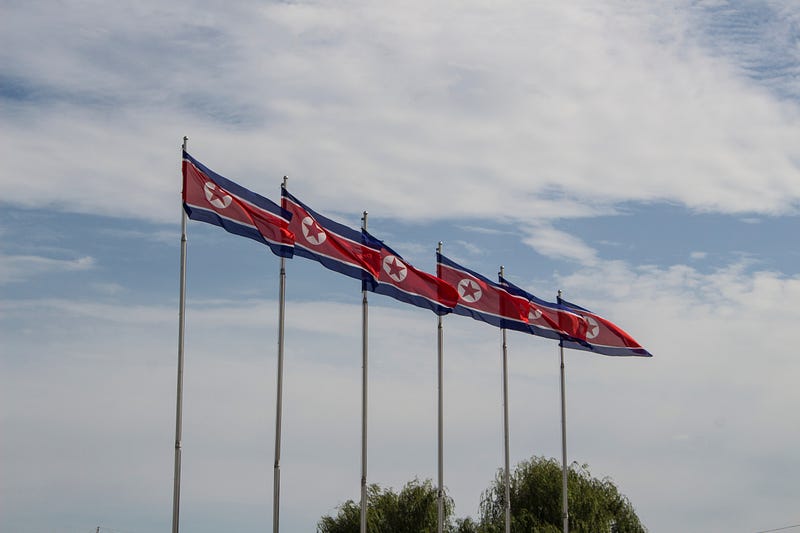
Photo by Micha Brändli on Unsplash


Sinbad.io

According to UK-based crypto compliance analysis firm Elliptic, the funds have made their way to a crypto mixer used by Lazarus Group, a notorious hacker group that focuses on crypto heists which is believed to have direct ties with the North Korean government.

On June 5, Elliptic’s Investigations Team revealed that it had traced the funds from the Atomic Wallet hack to the crypto mixer Sinbad.io. Lazarus had previously used the mixer to launder over $100 million in stolen crypto assets.

While the exact amount sent to the mixer was not specified, Elliptic noted that the stolen funds were being exchanged for Bitcoin before undergoing obfuscation through the mixer. Additionally, Elliptic reported that Sinbad.io is likely a rebranded version of Blender.io, another mixer extensively used to launder funds by the Lazarus Group. Blender.io has been sanctioned by the US Treasury.


Atomic Wallet hack

The hack of several user accounts on Atomic Wallet occurred on June 3, resulting in losses of up to $35 million. News of the issue broke with the following tweet from the project team (which has subsequently been deleted): “We have received reports of wallets being compromised. We are doing all we can to investigate and analyze the situation. As we have more information, we will share it accordingly.”

In a follow-up tweet the next day, the team confirmed that it was investigating the matter with the assistance of a number of “leading security companies.”

However, Atomic Wallet later downplayed the incident, stating that less than 1% of its monthly active users were affected. The project team was castigated by users for trying to present the hack as a minor incident. One user took to Twitter to call out the Atomic Wallet team for “having the nerve to come to the networks and say that only 1% of wallets were affected.”

The Atomic Wallet project is based out of Tallinn, Estonia, having been founded in 2017. It claims to provide a non-custodial decentralized multi-currency crypto wallet. The product supports over fifty coins and two hundred tokens. It also offers atomic swaps between digital assets, while also supporting integrations with instant exchanges such as Changelly, ShapeShift, and others.

Roland Säde, the Chief Marketing Officer of Atomic Wallet, assured users that the team is working tirelessly to recover the stolen funds. He emphasized the need to complete the investigation to develop a concrete plan.

Despite the ongoing efforts, Säde urged victims to track the illicit transfers and report them to popular crypto exchanges. By doing so, it was thought that may hinder the scammers from exchanging the funds.


Crypto hacking menace

Lazarus Group hackers have been the bane of the crypto space in recent years. Elliptic released a report last month that identified Japan as having been the country most adversely affected by the North Korean hackers. It’s understood that the estimated $721 million in stolen crypto from Japan-based entities amounts to nearly nine times the value of North Korea’s exports based on 2021 data.

While Atomic Wallet is directly reporting the incidents, Säde believes that having more individuals monitoring the hackers’ activities will make it more challenging for them to move the funds undetected. Unfortunately, Elliptic’s recent findings suggest that for many victims, it may already be too late to prevent further misuse of their stolen cryptocurrency.


More to Read
View All
Web3 & Enterprise·

Sep 12, 2023

Coinbase Affirms Commitment to India Despite Disabling Sign-Ups

Coinbase Affirms Commitment to India Despite Disabling Sign-UpsLeading US-based cryptocurrency exchange Coinbase announced on Monday that it has temporarily disabled new user sign-ups for its exchange platform in India.A report emerged via India’s English-language business daily The Economic Times on Monday which stated that Coinbase was stopping “all services” for Indian users.Photo by Big G Media on UnsplashClarification of a misunderstandingIt appears that Coinbase sent emails to a subset of its Indian customers, notifying them of the cessation of exchange operations in the country by September 25. However, a more recent report by TechCrunch outlined that Coinbase has provided further clarification that these emails were sent exclusively to customers who did not meet the updated standards set by the company.On that basis, these messages do not affect and are not relevant to the majority of Coinbase users in India. The email further advised affected users to transfer their funds from the platform by the specified date.A Coinbase spokesperson communicated to TechCrunch via email, stating:“We stopped allowing new user sign-ups on our exchange product in India back in June of this year. We maintain a robust tech hub in the country and offer live products, including our Coinbase Wallet. We are committed to India over the long term.”Coinbase’s proprietary exchange app in India reportedly boasts fewer than 50,000 monthly active users, as indicated by data from Sensor Tower, shared by an industry executive.Difficulty in cracking Indian marketDespite its aspirations, Coinbase has been unable to make headway with local authorities since launching its exchange in India over a year ago. The lack of progress with local officials has proven frustrating for company executives, including Durgesh Kaushik, who joined Coinbase last year as the Senior Director for Market Expansion, only to leave the company within a couple of months.Coinbase’s CEO, Brian Armstrong, made a visit to India last year to launch the exchange service by adding support for India’s popular payment instrument, the Unified Payments Interface (UPI). Unfortunately, the body overseeing UPI immediately denied Coinbase’s recognition, leading Coinbase to suspend support for the payment system shortly thereafter.UPI has proven to be a runaway success in India. Consequently, being able to access and integrate with it would be very important in providing Coinbase’s Indian customers with the means of on-ramping and off-ramping between the exchange and fiat currency. Coinbase affirmed its commitment to collaborating with the National Payments Corporation of India (NPCI) relative to UPI but these efforts simply have not borne fruit.RBI pushbackIn May of the same year, Armstrong disclosed that Coinbase had to halt its trading service in India due to “informal pressure” from the Reserve Bank of India (RBI), the nation’s central bank. Armstrong pointed out that cryptocurrency trading isn’t illegal in India — in fact, the country had recently imposed taxation on it. However, there were elements within the government, including the RBI, that appeared less enthusiastic about cryptocurrencies and were exerting “soft pressure” behind the scenes.Notably, other Indian cryptocurrency exchanges like CoinDCX and CoinSwitch remain operational, but they’ve had their own struggles in their own local market. In August CoinSwitch downsized its headcount, citing a 30% tax on crypto gains and a 1% tax deducted at source (TDS) on transactions as contributing factors. That same month, CoinDCX cut its headcount by 12%.

news
Policy & Regulation·

Sep 25, 2023

The Need for Crypto Regulation Improvements in South Korea

The Need for Crypto Regulation Improvements in South KoreaAlthough the cryptocurrency market entered a bearish phase last year, there are prospects for growth as regulatory inclusion and market transparency begin to improve. However, the domestic market is currently hindered by deepening monopolies and inadequate support policies, limiting the development of the industry, said Kim Jin-won, Executive Director of Korean crypto exchange COREDAX, during a conference last Friday in Seoul.The conference, hosted by the Federation of Korean Industries, invited experts to discuss the oncoming era of convergence and the current status and challenges of virtual asset legislation in South Korea, as well as the necessary steps for improving regulations on virtual assets.Photo by Kanchanara on UnsplashGlobal decentralization trendsOverseas, various decentralized projects, such as the integration of blockchain technology into traditional financial markets, have led to the growth of related markets such as Bitcoin futures, decentralized finance (DeFi), over-the-counter (OTC) trading, custodial services, the metaverse, and Web3. However, in Korea, the lack of clear guidance or policy management for crypto businesses and services prevents the market from thriving.Countries like the US and Japan as well as the European Union (EU) are overhauling regulations in order to dominate the global industry and market through blockchain technology and virtual assets. Kim emphasized that Korea also needs to incorporate such flexible regulatory improvements considering the likely possibility that various industries are going to thrive on crypto-related businesses.Challenging existing regulations and calls for clarityHe started off by stating that the implicit regulation known as the “One Exchange, One Bank” principle was created for administrative convenience and is acting as a barrier to entry into the crypto industry. He argued that it is a discriminatory regulation, especially considering the fact that securities firms choose to operate stock trading accounts through multiple banks.Regarding the standards for issuing bank accounts under real names, which will be determined by the Financial Intelligence Unit (FIU), he argued that they are difficult to comply with, even for banks that already have contracts with crypto exchanges. He called for the FIU to express a clear stance on the retroactive application of these standards to avoid potential consequences such as barriers to market entry for late-movers.“The crypto market — including DeFi, non-fungible tokens (NFTs), artificial intelligence (AI), the metaverse, and Web3 — is growing at an annual average rate of 12.8%, and is expected to reach a scale of $4.9 billion by 2030,” he said. “When combined with Web3 innovation, the metaverse will evolve into a 3D platform business that incorporates the use of payment methods, NFTs, and virtual assets.”Promoting innovation in the crypto industryTo foster such industry growth, it is necessary to actively explore new types of services as well as potential challenges. Innovative financial services should also be designated or promoted through regulatory sandboxes. The regulatory sandbox is a system run by the Korean government that exempts or suspends existing regulations for a designated amount of time for companies releasing new products and services and regulates them post-mortem if there is a problem.Kim went on to propose specific measures such as negative regulations — regulations that outline what is prohibited by law while allowing everything else — to promote new industries. He also suggested that banks should be allowed to engage in custodial services for virtual assets.Furthermore, he highlighted the need for cooperation between payment companies and crypto firms. “Payment service providers like Visa and Mastercard are already collaborating with global crypto exchanges to incorporate virtual assets into their businesses,” he said. “With companies like Tesla, eBay, and more adopting or considering adopting cryptocurrency as a payment method, we must consider allowing collaborations between domestic credit card companies, payment gateway companies, and crypto firms.”He also urged for the early approval of initial exchange offerings (IEOs) to stimulate the crypto market and advocated for support policies for virtual asset service providers (VASPs). He cited examples such as brokering transactions for security tokens, allowing OTC trading, requesting security token issuance assessments through system integration with account management agencies, and permitting outsourcing for issuance operations.

news
Web3 & Enterprise·

Aug 09, 2023

NEOPIN and SBINFT Join Forces to Expand DeFi and NFT Ecosystems

NEOPIN and SBINFT Join Forces to Expand DeFi and NFT EcosystemsNEOPIN, the global CeDeFi platform of South Korean investment holding company Neowiz Holdings, announced today its strategic partnership with SBINFT, the NFT marketplace developer and Web3 subsidiary of Japanese online financial conglomerate SBI Holdings.Photo by Markus Winkler on PexelsExtending their global reachThrough this partnership, the two companies will combine their individual expertise to enhance the global reach of each other’s ecosystems. Their strategy involves facilitating the introduction of established NFT projects from regions such as South Korea, the Middle East, and Southeast Asia into the Japanese market. Additionally, they will collaborate to offer both financial and technical assistance to promising Japanese Web3 initiatives, enabling them to expand internationally.Web3 projects and utility NFTsTo achieve this objective, NEOPIN will onboard a diverse range of Web3 projects to its ecosystem, thereby broadening their adoption and appealing to a worldwide user base. Meanwhile, SBINFT will proactively seek to bring utility NFTs into its NFT marketplace.NEOPIN’s partnership with SBINFT is a strategic step in its plan to enter the Japanese market. Just recently, the South Korean enterprise revealed its proactive approach to intensify endeavors to attract a Japanese customer base.Kim Yong-ki, NEOPIN’s CEO, mentioned that the collaboration with SBINFT represents one of their initial endeavors to penetrate the Japanese market. Kim further stated that NEOPIN is dedicated to achieving favorable outcomes not only within Japan but also across the East Asian region.Ko Jang-deok, CEO of SBINFT, echoed this sentiment, expressing that NEOPIN possesses a robust strategy tailored for the Japanese market. He mentioned that the partnership with such a company will help SBINFT introduce international content to the Japanese market. Ko highlighted SBINFT’s commitment to extending its presence in the East Asian market.

news
Loading