Top

Crypto.com Scores MPI License in Singapore

Policy & Regulation·June 02, 2023, 1:32 AM

In a significant move for the Web3 industry, the Monetary Authority of Singapore (MAS) has granted online crypto trading platform, Crypto.com, a Major Payment Institution (MPI) license. This regulatory development showcases Singapore’s commitment to welcoming innovation and embracing the potential of the Web3 sector.
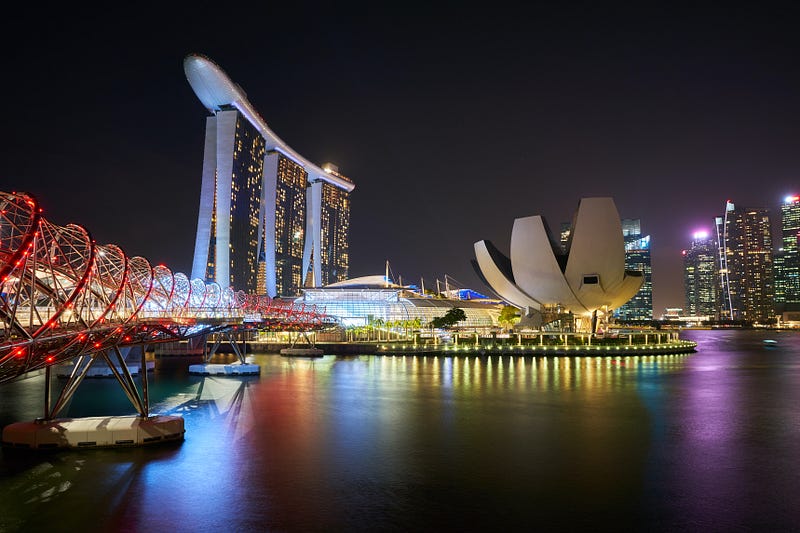
Photo by Timo Volz on Pexels


Licensing milestone

Crypto.com made the exciting announcement on Thursday, revealing that it has received the MPI license from the MAS, the country’s central bank and financial regulator. With this license in hand, Crypto.com can now provide its Digital Payment Token (DPT) services to residents of Singapore.

This achievement follows the in-principle approvals granted to Crypto.com by the MAS in June of the previous year, further highlighting the company’s adherence to regulatory standards and its dedication to operating within the guidelines set by financial authorities.


Community reaction

The news of the license has garnered positive reactions within the crypto community. Many members see the Singaporean government’s decision as a significant endorsement of the Web3 industry. ‘Aravind,’ a Twitter user, expressed this sentiment, stating, “Singapore government giving out a license is itself a massive plus for the Web3 Industry,” adding that it's probable the process to obtain the license has been hard fought, and likely two years in the making.

Interestingly, another community member drew comparisons between Crypto.com’s successes and the challenges faced by global crypto exchange, Binance. While Binance has encountered difficulties in various jurisdictions, Crypto.com has been praised for its steady progress and forward-looking approach.

Yet another Twitter user chimed in along similar lines, stating: “Whilst Binance seems to be losing ground, Crypto.com seems to be slowly doing things right and building for the future.”

Binance has recently faced setbacks, such as its diminishing presence in the Australian and Canadian markets and trading restrictions imposed in certain European countries. Reports have even surfaced suggesting that Binance plans to lay off 20% of its staff in June.

However, it’s important to note that Binance has not given up, as evidenced by its recent expansion into Thailand, where it established a regulatory-compliant platform. The exchange has also taken steps to ensure compliance in Japan through the creation of another regulatory-compliant platform.


Additional licenses

Crypto.com has set up its headquarters in Singapore, and it is in good company there with leading crypto firms Kraken and Coinbase also maintaining offices in the city state. The company has taken a truly global strategy, having marketed heavily in recent years. It maintains offices in nine other locations, including Miami, Dublin, London, Seoul, Malta, Sofia, Hong Kong and Shenzhen, as well as Kadıköy in Turkey.

The crypto trading platform has received a Minimal Viable Product (MVP) preparatory license from the Virtual Assets Regulatory Authority (VARA) in Dubai, alongside firms like Komainu, Hex Trust, and GC Exchange. The company has also successfully pursued digital asset licensing in France, Australia, and the United Kingdom.

Crypto.com’s acquisition of the MPI license in Singapore marks a significant milestone for the company and the broader Web3 industry. With Singapore embracing innovation and offering a favorable regulatory environment, Crypto.com is well-positioned to continue its growth and contribute to the advancement of the digital payment token ecosystem.
More to Read
View All
Policy & Regulation·

Sep 19, 2023

Rising Cryptocurrency Arbitrage Transactions Raise Concerns in South Korea

Rising Cryptocurrency Arbitrage Transactions Raise Concerns in South KoreaThe number of arbitrage transactions between South Korean and foreign cryptocurrency exchanges has been experiencing a notable uptick, according to a report by local media outlet Maeil Business Newspaper.In recent developments, foreign actors engaging in price manipulation have been transferring substantial amounts of cryptocurrency assets to Korean exchanges, driving up prices. Subsequently, they transfer these tokens from Korean exchanges back to overseas platforms, capitalizing on the price discrepancies to generate profits.Photo by Maxim Hopman on UnsplashBithumb’s case in H1According to documents submitted to Kim Hee-gon, a member of the ruling political party People Power Party, on Monday, KRW 3.4 trillion ($2.6 billion) worth of tokens were moved from Bithumb, a leading Korean cryptocurrency exchange, to foreign trading platforms during the first half of this year. Although this figure marks a 40% decrease compared to H1 2022’s KRW 5.7 trillion, primarily due to the significant decline in token prices across the cryptocurrency market, it’s noteworthy that the number of transactions has seen a significant increase.Other exchangesGopax, another major exchange in the nation, recorded token outflows totaling KRW 12.3 billion. On the other hand, Upbit, Coinone, and Korbit, which are also prominent exchanges, declined to provide data due to reasons like confidentiality concerns. However, given that Upbit holds an 82.0% share of the Korean crypto market, nearly four times larger than Bithumb’s share (14.2%), it is suspected that the volume of tokens transferred from Upbit to foreign platforms would likely have followed a similar proportion.While the value of tokens sent from Bithumb to overseas operators saw a year-over-year decrease, the number of transactions surged to 231,302, nearly doubling the figure of H1 2022’s 124,048 transactions. The average transaction size was KRW 14.7 million.Even though the overall enthusiasm for cryptocurrencies might have cooled off since last year, the spike in the number of transactions suggests that there’s been a surge in arbitrage trading between Korea and foreign markets.Kimchi premiumEarlier this month, a significant transaction caught the eye of cryptocurrency market observers in South Korea. On September 1, crypto data analytics firm Arkham identified that 170,000 CyberConnect (CYBER) tokens were transferred to Bithumb from a crypto wallet thought to be owned by DWF Labs, a firm specializing in cryptocurrency trading and investment. The timing of the transaction coincides with a period during which the Kimchi premium for CYBER exceeded 100%. The Kimchi premium refers to the crypto price gap between Korean exchanges and their foreign counterparts.The complicating factor here is that DWF Labs is a foreign entity that is managed by a foreign team.The use of corporate accounts is virtually prohibited in the Korean crypto market. The Travel Rule mandates that any transfers of tokens between Korean and international exchanges must go through accounts that have been verified under Know Your Customer (KYC) guidelines. Given these regulations, there are growing suspicions within the crypto community that foreign venture capitalists may have used accounts in borrowed names to conduct sales on Korean exchanges, which are restricted to Korean citizens. However, it’s worth noting that there is currently no legal basis for taking punitive action even if borrowed-name accounts were indeed used.Lawmaker Kim commented on the limitations of current financial regulations aimed at preventing money laundering in the cryptocurrency market. Despite efforts by financial authorities, including the introduction of the Travel Rule, Kim stated that these measures have not been very effective. He emphasized the urgency of enhancing the regulatory framework to curb potential illicit activities involving cryptocurrencies, such as those exploiting market arbitrage opportunities.

news
Web3 & Enterprise·

Aug 04, 2023

Hyosung TNS and APoT Join Hands to Promote NFT Portal Service

Hyosung TNS and APoT Join Hands to Promote NFT Portal ServiceSouth Korean IT infrastructure and financial solutions provider Hyosung TNS announced that it is teaming up with APoT Platforms, a company specializing in developing blockchains for real-world assets (RWAs), to promote NFTtown — Hyosung TNS’ portal service dedicated to providing information, news, and educational content on NFTs.Photo by Andrey Metelev on UnsplashBringing real-world assets to blockchainAPoT Platforms is equipped with technology that is able to embed data on RWAs, such as artwork and luxury goods, thereby connecting them to the blockchain. The company also maintains an extensive network of collaborative relationships with various NFT artist organizations and communities both domestically and abroad.Hyosung TNS plans to bring APoT’s artist network to NFTtown, allowing users to easily access information regarding NFT artists and their works.The two companies will also work together on other efforts, including introducing NFT artworks, digital product transfers, and events for NFT holders.NFT art exhibitionAs the first step of their collaboration, they plan to exhibit and sell works by renowned NFT artists such as Han Kwang-suk, Quiet Eye, and HAN (Han Sun-ok) this month at the Lotte Department Store Ilsan’s Spazio We;R Gallery.

news
Web3 & Enterprise·

Jun 24, 2025

OKX mulls U.S. IPO

OKX, a global crypto exchange, is understood to be considering carrying out an initial public offering (IPO) in the United States. That’s according to a report published by The Information on June 22. The development indicates changing fortunes for the firm in North America. In February, the company agreed to pay a fine of $84 million and surrender revenues earned through U.S. customers of around $420 million to the U.S. Department of Justice (DoJ). Photo by appshunter.io on Unsplash‘New era for OKX’The DoJ had taken action against the crypto exchange on the basis of allegations of unlicensed money transfers. Having put this matter behind it and in taking advantage of a more positive regulatory approach to the crypto sector in the U.S. by the Trump administration, in April OKX relaunched its service offering in the U.S. The company described the newly launched service as a “new era for OKX in the U.S.” Another consequence of that positive regulatory approach in the U.S. has been a renewed interest from crypto companies in pursuing IPOs. Yueqi Yang, a reporter with The Information, stated on X: “From IPOs to crypto treasury stocks, crypto is booming right now, but the rally is playing out in the stock market, at valuations that even surprised industry insiders.” USDC stablecoin issuer Circle (CRCL) executed its IPO on the New York Stock Exchange (NYSE) on June 5. Circle’s experience is likely to be encouraging for other crypto firms considering going public. Since going public, the company’s stock has surged by more than 675%. Circle raised in excess of $1 billion with an IPO share price of $31. During Monday’s trading, the company’s market cap exceeded that of Coinbase (COIN). The current market environment has encouraged other crypto firms to follow suit. In March, American crypto exchange platform Gemini filed confidentially for an IPO. Bullish has also taken this option, according to reports earlier this month. Kraken, another global crypto exchange platform, has indicated that it intends to pursue an IPO in Q1 2026. OKB token holder fearsNews of OKX’s intentions to go public has led to crypto community discussions surrounding the use of an exchange token as a means of fundraising versus a traditional stock market listing. OKX launched OKB, its native token, in March 2018.  Commentators have pointed out that those who invest in traditional shares will have access to more liquid markets whereas platform token liquidity is oftentimes concentrated on that specific exchange. Some OKB token holders fear that following the IPO, their token will be sidelined or abandoned. OKX has been working towards expanding across various regional markets recently. Last year it launched OKX TR to cater towards the crypto community in Turkey. It also acquired trading licenses in Singapore and the United Arab Emirates (UAE).  It emerged last week that the company had launched its services in Germany and Poland having acquired regulatory approval in both countries.  OKX was first founded in Beijing in 2013, later moving its headquarters to the Seychelles due to regulatory changes in China.

news
Loading