Top

Avalon integrated with Bybit to offer Bitcoin yield

Web3 & Enterprise·April 15, 2025, 5:14 AM

Dubai-headquartered global crypto exchange Bybit has integrated the Avalon Finance protocol within its platform to offer users greater opportunities to earn yield on Bitcoin.


Avalon Finance is a decentralized lending protocol that offers a range of financial services on the Merlin Chain, a Bitcoin layer-2 network. It facilitates users to borrow stablecoins using their Bitcoin as collateral, while also providing opportunities to earn yield by contributing to digital asset liquidity pools.

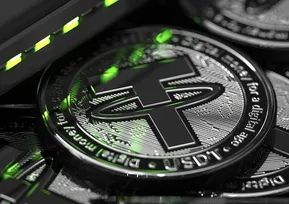
https://asset.coinness.com/en/news/7a41bb1ce26eb23c0b6f5e9d0422150b.webp
Photo by Kanchanara on Unsplash

CeFi to DeFi bridge

Avalon Labs, the driving force behind the Avalon Finance protocol, took to X on April 14 to outline that the protocol had gone live on Bybit. It stated:

”By integrating with Bybit Earn, Avalon unlocks new yield opportunities for Bitcoin holders by arbitraging our fixed-rate institutional borrowing layer — delivering predictable, enhanced returns through a seamless CeFi-to-DeFi bridge.”


Avalon claims to offer a mechanism which brings Bitcoin into DeFi. It accepts FBTC, an omnichain digital asset with $1.25 billion in total value locked (TVL), pegged 1:1 with Bitcoin, as collateral, while lending it out at fixed interest rates. USDT stablecoin borrowed on the strength of that Bitcoin can then be deployed by platform users to execute high-yielding DeFi strategies via the Ethena Labs synthetic dollar protocol, implicating the use of Ethena USD (USDe) and Ethena Staked USD (sUSDE).


In this way, the Avalon Finance protocol is providing a conduit between centralized finance and decentralized finance. Avalon Labs claims that the offering turns Bitcoin into a productive asset. It stated:


“Returns are stable, secure, and passed back to Bybit Earn users—making Bitcoin a productive asset while maintaining simplicity and risk control.”


More exchange collaborations planned

It’s understood that Avalon plans to collaborate similarly with other crypto exchanges in the future. Towards the end of 2024, the firm raised $10 million in Series A funding, with the funding round having been led by Framework Ventures, with participation from UXTO Management, Presto Labs and Kenetic Capital.


At the time, Avalon Labs asserted that the funding would be used to expand its Bitcoin-centric ecosystem. 


BTC-backed public debt fund

Taking to X in February, the project outlined that after years of research, it was working towards the launch of a Bitcoin-backed public debt fund that would fall within the parameters of the U.S. Securities and Exchange Commission’s (SEC) regulatory framework. The firm stated:

”By exploring regulated investment structures, we aim to bridge the gap between traditional finance and crypto, opening new opportunities for Bitcoin-backed financial products.”


Regulation A is an exemption offered by the SEC enabling a company to sell securities to the investing public without full registration. Should it eventually take this path forward, the project would pioneer this approach to launching a public debt fund as little progress has been made by others in taking such a Bitcoin-related product forward to date.


Towards the end of last month, Avalon Labs announced that it has added support for BlackRock’s “BUIDL” fund, a tokenized fund created by the world’s largest asset manager, which invests in short-term U.S. Treasury bills.

More to Read
View All
Policy & Regulation·

Jul 02, 2025

Malaysian regulator seeks feedback on crypto framework enhancements

The Securities Commission Malaysia (SC), the statutory body tasked with regulating and developing capital markets within the Southeast Asian nation, has published a consultation paper in an effort to garner public feedback on potential enhancements to its crypto regulatory framework. In a press release published to its website on June 30, the SC claimed that its proposals seek “to enhance competitiveness of Malaysia’s regulated digital asset market, improve investor protection and strengthen the resilience and integrity of [Digital Asset Exchange] operators.”Photo by Vlad Shapochnikov on UnsplashEasing listing requirementsIn the event that the proposals are adopted, one key change would see a liberalization of the listing requirements for digital assets. Where certain key eligibility criteria have been met, the regulator would allow the listing of digital assets on digital asset exchanges without prior SC approval. The regulator stated that it wants to make this change in order to speed up the time taken to get digital assets to market as they emerge. By setting out additional criteria, there will be greater exchange operator accountability. Exchange operators would bear responsibility for listing tokens in compliance with the requirements set out by the regulator.  Assets could only be listed once those assets and the underlying protocol and network had undergone security audits which had been carried out by an independent and qualified blockchain security auditor, with the audit results made public.  For the purposes of the “Liberalised Listing Framework,” the asset must have been trading on a Financial Action Task Force (FATF)-compliant virtual asset service provider (VASP) platform for a minimum of one year. The regulator believes that easing the listing requirements will result in a broader digital asset product offering being made available in Malaysia. Last month, Thailand’s Securities and Exchange Commission (SEC) started a public consultation process aimed at revising token listing rules. Coin listing processes have also come under scrutiny from the authorities in South Korea recently. Segregating client assetsAmong the proposals is a plan to oblige exchange platforms to properly segregate client assets from operational funds and assets held by the exchange business. In recent years, many failed crypto exchange platforms, most notably FTX, got into difficulty by co-mingling customer funds with operational funds. Furthermore, the regulator doesn’t want any cross-over of assets between the local exchange operator and any overseas affiliate companies it may have.The SC stated that it is cognizant of recent global exchange failures, which has led it towards further enhancing crypto exchange operational governance and controls. It suggests that only 10% of client assets should be held by a Malaysian exchange in hot wallets, with the remaining 90% held in cold or offline wallets. The SC said that it welcomes feedback from members of the various stakeholder groups on the proposals outlined. The public consultation period runs from June 30 through Aug. 11.  Malaysia is expected to have 4.74 million crypto users by 2026. That would equate to 13% of Malaysians using crypto by then.

news
Policy & Regulation·

Aug 08, 2023

Singapore Pledges $112M to Boost Fintech Solutions Including Web3

Singapore Pledges $112M to Boost Fintech Solutions Including Web3Acknowledging the growing significance of collaboration with industry stakeholders in propelling advancements in emergent technologies such as Web3, Singapore’s central bank, the Monetary Authority of Singapore (MAS), has unveiled plans to allocate up to 150 million Singapore dollars (approximately $112 million) towards supporting a spectrum of financial technology solutions, with a special focus on Web3.Photo by Jason Leung on UnsplashDistributed over three yearsThis financial commitment, outlined in a press release published to the MAS website on Monday, will be distributed over a three-year period as part of the revamped Financial Sector Technology and Innovation Scheme (FSTI 3.0), designed to invigorate and fortify innovation by backing projects that leverage cutting-edge technologies.The renewed innovation scheme encompasses multiple avenues, including the Enhanced Centre of Excellence track, the Environmental, Social and Governance (ESG) fintech track, and the Innovation Acceleration track — the last incorporating the realm of Web3.Emphasizing industry partnershipsMAS underlined the importance of forging partnerships with industry participants to bolster inventive fintech solutions originating from emerging technologies such as Web3.“MAS will conduct open calls for the use of innovative technologies in industry use cases. Grant funding will be provided to support actual trial and commercialization,” the central bank stated.In addition to these efforts, the initiative will maintain its commitment to encouraging adoption across domains like artificial intelligence, data analytics, and regulatory technology (RegTech). Furthermore, there will be an emphasis on fostering adoption within companies that are still digitally maturing and seeking to integrate RegTech solutions.Applicants across the various program tracks will be required to allocate resources toward nurturing talent. This strategy aims to augment Singapore’s fintech talent pool, ultimately contributing to the nation’s expertise in the sector.Ravi Menon, the Managing Director of MAS, underscored the substantial investment that the Financial Sector Development Fund (FSDF) has funneled into the FSTI program since its inception in 2015.Menon highlighted that this initiative’s overarching objective is to spur innovation and facilitate the seamless integration of novel technologies within the financial landscape. Over the years, the program has exemplified its commitment to driving transformation and pioneering the adoption of new technology across the financial sector.Nurturing Web3 innovationPotential Web3 and crypto hubs have come and gone, but Singapore has been vying to take its place as a center for Web3 innovation over a sustained period after it suffered some setbacks in 2022 related to a string of crypto business failures.While Binance had not been permitted to serve customers in the city-state, that meant that a disproportionate number of Singaporeans got caught up in the failure of the FTX crypto exchange. Alongside that regulatory failure, state investment giant Temasek had to write off a substantial investment in the company, while suffering reputational damage for not having detected the FTX fraud.The city-state has also been home to the failure of crypto lender Hodlnaut and crypto hedge fund Three Arrows Capital (3AC). Despite these setbacks, Singaporean authorities are continuing to work towards setting the proper stage to further develop Web3 innovation. In June, MAS proposed a comprehensive framework for the design of open networks relative to tokenized digital assets. This latest initiative will further Singapore’s ambition to grow its Web3 sector.

news
Web3 & Enterprise·

Jun 08, 2023

Mirae Asset Securities and NEAR Protocol Partner to Advance Blockchain Tech

Mirae Asset Securities and NEAR Protocol Partner to Advance Blockchain TechSouth Korea’s leading securities firm, Mirae Asset Securities, has partnered with the Swiss-based NEAR Foundation to further the development of Web3 initiatives, according to Digital Today’s report.Photo by Shubham Dhage on UnsplashCollaboration on Web3 researchThe NEAR Foundation is a Swiss-based non-profit organization behind the NEAR Protocol, a blockchain platform designed to support the operation of decentralized apps (dApps). The collaboration between NEAR and Mirae Asset Securities will encompass various endeavors, including conducting research on Web3 and blockchain technology within the financial sector, organizing awareness-raising events for both entities, and establishing a cooperative system to enhance the business network between Web2 and Web3.An In-sung, the head of the digital division at Mirae Asset Securities, expressed the company’s commitment to advancing blockchain technology and collaborating with partners to gain a competitive advantage in the Web3 sector. NEAR Foundation CEO Marieke Flament highlighted the technical expertise of their platform, emphasizing its potential to drive innovations within the financial industry through cooperation with Mirae Asset Securities.NEAR’s broader engagement in KoreaThe NEAR Foundation’s collaborative efforts extend beyond the financial sector in Korea. Earlier this month, the organization forged a strategic partnership with MARBLEX, a blockchain arm of gaming publisher Netmarble. This alliance aims to foster the growth of the Korean Web3 gaming industry, indicating the foundation’s wider involvement in the East Asian country.

news
Loading