Top

Animoca Brands Holding $3.4B in Cash and Reserves

Web3 & Enterprise·May 12, 2023, 12:44 AM

Digital entertainment, blockchain and gamification firm Animoca Brands provided an update on its financial position on Thursday, disclosing $3.4 billion in cash and assets as held on its balance sheet and in tokenized reserves as of April 30.
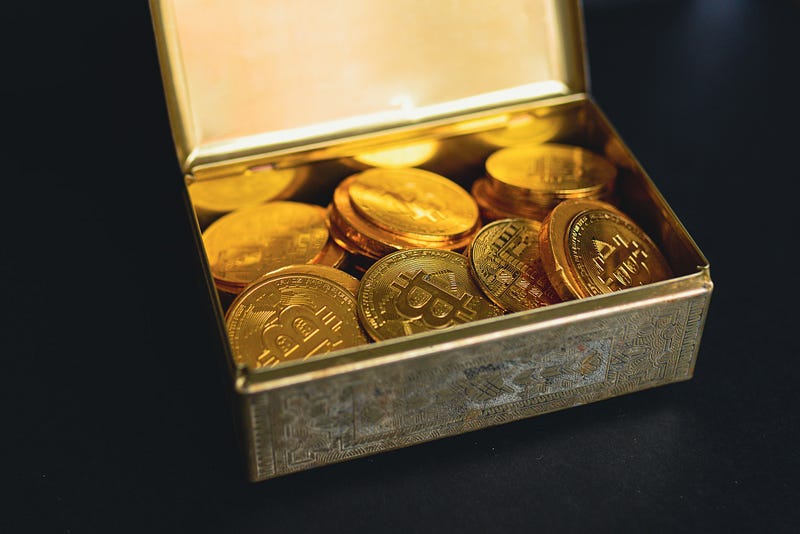
Photo by regularguy.eth on Unsplash


A financial breakdown

The Hong Kong-based Web3 firm published the interim financial report to its website. Breaking that down further, the company is holding $194 million in cash and stablecoin reserves. Additionally, $566 million is being held in liquid digital assets. This includes reserves of $SAND, the native token of the Ethereum-based Sandbox virtual metaverse.

Beyond this, Animoca holds $2.7 billion in a varied portfolio of digital asset reserves, linked to its majority owned Web3 subsidiaries and portfolio companies. The firm outlined that it intends to release additional financial updates in the near future. That will include an audited financial statement for 2020. Furthermore, a summary statement of business activity for 2022 will be released, together with similar business highlights pertaining to Q1, 2023.


Adjusting to changing market conditions

It’s likely that Animoca took the decision to release this data at this point to bolster confidence in the company, off the back of a number of announcements that may have led some in the industry to question the overall financial health of the company.

According to a report published in March by Reuters, Animoca Brands cut its target for its metaverse fund by 20% to $800 million. The scaling back was understood by many crypto sector commentators to be a reaction by the company due to changing market conditions within the crypto space. It was the second such adjustment the company made. In November 2022, the firm was working on the new fund, initially proposing a target of $2 billion. Once January came around, Animoca took the decision to scale that target back by half to $1 billion.

Subsequent to reports of the fund scale-back being published, Animoca Brands CEO Yat Siu reacted, telling one crypto media outlet that “the claim that the Animoca Capital fund target was ‘cut’ from $2 billion to $1 billion is not correct, because $1 billion has always been within the range declared.”

Playing down the news further, the company added: “There’s no doubt that the FTX and banking crises have had a serious impact on available venture capital, but fundraising for the Animoca Capital fund is in progress. When the raise is concluded, we will inform the market with the appropriate details, including the final size of this fund.”

Siu stated that as the source of that report was an unnamed source, it was difficult to figure out the agenda of that person in broadcasting that claim.

Animoca is perceived in the industry as a key player, particularly so when it comes to NFTs, blockchain-based gaming and the metaverse. The firm is classed as a Crypto Top 40 company by Forbes, while being a winner of Deloitte’s Technology Fast 50 award. Deloitte’s Technology Fast 50 program ranks fast growing companies based upon their percentage revenue growth over the course of three years.


More to Read
View All
Policy & Regulation·

Jan 17, 2024

Tether bites back on UN report criticism

A United Nations (UN) report published on Monday pointed fingers at USDT for its alleged role in money laundering and scams in Southeast Asia, prompting the stablecoin’s issuer, Tether, to respond.Photo by DrawKit Illustrations on UnsplashFighting backThe stablecoin issuer finds itself under the spotlight once again, facing intense scrutiny over its association with illicit activities, according to the UN report. Responding by way of a blog post, Tether expressed disappointment and pushed back against the accusations. The firm asserted that the report disproportionately focuses on USDT's alleged connection to illicit activities, neglecting to acknowledge the positive impact it has had on developing economies in emerging markets. Collaborating with law enforcementTether defended its position by highlighting its collaborative efforts with global law enforcement agencies, such as the Department of Justice (DOJ), the Federal Bureau of Investigation (FBI) and the recently onboarded United States Secret Service (USSS). The company expressed disappointment with the UN's assessment and stressed that its monitoring measures surpass those of traditional banking systems, historically implicated in money laundering cases. Having frozen over $300 million in recent months to combat the criminal use of crypto assets, Tether emphasized the traceability of its tokens and its established track record of collaboration with law enforcement. In its blog post, Tether urged the UN to shift the conversation from concentrating solely on risks to discussing how centralized stablecoins like USDT could contribute to the fight against financial crimes. The UN Office for Drugs and Crime (UNODC) division responsible for Southeast Asia and the Pacific released the report, specifically highlighting USDT as a significant instrument for money laundering in the region, notably on the Tron blockchain. Tether's response came soon after the release of the UNODC report, where the company emphasized the need for a broader discussion with the UN on addressing financial crimes within blockchain platforms. Tether acknowledged that there are still numerous opportunities to combat financial crimes on blockchain platforms and encouraged the UN to engage with the industry to comprehend and implement contemporary strategies. The company expressed a willingness to collaborate on initiatives aimed at enhancing the understanding of blockchain technology and its potential in fighting financial crime. A perennial controversyTether has been the subject of a perennial controversy inside and outside the crypto space over the years. Its critics have long accused the company of not having the asset backing to reflect the U.S. dollar stablecoins it issues. The issue has been compounded by Tether’s inability to produce fully fledged audits as opposed to attestation reports to verify its holdings. Speaking on the edges of the World Economic Forum’s annual meeting in Davos, Switzerland, on Tuesday, Howard Lutnick, CEO of leading global financial services firm Cantor Fitzgerald spoke positively about Tether. He said that his firm has held and managed large quantities of Tether’s assets. Lutnick confirmed that “they have the money they say they have.” Off the back of Lutnick’s comments, Nic Carter, partner at venture capital and private equity firm Castle Island Ventures, outlined that Tether’s critics have been proven wrong. Carter wrote: “Tether truthers spent 6 years trying to convince everyone tether would collapse and drag down the industry. it didn't. . . . Not sure anyone has ever been more wrong about anything.”

news
Web3 & Enterprise·

Sep 05, 2023

Real-World Assets Emerge as a Beacon of Hope for the Blockchain Industry Amid Crypto Winter

Real-World Assets Emerge as a Beacon of Hope for the Blockchain Industry Amid Crypto WinterIn the midst of a crypto winter that has cast a shadow over the blockchain industry, a new opportunity has come to light — the tokenization of real-world assets (RWAs), or tangible assets such as gold and real estate, on blockchain networks.Photo by Tierra Mallorca on UnsplashMajor blockchain companies and industry experts gathered at Klaytn Square Lounge 2023, a blockchain and Web3 event in Gangnam, southern Seoul on Monday to discuss how RWAs could overcome the limitations of the current blockchain market.The rise of RWAsRecently, platforms like RWA tokenization project Elysia and Klaytn Foundation have started to shift their attention to RWAs as a promising avenue in the blockchain market. According to a report by global consulting firm Boston Consulting Group, the total value of the global RWA market, which reached $310 billion last year, is projected to surge to a staggering $16 trillion by 2030.“During the ongoing crypto winter, we are witnessing not only new funds pouring into blockchain projects but also existing funds leaving the market. We see RWAs as a potential solution to this,” said Seo Sang-min, Representative Director at Klaytn Foundation.Seo went on to explain that currently, virtual assets dominate most of the assets on blockchain mainnets like Klaytn, but compared to RWAs such as gold, cash, and real estate, their scale is very small. “We need to expand the utility of RWAs by placing them on the blockchain. Once they are, transaction costs will significantly decrease, and anyone will be able to trade 24/7 worldwide,” he said.Other blockchain experts at the conference also shared this sentiment. “Tokenizing RWAs is crucial because it provides investment opportunities that do not require large sums of money or lengthy waiting periods,” Luc Falempin, CEO of Tokeny Solutions emphasized. Beyond tokenizing the assets themselves, legal contracts and information about the various stakeholders involved, such as asset issuers and investors, can be recorded and shared on the blockchain, which can prove to be very convenient for investors.Revolutionizing investmentAccording to Falempin, most derivative investments involve seeking investment opportunities, creating portfolios, and enduring complicated processes for recovering investment capital that can take over ten years to complete. Additionally, ordinary investors often struggle to raise the substantial funds required for investment, creating high entry barriers. Also, investment contracts were traditionally executed on paper, which is outdated and inconvenient. However, as blockchain technology enables the tokenization of assets, these processes become much simpler.“Through RWA-backed virtual assets, even dozens of individuals can easily participate in investment, eliminating the hassle of dealing with paperwork. Introducing blockchain as a new infrastructure allows all stakeholders to easily view relevant records within the blockchain network,” he stated.The role of DAOsSo, how can investment products like RWA tokens be effectively managed within the decentralized realm of blockchain? Yoon Kim, Chief Marketing Officer of Elysia, mentioned decentralized autonomous organizations (DAOs) as a fit solution.“DAOs are a realistic method that is crucial for implementing the RWA model effectively. All stakeholders within a DAO can make modifications and creations, providing an avenue for managing tokenized assets effectively without government intervention,” Kim said.Technical hurdlesHowever, RWA tokens face several technical challenges. RWA products, which integrate the real world with the blockchain realm, could suffer from the so-called oracle problem, which refers to the inherent inability of blockchains to access external data, leading to a lack of information transparency. Even if the assets are stable, their prices on the blockchain network may differ from those in the real market. Currently, there are no established technical solutions to address these issues.“Rather than getting directly involved, we aim to move in accordance with market prices, but also seek ways to minimize risks with the help of external entities in certain cases,” said James Lim, CEO of Creder.As the crypto winter persists, the blockchain industry is looking towards RWAs as a beacon of hope, offering the potential to bridge the gap between traditional assets and the decentralized world of blockchain, despite the challenges that lie ahead.

news
Web3 & Enterprise·

Dec 27, 2023

Kyber Network implements workforce reduction following exploit

In the aftermath of a substantial security breach in November that resulted in a confirmed loss of over $48 million, Kyber Network, the multi-chain decentralized exchange (DEX) aggregator, has taken decisive steps to restructure its operations.Photo by kate.sade on UnsplashWorking towards recoveryCEO and co-founder Victor Tran posted a lengthy message on the X social media platform on Christmas Eve to announce a 50% reduction in the firm’s workforce. The move marks a pivotal moment in the company’s efforts to recover and rebuild. As part of its strategy to ensure sustainability, Kyber temporarily suspended its liquidity protocol initiatives and KyberAI. Despite these challenging measures, the core aggregator and limit order functions remain fully operational. Tran emphasized the company’s commitment to persist and evolve, highlighting its determination to navigate through recent adversities. Despite these challenging measures, the core aggregator and limit order functions remain fully operational. Tran emphasized the company’s commitment to persist and evolve, highlighting its determination to navigate through recent adversities. Zap API additionIn an effort to enhance its services, Kyber Network disclosed plans to introduce the Zap API. This new offering aims to provide decentralized applications, crypto wallets and other DeFi projects with a seamless means to connect their users to liquidity protocols. Tran also revealed that in an effort to support its workforce during the transition, the firm has established a “voluntary database” to assist departing employees in finding new career opportunities. This initiative seeks to connect these individuals with peer projects in the industry. Exploit fall-outKyber Network took to social media on Nov. 22 to advise its KyberSwap Elastic user base of a security incident. With that notification, it advised users to withdraw their funds immediately. Over the next few days, it became clear that $48 million had been exploited on the platform by a hacker. In the immediate aftermath of the incident, the hacker posted a message on the blockchain, stating: “Negotiations will start in a few hours when I am fully rested.” He/she progressed to issuing unusual demands, including gaining complete operational control of the company and temporary ownership of the KyberDAO governance mechanism. The nature of these demands sets this particular exploit apart from others. The Kyber team, however, chose to reject these demands. It chose to respond with a blockchain message of its own, outlining that it was cooperating with law enforcement in an effort to track the hacker. The company, which operates from offices in Hanoi, Ho Chi Minh City and Singapore, also offered the hacker a carrot of a 10% bounty if the hacker agreed to return 90% of users’ funds. Instead, the firm pledged to compensate affected users through the KyberSwap Elastic Exploit Treasury Grant Program. On Dec. 20, the firm provided further details on that grant program, outlining how affected users would be refunded. Furthermore, Kyber Network is actively collaborating with authorities to identify the hacker and recover the stolen funds.Earlier this month, blockchain security firm CertiK issued an alert on social media, outlining that the hacker had moved BNB tokens to the value of $338,000 into decentralized crypto tumbler Tornado Cash.

news
Loading