Top

Hong Kong Says No to Light Touch Regulation

Policy & Regulation·May 10, 2023, 11:25 PM

The CEO of the Hong Kong Monetary Authority (HKMA) has said that while the autonomous territory will allow innovation to develop in the crypto space, that will not mean light touch regulation.
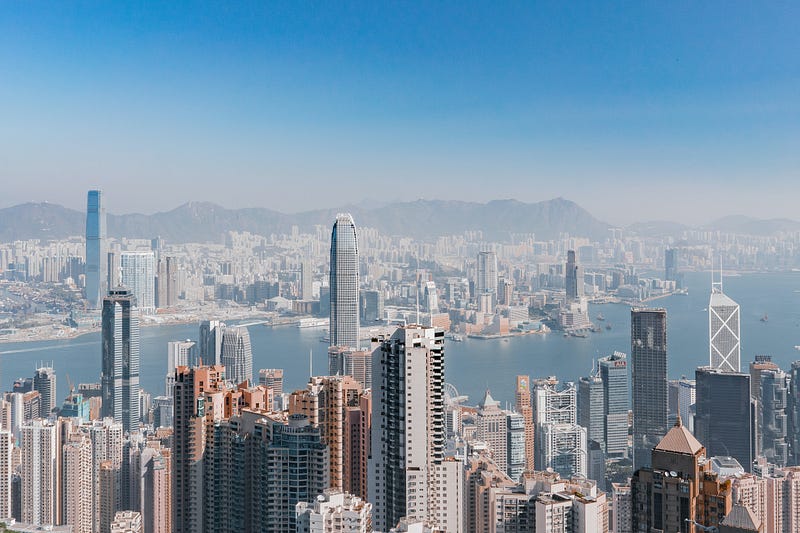
Photo by Ruslan Bardash on Unsplash


Lowering guard rails

After a three year hiatus, the Bloomberg Wealth Asia Summit returned to Hong Kong on Tuesday. Speaking at the conference, Eddie Yue, the CEO of the HKMA, Hong Kong’s regulatory body, outlined that the territory intends to enable innovation relative to crypto businesses that establish themselves in Hong Kong.

“We will let the industry develop and innovate, we will let them create an ecosystem here,” he said. However, he added the following caveat: “But that doesn’t mean light touch regulation. If any participant thinks that the regulation is too tight, they’re welcome to go elsewhere.”

Yue outlined that over the course of the past three years, guardrails relative to the operation of crypto-related activities were excessively high. Yue alluded to a new approach that sees those guard rails dropped to a level whereby innovation will be enabled in the digital assets space. However, he followed up by underlining the fact that the Authority has no intention of following a light touch regulatory approach.


No safeguards not an option

Although acknowledging that Hong Kong may have been excessively crypto unfriendly relative to digital asset regulation in the recent past, he believes that Hong Kong has now got it right. “Our guardrails are lower, to a reasonable and sustainable level,” Yue said.

The HKMA regulator flagged jurisdictions that provide little or no guardrails at all as the ones that will run into difficulties. “If you look elsewhere, there are no guardrails in some places, the guardrails are very low and there you see problems”, Yue clarified.

He cited FTX as a stand out example of a basic lack of internal controls. FTX International was based in the Bahamas. While customers of FTX International find themselves in a difficult position, those of subsidiary companies FTX Japan and FTX Europe are having their funds returned as a direct consequence of much better regulatory safeguards in those regions.

“All those wrongdoings by the platforms that we saw in the last one or two years will not happen in Hong Kong,” Yue claimed.


A continuing trend

While many commentators and critics from the conventional world have described bitcoin and crypto as a ponzi or a passing fad, Yue pointed out that digital assets are not going anywhere and that the trend towards digital assets will continue. Expanding further, he articulated that the overarching digital assets sector encompasses much more than just crypto: “Virtual assets or crypto is actually a very broad term. It’s not really about crypto, you’re talking about stablecoins or tokenized assets in the future.”

A mere $0.3 trillion of illiquid real world assets have been tokenized thus far. It’s anticipated that this level of tokenization will climb to $16 trillion by 2030.


More to Read
View All
Web3 & Enterprise·

Nov 29, 2023

Seoul Auction Blue seeks to register security tokens with the FSS for Andy Warhol’s artwork

Seoul Auction Blue seeks to register security tokens with the FSS for Andy Warhol’s artworkSeoul Auction Blue, the operator of fractional artwork investment platform Sotwo, recently submitted an application to the South Korean Financial Supervisory Service (FSS), local news outlet Seoul Economic Daily reported on Wednesday (local time). Its aim is to register security tokens linked to artworks with the financial authority, marking it the third entity in the country to pursue this innovative financial venture.Photo by Guido Coppa on UnsplashAndy Warhol’s ‘Dollar Sign’The artwork investment app plans to issue security tokens based on Andy Warhol’s “Dollar Sign,” a piece measuring 51.0 cm in height and 40.5 cm in length. This artwork was purchased by Seoul Auction Blue at an auction for KRW 626.2 million (approximately $485,000). The total value of the security tokens, inclusive of issuance costs, is approximately KRW 700 million. The firm will issue a total of 7,000 tokens, each valued at KRW 100,000. Upon receiving regulatory approval, Seoul Auction Blue is set to open for subscription requests from Dec. 20 to 26.In its endeavor to issue digital investment contract securities, Seoul Auction Blue has meticulously prepared its documentation in line with the FSS’s guidelines. The selection of the artwork of Andy Warhol, the renowned and iconic 20th-century artist, aligns with the FSS’s recommendation to choose a significant piece by an internationally acclaimed artist. This strategic choice reflects the company’s commitment to compliance and the recognition of Warhol’s global stature in the art world.Preventing conflicts of interestThe registration application submitted by Seoul Auction Blue includes specific restrictions aimed at preventing conflicts of interest with its affiliates related to security tokens. As per these rules, the company is barred from buying idle assets of affiliates to back its security tokens. Instead, Seoul Auction Blue is permitted to acquire them only through public methods like participating in an open bid or a post-sale bid process. Notably, the token issuer is in principle prohibited from purchasing these assets via intermediaries in private sales or any other non-transparent settings.The acquisition of underlying assets requires approval from the compliance monitoring committee. Furthermore, this regulation strips Seoul Auction Blue of the capacity to determine the final trading prices or conditions for these transactions.In addition, the company is collaborating with a couple of securities firms to safeguard investors’ funds, creating a buffer against any potential bankruptcy of the issuer. The funds raised from subscriptions for the security tokens will be managed in accounts overseen by KB Securities. Additionally, an investor protection fund is being set up, which will be handled as a trust fund by Shinhan Securities. This fund acts as an extra layer of security, offering investors enhanced protection for their investments.

news
Markets·

Jan 18, 2024

Circle report highlights APAC moving ahead in stablecoin adoption

In a recent report, Circle Internet Financial, the issuer of the USDC stablecoin, emphasized the growing adaptability of the Asian population towards digital currencies. This trend indicates a substantial potential for increased stablecoin usage in the Asia Pacific region. On Monday, the firm published "The State of the USDC Economy 2024 Report," providing a trove of relevant and timely data. Since its launch in 2018, the USDC stablecoin has facilitated over $12 trillion in blockchain transactions. The focus of the report is on the surge in remittances flowing into Asia, highlighting its growing presence. Remittances of $130 billion into AsiaAccording to a World Bank press release, remittances to Asia reached $130 billion in 2022, with the average cost of transferring $200 standing at 5.7% in the last quarter of the year. Meanwhile, the region accounted for 29% of all global digital asset value received, surpassing North America's 19% and Western Europe's 22%. Against this backdrop, the report sheds light on Circle's strategic partnership with Coins.ph, a crypto exchange in the Philippines, which aims to tap into the country's personal remittance demand, estimated at around $36 billion annually.  In another blog post, the company also dispels the notion that stablecoins are primarily used for speculative trading, citing a 90% decline in such activities over the past five years. This shift in usage patterns highlights the growing acceptance and adoption of stablecoins for practical applications like remittances and trade finance.Photo by Marjan Blan on UnsplashIncreasingly important role in trade financeImportantly, Circle asserts that USDC can play a role in closing the region's $510 billion trade finance gap. This gap represents the lack of liquidity available to companies for cross-border remittances and credit, particularly affecting emerging markets with capital outflow restrictions. The report underlines how businesses in these markets often struggle to secure funding for international trade, and USDC is emerging as a solution. One notable case study is Taipei-based XREX, which utilizes USDC to build financial pipelines between countries, leveraging the deep dollar liquidity in Taiwan to address the dollar scarcity in other Southeast Asian economies. This exemplifies how stablecoins like USDC are contributing to bridging financial gaps and facilitating international trade in regions with limited access to traditional banking services. Stablecoin-specific regulationThe regulatory landscape in the Asia-Pacific region is also evolving to accommodate stablecoins. Countries like Singapore, Hong Kong and Japan have implemented or proposed frameworks for stablecoin regulation, aligning with the growing importance of digital assets in the financial ecosystem. Circle has become increasingly active within the APAC region. In November, the firm joined forces with Japanese financial services conglomerate SBI Holdings to increase the circulation of USDC within Japan. Having been awarded a Major Payments Institution (MPI) license in Singapore in June, Circle followed that up later in the year by launching a zero-fee USDC minting facility within the city-state. Considering these developments, the Asia-Pacific region, with its large unbanked population and significant digital wallet usage, is predicted to witness quick adoption of stablecoins for cross-border payments.

news
Web3 & Enterprise·

Jul 24, 2023

AIITONE Partners with UAE’s Royal Office to Boost Fintech Industry in Asia

AIITONE Partners with UAE’s Royal Office to Boost Fintech Industry in AsiaAIITONE, an immersive tech company based in South Korea, has taken a significant step towards expanding its reach to the Middle East, according to Korean news outlet Newsis. The company recently signed a memorandum of understanding (MOU) with the Royal Private Office of H.H Sheikh Ahmed Bin Faisal Al Qassimi in the United Arab Emirates (UAE). The partnership between the two entities aims to bolster the fintech industry in South Korea, China, and Japan.Photo by Editz central Editors on PexelsUAE and East AsiaThe Royal Office, known for its diverse business ventures in the fields of real estate, global trading, consulting, and others, provides valuable guidance and strategies to enterprises in the UAE and the Gulf Cooperation Council. Lately, the Royal Office has been looking to expand its operations into East Asia, making this collaboration with AIITONE a strategic move.Security token and CBDCAs part of their joint efforts, the Royal Office plans to invest in promising Korean startups and facilitate the establishment of UAE banks’ Korean branches. Furthermore, the Royal Office intends to support Korean businesses in entering the Middle East market. Emphasizing their commitment to cutting-edge financial technologies, both parties will also work together on security token projects and central bank digital currencies (CBDCs), areas where Dubai is at the forefront of innovation.To facilitate the smooth implementation of these plans, Royal Office officials will visit AIITONE’s headquarters in Busan, Korea, next month. This visit will foster greater understanding and cooperation between the two organizations.An AIITONE representative expressed enthusiasm about the partnership, recognizing it as an opportunity to witness the Middle East’s growing interest in blockchain-based financial technology. Leveraging its expertise in Web3 technologies, such as extended reality (XR), artificial intelligence (AI), and blockchain, AIITONE strives to contribute to the development of both countries in the realms of digital economy and technology.

news
Loading