Top

Jump Trades to Top of NFT Marketplace

Web3 & Enterprise·April 11, 2023, 2:04 AM

Jump.trade, which is considered to be the largest NFT marketplace in Asia, has now emerged as the leading NFT marketplace on the Polygon Network, as per a recent report published by DappRadar. This new ranking has placed Jump.trade ahead of other popular NFT marketplaces like OpenSea, Decentraland, and OKX NFT marketplace, among others.
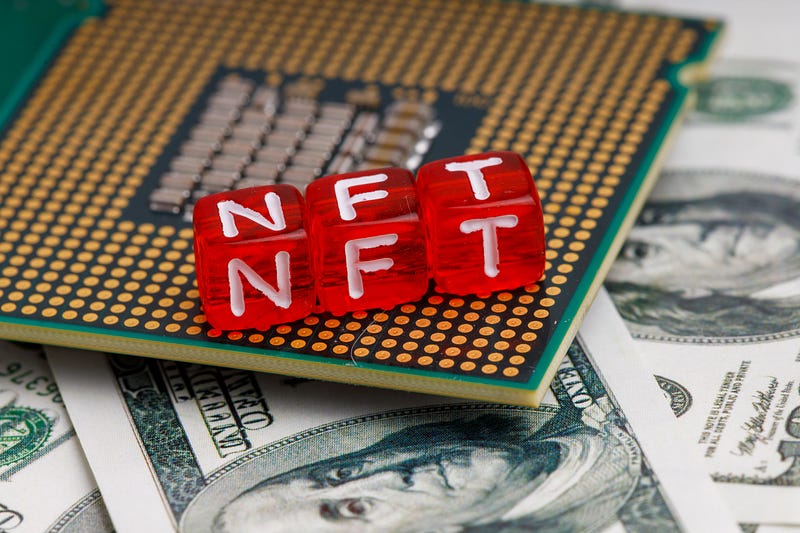
©Unsplash/Andrey Metelev


Jump №1 on Polygon

The firm acknowledged the achievement on social media last week, thanking its community for making the accomplishment a reality. Kameshwaran Elangovan, Co-Founder and COO of Jump.trade, expressed his delight with the recent ranking and called it “an astounding statement of our team’s hard work and the enthusiasm of our community who keep our marketplace always buzzing.”

While clearly an “unlocked achievement” as the company itself put it, it’s important to note that NFT marketplace development on the Polygon network has been much more recent. The bulk of NFT marketplace trading volume still occurs on blockchains such as Ethereum with NFT marketplaces OpenSea and upstart Blur dominating and accounting for 90% of NFT trade.


First P2E cricket game

It is worth noting that Jump.trade had introduced the world’s first P2E cricket game NFT collection last year, which consisted of 55,000 NFTs from the Meta Cricket League. Interestingly, this collection had sold out within a mere nine minutes, underlining the immense popularity and demand for NFTs. Jump.trade has also formed partnerships with various renowned brands such as Pepsi and Cadbury to make NFTs more accessible and develop a metaverse ecosystem where both brands and individuals can collaborate.


Global ambitions

The company has set its sights on becoming a major global player in the gaming NFTs market and is expected to benefit from the projected growth in the NFT market. This market is estimated to be worth $231 billion by 2030, with the gaming and sports industries anticipated to be the key drivers of NFT-related products.

Jump.trade is a collaboration between Indian firm Appstars Applications and Singapore’s Guardian Blockchain Labs. As an emerging tech superpower, India has a robust technical infrastructure that can enable the NFT industry to penetrate even the remote areas of the country. However, a well-structured regulatory framework will be critical for faster adoption of NFTs and digital collectibles, and ownership will play a crucial role in taking India closer to achieving its goal of an $800 billion digital economy by 2030.


Flipkart Labs partnership

Jump.trade is also the platform for the upcoming RADDX Racing Metaverse NFTs, and it provides opportunities for brands to leverage Web3/gaming for branding. On Wednesday, Jump.trade announced its partnership with Flipkart Labs, the blockchain and NFT offshoot of Indian e-tailer Flipkart. Both companies are collaborating on the RADDX Web3 advertising innovation.

Jump.trade CEO and Co-Founder Ramkumar Subramaniam said that “brands like Flipkart getting into metaverse advertising and Web3 marketing will serve as an encouragement and a beacon for a lot of brands to follow suit.” As part of the deal, Flipkart Labs bought Digital Lands, a digital land parcel within the RADDX Racing Metaverse.
More to Read
View All
Markets·

Apr 27, 2023

Yuan Surpasses Dollar in China Cross-Border Trade

Yuan Surpasses Dollar in China Cross-Border TradeThere has been a lot of talk in recent weeks and months about the continued use of the US dollar as the global reserve currency and newly published data from Beijing now demonstrates that the Chinese yuan became the most widely used cross-border currency in China for the first time in March.©Pexels/VOLKAN SORKUNErosion of dollar dominanceOver the course of the month of March, the US dollar was used in 46.7% of cross border transactions. That’s down 1.1% on the preceding month. Meanwhile, the yuan was the currency of choice in cross border Chinese trade last month, used in 48.4% of all cross border transactions.While this may seem impressive and it is encouraging for the Chinese authorities, it is still just a drop in the ocean when compared with the overall global cross border transaction statistics. Data produced by international financial messaging service, SWIFT, demonstrates that while the yuan’s share of global currency transactions relative to trade finance increased to 4.5%, that’s just a drop in the ocean. The same data set reveals that the US dollar accounted for around 84% of global cross border transactions in March.While it’s unlikely that the US dollar will be usurped in its global reserve currency role over the short to medium term, certain cracks are beginning to emerge that serve to weaken the leading fiat currency. According to a recent report by emerging market focused management firm Eurizon SLJ Capital, the dollar demonstrated a decline in reserve currency use of 8% in 2022. Since 2016, the leading international currency has declined in use on an adjusted basis by 11%. It also emerged this week that Argentina will begin to pay China in yuan for imports. The move comes at a time when the South American country is experiencing an acute shortfall in its dollar reserves following a drought-induced decrease in agricultural exports which would have ordinarily brought more dollars into the country’s coffers.SanctionsIn the case of Russia, China’s yuan replaced the US dollar in monthly trading volume in February for the first time, according to data compiled by Bloomberg. The emergence of the Russia Ukraine conflict in 2022, and more specifically the United States’ response to Russia as a consequence of the conflict, appears to have led to major change in terms of dollar use. Prior to the invasion, the trading volume of the Chinese yuan in Russia was negligible.The United States introduced a raft of sanctions that made it difficult for Russian banks and Russian corporations to trade internationally. It also confiscated sovereign funds held in US dollars belonging to Russia.It’s thought that this move has had wider repercussions as other nations have started to feel increasingly insecure in holding US dollars against that background. The logic is that any potential conflict between a nation and the United States could lead to a similar outcome. The US may have crossed a line that destroys confidence in other countries’ use of the US dollar.Implications for cryptocurrencyWhile these weaknesses in the global reserve status of the US dollar are unlikely to lead to its demise in that role any time soon, they may well be a bellwether of what plays out over the longer term. US dollar weakness is one aspect. Set against that, it’s hard to imagine the yuan being so dominant as to ever be the leading world currency relative to international trade.It’s far more likely that we may see several global ‘reserves’ share the role in the longer term. Bitcoin has been mentioned in the past as a candidate for this role given that it is not associated with any one nation. However, its current market capitalization and trading volume is minuscule by comparison with what would be required of a global reserve currency. That said, in a future where various currencies play a part in holding that reserve status, Bitcoin could very well see a modest but increasingly significant increase in its use for global trade purposes in the years ahead.

news
Web3 & Enterprise·

Mar 22, 2024

Com2uS Platform celebrates X-PLANET's first anniversary with NFT airdrop

Com2uS Platform, a subsidiary of South Korean game publisher Com2uS Holdings, yesterday revealed its plan for a non-fungible token (NFT) airdrop. This event is part of a celebration marking the one-year anniversary of its rebranded NFT marketplace, known as X-PLANET.Popular intellectual propertiesThe NFT marketplace underwent a rebranding in March of last year, aiming to improve its integration with Com2uS' XPLA blockchain mainnet. Named X-PLANET, the platform is envisioned as a new planet where users can "explore" and "play." By November 2023, it had become the top revenue-generating local NFT marketplace, thanks in part to popular intellectual properties like the B.O.P Universe and Choushinsei Flashman. The B.O.P Universe draws inspiration from Bung O Pang Tycoon, a mobile game centered around baking pastries, while Choushinsei Flashman is a 1980s Japanese TV series known for its live-action superheroes.NFT airdrop eventTo mark the first anniversary of its rebranding, X-PLANET is hosting an NFT airdrop event on its official website. The event kicked off on March 21 and will have another round on April 4, at 6 p.m. KST, when 365 "Lucky Star" NFTs will be made available on a first-come, first-served basis. Owners of NFTs bearing lucky numbers will have the chance to earn double points during a B.O.P Universe event, which continues until April 14.  Additional benefits are in store for those purchasing NFTs for the first time and those visiting X-PLANET’s Discord channel. Moreover, participants who spread the word about the anniversary event and the B.O.P Universe contest on social media will be entered into a draw for a chance to win a coffee coupon.Photo by Andrey Metelev on UnsplashNFT marketplace and blockchain ecosystemLee Luda, the Head of the Web3 Platform Business Division at Com2uS Platform, highlighted that the recent event was designed to show gratitude to X-PLANET users who have shown their support since the platform's rebranding. Lee further stated that as the NFT marketplace representing the XPLA ecosystem, X-PLANET is committed to evolving into a user-friendly platform. Their goal is to create an environment that not only adds value but also provides entertainment, making it a welcoming space where anyone can participate and enjoy. Recognized for its straightforward user interface and efficient trading system, X-PLANET has been introducing a collection of valuable NFT works across various domains, including art, games and K-pop. The NFT marketplace is actively pursuing collaborations with talented artists and prominent organizations to bring meaningful NFT content to its users.

news
Web3 & Enterprise·

Jan 23, 2024

HTX bounces back following DDoS attack

Well-known crypto exchange HTX and its decentralized autonomous organization (HTX DAO) have restored services following a distributed denial-of-service (DDoS) attack. The attack, which occurred late last week, briefly disrupted operations. However, HTX swiftly addressed the issue, highlighting the robust security protocols in place. The Seychelles-incorporated exchange confirmed the outage on social media last Friday, only to post an update shortly afterwards to confirm that service had been restored.Photo by Tekton on Unsplash‘Funds are SAFU!’Key industry figure and HTX advisor Justin Sun also took to social media to announce the recovery and express gratitude to the user community for their support. He reassured users that all funds remained secure, underscoring the exchange's dedication to safeguarding user assets. Sun borrowed a phrase first coined by Binance founder Changpeng Zhou (CZ), stating:”All funds are SAFU!” Latest in a string of incidentsThis DDoS attack adds to a series of challenges faced by HTX. In September, the same month in which the company rebranded from Huobi to HTX, hackers exploited the exchange, resulting in a loss of approximately 4,999 ether (ETH) valued at $7.9 million. In November, two Sun-linked protocols, HTX and Heco Bridge, experienced a combined $100 million hack. Despite these incidents, prompt measures, including statements from Justin Sun, ensured the protection of user assets. Having originated in 2013, HTX has evolved into a comprehensive blockchain ecosystem, encompassing digital asset trading, financial derivatives, wallets and various other blockchain-related services. The firm maintains offices in Hong Kong, Singapore, Tokyo and the United States. Its South Korean branch is set to close its operations on Jan. 29. Since 2018 the business has been a publicly listed company on the Hong Kong Stock Exchange (HKEX). HTX DAOOnly hours before experiencing this DDoS attack, the firm had launched HTX DAO. The DAO allows users to actively participate in the exchange's operations. Users can contribute to decision-making processes through voting, engaging in community discussions and selecting representatives. The DAO’s whitepaper outlines that governance will be conducted through the use of HTX tokens. The HTX DAO website alludes to various privileges that HTX token holders can benefit from on both the DAO and the HTX exchange. However, it remains unclear as to the specific nature of these privileges as yet. In a bid to strengthen its security infrastructure, HTX DAO recently underwent a comprehensive security audit conducted by ChainSecurity. This integration of the exchange business into the HTX DAO ecosystem reflects a broader trend within the cryptocurrency sector towards decentralization. In a long post on the X social media platform on Thursday, Justin Sun suggested that through HTX DAO, the HTX exchange would become “The People’s Exchange.” Sun added:”HTX currency holders should eventually become the owners of the platform.” Despite the high hopes and aspirations, Sun continues to have his perennial detractors. Travis Kling, founder of Ikigai Asset Management, posted on X on the very same day, stating:”We may be getting close to showtime here. We need [Justin Sun] gone. He’s a cancer.” 

news
Loading