Top

Korean regulator monitors non-listed token amidst peer-to-peer trading surge

Policy & Regulation·December 21, 2023, 4:01 AM

The South Korean financial regulator is closely monitoring BTCMobick, a non-listed token issued by crypto influencer Oh Tae-min, who is known for authoring books like “The Great Bitcoin” and “Bitcoin and the Geopolitics of the Dollar.” The Financial Services Commission (FSC) is cautioning local crypto exchanges regarding the potential for price manipulation should the token be listed.

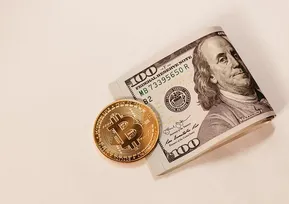
Photo by Daniel Bernard on Unsplash


BTCMobick Token

The BTCMobick token is reportedly being traded peer-to-peer at around KRW 300,000, which is approximately equivalent to $230, in chat rooms of messaging apps like KakaoTalk outside of cryptocurrency exchanges. The token has gained enough traction to spur the emergence of dedicated apps that facilitate these peer-to-peer trades, charging fees for their services. Based on the size of the chat rooms and apps involved, it is estimated that approximately 3,000 participants are trading the token, according to a report by local news website Etoday.

As per another coverage by the same outlet, the Virtual Asset Inspection Division of the Financial Intelligence Unit (FIU), which operates under the FSC, has inquired with local crypto exchanges on two occasions — once in September and again this week — about whether they have listed or are planning to list the BTCMobick token. It’s rare for the financial authority to specifically target a particular token when making inquiries with crypto trading platforms.


Potential price manipulation

An FIU official explained the rationale behind the agency’s inquiry into crypto exchanges. The official stated that the probe aimed to caution the exchanges about potential price manipulation of the BTCMobick token. The concern is that many crypto users might suffer losses if such a token, which has been experiencing a continual rise in price outside of trading platforms, were to be listed. Currently, legal penalties for cryptocurrency price manipulation fall under the Virtual Asset User Protection Act, which will not be enforced until July 2024. This indicates a regulatory gap in the immediate term.

Hwang Suk-jin, a professor at Dongguk University’s Graduate School of International Affairs and Information Security, pointed out that while giving out privately generated tokens to friends or acquaintances doesn’t raise any legal issues, the situation changes once these tokens are listed for trading on exchanges and distributed more broadly in the market. In such scenarios, these tokens can become a source of legal disputes, he explained.

Amidst these developments, there are circulating rumors suggesting that BTCMobick is on the verge of being listed on exchanges. An industry insider has mentioned that there are brokers actively spreading these rumors, indicating that the token might soon become publicly tradable.


Oh Tae-min’s denial of rumors

Meanwhile, Oh Tae-min, the creator of BTCMobick who has been distributing his token for free, states that the token is part of an experiment intended to mimic the early stages of Bitcoin. However, critics are concerned that the personally issued token has no practical utility. Addressing the circulating rumors about the token’s potential listing on exchanges, Oh asserts that these rumors are baseless and false. He further warns that any brokers spreading such rumors are likely engaging in fraudulent activities.

More to Read
View All
Policy & Regulation·

Sep 05, 2023

Singapore Elects Crypto Skeptic as President

Singapore Elects Crypto Skeptic as PresidentGarnering 70.4% of all votes cast on Saturday, Singaporeans chose to elect Tharman Shanmugaratnam as their next president, a move that may have implications for Singapore’s outlook when it comes to digital assets.While many had hoped that he would be the nation’s first non-Chinese prime minister, the crypto industry has greeted his rise to this largely ceremonial role with mixed feelings. Shanmugaratnam’s previous stances on cryptocurrency and digital assets have been predominantly critical.Photo by Justin Lim on UnsplashFormer MAS ChairmanIn the past, the president-elect has referred to cryptocurrency as “slightly crazy” and “purely speculative.” His ascent to the presidency comes after a distinguished career that includes serving as the former finance minister, deputy prime minister, and chairman of the Monetary Authority of Singapore (MAS), the country’s central bank, from 2011 to 2023.Crypto platform collapsesIt was during his tenure at MAS that two prominent crypto companies, Three Arrows Capital (3AC) and Terraform Labs, faced catastrophic collapses.The demise of Terraform Labs, along with its TerraUSD (UST) stablecoin, triggered a severe “crypto winter” in May 2022, from which the industry is still struggling to recover. This downfall wiped out a staggering $500 billion in value over just two weeks, devastating the portfolios of numerous retail investors.The ripple effect of TerraUSD’s fall also engulfed 3AC, a significant cryptocurrency hedge fund headquartered in Singapore. The contagion spread across the cryptocurrency market, leading to the downfall of other major entities like crypto lending platforms Celsius Network and Voyager Digital, alongside Singapore-based Hodlnaut.Given that these catastrophic events unfolded during Shanmugaratnam’s tenure at MAS, it’s plausible that he bore the brunt of the consequences. That might explain why in speaking on the subject in 2021, he appeared to be more accommodative, suggesting that there may be a useful role that crypto could play and highlighting that Singapore had allowed crypto businesses to develop within the city-state.In June of last year, MAS reprimanded 3AC for providing misleading information and exceeding the allowed assets under management (AUM) threshold, thereby breaching its status as a registered fund management company.In January, Shanmugaratnam said that regulating the crypto sector would give credibility to speculation and on that basis, it would be best to leave it unregulated. He went on to suggest that crypto should be subject to existing regulation as laid down for traditional finance.Early stage concernsBack in 2018, when he was Singapore’s finance minister, Shanmugaratnam questioned the wisdom of broad regulation potentially legitimizing a speculative and “slightly crazy” market. During the 2018 World Economic Forum, he emphasized the importance of anti-money laundering measures and advocated for educating consumers about the risks inherent in the unregulated crypto sector.Although he acknowledged blockchain’s potential to enhance global payment systems, Shanmugaratnam favored integrating existing traditional payment mechanisms as an alternative to blockchain innovations.Singapore’s new president brings with him a history of skepticism towards cryptocurrency and digital assets. However, with a largely ceremonial role relative to day-to-day governance, he’s not in a position to take direct action that could hold the sector back although he will have the power to initiate corruption investigations upon the advice of the Singaporean cabinet.

news
Web3 & Enterprise·

Oct 27, 2023

Fair Square Lab to Develop Blockchain-Based Shareholder Meeting Platform

Fair Square Lab to Develop Blockchain-Based Shareholder Meeting PlatformSouth Korean Web3 technology company Fair Square Lab announced on Friday that it is in the process of developing a blockchain-based platform for holding electronic shareholder general meetings. The firm said that it has applied for two patents for technologies related to blockchain-based electronic shareholder meetings. One is related to their operation methods and systems, and the other is associated with the utilization of voting rights tokens.Photo by Benjamin Child on UnsplashEmpowering shareholdersIn shareholder general meetings, many minority shareholders are often unable to attend in person, thereby finding it difficult to effectively exercise their opinions or rights during the decision-making process of a company. Fair Square Lab’s pending patents aim to address this issue by enabling more shareholders to easily participate in shareholder meetings through an electronic medium. Utilizing blockchain technology would also ensure the integrity and security of voting processes.Fair Square Lab’s growing portfolioWith this latest development, Fair Square Lab is now poised to possess a total of eight blockchain-related patents. Its other patents encompass areas like managing wallets in the blockchain network, generating wallet addresses for security token platforms, and preventing erroneous transfers of security tokens on a blockchain network. The company said that it is continuously working to secure intellectual property rights for its blockchain business, including design patents and its own trademark.“We have been consistently striving to secure intellectual property rights by linking research and development with the core blockchain technologies that we have accumulated over the years. We plan to obtain a total of 12 core technology patents by the end of this year,” said Jake Kim, CEO of Fair Square Lab.

news
Policy & Regulation·

Oct 18, 2023

Israel Doubles Down on Blocking Crypto Funding of Hamas

Israel Doubles Down on Blocking Crypto Funding of HamasIn a move to disrupt the flow of funds to Hamas, Israeli authorities have ordered the closure of over 100 cryptocurrency accounts on Binance, the world’s largest crypto exchange.Photo by Leonid Altman on PexelsHeightened monitoring of crypto-related financingIsraeli authorities were already monitoring crypto accounts suspected of terrorism financing before the recent attack by the Palestinian militant group Hamas. Since then, they have requested information about hundreds of accounts on Binance, suggesting that the scale of their actions has grown significantly since October 7.A statement from Israeli police last week outlined that they had frozen crypto accounts related to financing of Hamas. According to a report on Tuesday by the Financial Times (FT), the Israeli authorities have taken matters further still, having closed more than one hundred accounts on Binance.Scrutinizing 200 additional accountsSources cited by the FT as being close to the situation have revealed that these actions were initiated in response to Hamas’s assault on October 7. Authorities have also sought information on approximately 200 additional crypto accounts, with most of them being held on Binance. While Binance has acknowledged blocking a “small number” of accounts since the summer, it emphasized its adherence to internationally recognized sanctions rules and declined to provide further comment.Governments and regulators have long expressed concerns that terrorist organizations might exploit lightly regulated crypto markets for financial transactions. However, the recent attacks on Israel and the subsequent crypto-based fundraising campaigns by Hamas have made these concerns more pressing.Tom Alexandrovich, the Executive Director at the Israel National Cyber Directorate, stated that cryptocurrency has become a major tool for terror financing during these times of conflict. He noted that the amount of crypto funds involved has significantly increased since the start of the attack.Tether freezes accountsTether, the issuer of leading US dollar stablecoin USDT, announced on Monday that it had frozen 32 addresses containing more than $873,000 due to their alleged links to “terrorism and warfare” in Israel and Ukraine. The exact timing of when these accounts were blocked and the distribution of assets between Israel and Ukraine were not disclosed.Notably, US financial regulators previously alleged that money held on Binance had ties to Hamas. A lawsuit by the Commodity Futures Trading Commission (CFTC) in the United States in March claimed that senior Binance executives had knowledge of “Hamas transactions” in 2019. Binance has refuted these allegations and expressed its intent to contest the lawsuit.Commentators within the crypto space fear that opponents of the development of crypto, like US Senator Elizabeth Warren, will try to capitalize on this issue by using the opportunity to further draconian regulation.Over the past two years, Israeli authorities have seized millions of shekels from crypto accounts with suspected ties to Hamas and other militant groups in the Middle East. A recent analysis by Elliptic found that crypto wallets associated with various suspicious Middle East groups have interacted and relied on the same crypto exchange services to convert crypto into sovereign currencies.

news
Loading