Top

China disrupts massive crypto-related laundering operation

Policy & Regulation·December 28, 2023, 2:11 AM

While cryptocurrencies may be banned in China, crypto trading activity continues in some corners, nonetheless, sometimes through accessing overseas exchanges. With that, authorities recently uncovered a massive underground banking operation that exploited crypto trading platforms to evade local forex regulations.

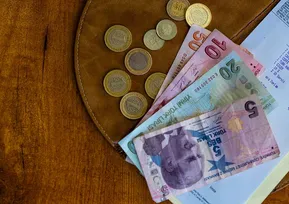
https://asset.coinness.com/en/news/caa2d48c10dac4ad394bad96026e1e19.jpg
Photo by Manuel Joseph on Pexels

$2.2 billion laundering operation

On Sunday, an account on popular Chinese social media platform WeChat run by China’s State Administration of Foreign Exchange (SAFE) published details of the $2.2 billion laundering operation bust.


Xu Xiao, the Inspector at the Qingdao Branch of the State Administration of Foreign Exchange, revealed that the scheme involved underground banks who purchased virtual currencies and then sold the virtual currencies through overseas trading platforms to obtain the foreign currency they needed. This process, he explained, completes the conversion of yuan and foreign currencies, constituting the illegal act of buying and selling foreign exchange.


Stringent capital controls

China enforces stringent rules on money transfers outside the country. Citizens are limited to exchanging up to $50,000 in foreign currency and require a permit for transactions beyond that limit. Any transaction exceeding the limit without a permit is considered money laundering.


During a recent investigation, authorities seized cryptocurrencies valued at approximately $28,000 in Tether, Litecoin and other digital currencies. However, the operation is estimated to have facilitated the movement of over $2.2 billion, involving more than a thousand bank accounts across 17 provinces and municipalities.


Monetary control loopholes

China, once the largest cryptocurrency market, imposed a comprehensive ban on crypto exchanges in September 2017 and subsequently expanded its restrictions to include crypto mining and trading. Despite these measures, reports have surfaced about underground crypto exchange operations. Earlier this year, an investigative report by the Wall Street Journal found that global exchange Binance continues to do thriving business with Chinese customers.


Global crypto exchanges are reportedly still onboarding Chinese clients indirectly. The South China Morning Post (SCMP) recently accused Binance of facilitating Chinese crypto trading accounts by falsely claiming they are from Taiwan.


While mainland China adopts a hostile stance towards cryptocurrencies, the special administrative region of Hong Kong remains progressive in the sector. Hong Kong’s regulatory authorities have introduced specific rules for cryptocurrencies and are licensing crypto exchanges operating within the jurisdiction.


Arthur Hayes, the co-founder of the BitMEX crypto derivatives platform, recently described Hong Kong as the gateway for mainland China to global capital markets. Hayes asserted that wealthy Chinese individuals all bank in Hong Kong and with that, they all have access to crypto exchanges and brokers. In Cambodia, it is understood that illicit Chinese-linked activities oftentimes implicate the use of U.S. dollar stablecoin Tether (USDT) to move funds in and out of China even though Tether is banned in Cambodia.


The latest crackdown in China underscores the ongoing challenges faced by authorities in controlling crypto-related activities, highlighting the dynamic nature of such activity within and adjacent to mainland China. As regulatory scrutiny intensifies, the contrast between mainland China’s approach and Hong Kong’s more open stance toward cryptocurrencies becomes increasingly evident.
 

More to Read
View All
Policy & Regulation·

Dec 01, 2023

Fasset becomes sixth crypto firm to secure VARA license

Fasset becomes sixth crypto firm to secure VARA licenseFasset FZE, a digital asset brokerage based in Dubai in the United Arab Emirates (UAE), has successfully obtained a Virtual Asset Service Provider (VASP) license from Dubai’s Virtual Asset Regulatory Authority (VARA).This achievement, evidenced by a listing on VARA’s website on Wednesday, marks the culmination of VARA’s approval process, granting Fasset the authorization to provide broker-dealer services through its Web3-based financial services platform to a broad spectrum of clients, including both retail and institutional investors.Fasset, with a focus on practical applications of digital assets underpinned by blockchain technology, offers a range of services encompassing stable cryptocurrencies, tokenized commodities, precious metals and fiat currencies.Photo by Hongbin on UnsplashInvestcorp fundingSimultaneous with securing the VARA license, Fasset announced an upcoming investment from global investment manager Investcorp ahead of its Series B funding round, although the exact funding amount remains undisclosed. In 2022 the firm raised $22 million in Series A funding. With plans for a beta launch scheduled for this month and a full roll-out in January 2024, the startup is attempting to make an impact on the market.Mohammad Raafi Hossain, the CEO of Fasset, underscored the strategic importance of the VARA license in advancing the company’s mission to facilitate access to digital assets in emerging markets. In a post published on Thursday via the company’s LinkedIn account, Hossain outlined that this approval plays a crucial role in Fasset’s global licensing strategy, enabling seamless asset transfers across high-traffic remittance corridors, particularly from the Gulf Cooperation Council countries to Asia.Targeting emerging marketsHossain remarked:“Fasset’s focus on enabling people across emerging markets to access to digital assets is bolstered with this permission from VARA in UAE. As one of the most progressive regulatory frameworks in the world, the VARA approval is a crucial link in our global licensing portfolio, connecting places like Indonesia, Malaysia, Bangladesh, Pakistan, and Turkiye through blockchain.”The countries Hossain mentioned are precisely the markets that the firm is attempting to target. In August the firm launched an app which allows users to buy, sell and swap various cryptocurrencies with those markets in mind. Earlier in the year, Fasset had partnered with Mastercard in an effort to expand its service and product offering in IndonesiaWorking towards compliant frameworksFasset has been proactive in engaging with regulatory bodies, dating back to its establishment in 2019. The fledgling firm is now reaping the benefits of following that approach of regulatory compliance. The founding team’s prior collaboration with the UAE Prime Minister’s Office in crypto regulation laid the groundwork for compliant frameworks, something that is seen by officials as essential to the UAE’s technological progress.Dubai’s emergence as a key player in the cryptocurrency industry is evident, with an increasing number of crypto companies setting their sights on the Middle East, particularly Dubai, as a potential hub. In the month of November alone, five distinct entities, including CFI, GCEX, HEX, Crypto.com and Ripple, secured authorization from Dubai for crypto operations, showcasing the growing prominence of the region.

news
Policy & Regulation·

Dec 09, 2023

Kazakhstan shuts out 980 non-compliant crypto exchanges in 2023

Kazakhstan shuts out 980 non-compliant crypto exchanges in 2023Kazakhstan has implemented stringent measures in 2023 when it comes to regulating the crypto sector, resulting in the closure of 980 crypto exchanges that failed to comply with government regulations.That’s according to a press release published by the Central Asian country’s Financial Monitoring Agency (FMA), the state entity responsible for anti-money laundering (AML) policy. These measures, taken over the course of the year, were highlighted during the 39th Plenary Week of the Eurasian Group (EAG) in the resort city of Sanya, in Hainan province in China.Photo by Kuralbek Djumagaziev on UnsplashCombating money laundering threatsThe seminar served as a platform for participating countries to exchange experiences, with an emphasis on leveraging advanced technologies, including artificial intelligence, to effectively combat emerging threats related to money laundering and terrorist financing. The Kazakhstani delegation played a leading role in discussions on virtual assets.Ruslan Ostroumov, the Head of Kazakhstan’s Financial Monitoring Agency, showcased the country’s legislative regulations and robust measures to combat the illegal turnover of digital assets. Ostroumov reported the blocking of 980 illegal cryptocurrency exchange platforms in the current year. Additionally, nine investigations into illegal exchange operations, amounting to $36.7 million, have been initiated, accompanied by ongoing preventive measures.Registration process complexityWhile the seminar’s organizers commended Kazakhstan for its proactive stance against financial crimes in the virtual assets space, the country’s crypto laws have added complexity to the registration process for exchanges.In November, the Kazakhstani authorities blocked local access to the Coinbase website due to potential violations of the country’s digital asset legislation. This decision aligned with the law on digital assets, effective since February 2023, which prohibits the issuance and trading of digital currencies and cryptocurrency exchange businesses without proper licensing.While challenges remain for crypto platforms within Kazakhstan, some have been successful in their efforts. In May, crypto derivatives trading platform Bybit was successful in gaining approval to offer its services within the country. Binance followed suit in June, securing preliminary approval. Other platforms such as CaspianEx, Biteeu, ATAIX, Upbit, Xignal and MT have been granted permission to conduct trade in Kazakhstan.In December 2020, Kazakhstan formally legalized cryptocurrency mining, and on May 6, 2021, the National Bank of Kazakhstan announced plans to issue a “digital tenge,” their version of a central bank digital currency (CBDC). Various CBDC-related projects have followed. In September, the National Payment Corporation, an entity which will be responsible for CBDC development, was launched. The same month, the National Bank of Kazakhstan entered into a collaboration with financial messaging service SWIFT to work on an interoperable CBDC connector.For the most part, these comprehensive regulations and the issuance of a CBDC signify Kazakhstan’s broader acceptance and adaptation to the cryptocurrency landscape. Authorities internationally are trying to find a balance between adequate regulation and enabling innovation to take place. Kazakhstan is no exception, and with that, there are bound to be challenges as regulatory frameworks are optimized and tweaked along the way.

news
Web3 & Enterprise·

Oct 28, 2023

Circle Partners with Asian Convenience Store Chain to Push USDC Adoption

Circle Partners with Asian Convenience Store Chain to Push USDC AdoptionCircle, the issuer of US dollar stablecoin USD Coin (USDC), has entered into a strategic partnership with Taiwanese cryptocurrency service provider BitoGroup and Taiwan FamilyMart, the nation’s second-largest convenience store chain.The primary objective of this collaboration, which Circle announced on Thursday through the publication of a statement on its website, is to expand the utility of loyalty points and enhance their intrinsic value, all the while driving the adoption in the use of USDC in Taiwan.Photo by Jiachen Lin on UnsplashFocus on loyalty pointsThe partnership introduces an innovative service known as “Points-to-Crypto,” accessible through the Taiwan FamilyMart App and the BitoPro Exchange. This service empowers customers to seamlessly convert their FamilyMart loyalty points, commonly known as FamiPoints, into digital currencies such as USDC.This conversion not only preserves the value of loyalty points but also incurs no transaction fees, effectively democratizing access to the world of cryptocurrencies. This move aligns with Circle’s overarching strategy to push the boundaries of digital asset innovation.Broader strategyCircle unveiled a broader strategy along these lines in June. The focus has been on collaborations aimed at transforming how consumers and institutions in the Asia Pacific (APAC) region engage with the digital dollar, especially USDC, to facilitate quicker and more efficient financial transactions. In June Circle acquired a full trading license from the Monetary Authority of Singapore (MAS).Last month it emerged Circle has been actively integrating its Web3 Services platform into the well-known Grab platform. Grab is Southeast Asia’s super app for transportation, deliveries, payments, and more. This integration, initially set to debut in Singapore, seeks to elevate user experiences through blockchain-enabled solutions. Grab has 25 million monthly active users in Southeast Asia.Integrating Circle’s Web3 services and bringing them to these customers eventually will mean a direct touch point for Web3 in their daily lives, and the active use of a digital wallet for each and every one of them.This latest development assumes significance in Taiwan due to the country’s high density of convenience stores, where loyalty points hold substantial value. According to the Market Intelligence & Consulting Institute (MIC) in Taiwan, “Points Accumulation and Redemption” ranked as the most practical function among four primary retail app functions in their 2021 consumer behavior survey.Local industry partnersBitoGroup, one of the primary partners in this initiative, boasts a membership base nearing 800,000 and holds a market share of approximately 90% in Taiwan. BitoGroup offers a diverse range of services, including BitoPro, a cryptocurrency exchange; BELS, an NFT empowerment platform; and O2 META, which is a metaverse-focused social media platform.For nearly a decade, Taiwan FamilyMart and BitoGroup have offered customers the ability to purchase Bitcoin at convenience store locations nationwide. This new partnership signifies a shift from physical convenience stores to online experiences, enabling access to innovative financial tools and reinforcing Taiwan’s position as a digital economy leader.This latest partnership marks a significant milestone in bringing Web3 and digital currency into active and mass market use among ordinary people in Taiwan. The development coincides with Taiwan’s legislature and regulators currently working on the introduction of a regulatory framework for digital assets.

news
Loading