Top

Hong Kong crypto executive anticipates spot crypto ETF approvals by mid-2024

Policy & Regulation·January 23, 2024, 2:15 AM

The launch of Hong Kong's inaugural spot crypto exchange-traded funds (ETFs) is expected to occur by mid-2024, according to one of Hong Kong’s leading crypto executives.


Gary Tiu, the executive director and head of regulatory affairs at OSL, a licensed cryptocurrency exchange based in Hong Kong, made that assertion in discussion with The Hong Kong Economic Journal. Tiu provided the publication with insights into the accelerating pace of negotiations between cryptocurrency exchanges and fund companies in the region.

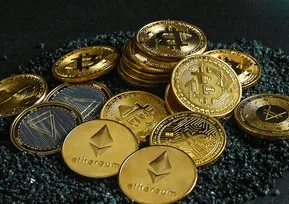
https://asset.coinness.com/en/news/9daf0bf9cb5d401d5323ec96f2586487.webp
Photo by Stella P on Unsplash

Up to ten firms contemplating ETF launch

OSL is actively engaged in discussions with multiple fund companies, with five to ten firms contemplating the introduction of spot crypto ETFs. Tiu revealed that certain firms have made notable progress, raising the possibility of the debut of these ETFs in Hong Kong by the middle of the year.


Additionally, the OSL executive emphasized the significance of maintaining reasonable fees in collaborations between OSL and fund companies, given the limited presence of licensed crypto exchanges in the city – a total of two at present.


This suggestion from Tiu aligns with similar recent soundings emanating from HashKey, another licensed crypto exchange in Hong Kong, which recently disclosed its ongoing discussions with asset managers exploring the potential launch of spot crypto ETFs. Livio Weng, the CEO of HashKey, indicated that approximately ten fund companies are considering the introduction of such ETFs in the city.


VSFG’s ETF plans

Aligned with Tiu’s thoughts on the matter, according to a Bloomberg report last week, Venture Smart Financial Holdings Ltd (VSFG), a Hong Kong-based financial services firm, expressed plans to potentially launch a spot bitcoin ETF within the first quarter of this year. Bloomberg reported the company's goal of growing the ETF's assets under management to $500 million by the end of 2024.


The regulatory landscape in Hong Kong is actively adapting to accommodate spot crypto ETFs, with the Securities and Futures Commission (SFC) and the Hong Kong Monetary Authority (HKMA) announcing in December that they have reviewed their existing policies. Two circulars were published, outlining the requirements for spot crypto ETFs, with the SFC stressing that transactions should be conducted through SFC-licensed crypto platforms or authorized financial institutions.


Currently, Hong Kong has listed several futures-based crypto ETFs, including the Samsung Bitcoin Futures Active ETF, CSOP Bitcoin Futures ETF and CSOP Ether Futures ETF.


Hong Kong venue for Bitcoin conference

In a related development, local lawmaker Johnny Ng revealed on social media on Monday that Hong Kong will host The Bitcoin Conference this year. Earlier this month Ng urged the local administration in Hong Kong to swiftly follow the United States' approval of spot bitcoin ETFs and position the city as a leading hub in the cryptocurrency space.


With Hong Kong and Singapore vying for hub status in the Asian region relative to the digital assets space, the launch of ETF products would give the Chinese autonomous territory a competitive head start given that Singapore doesn’t appear to be close to accommodating crypto ETFs for the time being.

More to Read
View All
Policy & Regulation·

Apr 10, 2025

Thailand counters cybercrime with tighter controls on foreign crypto P2P platforms

Thailand has taken steps to tighten controls on digital asset mule accounts and overseas crypto peer-to-peer (P2P) platforms in an effort to combat cybercrime.Photo by Growtika on UnsplashLegislative amendmentsOn April 8, the Securities and Exchange Commission (SEC), a local regulator, published a statement explaining that the Thai cabinet has passed a resolution approving a number of amendments to the Southeast Asian nation’s digital asset business law and its cybercrime law. The regulator asserted that the amendments are designed to “strengthen measures against cybercrime and mule accounts, enhancing the security of public financial transactions and improving the effectiveness of combating online scams.” The amendments won’t become effective until such time as they are published in the Government Gazette of Thailand, an official public journal that acts as a primary source for Thai law. Mule accountsOne aspect that has been addressed is the enhancement of measures taken in an effort to block digital asset mule accounts. Criminals utilize mule accounts in an effort to launder the proceeds of crime.  While this happens with conventional bank accounts, it is also now happening with digital asset exchange accounts and digital asset wallets. Accounts may have been established for legitimate purposes but later fall under the influence of criminals who utilize them for money laundering. According to a report by the Bangkok Post last month, the Thai SEC had been collaborating with the Thai Digital Asset Operators Trade Association (TDO) and digital asset businesses in order to formulate these new measures.  The standard was also established following consultation with the Bank of Thailand, the Cyber Crime Investigation Bureau, Central Investigation Bureau, the Anti-Money Laundering Office and the Thai Bankers' Association. It is hoped that these enhanced mechanisms will lead to earlier detection of unusual customer behavior, enabling the authorities to intervene at an earlier stage to block mule accounts.Going forward, the regulator will collaborate with the TDO in monitoring and evaluating implementation of the new measures. Individuals who allow their digital asset accounts to be used by criminals will face up to three years' imprisonment and a fine of up to 300,000 Thai baht ($8,765). Blocking P2P platformsAnother change is being implemented in respect of offshore crypto P2P platforms. The objective of that particular measure is to deter and prevent the use of such platforms by investors within Thailand.  It’s envisaged that the Ministry of Digital Economy and Society will now be enabled to move more swiftly in blocking website and application access to these foreign P2P platforms. Such offshore platforms will be deemed to be attempting to solicit local investors if they offer payment options in Thai baht, provide online services or applications using the Thai language or if they accept payments through Thai bank accounts. Earlier this month, Thai law enforcement raided five unlicensed crypto firms. The raid led to the arrest of 11 individuals, charged with illegally operating e-money services related to enterprises responsible for a combined $29 million turnover. 

news
Web3 & Enterprise·

Jan 15, 2024

Lotte Data Communication showcases metaverse and EV charging platform at CES 2024

Lotte Data Communication, the IT service management unit of South Korean conglomerate LG Group, brought its hyperrealistic metaverse platform Caliverse and electric vehicle charging platform EVSIS to the stage at CES 2024, attracting great interest from stakeholders from around the world, according to an article by South Korean news outlet KG News.Photo by GuerrillaBuzz on UnsplashExploring tomorrow's technologyCES is one of the biggest annual tech conventions in the world organized by Consumer Technology Association, where companies and other industry leaders gather in Las Vegas to showcase their innovations and visions for a future led by advanced technology. This year’s event was held from Jan. 9 to 12.  AI takes the spotlightIn particular, user-engaging technologies such as generative AI received much attention at the convention, such as AI mobile scanning, which allows anyone to take a picture of their product with a mobile device and virtually create their own digital object in less than five minutes. Another new technology called metaverse live streaming allows users to interact with each other in the virtual space in real-time by replicating their appearance. Standing at the forefront of the IT industryLotte’s Caliverse platform provides deeply immersive content based on world-class technologies such as ultra-high-definition VR shots, image synthesis and real-time rendering graphics. It can also be experienced through a head-mounted display (HMD) as well as most other electronic devices such as 3D monitors, PCs and smartphones, maximizing user accessibility. The company also showcased various EV chargers and digital platforms that are used in its other new product EVSIS, gaining popularity among visitors at the event. Lotte aims to further establish itself as a global market leader in the IT industry based on these cutting-edge platforms.

news
Policy & Regulation·

May 16, 2023

Japan Tops Crypto Losses to North Korean Hackers

Japan Tops Crypto Losses to North Korean HackersHackers affiliated with the North Korean regime have been responsible for the theft of $721 million in digital assets from Japan.That’s the finding of a recent report by UK-based crypto compliance analysis firm Elliptic. Elliptic had produced the report on behalf of Japanese news media group, Nikkei. It leaves Japan at the top of the table when considering the distribution of digital asset losses suffered due to North Korean hackers on a country by country basis.Photo by FLY:D on UnsplashIncreasing lossesElliptic has the wherewithal to track and identify blockchain-based transfers. As part of its analysis, it grouped by region and by country those businesses that it identified as having cryptocurrency holdings that later were transferred to digital wallets held by the Lazarus Group, the most notorious hacker group connected with the North Korean government. It’s the first such analysis to break down crypto-related hacking losses on a country by country basis.The study included a consideration of both hacking and ransomware attacks. The loss associated with Japanese-based entities represents in excess of 30% of the global recorded loss. This latest analysis follows a recent report submitted to the United Nations which found that North Korea stole more digital assets in 2022 than any other year. That report had been submitted to the 15 members of a North Korea sanctions committee, finding that between $630 million and $1 billion worth of digital assets had been stolen.Lax securityElliptic’s analysis and subsequent report point to lax security being employed within Vietnamese and Japanese cryptocurrency marketplaces. Nikkei referred to an unnamed source who asserts that at least three Japanese cryptocurrency exchanges had been compromised by hackers between 2018 and 2021.One of those instances involved Zaif, a company that lost $51.4 million in 2018 and subsequently shut down operations. Overall, Elliptic estimates a global loss of $2.3 billion to hackers between 2017 and 2022 in digital assets, as suffered by crypto firms. It also estimates such losses suffered in the United States at $497 million, while Hong Kong-based losses have been calculated at $281 million.International responseIn April, the Office of Foreign Assets Control (OFAC) within the Department of the Treasury in the United States stated that it had sanctioned two Chinese nationals and a Hong Kong British national for allegedly having aided the North Korean government in crypto money laundering activities.On Saturday, a joint statement was issued by the Group of Seven finance ministers and central bank governors, following a meeting in Japan, outlining the “growing threat from illicit activities by state actors.” It’s widely believed that the proceeds of these hacks are contributing towards the funding of North Korea’s missile program and other such activities that threaten stability within the region.The Japan External Trade Organization (JETO) has estimated that the estimated $721 million stolen from Japan amounts to 8.8 times the value of North Korea’s exports in 2021.

news
Loading