Top

Bitcoin rally significantly benefits online-only Kbank in Korea

Markets·March 04, 2024, 7:11 AM

Following the recent bitcoin boom, transactions in cryptocurrencies among Korean investors have surged, significantly benefiting local banks that have made contracts with Korean crypto exchanges to offer real-name accounts for crypto investors. As the price of bitcoin soared to as high as KRW 90 million ($67.6 million) in Korea on Thursday, online-only bank Kbank saw an uptick in trading fee revenue, according to local media outlet The Seoul Economic Daily. Kbank is a partner with crypto exchange Upbit, which accounts for 70% of the Korean crypto market. 


Under the current law, Korean crypto exchanges offering trading against Korean won must secure real-name accounts from a bank. These banks typically earn fees of KRW 300 to KRW 1,000 per transaction. Currently, other than Kbank, NongHyup Bank offers real-name accounts to Bithumb, Kakaobank to Coinone, Shinhan Bank to Korbit and Jeonbuk Bank to Gopax.
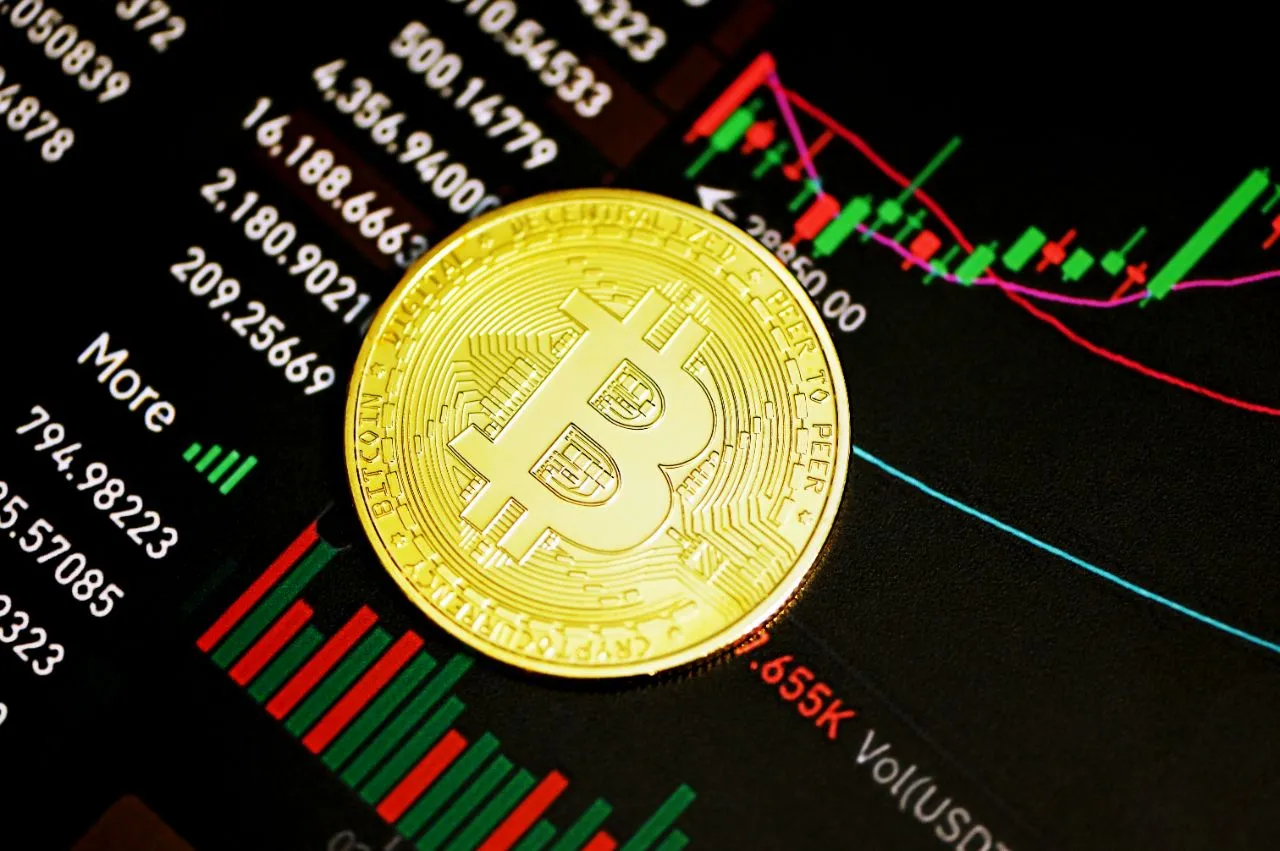
https://asset.coinness.com/en/news/7315c44d342b0a44a3f5b5528d734719.webp
Photo by Kanchanara on Unsplash

Crypto trading volume up 68.2% in a month

According to Xangle, a crypto data intelligence platform, the total crypto trading volume in Korea rose by 68.2% between the last week of January and the last week of February, rising from KRW 2.39 trillion to KRW 40.2 trillion. During the same period, the daily average trading volume also grew from around KRW 4 trillion to KRW 5.7 trillion.  


In particular, the bitcoin trading volume on Upbit surged to 19,254 BTC on Feb. 28, reaching the second-highest level since Nov. 10, 2022, when the asset’s trading volume stood at 20,710 BTC. After signing the real-name account contract with Upbit in 2020, Kbank raked in KRW 29.2 billion in fees during the last bull market of 2021, which was equivalent to 14% of its annual interest income of KRW 198 billion and exceeded its net income for the year, which stood at KRW 22.5 billion.


Increased bank deposits from exchange users

Kbank also saw a substantial rise in its balance sheet, with Upbit users depositing around KRW 2.94 trillion into their real-name accounts. The sum is six times greater than the deposits made into NongHyup Bank by Bithumb users, which stood at KRW 547.1 billion. 


Experts see that the surge in Kbank’s user base, which recently surpassed 10 million users, is largely attributed to growing excitement surrounding bitcoin. One crypto insider said that crypto trading fees, which have been on the decline for the past 2 years, could take a turn this year, signaling further gains for the affiliated banks. 

 

More to Read
View All
Policy & Regulation·

Sep 19, 2023

HKMA Issues Warning Against Crypto Firm Misrepresentation

HKMA Issues Warning Against Crypto Firm MisrepresentationThe Hong Kong Monetary Authority (HKMA), the central bank for the Chinese autonomous territory, has taken a stand against cryptocurrency businesses that falsely present themselves as “banks” and market their products as “deposits,” issuing a public advisory to raise awareness about the issue.Photo by Marcel Eberle on UnsplashBanking ordinance violationsIn a press release published to its website on Friday, the HKMA said that instances had arisen where crypto firms had labeled themselves as “crypto banks,” “crypto asset banks,” and “digital trading banks.” The regulatory authority underscored that such misrepresentations could be in violation of the Banking Ordinance in Hong Kong.In addition to adopting misleading bank-related titles, these crypto firms have been advertising “savings plans” as “low risk” with “high return,” potentially misleading the public into believing that these entities are authorized banks in Hong Kong, where they can securely deposit their funds.The HKMA stressed that only entities such as licensed banks, restricted license banks, and deposit-taking companies, collectively referred to as “authorized institutions” and holding a license granted by the HKMA, are legally permitted to engage in banking or deposit-taking activities in Hong Kong.Furthermore, funds held on crypto exchanges are not covered by Hong Kong’s Deposit Protection Scheme. “Under the Banking Ordinance, only licensed banks, restricted license banks and deposit-taking companies, which have been granted a license by the HKMA can carry out banking or deposit-taking business in Hong Kong,” the HKMA stated.Misuse of banking termsAny entity using the term “bank” in its business name or implying that it offers banking services in Hong Kong is committing an offense, according to the central bank. The same rule applies to any entity engaging in deposit-taking activities in Hong Kong or soliciting the public to make deposits.It’s important to note that crypto firms not officially recognized as banks in Hong Kong are not subject to the oversight of the HKMA.The HKMA advised the public to exercise caution. In cases of uncertainty regarding an entity claiming to be a bank or soliciting deposits in Hong Kong, individuals are encouraged to consult the register of authorized institutions on the HKMA’s website, and if doubts persist, it suggests that they should contact the authority via its Public Enquiry Service hotline.According to section 97 of the Banking Ordinance, only a bank or a central bank can use the term “bank” or its derivatives in its business name in Hong Kong without the written consent of the HKMA.Additionally, sections 11 and 12 of the Banking Ordinance stipulate that only entities possessing a valid banking license or recognized as authorized institutions are permitted to engage in banking or deposit-taking activities in Hong Kong. As per section 92 of the Banking Ordinance, only an authorized institution is authorized to issue advertisements inviting the public to make deposits, with certain exceptions.The HKMA’s advisory serves as a stern reminder to the crypto industry that regulatory compliance and transparency are essential, particularly when using terms associated with traditional banking, to protect the interests of the public.

news
Web3 & Enterprise·

Aug 08, 2023

Asiastar Entertainment and Codus to Develop Casual P2E Game with NFT Rewards

Asiastar Entertainment and Codus to Develop Casual P2E Game with NFT RewardsAsiastar Entertainment, a Korean company specializing in animation, food products, and toys, revealed plans last Friday to work with its business partner, software and blockchain development firm Codus, to develop a casual play-to-earn (P2E) game that rewards players with NFTs.Photo by Choong Deng Xiang on UnsplashTokenized in-game assets and coin rewardsSpecifically, multiple in-game characters and backgrounds will be tokenized as NFTs for trading. As players progress through the game, they can also earn rewards in the form of TBC — the official tradeable coin issued by TurboChain Foundation, a subsidiary of Asiastar Entertainment. These rewards can be exchanged for gift vouchers and various merchandise, the company said.The two companies plan to leverage Asiastar Entertainment’s Great Q-Bot animation model — a model originally aimed at providing animated educational content for children — to create the P2E game.Watch-to-earn, short-form videosMeanwhile, TurboChain Foundation is gearing up to launch its Turbo Playhouse platform in the latter half of the year. This watch-to-earn, short-form video platform links offline products and online videos with QR codes to allow users to receive TBCs.Asiastar Entertainment also added that it is currently focusing on expanding its business through blockchain-related ventures by taking advantage of its core competencies in this emerging field.

news
Markets·

Aug 21, 2025

China mulls yuan-pegged stablecoin approval

The Chinese authorities are reportedly mulling over the possibility of approving the use of stablecoins pegged to and backed by the Chinese yuan. That’s according to a report published by Reuters on Aug. 20, with the publication citing “sources familiar with the matter.”Photo by Eric Prouzet on UnsplashInternationalization of the Chinese yuanChina’s State Council, its cabinet and primary administrative authority, has scheduled a review of yuan-backed stablecoins for later this month, a development that could potentially lead to their approval. The Chinese have been leaders in recent years in the development of a central bank digital currency (CBDC), the digital yuan. The digital yuan was further along in its development than any other CBDC globally, with the Chinese making concerted efforts to bring the digital currency into use at home, with an eye toward global use for international trade. While the U.S. dollar has enjoyed an extended period as the world’s reserve currency, the weaponization of the currency by the U.S., particularly through the application of sanctions, has led BRICS (Brazil, Russia, India, China and South Africa) nations to consider alternatives. One of Reuters sources asserted that the Chinese authorities are now homing in on the potential to internationalize the yuan via stablecoins. Setting the tone for stablecoin useMembers of the Chinese government leadership are expected to establish the tone for stablecoin use following their upcoming review, outlining the parameters within which the Chinese authorities will permit their use. Reacting to this development, Robin Brooks, a senior fellow at the Brookings Institution, asserted that China’s newfound interest in yuan-backed stablecoins is a sign of “how insecure China is in the global financial system.” Brooks added that the way to internationalize a sovereign currency is to promote the rule of law and property rights rather than pursue the use of stablecoins, which he described as “ridiculous.”  Growing global interestWhile the Brookings Institution is not directly backed by the U.S. government, the organization is nevertheless a Washington, D.C.-based think tank. Despite Brooks’ objection to the use of stablecoins, China is not the only nation to show interest in using them.Taking to X, Raphaël Bloch, co-founder of crypto media platform The Big Whale, pointed out that increasingly, nations around the world are embracing stablecoins due to the efficiency of global currency distribution that is possible via public blockchain networks.  Additionally, stablecoins offer an effective means of government debt financing, given that stablecoin reserves are backed by government bonds. In the U.S., President Donald Trump has ruled out the pursuit of a CBDC. Last month, the U.S. House of Representatives passed the Anti-CBDC Act to prohibit the development of a CBDC by the Federal Reserve. Instead, Trump has said that a stablecoin regulatory bill working its way through the legislative system will ensure global dominance for the U.S. in the crypto sector. In June a Deutsche Bank strategist claimed that the legislation would strengthen the U.S. dollar’s global dominance, with several American politicians having since expressed the same view.Earlier this week, Japan’s Financial Services Agency (FSA) signaled that it is likely to approve the issuance of a yen-pegged stablecoin. Meanwhile, the authorities in South Korea are working on a bill related to won-pegged stablecoins.

news
Loading