Top

Hong Kong regulator unveils stablecoin sandbox

Policy & Regulation·March 13, 2024, 2:22 AM

Following December's release of proposed fiat-referenced stablecoin regulations, the Hong Kong Monetary Authority (HKMA) has progressed further with the introduction of a stablecoin sandbox.
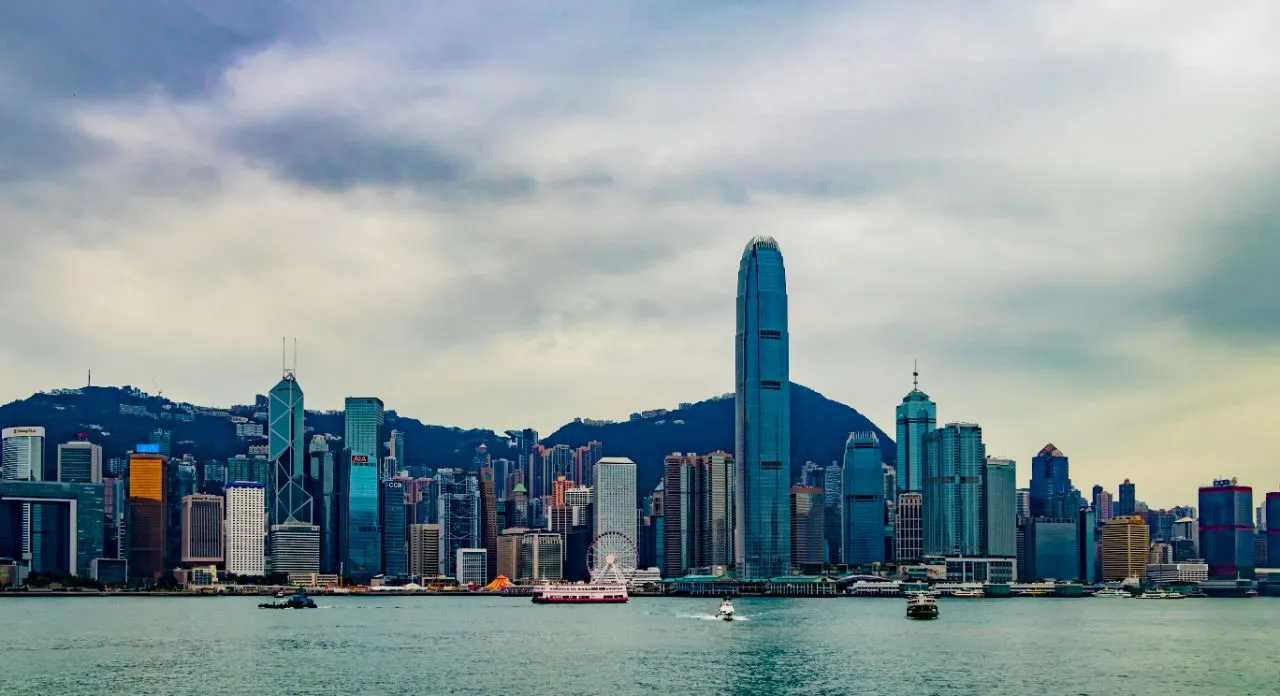
https://asset.coinness.com/en/news/e763efd689cd18271999f1369a2cfaa5.webp
Photo by Nextvoyage on Pexels

Formulating a regulatory regime

The regulatory sandbox, announced through a press release published to the regulator’s website on March 12, encompasses stablecoin currencies beyond the Hong Kong dollar, although the HKMA refrained from specifying particular currencies.


Eddie Yue, CEO of the HKMA, emphasized the sandbox's role as a platform for constructive dialogue between the regulatory authority and the industry. Yue stated:

"The sandbox arrangement serves as an effective channel for the HKMA and the industry to exchange views on the proposed regulatory regime.”

Yue further noted that such engagement is pivotal for formulating regulatory requirements conducive to the sustainable and responsible growth of the stablecoin issuance business. The stablecoin sandbox finds its digital footprint within the International Financial Centre on the HKMA's website. The documentation accompanying the sandbox outlines several key requirements for potential participants.


These include demonstrating genuine interest and a feasible plan for issuing fiat-referenced stablecoins in Hong Kong, as well as a concrete strategy for engagement within the sandbox. Additionally, applicants must exhibit a reasonable prospect of compliance with the proposed regulatory framework.


Minimum capital requirements

One notable regulation proposed stipulates that issuers must be Hong Kong-based entities with a minimum capital requirement of HK$25 million ($3.2 million) or 2% of the stablecoin issuance, whichever is higher. The HKMA remains vigilant regarding public announcements by sandbox participants, ensuring that such declarations do not misconstrue endorsement or accreditation from the regulatory authority.


In late January, reports suggested discussions between Harvest Global Investment, RD Technologies, Venture Smart Financial Holdings and the HKMA regarding their potential entry into the sandbox. Harvest Global Investment, boasting over $200 billion in assets under management, signifies a significant player in this evolving digital assets space.

RD Technologies took to the X social media platform to publicize its approval of the HKMA’s stablecoin sandbox. It also availed of the opportunity to outline that it’s in the process of launching a Hong Kong dollar (HKD)-based stablecoin, which will be known by the short-code HKDR.

Hong Kong-based fintech firm AnchorX also chimed in, stating that the sandbox is “a pivotal step forward for the industry, enabling informed dialogue and collaboration between regulators and fintech innovators.”


Like RD Technologies, AnchorX is also looking to get involved in the stablecoin business, having developed the AxHKD Hong Kong dollar-based stablecoin, which it is currently beta testing, in collaboration with Conflux Network.


Juan Leon, crypto analyst with Bitwise Asset Management, suggested that the move is a great initiative, while calling on the U.S. Federal Reserve Chair Jerome Powell to follow Hong Kong’s example.


On the tokenization front, Hong Kong made headlines in 2023 with the issuance of the world's largest native digital bond — a green bond exceeding $750 million. Late last year, it also proposed regulations relative to tokenization of real-world assets.

Guidance provided to banks on tokenization, coupled with plans for forthcoming legislation, further solidifies Hong Kong's position as a trailblazer in the realm of digital finance.


More to Read
View All
Web3 & Enterprise·

Jul 09, 2025

Metaplanet aspires to acquisition of digital bank

The CEO of Japanese hotel operator turned Bitcoin treasury company, Metaplanet, has suggested that the firm may consider acquiring a digital bank in the future. Simon Gerovich, the firm’s CEO and a former Goldman Sachs banker, told the Financial Times that part of the second stage of its overall strategy may involve “acquiring a digital bank in Japan and providing digital banking services that are superior to the services which retail now is getting.”Photo by Kanchanara on UnsplashBitcoin gold rushGerovich explained that phase one of Metaplanet’s plan involves participating in what he considers to be “a bitcoin gold rush.” He added: “We need to accumulate as much bitcoin as we can . . . to get to a point where we’ve reached escape velocity and it just makes it very difficult for others to catch up.” Other firms are jumping on the bandwagon, as within a very short timeframe, 140 companies around the world have adopted a Bitcoin treasury strategy. Metaplanet currently weighs in as the fifth-largest corporate holder of Bitcoin globally. Right now, the company holds 15,555 BTC. Its target is a holding of 210,000 BTC, which equates to around 1% of the total Bitcoin supply. Based on current pricing, such a holding would be worth in the region of $23 billion. Acquiring cash-generating businessesOnce the company has accomplished its Bitcoin accumulation goals, it plans to move on to phase two, acquiring cash-generating businesses while leveraging its Bitcoin holdings in order to do so. Using Bitcoin as collateral, Gerovich said that Metaplanet will “get cash that we can use to buy profitable businesses.”  While inroads are being made with regard to the acceptance of Bitcoin as a corporate reserve asset, it is earlier days still for its acceptance as collateral. Last month, the Federal Housing Finance Agency (FHFA) in the United States, ordered Fannie Mae and Freddie Mac, key government-sponsored players in the American mortgage market, to explore the treatment of Bitcoin as eligible collateral for mortgages. Standard Chartered and crypto exchange OKX launched a pilot program earlier this year geared towards the use of crypto for collateral purposes. Gerovich talks in terms of Metaplanet’s phase two plan playing out at a time “when bitcoin, like securities or government bonds, can be deposited with banks and then they’ll provide very attractive financing against that asset.” The Metaplanet CEO stated that he expects the Bitcoin accumulation phase of the plan to play out over a period of between four and six years. The Tokyo-listed firm started accumulating Bitcoin in 2024. Some market participants are backing Metaplanet’s strategy with their own money. Global investment management firm Capital Group recently became Metaplanet’s second-largest investor. Bitcoin treasury criticsHowever, the emergence of Bitcoin treasury firms has also drawn quite a few detractors. Some critics point out that many of these companies have a negative operating income. Market analyst Caleb Franzen asserted that even after buying Bitcoin, they’re still junk companies. Others point out that too many firms have jumped on the Bitcoin treasury bandwagon, making the prospect no longer attractive. Fakhul Miah, managing director of GoMining Institutional, is also concerned about copycats. He told Cointelegraph that ”if these smaller firms crash, we could see a ripple effect that hurts Bitcoin’s image.”

news
Web3 & Enterprise·

Dec 21, 2023

Starbucks Korea implements NFT initiative to boost sustainability efforts

Starbucks Korea implements NFT initiative to boost sustainability effortsStarbucks Korea is set to take on several eco-friendly initiatives in the new year to promote the use of personal reusable cups, including an NFT wallet and a new tumbler coupon policy, according to local news outlet Newsis on Thursday (KST).Photo by Battlecreek Coffee Roasters on UnsplashNFTs and eco-friendly effortsIn a newfound development, the brand also said that it would start issuing NFTs through a new NFT wallet on its mobile app next month as part of its eco-friendly consumption campaign. Until now, NFTs have been widely utilized in fields like art, music and entertainment due to their ability to prove individual ownership of digital assets. Starbucks’ adoption of the technology is a significant step in its implementation into daily life, which will lead to an increase in the number of real-world use cases and an acceleration in the transition to the era of Web3.To celebrate the launch of the NFT wallet, Starbucks plans to hold a promotional event where customers who use a reusable cup for one beverage ordered via the Siren Order function will receive one Eco Stamp. Up to three stamps can be collected per day. These can be exchanged for various types of NFTs, which are categorized as Basic, Creative and Artist, and each customer can only own one.Starbucks’ NFTs will be minted in collaboration with Seoul-based art platform and gallery Print Bakery (PBG) and PBG exclusive artist DADAZ, featuring images of unique cups, tumblers and more.The franchise plans to hold an offline exhibition to showcase images of the NFTs as well as its achievements in corporate sustainability at the Starbucks Jongno R store located in Jongno-gu, central Seoul, early next month.Sustainable sipsThe coffee franchise is also known for offering a complimentary beverage voucher to customers who purchase a reusable cup or tumbler. Next month, this voucher will be renamed the Eco Tumbler Beverage Coupon, which customers can exchange for a tall-sized beverage of their choice. This policy is aimed at encouraging the use of personal cups and providing tailored benefits to customers who embrace sustainable options.This new introduction was partially driven by the steady increase in the number of personal cups used at Starbucks stores around the country over the past three years. The annual number of cases has risen from 17.39 million in 2020 to 21.9 million in 2021, then 25.3 million last year.This figure has spiked significantly this year in particular, with the cumulative yearly number reaching 26.7 million last month, surpassing last year’s total. If this trend continues until the end of the year, the estimated figure is expected to be around 29.6 million, representing a 17% increase compared to 2022.This upward trend is attributed to the immediate KRW 400 discount offered to customers who participate, as well as an alternative benefit where customers can earn one “Star”, or reward point, for each purchase that they make. Until last month, the total value of benefits that were distributed via these two systems — with one Star valued at KRW 500 — exceeded KRW 12 billion. The ratio of immediate discount and Star rewards in this value stands at 30% and 70%, respectively.Green commitmentStarbucks also plans to continue its No Single-Use Cup Day campaign, a collaboration with the Korea Zero Waste Movement Network that has been ongoing for the past five years. The brand dedicates the tenth of every month as a day without single-use disposable cups, giving out merchandise like mugs, tumblers, coffee ground planting kits and stickers. Since last year, various events have been organized to celebrate the day, such as coupons gifted to customers who use reusable cups the most. Approximately one million people have participated in these promotions since the campaign’s inception in 2018.Starbucks expressed its hopes that these initiatives would act as a catalyst for positive changes in local communities by encouraging the reduction of waste.

news
Policy & Regulation·

May 27, 2023

Gulf Binance Secures Thai Digital Asset License

Gulf Binance Secures Thai Digital Asset LicenseBinance, one of the world’s leading cryptocurrency exchanges, has secured a digital asset operator license in Thailand, paving the way for the launch of a new crypto exchange and broker. The license, granted by the Ministry of Finance of Thailand and overseen by the Southeast Asian country’s Securities and Exchange Commission (SEC), ensures that the upcoming platform will operate in compliance with regulatory requirements.Photo by Markus Winkler on UnsplashLicense awardThe license was awarded to Gulf Binance, a joint venture between Binance and Gulf Innova Co., Ltd., a subsidiary of Gulf Energy Development PCL. It marks a significant milestone in Binance’s expansion efforts. The partnership was initiated through a memorandum of understanding signed in January 2022, as both parties recognized the potential of establishing a digital asset exchange in Thailand.Richard Teng, the head of Asia, Europe, and MENA at Binance commented on the development: “By harnessing Binance’s expertise together with Gulf’s established local presence and network, Gulf Binance aims to showcase the full potential of blockchain technology to meet the needs of Thai users. Local users can expect access to a trusted and regulated service that prioritizes user security alongside compliance with local regulations.”Combined expertiseGulf Innova, as a prominent player in the Thai business landscape, brings extensive expertise and experience in the digital asset trading sector to the joint venture. The conglomerate, headed by billionaire Sarath Ratanavadi, operates in various industries, including energy production, telecommunications, and digital businesses.By combining Binance’s unparalleled growth and expertise in the digital asset space with Gulf’s established presence and knowledge in Thailand, the partnership aims to create a powerful synergy that drives innovation, fosters growth, and provides exceptional value to users in the digital asset ecosystem.Q4 launchThe new crypto exchange is expected to commence operations in the fourth quarter of 2023, although further details about the platform will be disclosed closer to the launch.Often criticized for its opaque structure, Binance is showing renewed commitment to transparency and regulatory compliance. As regulatory frameworks are put in place in varying jurisdictions, global crypto businesses are having to change corporate structures in order to meet these changing requirements. That’s evidenced by Binance’s Thai joint venture, its launch of a separate corporate entity in the form of Binance Japan and a similar move by crypto exchange BitMEX in Hong Kong.Thailand has emerged as a significant cryptocurrency hub in Southeast Asia, with its capital city, Bangkok, ranked 10th globally in The Crypto Readiness Index published by Recap, a cryptocurrency tax software company. Despite the ban on cryptocurrencies as a payment method, Thailand continues to flourish as a hub for trading and investment activities in the crypto space.That ban on cryptocurrency payments, implemented by the SEC in April 2022, aimed to safeguard the stability of the financial system and mitigate potential risks to the economy. The SEC identified price volatility, cyber theft, and personal data leakage as concerns associated with cryptocurrencies. However, the regulatory measures did not impede trading or investment activities, allowing the crypto industry to thrive.Chainalysis, a leading blockchain analysis company, ranked Thailand 8th in its Global Crypto Adoption Index for 2022, surpassing countries like Russia, China, Nigeria, Turkey, Argentina, and the UK. This recognition highlights Thailand’s progressive stance toward digital assets and its growing adoption within the country.

news
Loading