Top

South Korea and OECD hold roundtable on ASEAN digital finance

Policy & Regulation·March 19, 2024, 12:26 AM

South Korea is holding a joint two-day conference with the Organization for Economic Co-operation and Development (OECD) on Monday to discuss digital finance in the member countries of the Association of Southeast Asian Nations (ASEAN). 


Held in partnership with Korea’s Financial Services Commission (FSC) and the Korea Institute of Finance (KIF), the event was titled “OECD-FSC-KIF Roundtable on Digital Finance in ASEAN.” The roundtable intends to bring together many financial experts and high-ranking regulators worldwide, sharing the trend of digital financial frameworks in the ASEAN region while seeking solutions to emerging risks following financial digitalization. 
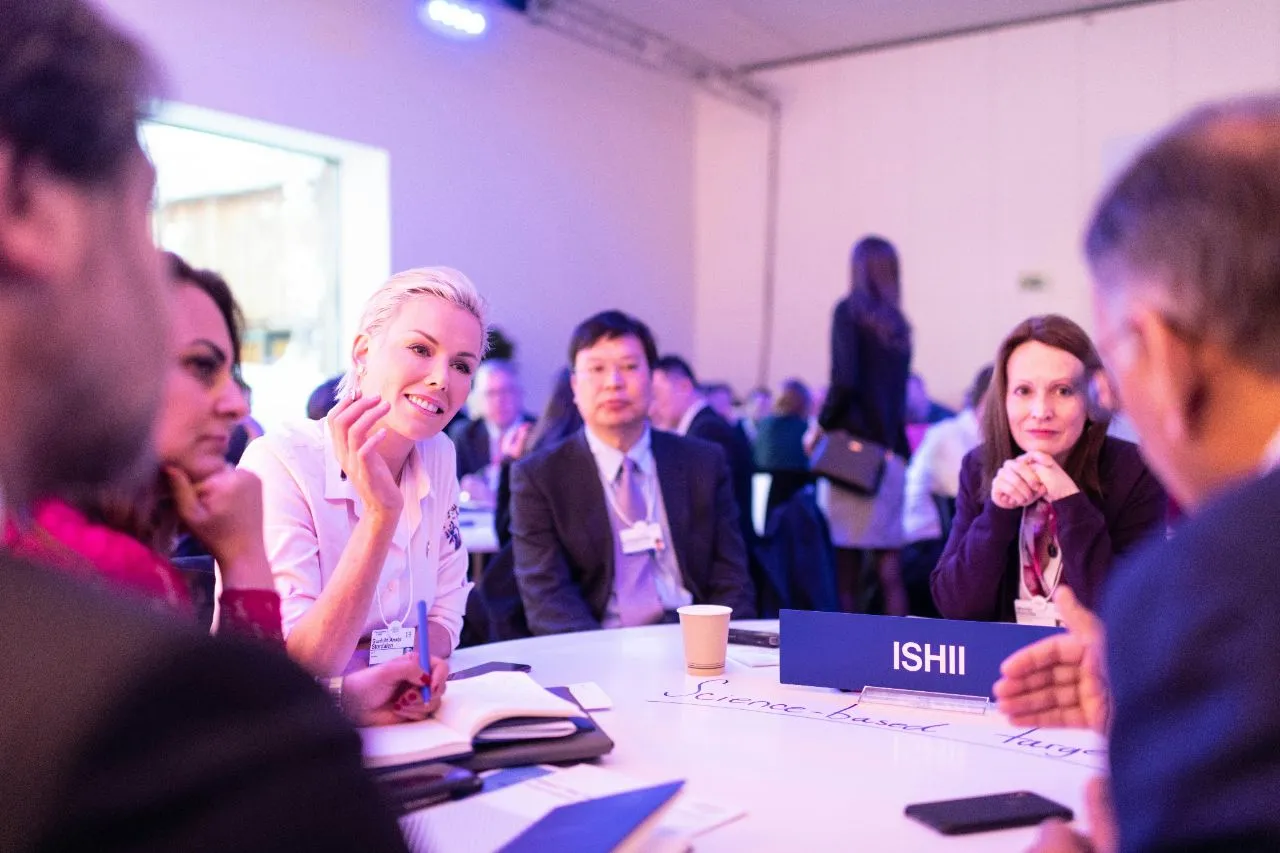
 

https://asset.coinness.com/en/news/f907c5b54be17b6d1aabbcbd0ab890ac.webp
Photo by Evangeline Shaw on Unsplash

Two-day event focusing on digital assets and AI 

The first day focused on the global market trend relative to digital assets such as central bank digital currency (CBDC) and virtual assets. FSC Vice Chairman Kim So-young, KIF Chairman Lee Hang-yong and OECD Director for Financial and Enterprise Affairs Carmine Di Noia delivered opening remarks, followed by discussion sessions joined by expert panelists.


Among the first day’s roundtable agendas were: “Digital assets, CBDCs, tokenization and DLT-based finance: the Asian perspective,” “The limits of DeFi in terms for financial inclusion: Lessons from ASEAN,” “DeFi and crypto assets in ASEAN and beyond” and “Cyber-security in the financial sector.” 


The second day focuses on leveraging artificial intelligence (AI) in financial sectors, with sessions titled “Artificial intelligence in Finance: the Asian perspective” and “Generative Artificial Intelligence in Finance in Asia and ASEAN.” 


South Korea’s commitment to bolstering global financial cooperation 

During the roundtable, the FSC Vice Chairman Kim vowed to strengthen global financial cooperation with ASEAN countries.


“(We) will continue strengthening our cooperation with other global partners, including ASEAN countries and international organizations, to share latest trends in finance and maintain our system in line with the international regulation norms,” said Kim.


 

More to Read
View All
Web3 & Enterprise·

Aug 28, 2023

Infinite Block Receives Certification for Information Security Management System of Blockchain…

Infinite Block Receives Certification for Information Security Management System of Blockchain PlatformSouth Korean blockchain fintech company Infinite Block announced on Monday that it has obtained ISO 27001 certification for the information security management system of its upcoming blockchain platform from Lloyd’s Register Quality Assurance (LRQA), a UK-based global assurance provider.Ramping up information securityISO 27001 is an international standard established by the International Organization for Standardization (ISO) for managing information security. It enables companies and organizations to establish a system that manages information security, cybersecurity, and privacy protection, thereby proving to their customers and partners that they protect important and personal data.Photo by Towfiqu barbhuiya on UnsplashThis latest development comes after the company recently received approval from the Korean Financial Services Commission to function as a virtual asset service provider (VASP), becoming the 37th entity to do so in Korea.“Although we are still a fledgling startup, we have made consistent efforts to establish an information security management system since our inception,” said Jeong Gu-tae, CEO of Infinite Block. “This certification is a testament to our dedication.”Comprehensive blockchain platformInfinite Block is currently developing a blockchain platform set to be launched soon that offers integrated support for virtual asset custody services, including transferring, storing, and managing virtual assets. It also supports various blockchain mainnets and tokens, including Bitcoin, Ethereum, Klaytn, Tezos, Polygon, and Avalanche.“We will continue to enhance and improve our information security system to further solidify user trust,” CEO Jeong added.

news
Markets·

Oct 25, 2023

Korean Crypto Market Outpaces Stock Exchange Amid Bitcoin ETF Optimism

Korean Crypto Market Outpaces Stock Exchange Amid Bitcoin ETF OptimismThe anticipation is building around the potential approval of BlackRock’s Bitcoin exchange-traded fund (ETF) in the United States. As the world’s largest asset manager is anticipated to obtain a green light, Bitcoin’s price has surged by more than 17% just this week, capturing the keen interest of investors.Photo by Kanchanara on UnsplashCrypto surpassing stocks in daily trading volumeIt’s worth highlighting the surge in the Korean cryptocurrency market, where the daily trading volume has recently eclipsed that of the Korean Composite Stock Price Index (KOSPI).According to local news outlet Maeil Business Newspaper, on October 24, KOSPI recorded a trading volume of KRW 7.83 trillion ($5.8 billion). Yet, in a 24-hour span from 9 a.m. (KST) on October 23 to 9 a.m. on October 24, the combined trading volume of the top five Korean cryptocurrency exchanges reached KRW 8.44 trillion.Breaking it down by exchange, Upbit had a 24-hour trading volume of KRW 6.97 trillion, followed by Bithumb with KRW 1.36 trillion, Coinone with KRW 87.6 billion, Korbit with KRW 18.8 billion, and Gopax with KRW 2.2 billion.Retail investors leaving the stock marketThe surge in the Korean crypto market is largely due to retail investors shifting their focus away from the Korean stock market. This move comes in response to challenges the stock market has been grappling with, such as monetary tightening in the US and increased volatility stemming from the Israel-Hamas war.

news
Policy & Regulation·

Sep 09, 2025

South Korea to mandate disclosure of crypto funds in home purchases

South Korean authorities will require homebuyers to disclose funds originating from cryptocurrency sales, a move aimed at increasing transparency in the nation's tight real estate market. The new rule is part of a wider government effort to address housing affordability, which is particularly pronounced in Seoul, and to integrate digital assets into its regulatory framework. The change, announced on Sept. 7 as part of new housing supply measures, will alter the mandatory funding plan submitted during property transactions. Proceeds from digital assets will be listed as a distinct category, similar to funds from stocks or bonds. Officials are also expanding loan disclosure requirements to include business loans and overseas borrowing, closing potential financing loopholes.Photo by Traxer on UnsplashImpact of asset volatility on property valuesThe policy follows growing evidence that volatility in assets like cryptocurrency can spill over into the property market. A 2024 study cited by Maeil Business Newspaper highlighted that both the COVID-era stock rally and Bitcoin's 2023 price surge had a discernible impact on housing values. According to Yu Jung-suk, a professor at Dankook University, apartments in Seoul's affluent Gangnam district are particularly sensitive to fluctuations in Bitcoin and the KOSDAQ index. He noted that high-profile property acquisitions by young crypto investors, even if few in number, can significantly sway market sentiment. Professor Yu suggested that regulators may need more comprehensive tools to manage the risks connecting different asset classes. The government's new measures also seek to cool the capital's housing market, where prices have continued to rise despite a slowdown in growth. In contrast, prices in areas outside Seoul have been declining since 2022. To address the supply-demand imbalance, officials plan to begin construction of 1.35 million new homes in the Seoul metropolitan area between 2026 and 2030. Stablecoin regulation and CBDC trials advanceBeyond real estate, officials are developing a formal regulatory structure for stablecoins. The Presidential Commission on Policy Planning is reportedly considering a model where a consortium of banks and fintech firms would be granted rights to issue a won-pegged stablecoin. Supervision for this new system would fall to a proposed Financial Stability Council, a body intended to serve as a central coordinator for financial policy, comprising the finance ministry, the Bank of Korea, and other regulators. The initiative aims to combine the stability of the traditional banking sector with the innovation of non-bank financial companies. The evolving regulatory environment is attracting attention from global industry leaders. Executives from Tether, the issuer of the USDT stablecoin, met with Shinhan Financial Group CEO Jin Ok-dong in Seoul on Sept. 8. While Tether representatives stated they were monitoring the regulatory climate, they confirmed no specific business plans were discussed. Separately, the Bank of Korea is moving forward with digital currency experiments. In partnership with government agencies and six major commercial banks, the central bank will launch a pilot program to test the use of a digital currency for distributing state subsidies and vouchers. 

news
Loading