Top

Hong Kong digital yuan pilot lacks P2P capabilities

Policy & Regulation·May 20, 2024, 7:06 AM

Hong Kong has launched a pilot program for the digital yuan, marking the People’s Bank of China's (PBoC) central bank digital currency’s (CBDC) first major deployment outside mainland China. 


This initiative, facilitated by the Hong Kong Monetary Authority (HKMA), represents another step forward in the integration of the digital yuan into Hong Kong's financial ecosystem.

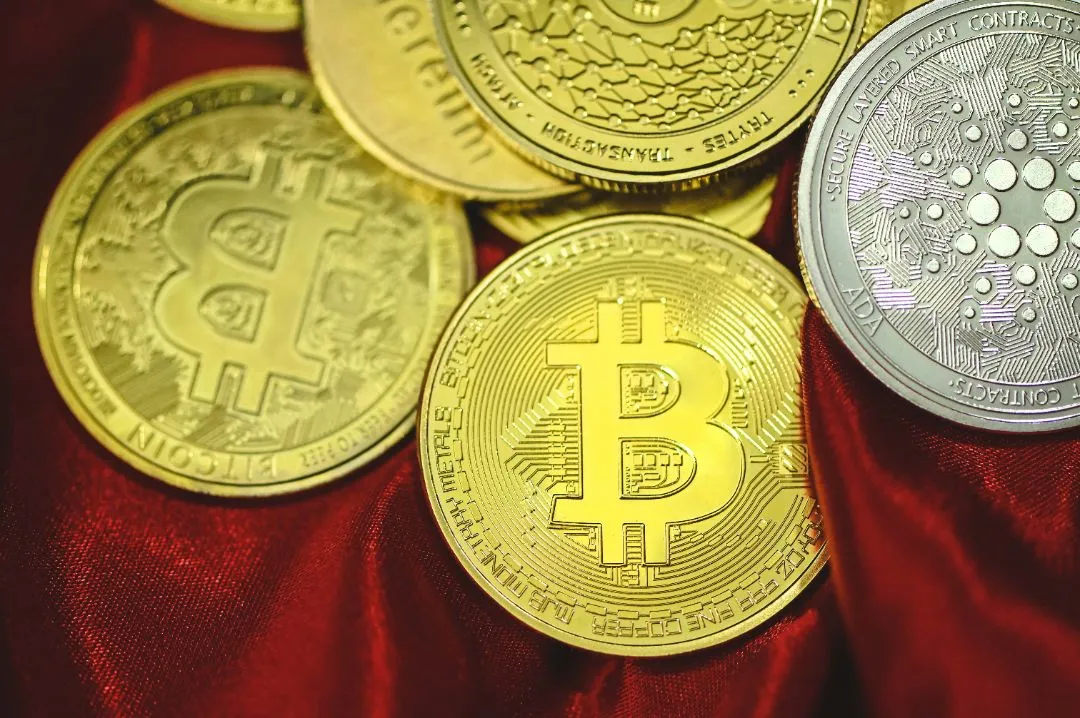
https://asset.coinness.com/en/news/44365445b9877a0bc536aab5d0bd1892.webp
Photo by bady abbas on Unsplash

Cross-border transactions rather than P2P

According to a press release, the HKMA and PBoC are working together to enable Hong Kong users to set up personal e-CNY wallets using just their Hong Kong mobile phone numbers. The faster payment system (FPS) will support these e-CNY wallets, allowing users to top up their wallets through 17 retail banks in the Chinese autonomous territory. However, the e-CNY wallets are primarily designed for cross-border payments between Hong Kong and the mainland, and currently do not support person-to-person transfers within Hong Kong.


This pilot aims to facilitate transactions for Hong Kong residents using their digital yuan wallets, marking the first integration of a CBDC through a major central bank. The Digital Currency Institute (DCI) is managing the interoperability infrastructure between the FPS and the digital yuan, with a focus on enhancing cross-border payments, a key objective on the G20 countries' roadmap.


More functionality promised

Like blockchain protocols, the digital yuan pilot offers 24/7 payment capabilities. Eddie Yue, the chief executive of the HKMA, stated that the e-CNY application and wallet would gradually gain more functionality as the HKMA and PBoC work to encourage more retail merchants to adopt the system. Yue stated:


“By expanding the e-CNY pilot in Hong Kong and leveraging the 24x7 operating hours and real-time transfer advantages of the FPS, users may now top up their e-CNY wallets anytime, anywhere without having to open a Mainland bank account, thereby facilitating merchant payments in the Mainland by Hong Kong residents.”


The HKMA and DCI are planning upgrades to the e-CNY wallets through real-name verification, aiming to enable corporate use cases for cross-border trade settlements in the future.


Adoption struggles

With at least 140 countries exploring CBDC pilots, China's digital yuan is among the most advanced. China has been actively promoting its CBDC, even paying monthly salaries in e-CNY to government workers and employees of state-owned enterprises. However, as reported by the South China Morning Post, many recipients are hesitant to use the digital yuan due to privacy concerns and other limitations.


China's central bank aims to increase the use of the yuan in Hong Kong, especially in tourist areas. Last June, digital yuan ATMs were installed in the resort city of Sanya in an attempt to target use of the currency by tourists. Although the city of Jinan embarked upon an initiative last year to enable digital yuan payments on its bus system, the currency is not yet widely accepted for public transportation across China. 


Meanwhile, Hong Kong is in the second phase of its own CBDC pilot, the e-HKD, and has launched a regulatory sandbox for stablecoins to foster communication between regulators and issuers of fiat-pegged stablecoins in the region.

 

More to Read
View All
Web3 & Enterprise·

Aug 08, 2025

Bakkt takes stake in Japanese textile firm in pivot to crypto treasury strategy

Bakkt, an American digital asset custodian and trading firm, has acquired a stake in Marusho Hotta, a Japanese textile firm, as part of a new crypto treasury strategy which the company adopted recently. The firm, which was established in 2018 and is 55% owned by Intercontinental Exchange, the owner of the New York Stock Exchange (NYSE), published a statement on its website on Aug. 6, outlining that it had acquired a 30% stake in Marusho Hotta. The textile firm, a publicly-listed company on the Tokyo Stock Exchange (TSE: 8105), is both a manufacturer and distributor of yarn and bedding, as well as Japanese and Western clothing.Photo by 🇸🇮 Janko Ferlič on Unsplash‘bitcoin.jp’As a result of the transaction, Bakkt International President Phillip Lord will become CEO of Marusho Hotta, and the company will be renamed as “bitcoin.jp.” Akshay Naheta, co-CEO of Bakkt, commented on the development, stating: "Japan's regulatory environment creates an ideal platform for a Bitcoin-centered growth business. We look forward to working with MHT's team to integrate Bitcoin into their operating and financial model and to establish MHT as a leading Bitcoin treasury company." Back in June, it emerged that Bakkt was working towards raising $1 billion from investors, providing the first indication that the firm was moving towards pursuing a crypto treasury strategy. A filing lodged with the Securities and Exchange Commission (SEC) at the time stated:“We may acquire Bitcoin or other digital assets using excess cash, proceeds from future equity or debt financings, or other capital sources, subject to the limitation set forth in our Investment Policy.” The company went on to outline that the timing and magnitude of any such crypto purchases would depend upon market conditions at the time, capital market receptivity, the firm’s business performance and other strategic considerations. Given the credentials within traditional finance of the company’s owners, the arrival of Bakkt in 2018 was seen as a significant event within the crypto sector. However, the firm’s journey has not been an easy one. It started out by trying to appeal to retail users and bring about real-world use of cryptocurrency. It established an app and a partnership with Starbucks, which looked to bring crypto into mainstream use in terms of everyday payments.However, that partnership fizzled out and in 2024 a filing lodged by the company with the SEC revealed that the company’s position was challenging, with it warning that it “might not be able to continue as a going concern.” When the business first launched, it aspired to bring Bitcoin to 401(k) retirement accounts in the U.S. It may have been ahead of its time in that regard as it had to contend with Donald Trump’s first term as president when he wasn’t particularly pro-crypto and a distinctly anti-crypto Biden administration immediately afterwards. It is only now, seven years after the founding of Bakkt, that the current Trump administration is finally moving to allow crypto investment to form part of 401(k) plans. More recently the firm had concentrated on catering to the needs of institutional investors but faced further turmoil earlier this year when it lost two customers who allegedly made up 73% of Bakkt’s revenue.

news
Web3 & Enterprise·

Jun 09, 2023

AliExpress Partners With ‘The Moment3!’ NFT Project

AliExpress Partners With ‘The Moment3!’ NFT ProjectAliExpress, the renowned global e-commerce platform and subsidiary of China’s Alibaba Group, is making its entry into the world of non-fungible tokens (NFTs) through a newly announced partnership with The Moment3!, a Web3 project. The collaboration aims to release a collection of 5,555 NFTs later this month.Photo by Andrey Metelev on UnsplashWhat is ‘The Moment3!’?Oddly, we know very little about the project. Its Telegram channel has just been established, it doesn’t have a website, while its Discord and Twitter channels are also recently established with modest followings. Anonymity is a feature in Web3 and perhaps that’s the approach this project is taking. Whatever the background, it has to be said that there must be some talent behind the project for it to secure the backing of an entity like AliExpress by way of this partnership.This recent announcement was initially made on AliExpress’ official Twitter account but that tweet has since been removed. The project itself tweeted out news of the partnership on Thursday. The Moment3!’s mission, as stated in its Twitter bio, revolves around utilizing NFTs to immortalize special moments on the blockchain.According to the project’s Discord channel, The Moment3! aims to connect with real-world businesses and provide NFT owners with benefits and exclusive rights beyond the collectible value.NFT debutThis marks AliExpress’ initial venture into the NFT market, although its parent company, Alibaba, has previously explored the Web3 space. In September 2022, Alibaba’s luxury shopping platform, Tmall Luxury Pavilion, introduced an immersive shopping metaverse experience and introduced the Meta Pass, granting users free access to virtual experiences.Alibaba-Centric Web3 projectsThere have been several other Web3-related investments and developments related to Alibaba Group companies in recent months.Last month, Alibaba Cloud, one of the world’s largest cloud computing companies, joined forces with the Avalanche layer one blockchain project to introduce “Cloudverse,” a launchpad facilitating the creation of personalized spaces within the metaverse for businesses.In April Alibaba Cloud was the co-organizer of the Web3 Festival, an event held in Hong Kong to showcase the autonomous Chinese territory for the development of the Web3 sector. The four-day event attracted 10,000 attendees.In early May, Artifact Labs, a Hong Kong-based start-up company that specializes in metaverse and Web3 product offerings, raised $3.25 million in a funding round led by Blue Pool Capital. The investment firm is the personal investment vehicle of Alibaba founders Jack Ma and Joe Tsai.NFT warningAliExpress, owned by Alibaba Group, is a global e-commerce platform that does not cater to customers in mainland China, despite being headquartered in China. The Chinese government prohibited all cryptocurrency transactions in September 2021. NFTs remained legal although authorities recently issued a warning on their use, together with some guidelines.With its new collaboration, AliExpress is expanding its reach into the Web3 space and exploring the potential of NFTs. As the release date approaches, anticipation grows to witness the specific features and benefits offered by the 5,555 NFTs that will soon be available to the public.

news
Policy & Regulation·

Oct 05, 2023

KCS Says Illegal Forex Transactions for Crypto Purchases Amount to $7.7B

KCS Says Illegal Forex Transactions for Crypto Purchases Amount to $7.7BOver the past five years, the total value of illegal foreign exchange transactions associated with virtual asset purchases has amounted to approximately KRW 10.4 trillion ($7.7 billion), according to the Korea Customs Service’s report received on Thursday by Go Yong-jin, a member of the Democratic Party of Korea on the National Assembly’s Strategy and Finance Committee.Photo by Sasun Bughdaryan on Unsplash“Illegal transactions on foreign exchanges for the purchase of virtual assets are occurring due to the higher prices of virtual assets in Korea compared to prices abroad,” Go explained.Crimes incited by crypto waveThe data showed that the number of violations subject to fines was 6,066, involving forex transactions of KRW 2.3 trillion. In particular, violations made in 2020 and 2022 accounted for the majority, making up 78.7% with 4,775 cases and a value of KRW 1.9 trillion, or 83.7% of the cumulative total. This indicates a substantial increase in illegal activities during the periods when the crypto investment frenzy in Korea was at its peak.Uncovering key patternsWhile foreign exchange transactions were primarily intended for acquiring virtual assets, they were often disguised as trade payments. There were also cases where individuals withdrew foreign currency from overseas ATMs to buy cryptocurrencies. These two scenarios were the most prevalent cases for which fines were imposed. More specifically, among the 6,066 violations, there were 4,518 instances of the former and 1,486 cases of the latter. The transferred funds amounted to KRW 1.9 trillion and KRW 407 billion, respectively.During the five-year period, individuals involved in 93 cases of these forex activities — collectively valued at KRW 8.1 trillion — were penalized following the referral of their cases to prosecutors. In particular, the violations in 2022 accounted for 70.3% (KRW 5.7 trillion). This could be accredited to the breakout of suspicious large-scale forex transactions last year, which prompted local authorities such as the Korea Customs Service and the Financial Supervisory Service (FSS) to initiate planned investigations.The most common type of illegal foreign exchange transaction cases referred to prosecutors was similar to those that incurred fines: overseas remittances disguised as trade payments, constituting 49.9% (KRW 4 trillion) of all cases. Transferring foreign currency via unregistered entities was the second most common violation, making up 47.2% (KRW 3.8 trillion). These transfers breach the Foreign Exchange Transactions Act and are always reported to prosecutors.Go thereby called on authorities to intensify crackdowns on illegal forex transactions aimed at trading virtual assets and to revise foreign exchange regulations accordingly.

news
Loading