Top

Japan’s largest bank collaborates with KlimaDAO on carbon credit marketplace

Markets·May 23, 2024, 2:18 AM

Japan’s largest bank, MUFG, has teamed up with KlimaDAO Japan, the provider of a digital reserve currency backed by carbon credits, to explore the use of the JPYC stablecoin for settling tokenized carbon credit transactions on the Progmat blockchain platform.


Settlement on Progmat

Progmat provides the infrastructure to enable the issuance of various stablecoins. Last September, MUFG announced a collaboration with Binance geared towards stablecoin issuance.


The JPYC stablecoin, operational since 2021, functions as a prepaid money instrument, similar to a prepaid card, due to its existence before Japan’s stablecoin legislation. Under new regulations, JPYC can either obtain a money transmitter license or issue a trust-style stablecoin with a bank like MUFG acting as the trustee for the stablecoin's reserves. Last year, JPYC formed a partnership with MUFG implicating the use of the Progmat platform. 


This partnership, along with the involvement of Kansai Electric subsidiary Optage as the integration partner, sets the stage for the KlimaDAO stablecoin experiments. Optage will provide the corporate infrastructure required to manage the carbon credits added to the blockchain and provide a means for funds settlement to be achieved via bank transfer. Through the use of various local stablecoins for the purpose of settlement, it’s hoped that improved liquidity on a global basis may be achieved.
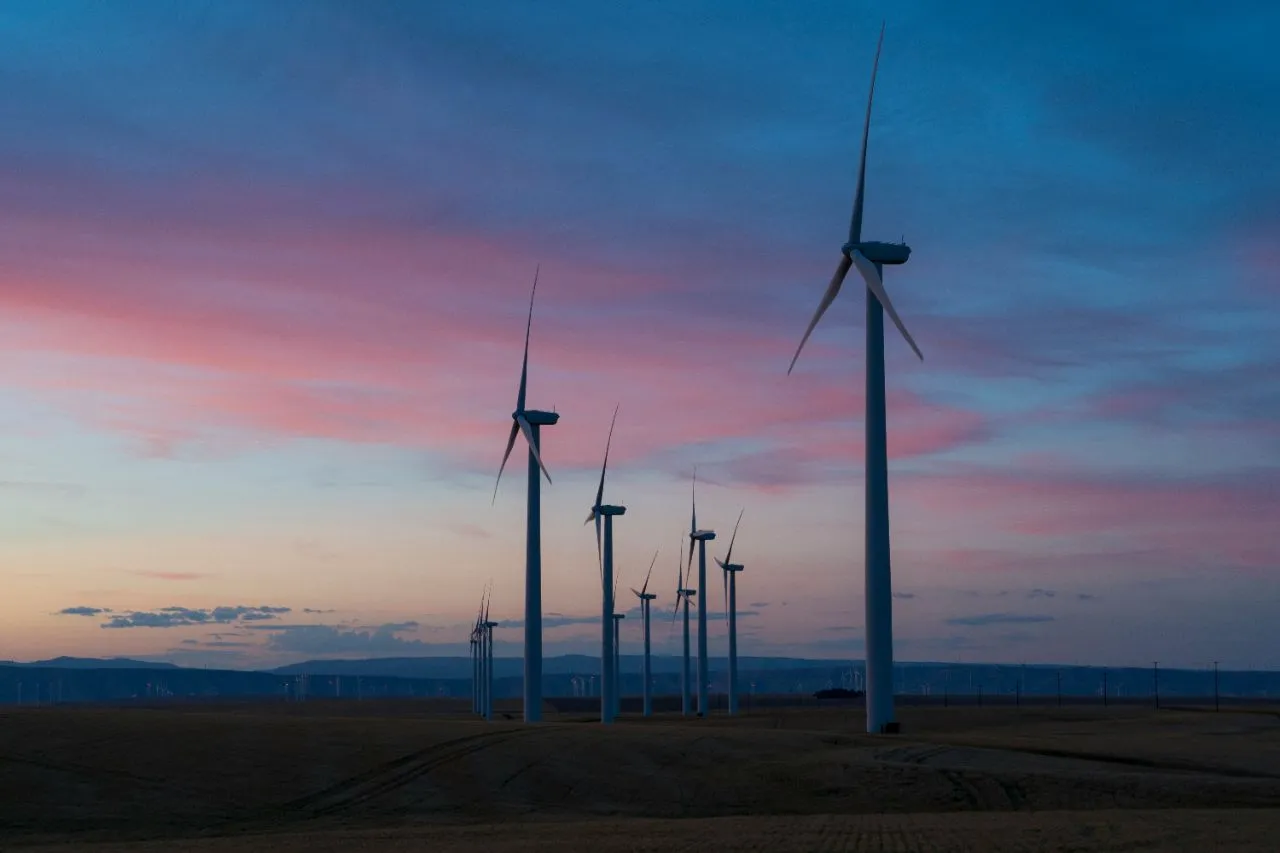
https://asset.coinness.com/en/news/c95c6c3bc93ed0fb37638494bc42b445.webp
Photo by Dan Meyers on Unsplash

Initially recognized for making tokenized carbon credits accessible on public blockchains, KlimaDAO's functionality extends beyond this. The organization also offers the capability to retire credits. Last year, KlimaDAO expanded its reach by launching Carbonmark, an enterprise-focused marketplace. 


This platform, which utilizes blockchain technology, namely Polygon, and smart contracts, offers a user-friendly experience by integrating traditional payment methods like bank transfers and SAP integration. 


J-Credits

Japan operates a national scheme known as J-credits, and the Tokyo Stock Exchange has introduced a secondary market for these credits. J-credits are designed to certify the amount by which greenhouse gas emissions have been reduced through the use of carbon sinks in Japan. However, the volume of J-credit transactions remains low, reflecting the broader state of Japan's voluntary carbon market. 


KlimaDAO aims to address this by launching the KlimaDAO Japan Market, simplifying the process for domestic companies to purchase and utilize carbon credits. This initiative will involve tokenizing J-credits, referred to as D-Carbons. 


Andrew Bonneau, KlimaDAO co-founder, outlined on X that “@KlimaDAO is in a unique position to facilitate an efficient J-Credit market on chain, while serving as the base infrastructure for integrating these assets with 3rd party services.” While the initial phase will use traditional bank payments, the ultimate goal is to transition to using stablecoins, particularly the JPYC stablecoin.


Norbert Gehrke, an observer of developments within the Japanese fintech scene, outlined on Medium that the Japanese carbon credit market is likely to reach three trillion yen ($19.15 billion) by 2030. Meanwhile, the global carbon credit market has a current value of 39 trillion yen ($249 billion).


KlimaDAO Japan has mentioned the use of a permissionless blockchain for this initiative but has fallen short of confirming that the Polygon network will be relied upon. Japan has several homegrown blockchains, which might be considered for this project. 


At the time of writing, the KLIMA token had risen 31% over the course of the previous 24 hours, with a unit price of $3.53 according to CoinGecko.


 

More to Read
View All
Policy & Regulation·

Nov 03, 2023

Abu Dhabi’s ADGM unveils DLT foundations regulations

Abu Dhabi’s ADGM unveils DLT foundations regulationsThe Registration Authority (RA) of Abu Dhabi Global Market (ADGM) has officially unveiled the Distributed Ledger Technology (DLT) Foundations Regulations 2023, marking yet another milestone in the evolution of digital assets regulatory frameworks both regionally and internationally.Photo by Kamil Rogalinski on UnsplashFramework for DAOs and foundationsThe new regulations were published to the ADGM website on Wednesday, with enactment occurring on Thursday. This legislative framework has been crafted to offer a comprehensive structure for DLT foundations and decentralized autonomous organizations (DAOs), addressing their unique operational needs within the blockchain sector. ADGM’s strategic vision to promote initiatives in the broader blockchain and digital asset sphere has culminated in the creation of this regulatory regime.As a global first of its kind, the DLT foundations regulation sets a precedent for blockchain foundations, Web3 entities, DAOs and traditional foundations seeking to enhance their operations through DLT. This forward-thinking framework is poised to provide a unified solution for digital asset-related activities and the broader foundations landscape, fostering transparency and efficiency.Establishing governance structuresThe ADGM DLT foundations regulation represents an effective means to establish governance structures while acknowledging the imperative decentralization characteristic of the industry. This regulatory development followed a robust public consultation process, actively involving stakeholders and industry participants to gather feedback and refine the regulations.In the realm of digital assets, ADGM continues to push towards taking leadership in regulatory standards, providing an attractive environment for Web3 startups. Ahmed Jasim Al Zaabi, Chairman of ADGM, emphasized the pivotal role that the DLT Foundations Regime plays in shaping the future of digital asset development. According to a press release on PR Newswire, Al Zaabi stated:“Abu Dhabi is rapidly emerging as the destination of choice for global players at the forefront of digital asset development. The introduction of the DLT Foundations Regime marks a revolutionary step forward, reinforcing ADGM’s commitment to a proactive approach rooted in extensive cross-industry dialogue and collaboration with various stakeholders. The new regime serves as a driving force for positive change in the digital assets sector. By transforming the blockchain and Web3 landscape, we are moving towards a future characterised by setting global benchmarks with enhanced transparency and efficiency.”Nurturing Web3 innovationOver the course of the past 12 months, the authorities in Abu Dhabi, alongside the United Arab Emirates (UAE) itself and other emirates such as Dubai, have been allocating resources towards developing the right conditions for the Web3 sector to flourish. In April of this year, a legislative framework was proposed by the ADGM.Recent months have seen a plethora of digital asset sector firms gain trading approval within the emirate. These included virtual asset firm M2, Standard Chartered digital asset subsidiary firm Zodia Markets and Laser Digital, the digital assets subsidiary of Japanese financial services conglomerate Nomura.By way of its DLT foundations regulations, the ADGM is attempting to go beyond simply creating a set of rules. The aspiration is to strive towards a future where the blockchain and digital asset industry operates within a transparent, efficient and globally respected framework. As blockchain technology continues to gain traction, Abu Dhabi’s ADGM is positioning itself to play a role in driving these advancements.

news
Web3 & Enterprise·

May 18, 2023

Korean Crypto Exchange Operator Airdrops NFTs to Raise Biodiversity Awareness

Korean Crypto Exchange Operator Airdrops NFTs to Raise Biodiversity AwarenessDunamu, the operator of Upbit, one of South Korea’s leading cryptocurrency exchanges, made an announcement on Thursday regarding its initiative to raise awareness about biodiversity threatened by climate change. In collaboration with four organizations affiliated with the Ministry of Environment, Dunamu plans to transform Climate-Sensitive Biological Indicator Species (CBIS) into non-fungible tokens (NFTs), as reported by news media Daily Hankook.Photo by Alin Andersen on UnsplashAffected biological speciesCBIS encompasses biological species that have experienced significant changes in their seasonal activities, distribution areas, and population sizes due to climate change. These species require ongoing research and management by the government. The National Institute of Biological Resources (NIBR) of the Ministry of Environment compiled a list of 100 such species in July 2010. This list was created to facilitate the efficient monitoring of climate change’s impact on the distribution and vulnerability of biological species on the Korean Peninsula.The initiative is part of the Resource Circulation Climate Action Campaign organized by Dunamu with four environment agencies, namely the NIBR, the Nakdonggang National Institute of Biological Resources (NNIBR), the Honam National Institute of Biological Resources (HNIBR), and the National Institute of Ecology (NIE). Its key objective is to protect the habitats of plants and animals while raising awareness about biodiversity conservation.Species vanishing every 15 minutesWith climate change causing the extinction of one species every 15 minutes, the project aims to raise awareness about this distressing trend. In pursuit of this goal, 15 NFT editions will be distributed through four separate events over the course of a year, commencing on May 19. The participating artists include Jjawook, an artist with developmental disabilities; Jin Kwan-woo, an artist renowned for depicting endangered species using the Korean alphabet Hangul; and members of the Botanical Artists Society of Korea.NFT release planThe initial set of NFTs to be airdropped includes three species: the warbling white-eye, the common camellia, and the house holly-fern. These species have historically inhabited coastal regions of islands. However, as a result of climate change, their distribution and habitat have been shifting towards inland or northern areas.To obtain CBIS NFTs, individuals can visit Dunamu’s metaverse platform 2ndblock. Once there, they will have the opportunity to engage in a resource collection mission. Upon successfully completing the mission, users will receive an NFT gift code. To claim their NFTs, they need to register the provided NFT gift code on the Upbit NFT marketplace.Dunamu CEO Lee Sirgoo expressed his hope that the project would have a positive impact on raising awareness about biodiversity conservation on the Korean Peninsula, which is under threat from climate change. He stated that Dunamu intends to continue utilizing its technology and expertise in diverse ways to contribute to a sustainable future and environment.HNIBR Director Ryu Tae-chul believes that the campaign will encourage recycling in communities to reduce carbon emissions and serve as an inspiration for individuals to actively engage in initiatives that promote a sustainable and biologically diverse planet.

news
Web3 & Enterprise·

Nov 23, 2023

Seoul Labs to build layer 2 blockchain mainnet using SASEUL

Seoul Labs to build layer 2 blockchain mainnet using SASEULSouth Korean blockchain solutions provider Seoul Labs announced Thursday (local time) that it will build a layer 2 mainnet utilizing the third-generation blockchain engine SASEUL. This comes in an effort to strengthen the scalability of the SASEUL network and improve capabilities for large-scale traffic processing. Layer 2 refers to a set of off-chain solutions built on top of a layer 1 network to reduce bottlenecks with scaling and data.Photo by Shubham Dhage on UnsplashScalability and stabilitySeoul Labs plans to actively utilize the mainnet’s core functions, such as its HAP-2 hypothesis acceptance verification algorithm and dual chain mechanism as well as its ability to solve storage space problems. In particular, the HAP-2 hypothesis acceptance verification algorithm is a more efficient method for generating blocks than the proof of Work (PoW) algorithm that is widely used in blockchain mainnets, significantly improving scalability.According to the company, the layer 2 mainnet will implement an approach to becoming a node on the network without a graphics processing unit (GPU).“By building the layer 2 mainnet, we will be able to build the SASEUL blockchain network into a stable and scalable platform,” said Dohee Jang, CEO of Seoul Labs.Multifaceted solutionThe project is also poised to become a solution to the excessive computing resources and electrical energy required to run blockchain networks that lead to environmental repercussions. In addition, the company is facilitating research and development for the implementation of central bank digital currencies (CBDCs) into the global economy. Notably, the South Korean government is also planning to launch a CBDC pilot project by 2024.“Recently, central banks around the world have been promoting the integration of CBDCs, but they are facing various problems in terms of scalability and speed,” said an unnamed employee at ArtiFriends, the company behind the SASEUL mainnet. “Layer 2 mainnet is a stable and scalable platform suitable for CBDCs.”

news
Loading