Top

Turkish lira becomes third largest fiat currency in crypto trading

Markets·June 13, 2024, 5:51 AM

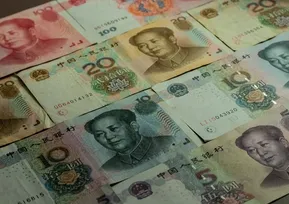
The Turkish Lira (TRY) has become the third largest fiat currency by volume in the cryptocurrency market, according to a report by Kaiko. This milestone was reached as TRY's share of the crypto market hit an all-time high of 19% in early June. The increase in volume is attributed to the country's economic challenges, notably its high inflation rate, which has surpassed 70%, making the lira one of the most volatile fiat currencies globally.

https://asset.coinness.com/en/news/5cc70303de0a0312d8740f0d093374dd.webp
Photo by Afdhallul Ziqri on Unsplash

Factors influencing the increase

The shift in the Turkish lira's position in the crypto market is partly due to increased foreign exchange volatility and currency devaluation, common catalysts for cryptocurrency adoption in developing economies. Additionally, geopolitical factors such as a record number of elections and diverging monetary policies have intensified market fluctuations. This environment has favored cryptocurrencies like Bitcoin, which reached new highs against the lira in recent months. For instance, Bitcoin escalated to 2.3 million TRY in March from 979,000 TRY in October 2023. The recent adjustments in cryptocurrency trading platforms, particularly Binance's delisting of certain fiat trading pairs due to banking issues, have also increased the dominance of TRY in crypto transactions. This series of events underscores the growing interconnection between traditional and digital finance markets, highlighting the increasing role of cryptocurrencies in regions facing economic instability.


More to Read
View All
Markets·

Nov 05, 2025

StanChart CEO predicts blockchain will replace cash in everyday finance

Bill Winters, the American banker who heads the British financial group Standard Chartered, appeared at the Hong Kong FinTech Week conference earlier this week, where he predicted a future in which cash will give way to blockchain-based systems for everyday transactions. According to Cointelegraph, Winters’ view aligns with that of Hong Kong regulators. At the same time, he stressed the importance of continued experimentation, noting that it remains uncertain how this transformation will ultimately take shape. Winters also commended Hong Kong’s leadership in exploring the potential of digital finance. Tech-driven finance has certainly been one of the key initiatives Hong Kong has been exploring. Recently, the Hong Kong Monetary Authority (HKMA) released its e-HKD Pilot Programme Phase 2 Report, which showed public support for tokenized deposits.Photo by Shubham Dhage on UnsplashReal-world assets gain ground on the blockchainOn-chain data also underscores the rapid growth of the tokenization sector. According to RWA.xyz, the total value of real-world assets (RWAs) deployed on-chain has climbed to $35.63 billion, up 7.8% from a month ago. A study by Ripple and Boston Consulting Group (BCG) estimates that tokenized assets could be worth $19 trillion by 2033, about 530 times their current value. Among RWA assets, the BlackRock USD Institutional Digital Liquidity (BUIDL) Fund, Tether Gold (XAUT), and Paxos Gold (PAXG) currently lead the market in terms of value. Over the past 30 days, BlackRock’s BUIDL Fund slipped 0.06%, while the two tokenized gold products, XAUT and PAXG, jumped 46.65% and 14.19%, respectively. These gains mirror gold’s bullish run in October, when its price surpassed $4,000 per ounce for the first time on Oct. 7. The momentum has since eased slightly, with gold now trading at around $3,969.55 per ounce. Tokenization brings 24/7 markets and P2P flexibilityIndustry experts point to the convenience of tokenization as a key advantage. Speaking to Yahoo Finance, Will Peck, head of digital assets at WisdomTree, explained that tokenized gold allows for around-the-clock trading and direct peer-to-peer (P2P) transactions. He added that gold and Bitcoin act as complementary stores of value, both serving as deflationary assets. Ian Kane, CEO of fintech company Firepan, said tokenized gold appeals to investors as it enables them to retain ownership, leverage their holdings for loans, and generate extra yield, while preserving their principal against debasement or devaluation. These views are not new. Earlier this month, Robinhood Markets CEO Vlad Tenev described tokenization as “a freight train” that “can’t be stopped,” predicting it will eventually transform the global financial system. Similarly, in his annual letter to investors in April, BlackRock CEO Larry Fink said the tokenization of assets could fundamentally reshape the way people invest. By digitizing ownership, tokenized venture capital funds could move beyond their closed circles, giving ordinary investors a stake in early-stage innovation and greater control over their capital. Venture capital faces hurdles in tokenization pushWhile tokenization promises greater accessibility and liquidity, not all market segments are ready for it. According to TheStreet, tokenized venture capital (VC) funds could open a traditionally closed market to more investors, but the process is more complex than it appears. In an interview with TheStreet, Elena Obukhova, founder of Supermoon Ventures, said that liquidity, not technology, is the main obstacle. Unlike tokenized company shares that can be traded freely on public markets, VC funds invest in private startups whose value may take years to materialize through an exit or acquisition. Allowing such funds to trade freely could increase volatility and pressure founders, as interim valuations might distort perceptions and weaken confidence in early-stage ventures. Still, the promise of tokenized venture finance remains within reach. Firms are testing models that limit trading periods, protect investor data, and refine valuation methods to better reflect the illiquid nature of startup investments. Since liquidity events such as initial public offering (IPOs) or acquisitions typically occur only every one to two years for early-stage startups, the path forward will depend on creating systems that can maintain stable and accurate valuations in the interim. Tokenization is rapidly emerging as a transformative force in the financial world, offering greater accessibility, liquidity, and efficiency. As more assets, from gold to venture capital, make their way onto the blockchain, the potential to reshape investment and trading markets grows. While challenges remain, particularly around liquidity and valuation in sectors like venture capital, the continued advancements in tokenization demonstrate its key role in the future of finance.

news
Policy & Regulation·

May 27, 2023

Study Places Hong Kong as Leader in Crypto Readiness

Study Places Hong Kong as Leader in Crypto ReadinessHong Kong, according to a recent study conducted by Forex Suggest, has emerged as the leading jurisdiction worldwide in terms of its readiness for cryptocurrencies. The study evaluated various factors such as the number of blockchain startups per 100,000 people and the density of crypto ATMs in relation to the population.Photo by Traxer on UnsplashZero capital gains taxThe attractiveness of Hong Kong for investors in the crypto space stems from its advantageous tax policies. The study noted that Hong Kong does not levy capital gains taxes on cryptocurrency, making it an appealing destination for crypto enthusiasts. The United States and Switzerland secured the second and third positions, respectively, in the rankings of the most crypto-ready countries.In recent times, Hong Kong has actively embraced investments from digital asset companies and is poised to implement new regulations for the industry. Effective from June 1, the city’s new rules aim to establish Hong Kong as a global hub for digital assets. These regulations permit licensed cryptocurrency trading platforms to offer services to retail investors while incorporating measures to safeguard individual traders.Global crypto firms are gearing up for that new licensing approach, carving out separate corporate entities in order to meet the regulatory requirements which the Hong Kong regulator, the Securities Futures Commission (SFC), has set. Another Hong Kong regulator, the Hong Kong Monetary Authority (HKMA), is also opening up to embrace digital asset innovation through a pilot project implicating the tokenization of real world assets.Regarding the number of blockchain startups, Hong Kong boasts three startups per 100,000 individuals, securing the second position globally. Topping the list is Switzerland, with an impressive count of 12.9 blockchain startups per 100,000 residents, amounting to a total of 1,128.The study also highlighted that countries such as Hong Kong, Switzerland, Panama, Portugal, Germany, Malaysia, and Turkey impose the lowest taxes on cryptocurrencies. These nations exempt individuals from capital gains taxes on profits derived from cryptocurrency trading.Crypto ATM proliferationWhen considering the prevalence of crypto ATMs, Hong Kong ranks third globally, with two ATMs per 100,000 people, totaling 149 ATMs. The United States takes the top spot with nearly 34,000 crypto ATMs, but when normalized to the population, it has 10.1 ATMs per 100,000 individuals.Regressive measures in USIn contrast to Hong Kong’s favorable environment, regulators in the United States have intensified their efforts to tighten regulations on cryptocurrency exchanges, leading many within the industry to advocate for clearer guidelines. Consequently, several exchanges are exploring jurisdictions that offer more favorable conditions.Forex Suggest emphasized that the report’s findings were based on extensive data analysis, taking into account factors such as tax regulations, legislation, the presence of blockchain startups, and the level of interest in cryptocurrencies. Each jurisdiction received a normalized score out of 10 for each factor, and the overall rankings were determined by averaging these scores.Hong Kong’s position as the most crypto-ready jurisdiction in the world showcases its commitment to fostering innovation and becoming a global leader in the digital asset space. With its advantageous tax policies, growing number of blockchain startups, and forthcoming regulations, the autonomous Chinese territory is solidifying its position as an attractive destination for businesses and investors in the cryptocurrency space.

news
Policy & Regulation·

Nov 06, 2023

Daegu to host first-ever metaverse expo on Nov. 8

Daegu to host first-ever metaverse expo on Nov. 8South Korea’s Daegu Metropolitan City is set to host its first metaverse expo called the “ABB Big Show” from Wednesday to Friday (local time) at the EXCO convention center as part of efforts to stimulate and promote the metaverse industry — a key industry that was notably earmarked as a growth engine in last year’s eighth nationwide local elections. Despite more recent concerns about the sector due to worsening domestic and international economic conditions and reduced investments, the global market continues to recognize its high potential, as divulged at CES 2023, one of the biggest tech events in the world. Daegu has thus stepped up to promote the latest metaverse technologies and content across diverse industrial, administrative and educational services.“The metaverse industry represents a new field that symbolizes a digital era with infinite opportunities and possibilities,” said Choi Woon-baek, Director of the city’s Office for Future Innovation Growth. “I hope that this event will be a meaningful time for citizens to experience firsthand the advanced metaverse technology that is poised to change our future lives.”Photo by GuerrillaBuzz on UnsplashA confluence of metaverse innovation and technologyUnder the theme of exploring the link between reality and the virtual realm, the ABB Big Show — ABB is an acronym for AI, blockchain and big data — will be hosted by Daegu and jointly organized by the Daegu Gyeongbuk Metaverse Industry Association, the MICE Industry Research Institute and local news outlet Yeongnam Ilbo. It will also be held simultaneously with this year’s ICT Convergence Expo Korea and the ABB Hackathon. Of the 156 total companies that are scheduled to participate in the shared event, 32 of them are metaverse companies, the city said.These companies are set to introduce various cutting-edge metaverse technologies through hands-on activities and exhibitions, many of which come with prizes and special events for visitors. In particular, creative media content company YDesign Lab plans to set up a futuristic Instagram photo zone for visitors using immersive anamorphic technology, while mixed reality (MR) content provider DG Entertainment will showcase its motion recognition technology.Other individual guests plan to give lectures on the prospects of Korea’s metaverse industry and propose related policies to push these prospects in a promising direction. The second day of the expo will host a conference featuring Ahn Jong-bae, President of Hansei University’s Future Creativity Campus, who will deliver a keynote speech on the role of artificial intelligence (AI) in changing the future and the metaverse industry.Daegu’s ambitious projectsDaegu is also pursuing several other big-budget projects to foster its regional metaverse ecosystem, including the construction of a metaverse hub in the greater metropolitan area that will serve to support related businesses and cultivate metaverse experts. Also on the city’s agenda is the development of a “Daegu World” metaverse that leverages regional intellectual property in the realms of tourism, education and culture to give citizens unique virtual experiences.

news
Loading