Top

Late Korean artist Lee Jung-seob’s ‘Bull’ NFT on auction at OpenSea

Web3 & Enterprise·December 01, 2023, 3:29 AM

NFT marketplace OpenSea is hosting an ongoing auction for a digital representation of the painting “Bull” by the late Korean artist Lee Jung-seob, Yonhap News TV reported on Tuesday. Celebrated for his distinctive lines in his paintings, Lee passed away in 1956. This auction is set to conclude on Dec. 12, with the starting bid placed at 300 WETH (Wrapped Ethereum), which is approximately equivalent to $626,000.
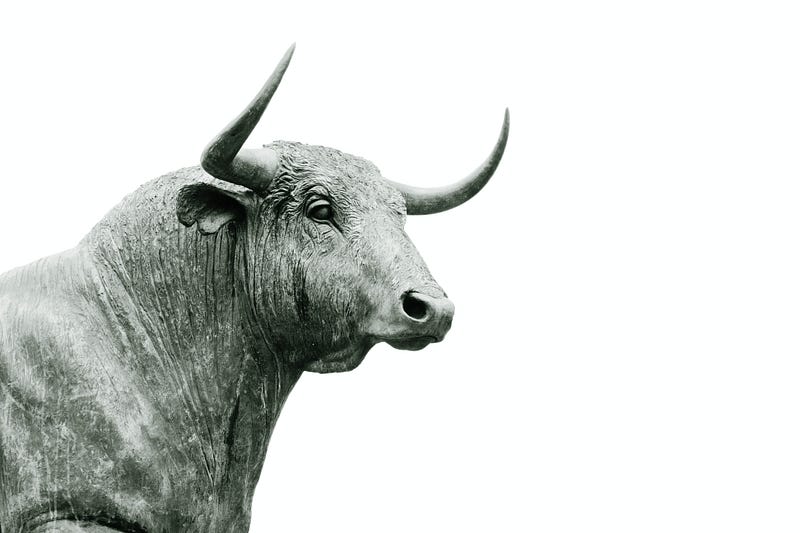
Photo by Hans Eiskonen on Unsplash


White bull as NFT

Lee’s “Bull,” featured in the OpenSea auction, is distinguished by its depiction of a white bull set against a dark green background. This particular piece is one of Lee’s unpublished works and is currently being offered for sale by a private art collector. Regarding the authenticity of the painting, the description on the OpenSea page states, “This work received a handwritten evaluation from Professor Jung Jum-sik, a founding member of the Lee Jung-seob Art Award, on November 9, 2000.”

The current owner of the original artwork has expressed their intention for auctioning it as a desire to share a valuable piece of art. The painting originally belonged to poet Ku Sang and has since changed hands multiple times, experiencing some damage along the way. While the copyright for an artist’s work typically remains with their inheritors for 70 years posthumously, in the case of Lee Jung-seob, this period has already lapsed.


Authenticity and NFT investments

Meanwhile, art appraisal experts are advising caution, emphasizing the need to first confirm the authenticity of the original painting. This caution stems from the fact that the painting has not undergone evaluation by an official appraisal organization.

During his interview with Yonhap, Jung Jun-mo, CEO of Korea Art Authentication Appraisal Inc., offered a word of caution regarding investment in NFTs tied to artworks with questionable authenticity. He emphasized that NFTs representing works that lack genuine authentication also hold no value in terms of authenticity. Jung advised potential investors to thoroughly verify the legitimacy of such artworks before proceeding with any investment in their NFT representations.

Last year, many paintings of modern Korean artists were converted into NFTs, but they sparked controversy over issues of authenticity. Experts in art investment have since been advising thorough research prior to making any investments in these digital assets. They warn that losses incurred from transactions involving these NFTs fall squarely on the investors.


More to Read
View All
Web3 & Enterprise·

Mar 26, 2024

DigiFT launches RWA depository receipt tokens

DigiFT, a Singapore-based regulated exchange for real-world assets (RWAs), has brought its latest product offering to the digital asset market by introducing its U.S. Treasury bill depository receipt (DR) tokens. These tokens offer investors fractional ownership in U.S. Treasury bills, providing an avenue to engage with the traditionally secure U.S. debt market without requiring significant upfront capital, as detailed in a press release issued by the company on Monday.Photo by Karolina Grabowska on PexelsDemocratizing market accessThe conventional route to investing in U.S. Treasury bills typically demands substantial financial resources. DigiFT's DR tokens aim to democratize access to this market by enabling investors to purchase fractional shares of these bills. Henry Zhang, the founder and CEO of DigiFT, highlighted the innovative nature of the DR structure, noting its capacity to address challenges within the current market and empower investors with direct ownership of assets and returns. Zhang emphasized the company's intent to expand the scope of traditional financial assets in the Web3 space, leveraging the DR model to enhance investor protection and transparency. The DigiFT U.S. Treasury Tokens (DRUST) represent the inaugural offering in a series under the DR structure. These DR tokens, a type of security token, offer fractional ownership of an underlying asset. In the case of DigiFT, these tokens are specifically backed by U.S. Treasury bills, providing investors with exposure to the secure US debt market. Each DRUST token is directly backed by AA+ rated, highly liquid and short-term U.S. Treasury Bills, offering stability and tailor-made solutions for stablecoin issuers and Web3 product developers seeking regulatory-compliant treasury and cash management options. Pursuing regulatory complianceIn its latest announcement DigiFT has outlined its intention to pursue regulatory compliance, a facet intended to instill confidence and assurance among investors. Having been established in 2021 and previously operating within the Monetary Authority of Singapore's (MAS) FinTech Regulatory Sandbox, DigiFT obtained a Capital Markets Services (CMS) license and was acknowledged as a Recognised Market Operator (RMO) in December 2023. By adhering to regulations, DigiFT aims to simplify the investment process and broaden accessibility for investors. DigiFT highlights that institutional and accredited investors can access DRUST tokens from authorized self-custodial wallets using fiat currency or stablecoins, providing flexibility and convenience. Growing popularityThe growing popularity of tokenized funds, particularly those tied to U.S. treasuries, is evident in recent reports. Moody’s revealed a surge in the value of tokenized funds, driven by the increasing tokenization of U.S. treasuries. Both public and private blockchains are witnessing the inclusion of various assets, reflecting a broader trend toward asset tokenization. Tokenized funds offer numerous benefits, including enhanced liquidity, accessibility, reduced costs, fractionalization, decreased reliance on intermediaries, shortened settlement times, automated processes through smart contracts and improved transparency. Last June, Hong Kong-based cryptocurrency firm Finblox provided details of a tokenized version of U.S. Treasury Bills it has been working on. In November, the Bureau of the Treasury in the Philippines announced the issuance of one-year tokenized bonds to the value of $179 million. Binance Research has identified real-world asset tokenization as a key theme in crypto for 2024, noting its potential to improve transparency and efficiency by bringing off-chain assets onto blockchain networks.

news
Web3 & Enterprise·

May 19, 2023

Singapore’s Whampoa Plans Crypto-Friendly Bank in Bahrain

Singapore’s Whampoa Plans Crypto-Friendly Bank in BahrainSingapore-based privately held investment firm Whampoa Group has announced that it plans to open a crypto-friendly digital bank in the Kingdom of Bahrain in the Persian Gulf.Photo by Charles-Adrien Fournier on UnsplashIsland state diversificationThe island state has been looking to diversify from its predominantly oil-based economy into fintech and finance. Whampoa Group CEO Shawn Chan said that the company was “impressed by Bahrain’s solid reputation in the financial services sector, transparent regulatory framework, and ongoing pledge to collaborate and innovate.”Chan added that Whampoa would commit to providing “secure and innovative digital financial solutions in line with global best practices” relative to the proposed digital bank, with an eye towards setting a benchmark for the industry where digitally-native banking is concerned.Persian Gulf crypto hubsThe Persian Gulf is proving to be a crypto-friendly region in recent times. Bahrain is one of a number of Gulf Cooperation Council (GCC) countries vying for digital asset-related business. The country’s financial services sector contributes in excess of 17% to Bahraini gross domestic product (GDP). Bahrain has been one of the first in the region to establish a regulatory framework for digital assets, together with a crypto asset licensing system.Its Persian Gulf neighbor, the United Arab Emirates, including the individual emirates of Dubai and Abu Dhabi, have followed a similar path, establishing a workable set of regulatory rules in relation to digital assets, alongside licensing of crypto businesses.CEO of the Bahrain Economic Development Board, Khalid Humaidan welcomed Whompoa’s decision to establish the business in Bahrain, emphasizing the importance of crypto-friendly digital banking to support further development of crypto business in Bahrain, while bolstering the infrastructure available to existing digital asset businesses operating within the Kingdom.Doors open in 2023The bank is scheduled to open later this year, providing integrated financial services covering traditional banking, together with crypto-specific banking activity. That will include digital asset trading and custody, as well as asset management-based products and services.Whompoa’s plan is to gear the bank towards meeting the needs of institutions, innovators and crypto start-up companies and sophisticated global investors. Crypto-friendly banking has been a perennial problem that has stymied the development of the digital assets sector since its emergence.That problem has gotten worse rather than better more recently, with a mixture of banking failures and a crypto sector crackdown leading to the closure of crypto-friendly banks like Silvergate and Signature in the United States in recent months.In East Asia, Hong Kong, while shaping up to compete on the global stage as a crypto-hub, has seen crypto businesses experience difficulty in terms of securing banking within the Chinese autonomous territory. Efforts are being made to alleviate that issue. Furthermore, Hong Kong’s largest virtual bank, ZA Bank, has set out to become the go-to bank for crypto start-up banking in the city.Experiences elsewhere exemplify how crucial banking infrastructure is to the embryonic digital assets sector. It underscores the important role that Whompoa could play in boosting crypto sector business in the island state of Bahrain as digital asset innovation continues to be rolled out.

news
Policy & Regulation·

Dec 30, 2023

India’s FIU moves to block overseas exchanges

In a widening crackdown on overseas crypto exchanges operating illegally in India, the Financial Intelligence Unit (FIU) has issued “compliance show-cause” notices to some of the leading global crypto platforms. In a statement published by the FIU on Thursday, the agency outlined that it has issued compliance show-cause notices to nine offshore virtual digital assets service providers. These include Bitfinex, Bittrex, Binance, Bitstamp, Gate.io, Huobi, Kraken, Kucoin and MEXC Global.Photo by Naveed Ahmed on UnsplashRequest to block URLsThe FIU has also called on the information ministry to block the URLs of these entities, citing their non-compliance with Anti Money Laundering (AML) and Counter Financing of Terrorism (CFT) frameworks. The FIU is a national agency tasked with receiving, analyzing and disseminating information to enforcement agencies where suspect financial transactions are concerned. The move comes as part of India’s broader efforts to tighten oversight of the digital asset sector. Earlier this year, the government imposed money-laundering provisions on the crypto industry, aligning its regulations with those of other nations. In 2022, local crypto exchanges were dealt a significant blow with the introduction of a transaction tax, leading to a sharp decline in trading volumes. Unregistered platformsAccording to the FIU statement, offshore entities, despite serving a substantial number of Indian users, were operating without proper registration under AML and CFT frameworks. To address this, the FIU issued show-cause notices — a formal request for entities to demonstrate compliance with Indian laws when suspected of misconduct. It emerged earlier this month that in excess of 28 crypto platforms had registered with the FIU. Those compliant platforms were largely native Indian businesses. If the FIU’s recommendation is followed and in due course, URL access to the cited overseas exchanges is blocked, this could potentially be a boon for complaint platforms like WazirX, CoinDCX and ZebPay, at least in the short term. India’s actions against Binance, in particular, are not new. In 2021, the country’s anti-money laundering agency was reportedly investigating Binance’s potential involvement in a case related to betting apps. Binance, the world’s largest crypto exchange, has faced increasing regulatory pressure globally. In November, the company agreed to a $4.3 billion settlement, pleading guilty to anti-money laundering and U.S. sanction violations. As part of the settlement, CEO Changpeng Zhao agreed to step down. Community reactionNews of this development has caused some disquiet among Indian crypto advocates. However, taking to social media, Web3 marketer Abhinav Kumar wrote: “This isn’t a sign that crypto trading is suddenly going to be banned. . . . It’s a routine thing. The government wants to make sure foreign companies play by the same rules as Indian ones. That’s fair enough! Also remember India has over 20 million crypto investors now.” Leading crypto adoptionDespite regulatory challenges, India has emerged as a significant player in the global crypto market. Chainalysis’ 2022 global crypto adoption index ranked India as the top country by raw estimated transaction volume, second only to the United States. Responding to the growing crypto adoption, India is actively working on a regulatory framework based on joint recommendations from the International Monetary Fund and the Financial Stability Board. The government’s actions underscore its commitment to ensuring compliance within the crypto sector and aligning with international standards.  

news
Loading