Top

HashKey to list platform token later this year

Web3 & Enterprise·June 25, 2024, 11:33 PM

Hong Kong-based digital asset financial services firm HashKey Group has announced its intention to list its platform token, HSK, in Q3 2024.


HSK tokenomics

The company set out details of the HSK listing via a series of posts on the X social media platform. The HSK token is based on the Ethereum ERC-20 token standard. Total token supply will be capped at one billion, 65% of which will be allocated towards ecosystem growth. The team will be incentivized by the allocation of 30% of the supply while 5% will be held back in a reserve fund. 


Regarding the token’s burning mechanism, HashKey revealed it retains the discretion to repurchase up to 20% of net profits from specified businesses and subsequently burn the acquired tokens from the total supply.

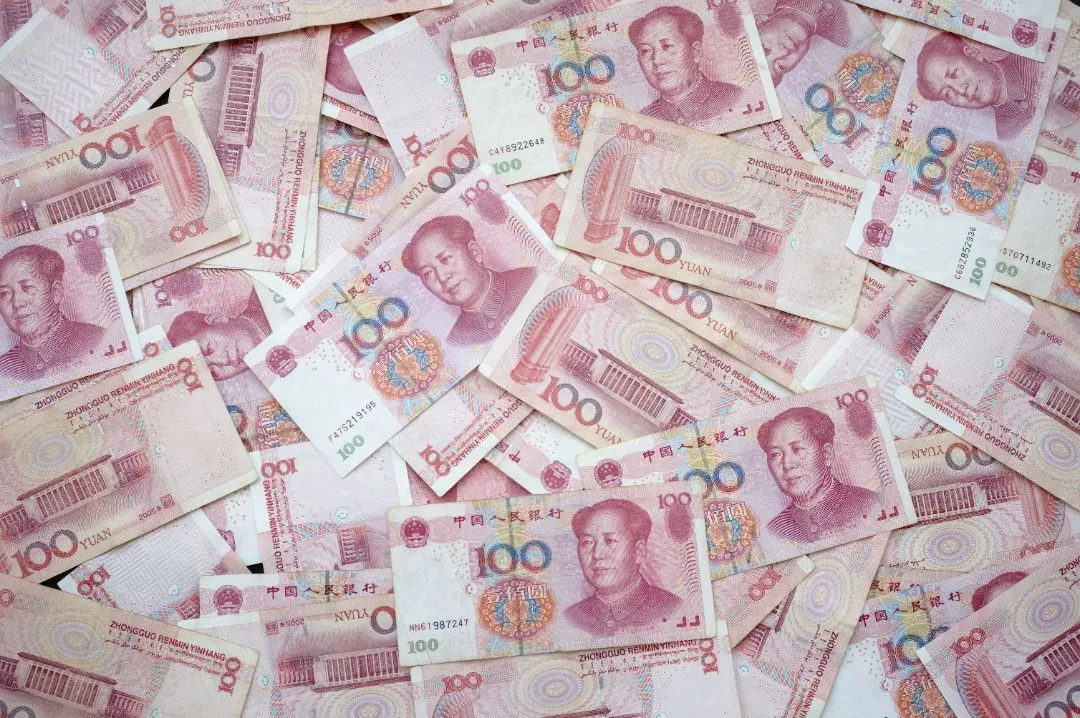
https://asset.coinness.com/en/news/be99e899d6d744438f0f9e1287e5353e.webp
Photo by Zoltan Tasi on Unsplash

Airdrop imminent

In a statement shared with The Block, HashKey Group detailed that HSK will be integrated across its various products and applications. The community airdrop, launching in late June, aims to encourage user participation. The company stated:

“HSK is scheduled to launch a community airdrop through HashKey's core businesses in late June, encouraging users to contribute to community building.”


The company believes that HSK will incentivize ecosystem contributors when it comes to development of its layer-2 ecosystem chain, the HashKey Chain. That incentive structure, the company maintains, will result in contributors “providing robust support,” while acting as a “driving force for on-chain users and assets.” 


Integration with external ecosystems

The firm outlined that the HSK token is designed to integrate with external crypto ecosystems so as to best facilitate synergy between internal and external collaborations. HashKey Group boasts a comprehensive Web3 ecosystem, inclusive of infrastructure, middleware, AI, DeFi, GameFi and the Metaverse.


HashKey Group’s core businesses include HashKey Capital, HashKey Tokenisation and HashKey NFT. It also operates HashKey Exchange, a licensed cryptocurrency exchange in Hong Kong, with the exchange business having reached a $500 million assets-under-management (AUM) milestone earlier this month. 


HashKey Cloud, a Web3 infrastructure provider, formed a strategic partnership with the Aptos Foundation last month with a view towards progressing projects relative to decentralized identity (DID) and security token offerings (STOs). HashKey Global, a global exchange launched in April, has risen to ninth spot in terms of overall crypto exchange trading volume.


In January, HashKey Group announced that it raised nearly $100 million in its Series A financing round, achieving a pre-money valuation above $1.2 billion. In September, the investment arm of the company, HashKey Capital, launched a $100 million fund focused on altcoins.

More to Read
View All
Markets·

Jul 22, 2025

CFX surges as Conflux teases yuan-pegged stablecoin & 3.0 launch

Conflux Network, a layer-1, regulatory-compliant Chinese blockchain focused on borderless transactions, has announced the upcoming launch of the Conflux 3.0 mainnet together with an offshore yuan-pegged stablecoin, resulting in its native CFX token surging.Photo by Eric Prouzet on UnsplashPartnershipA notice published on the website of the Shanghai Municipal People’s Government on July 20 reported on the Conflux Tree Graph Technology and Ecological Development Conference, which was held in Shanghai over three days from July 18 to July 20. Over the course of the three-day event, the project announced a partnership with AnchorX, a Hong Kong-based fintech firm specializing in stablecoins, and Shenzhen-based Eastcompeace Technology.  The purpose of the initiative is to develop a stablecoin pegged to the offshore yuan (CNH), the version of China’s currency that circulates outside the mainland. The report outlined that in recent years, stablecoins and tokenized real-world assets (RWAs) have come to global attention.  Belt & Road InitiativeGiven this backdrop, it was outlined that “creating an independent and controllable high-performance public chain system” could be of great benefit to China and its Belt and Road Initiative (BRI), which sets out to develop infrastructure across 150 countries to facilitate trade with China. This is not the first point at which AnchorX has collaborated with Conflux. Back in February, the company received in-principle approval from the Astana Financial Services Authority (AFSA) in Kazakhstan to issue CNH-pegged stablecoins. Growing bilateral trade between Kazakhstan and China was cited as the rationale behind the license, given the need for cross-border payments. At the time, it was outlined that the AxCNH yuan-pegged stablecoin would be issued on the Conflux blockchain. It’s unclear if this same stablecoin is the focus of this latest development or whether an entirely new yuan-pegged stablecoin will be issued.AnchorX collaborated with Conflux in 2024 to bring about the issuance of AxHKD, a Hong Kong dollar-pegged stablecoin. The stablecoin runs on the Conflux blockchain, with the stablecoin issuer using OKLink Trust as its custodian. TokenPocket, a multi-chain crypto wallet project, also outlined on X on July 21 that it too is involved in the partnership with Conflux and AnchorX. The project outlined that it will support the growth of stablecoin adoption, the development of cross-border payment solutions and the promotion of tokenized RWAs in international markets through the collaboration.  Pilot projectsTokenPocket went on to explain that the companies plan to launch pilot projects in Central Asia, Southeast Asia and other regions, building “a compliant, secure, and innovative fintech framework to boost the role of the Conflux ecosystem as critical infrastructure for cross-border trade.” It was revealed at the conference that the mainnet release of Conflux 3.0 will occur in August. With the implementation of further optimized execution modules, the project expects 3.0 to result in a network throughput of 15,000 transactions per second (TPS).  These developments over the course of the weekend have had an impact on the unit price of Conflux’s native token, CFX. On July 19, the token was trading at around $0.1043. According to CoinMarketCap data, at the time of writing, it’s trading at $0.2232, a 2.58% increase over the past day. 

news
Policy & Regulation·

Dec 27, 2023

Hong Kong offers crypto ETF promise despite focus on U.S. approval

Industry leaders are turning their attention to Hong Kong as a notable location for spot bitcoin exchange-traded funds (ETFs). That speculation arises in anticipation of the United States granting approval for such ETFs, with Hong Kong emerging as a likely frontrunner in Asia. In a recent report, The Block spoke with a couple of prominent industry stakeholders, who appear to acknowledge the significance of moves towards seemingly expanding crypto ETF product offerings in Hong Kong, even though the bulk of the industry’s attention has been on U.S. spot bitcoin ETF approval.Photo by Simon Zhu on UnsplashU.S. ETF expectationsOn Monday, the research arm of crypto derivatives platform BitMEX calculated that the arrival of such a product in the United States could dwarf the total value locked within existing crypto-related exchange traded products (ETPs). Earlier this month, a researcher at crypto asset manager Bitwise suggested that U.S. spot bitcoin ETFs would be the most successful ETF products ever launched. Acknowledging Hong Kong’s positionWith all the focus on the U.S., could it be that Hong Kong will play a far greater role in the global crypto ETF business? Yat Siu, the chairman of Web3 investor Animoca Brands, highlighted the encouraging position of Hong Kong’s Securities and Futures Commission (SFC) toward digital assets, laying a foundation for potential spot bitcoin ETFs. Referring to the SFC’s recent statement expressing openness to expanding access to digital assets, Siu emphasized the relatively uncontroversial nature of a spot Bitcoin ETF. He noted: “If you look at what the SFC had said about I think a month ago, it says that it was open to widen access to digital assets. And frankly, Bitcoin spot ETF is, I would say, relatively uncontroversial at the end of the day.” Poised to usher in spot ETFsAs the U.S. inches closer to approving its first spot bitcoin ETF, Hong Kong could likely follow suit, benefiting from the groundwork already laid by U.S. regulators. In fact, just last week both local regulators, the Hong Kong Monetary Authority (HKMA) and the Securities and Futures Commission (SFC), signaled that they are happy to start to accept applications for the provision of crypto-related spot ETFs. Siu pointed out the abundance of public filings and applications that Hong Kong authorities can reference in shaping their regulatory framework. Julia Leung, SFC CEO, stated in November that the regulator was evaluating spot crypto ETFs while expressing openness to proposals leveraging innovative technology for efficiency and enhanced customer experience. Presently, Hong Kong has listed several futures-based crypto ETFs, including the Samsung Bitcoin Futures Active ETF, CSOP Bitcoin Futures ETF and CSOP Ether Futures ETF. Glenn Woo, Head of Sales of APAC at Web3 infrastructure company Blockdaemon, echoed the positive sentiment, noting that while traditional asset managers may have lingering concerns, there is a prevailing appetite for such financial instruments in Hong Kong. Woo, drawing on over a decade of experience in the traditional financial industry in Hong Kong, emphasized the growing interest, anticipating that the appetite will expand further once the U.S. approves its first bitcoin ETF. Hong Kong’s long-standing reputation as a global financial center, combined with the potential of crypto ETF products, will likely boost crypto adoption in the region and the significance of Hong Kong’s role in the sector with it.

news
Policy & Regulation·

Oct 14, 2023

Indonesia to Launch Blockchain Trials to Enhance Public Services

Indonesia to Launch Blockchain Trials to Enhance Public ServicesIn the wake of its recent government-backed cryptocurrency exchange launch, Indonesia is moving further forward to launch trials that employ blockchain technology within its public services sector.Photo by Bisma Mahendra on UnsplashBlockchain-based land ownership recordsAt the recent Blockchain Economy Summit held in Dubai, Tuhu Nugraha, the Principal of the Indonesia Applied Digital Economy and Regulatory Network (IADERN), told Cointelegraph that these trials will encompass the utilization of blockchain-based digital certificates for land ownership and certificates of competence within the education sector.The executive believes that blockchain’s inherent attributes, which include characteristics such as immutability and transparency, can be harnessed to combat certificate fraud. By anchoring these certificates in blockchain’s secure ledger, the government can efficiently verify the authenticity of various digital certificates, which is a significant leap forward in ensuring the integrity of critical documents.Nugraha is an advisor to the Indonesian government on blockchain and metaverse technologies. He emphasized the government’s collaborative approach to Web3 technology. Additionally, Nugraha revealed that the Indonesian government is working in close partnership with various blockchain-focused associations to conduct experiments and gather insights into the multifaceted implications of blockchain across diverse sectors. Instead of imposing rigid regulations, Nugraha maintains that the Indonesian government is committed to crafting regulations that spur innovation.Cointelegraph also spoke with Grace Sabandar, Co-Founder of the Indonesia Blockchain and Metaverse Center (IBMC). Sabandar, an advocate of blockchain’s potential, emphasized the pivotal role of Indonesia’s youthful demographic on the basis that this dynamic demographic is inherently adaptable to new technology.Youthful demographic to capitalize on Web3Sabandar made the point that this younger Indonesian demographic has already demonstrated itself to be one of the world’s largest user bases for Web2 social media platforms such as Facebook and Instagram. On that basis, she believes Indonesia is poised to lead in the adoption of Web3 technology. She remarked:“We want to be the leader, not only the user of technology, because now, because of decentralization, anybody can do something, anybody can create something.”Furthermore, Sabandar highlighted the crucial educational role played by the IBMC in collaboration with the government, private sector stakeholders, media, and academia. Their mission revolves around enlightening the nation about the manifold benefits of blockchain, emphasizing transparency, the utility of smart contracts in business operations, the essence of decentralization, and other fundamental aspects.Realizing blockchain and Web3 potentialEarlier this week, a report published by South Korean crypto data platform Xangle in conjunction with Web3 consulting firm Tiger Research concluded that Indonesia has significant potential to grow its Web3 sector.Reports in recent days have also demonstrated further instances of the use of blockchain technology in the country, with state-owned ID Food collaborating with Singapore’s D3 Labs to establish a blockchain-based fish trading process. In July, South Korean tech company Milk Partners launched its blockchain-based reward points service in Indonesia.Indonesia’s blockchain development and adoption are being spurred on by the enthusiasm of its tech-savvy youth, collaborative partnerships, and a government dedicated to innovation and transparency. As it paves the way in the Web3 era, Indonesia seeks to leverage blockchain technology to benefit public services, foster trust, and lead by example in the global digital revolution.

news
Loading