Top

CFX surges as Conflux teases yuan-pegged stablecoin & 3.0 launch

Markets·July 22, 2025, 12:16 AM

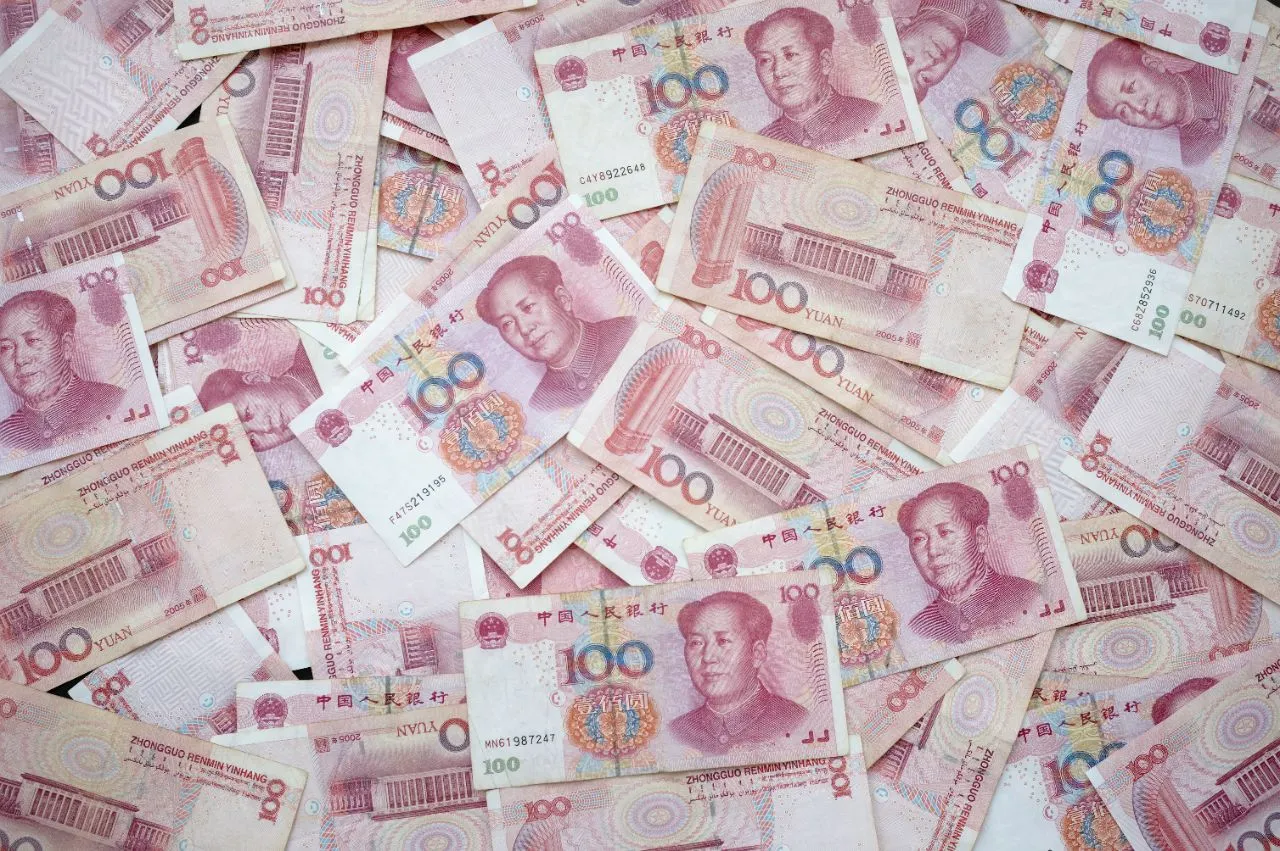
Conflux Network, a layer-1, regulatory-compliant Chinese blockchain focused on borderless transactions, has announced the upcoming launch of the Conflux 3.0 mainnet together with an offshore yuan-pegged stablecoin, resulting in its native CFX token surging.
https://asset.coinness.com/en/news/06040104449a2d7706a51662c1fc5865.webp
Photo by Eric Prouzet on Unsplash

Partnership

notice published on the website of the Shanghai Municipal People’s Government on July 20 reported on the Conflux Tree Graph Technology and Ecological Development Conference, which was held in Shanghai over three days from July 18 to July 20. Over the course of the three-day event, the project announced a partnership with AnchorX, a Hong Kong-based fintech firm specializing in stablecoins, and Shenzhen-based Eastcompeace Technology. 


The purpose of the initiative is to develop a stablecoin pegged to the offshore yuan (CNH), the version of China’s currency that circulates outside the mainland. The report outlined that in recent years, stablecoins and tokenized real-world assets (RWAs) have come to global attention. 


Belt & Road Initiative

Given this backdrop, it was outlined that “creating an independent and controllable high-performance public chain system” could be of great benefit to China and its Belt and Road Initiative (BRI), which sets out to develop infrastructure across 150 countries to facilitate trade with China.


This is not the first point at which AnchorX has collaborated with Conflux. Back in February, the company received in-principle approval from the Astana Financial Services Authority (AFSA) in Kazakhstan to issue CNH-pegged stablecoins. Growing bilateral trade between Kazakhstan and China was cited as the rationale behind the license, given the need for cross-border payments.


At the time, it was outlined that the AxCNH yuan-pegged stablecoin would be issued on the Conflux blockchain. It’s unclear if this same stablecoin is the focus of this latest development or whether an entirely new yuan-pegged stablecoin will be issued.

AnchorX collaborated with Conflux in 2024 to bring about the issuance of AxHKD, a Hong Kong dollar-pegged stablecoin. The stablecoin runs on the Conflux blockchain, with the stablecoin issuer using OKLink Trust as its custodian.


TokenPocket, a multi-chain crypto wallet project, also outlined on X on July 21 that it too is involved in the partnership with Conflux and AnchorX. The project outlined that it will support the growth of stablecoin adoption, the development of cross-border payment solutions and the promotion of tokenized RWAs in international markets through the collaboration. 


Pilot projects

TokenPocket went on to explain that the companies plan to launch pilot projects in Central Asia, Southeast Asia and other regions, building “a compliant, secure, and innovative fintech framework to boost the role of the Conflux ecosystem as critical infrastructure for cross-border trade.”


It was revealed at the conference that the mainnet release of Conflux 3.0 will occur in August. With the implementation of further optimized execution modules, the project expects 3.0 to result in a network throughput of 15,000 transactions per second (TPS). 


These developments over the course of the weekend have had an impact on the unit price of Conflux’s native token, CFX. On July 19, the token was trading at around $0.1043. According to CoinMarketCap data, at the time of writing, it’s trading at $0.2232, a 2.58% increase over the past day.


 

More to Read
View All
Web3 & Enterprise·

Jul 31, 2025

Pyth Network brings Hong Kong stock pricing on-chain

Pyth Network, an oracle network that provides a bridge between blockchain smart contracts and real-world data, has added pricing data related to stocks listed on the Hong Kong Stock Exchange (HKEX) to its service offering. Data covering 85 stocksIn a social media post, the project stated that it’s “bringing the Hong Kong market onchain.” In building out the future of finance, DeFi application developers need real-world data from traditional finance sources. Pyth Network confirmed that real-time data in the case of 85 stocks listed on HKEX is now live. In announcing the development, the company disclosed that price feed data is updated every 400 milliseconds and sourced from institutional-grade venues. Once added to the Pyth Network, the data is made available on a multi-network basis across in excess of 100 blockchain networks.Photo by Anne Nygård on UnsplashGateway dataHKEX data is perceived to be significant given that it is a major global exchange, while acting as a key gateway between global and Chinese markets. Pyth Network stated: “Whether you’re building trading strategies, structured products, tokenized portfolios, or simply want access to real-world stock prices from Asia’s financial gateway, these feeds bring Hong Kong’s equity market onchain openly, instantly, and permissionlessly.” In a blog post published to its website on July 28, Pyth Network outlined that this data addition accounts for data related to companies that have a combined equity market value of over $5 trillion. The project stated that this new data is “giving builders, traders, and protocols around the world direct, real-time access to one of the largest financial markets on earth.” Improving access to APAC equitiesThe project made the point that for many years, access to real-time data from the primary markets within the Asia-Pacific (APAC) region has been cost-prohibitive. It claimed that data terminals with this information can cost in excess of $30,000 per year. Pyth Network feels that with its market offering now incorporating HKEX market data, it is opening up access to this data for developers and DeFi protocol projects. This development is the latest in a string of updates that the project has brought about recently. Earlier this month, the project announced a partnership with tokenized real-world asset (RWA) provider Ondo Finance. The deal sees the duo oversee the launch of a USDY/USD price feed, which will be distributed by Pyth across 65 blockchain ecosystems. Similar to its latest unlocking of HKEX equity data, in June it enabled access to real-time onchain pricing related to the UK’s most actively traded equities. Going forward, the company states that “foundational market data will be open, composably integrated, updated in real-time, and available to anyone with an internet connection.” In March 2024, Pyth’s price feeds went live on Injective inEVM, an Ethereum Virtual Machine (EVM)-compatible layer-2 rollup developed by Injective Labs. At the time of writing, the unit price of PYTH, Pyth Network’s native utility and governance token, was $0.1204, according to CoinGecko data.

news
Policy & Regulation·

Mar 15, 2024

Thailand approves crypto income tax exemption

In a move aimed at boosting the Web3 sector, the adoption of investment tokens and the enhancement of startup financing, the Thai government recently approved a tax break for individuals holding such tokens.Photo by Nataliya Vaitkevich on PexelsIncentivizing crypto-based fundraisingThe decision, reported by local media as having been made on March 12, signifies a significant step towards incentivizing the use of investment tokens for fundraising purposes. Under the new regulations, capital gains derived from holding investment tokens will be exempt from personal income tax calculations. This exemption applies even if a 15% withholding tax had previously been deducted. The endorsement of this tax break by Thailand's cabinet underscores the government's interest in fostering economic growth and enhancing investment opportunities in the region. Kulaya Tantitemit, Director-General of Thailand's Revenue Department, emphasized the strategic importance of these tax measures, which have been made retrospectively effective from Jan. 1. The initiative is expected to stimulate fundraising activities through investment tokens, injecting vitality into the economy and paving the way for increased investment and job creation. However, it's worth noting that the tax break will only apply to individuals who refrain from seeking full or partial refunds of the deducted tax or claiming a deducted tax credit. Additionally, the government has extended tax incentives to investment token issuers, waiving corporate income tax as announced on March 7.Last month, the Thai Finance Ministry announced the exemption of digital asset trading activity from value-added tax (VAT). The VAT exemption is similarly designed to encourage the use of digital assets as an alternative fundraising mechanism. Potential $3.7B boostDeputy Government Spokesman Rachada Dhnadirek highlighted the significance of this move in diversifying fundraising avenues for firms, complementing traditional methods. The government anticipates that investment tokens will contribute approximately $3.7 billion to the economy over the next two years. While the recent tax break signals a positive step towards fostering a crypto-friendly environment in Thailand, the country's approach to crypto taxation has faced scrutiny from industry stakeholders in the past. Efforts by the Thai Revenue Department to tighten oversight and impose taxes on cryptocurrency trading were met with resistance from industry players concerned about the potential stifling effect on the sector's growth. In January 2022, the government's proposal to impose a 15% capital gains tax on crypto traders drew significant public backlash, leading to its suspension on Feb. 1 of the same year. Despite these challenges, Thailand has demonstrated a willingness to adapt its regulatory framework to accommodate the burgeoning crypto industry. Measures such as exempting traders on authorized exchanges from a 7% value-added tax (VAT) on crypto transactions, announced on March 8, 2022, underscore the government's efforts to create a conducive environment for crypto-related activities. The political backdrop in Thailand more recently is likely to be aiding the country in taking a more progressive stance where crypto is concerned. Last year, the country elected Srettha Thavisin as Prime Minister. In a prior role as CEO of real estate developer Sansiri, Thavisin oversaw the company’s involvement in digital asset-related activities. In January, Thailand’s Securities and Exchange Commission (SEC) removed the investment ceiling imposed on retail investors relative to participation in initial coin offerings (ICOs).

news
Web3 & Enterprise·

Jun 12, 2023

SBINFT and JPNFT Collaborate to Establish A Secure NFT Market in Japan

SBINFT and JPNFT Collaborate to Establish A Secure NFT Market in JapanSBINFT, a Japanese company specializing in NFT consulting and marketplace services, has joined forces with JPNFT, a Japanese platform dedicated to establishing a secure NFT market by combating unauthorized NFTs, according to a press release. Together, these entities are working towards the development of a marketplace that ensures users have access to secure and authorized NFTs, with the overarching aim of promoting the distribution of legitimate digital assets.Photo by Choong Deng Xiang on UnsplashRise of NFTsThe advent of blockchain technology has revolutionized the way digital assets are valued and their ownership is determined. This transformative technology has enabled the creation of non-fungible tokens (NFTs), which now serve as digital representations of various creations and are actively traded on dedicated marketplaces.Unauthorized NFTsSince 2021, numerous new players have entered the global NFT landscape. As of March 2023, OpenSea, the world’s largest NFT marketplace, boasts a monthly trading volume of $430 million. While this growth signals promising market development, it also brings forth challenges stemming from the proliferation of pirated and unauthorized NFTs. Considering Japan’s esteemed international reputation in the realms of art and content, the country possesses the potential to emerge as a significant player in the NFT market. However, to realize this potential, appropriate measures must be swiftly implemented to guarantee security and authenticity within the industry.License check & certification markIn order to tackle this challenge, SBINFT and JPNFT have joined forces to establish a safe and sound NFT market that ensures the availability of genuine NFTs for users. As part of this collaboration, content NFTs registered on the NFT disclosure information platform called “jpnft” will undergo a verification process for authenticity when traded on the “SBINFT Market.” This verification process will involve an official license check as well as the inclusion of a JPNFT certification mark.The launch of jpnft content on the SBINFT Market is planned for the summer of 2023. The jpnft platform plays a crucial role in distinguishing between licensed NFTs and unauthorized ones by publishing official information related to NFTs based on Japanese intellectual properties. Licensed NFTs will be either issued directly by rights holders or authorized by them. It’s worth noting that the jpnft platform was developed as a project supported by the subsidy for “Japan content localization and distribution (J-LOD)” in the 2021 Supplementary Budget of the Japanese Ministry of Economy, Trade and Industry.Previously known as nanakusa, the SBINFT Market is built on two public chains (Ethereum and Polygon) and is committed to becoming a global open marketplace and. With a focus on providing a secure trading environment, the SBINFT Market meticulously reviews NFTs to safeguard users from potential risks such as fraud and hacking.Both SBINFT and JPNFT share a common philosophy that emphasizes the security of NFTs and the healthy development of the industry. With this shared vision, the SBINFT Market aims to enhance its content offerings and position itself as an authorized NFT marketplace that handles NFTs on jpnft.Government initiativeLast month, the Working Group for Digital Society Promotion under Japan’s ruling Liberal Democratic Party (LDP) presented a proposal to Prime Minister Kishida Fumio regarding the Web3 industry. This proposal recommended the implementation of measures to safeguard Japanese content and data from unauthorized monetization by foreign entities. This initiative highlights the government’s endeavor to protect and promote the integrity of Japan’s digital assets.

news
Loading