Top

Potential positive impact of monetary stimulus in China

Policy & Regulation·September 26, 2024, 1:54 AM

Many commentators in the crypto space were pointing to a lowering of interest rates last week by the Federal Reserve in the United States as being a positive development for the pricing of digital assets. However, the introduction of a stimulus package to revive the Chinese economy may also have a role to play.


Stimulus package

Bloomberg reported on Sept. 24 that People’s Bank of China Governor Pan Gongsheng had cut a key short-term interest rate. Furthermore, the Bank of China governor plans to implement a reduction in the reserve requirements that are applied to the country’s banks. The Reserve Requirement Ration (RRR) will be cut by 50 basis points, which will mean that $142 billion will be freed up for new lending. 


Additionally, a package of measures has been introduced to rejuvenate China’s beleaguered real estate market, lowering the borrowing costs related to $5.3 trillion in mortgages.
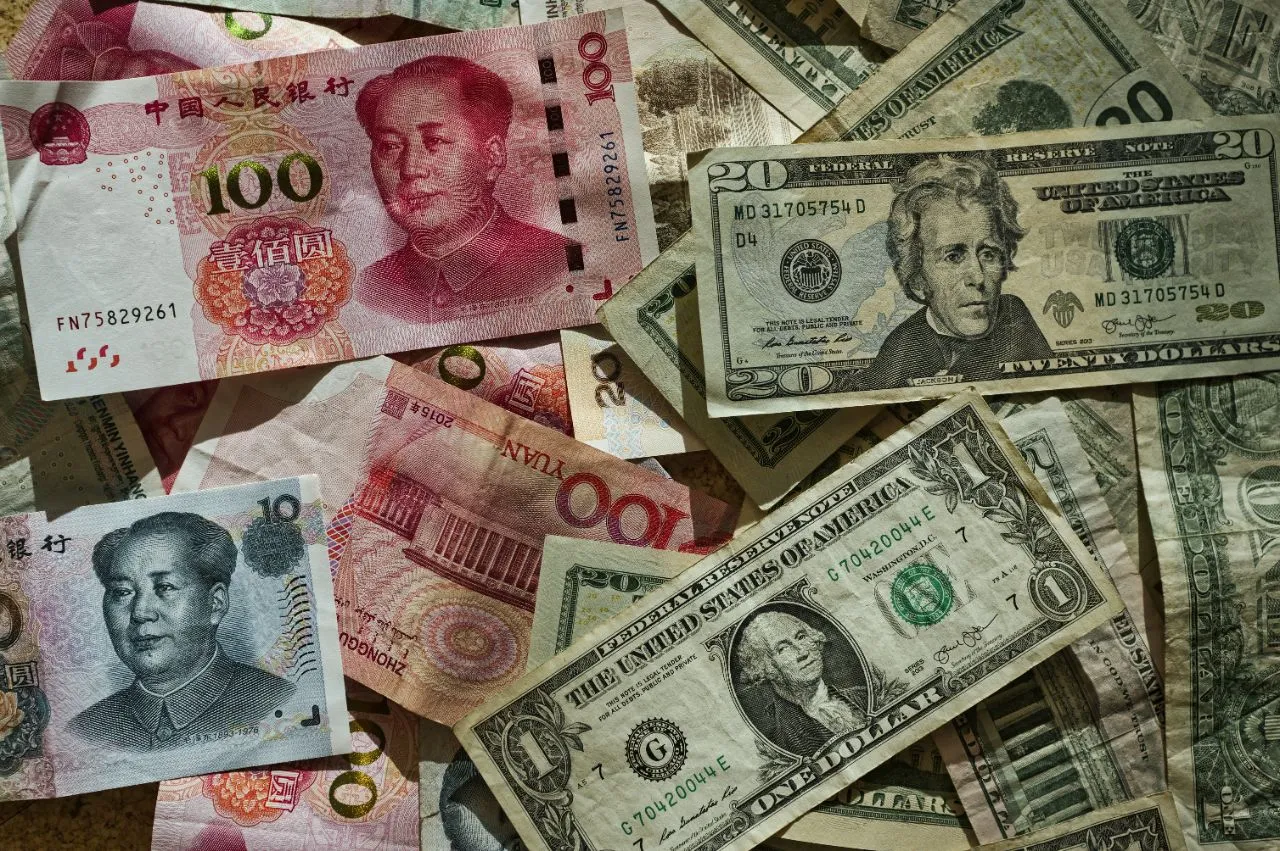
https://asset.coinness.com/en/news/80a461c9ba733f424b0176fe5cd0c9e0.webp
Photo by Eric Prouzet on Unsplash

Bullish for crypto?

Jamie Coutts, chief crypto analyst at financial research platform Real Vision, took to X to comment on the development. Coutts wrote:


“The bottom is in for global central bank liquidity for this cycle. Sit back and watch the other CBs fall into line. In a credit-based fiat fractional reserve system, debasement is a feature, not a bug.”


Coutts signed off with a “Bitcoin” hashtag, with the inference that the development will have positive implications for Bitcoin. Similarly, market analysts at Singaporean crypto-asset trading firm QCP Capital perceive the move as being bullish for crypto and risk assets more generally.


QCP Capital analysts stated:


"We believe more easing is coming from the People's Bank of China (PBoC), and they have communicated as much, and combined with the U.S. Federal Reserve joining the global cutting cycle, all major central banks, except Bank of Japan, are now ready to inject more liquidity into the market. The macro space continues to look more and more bullish for risk assets, including crypto." 


Taking that consideration further, the QCP Capital analysts suggest that market participants in the crypto space may be caught off guard by a resultant uptick in crypto pricing, stating:


"We know how explosive crypto prices can be, and with so many bullish catalysts, we think the next move higher will leave many people surprised and sidelined.”


Fed rate cuts

Many market commentators were similarly enthused last week following an announcement in the U.S. by Jerome Powell, Federal Reserve Chairman, of a 50 basis point rate cut, with the suggestion that further cuts may be implemented going forward.


However, not all market pundits are of the same view. Some believe that small interest rate cuts occurring in an overall high rates environment won’t move the needle and that it’s only in a zero rates environment where Bitcoin and crypto skyrocket. 


Arthur Hayes, co-founder of BitMEX and Chief Investment Officer (CIO) at the Maelstrom Fund, asserted in his keynote speech at TOKEN2049 in Singapore last week that he wasn’t enthusiastic about rate cuts driving crypto. 


“While I think a lot of people are looking forward to a rate cut, meaning that they think the stock market and other things are going to pump up the jam, I think the markets are going to collapse a few days after the Fed’s rates,” he stated.


Markets didn’t collapse subsequently although it seems that they are responding to this latest monetary stimulus introduced by China.


More to Read
View All
Policy & Regulation·

May 02, 2023

Binance APAC Head Urges the Korean FIU to Approve Gopax’s Exec Changes

Binance APAC Head Urges the Korean FIU to Approve Gopax’s Exec ChangesIn a recent interview with Yonhap News, Leon Sing Foong, Binance’s head of Asia-Pacific operations, emphasized the importance of the Korean financial regulator approving the change of executives at Gopax, a Korean crypto exchange.©Pexels/freestocks.orgDelayed staked asset returnFoong’s comments came in the face of mounting worries regarding the delayed repayment of assets stored in Gopax’s staking service GOFi. He explained that 25% of the assets staked in GOFi have been repaid, and the remaining assets will be refunded after approval of the Financial Intelligence Unit (FIU) of the Korean Financial Services Commission (FSC) is secured.Foong was appointed as the new CEO of Gopax last February, with Binance becoming the largest shareholder of Gopax’s operator Streami. In March, Gopax submitted an application to the FIU to inform them of the executive changes, as required by Korean law.However, the application review has been delayed amid concerns about the unclear location of Binance’s headquarters and its regulatory challenges in the US.Controlling staking servicesThe Binance executive believes Gopax’s staking service should be controlled by the exchange itself, rather than a third party. The current GOFi issue emerged due to Gopax’s management of its custody assets through crypto lender Genesis, which ceased trading following the FTX bankruptcy. Foong stated that Binance will require Gopax to maintain reserves of over 100% and eventually phase out the third-party-based service.According to Foong, Gopax’s business model will remain unchanged, and the exchange will work alongside Binance to bolster liquidity within the local market while enhancing both infrastructure and security measures. He considers internal risk management as Gopax’s top priority.Risk assessmentFoong also expressed confidence in the upcoming risk assessment of Gopax by Jeonbuk Bank, recently requested by the Korean Financial Supervisory Service (FSS). He said that the exchange is healthy, and that Binance has high-level anti-money-laundering (AML) capabilities.Korean law mandates crypto exchanges supporting Korean won trading have real-name bank accounts, and Gopax receives such accounts from its partner Jeonbuk Bank.Binance’s Asian expansionBinance’s endeavor to enter the Korean market is part of its strategy to expand its presence in Asia. It was previously reported that Binance Japan will start its operations around June this year.

news
Policy & Regulation·

Oct 05, 2023

KDIC Seizes Crypto from Debtors Linked to Losses at Financial Firms

KDIC Seizes Crypto from Debtors Linked to Losses at Financial FirmsDuring the first half of this year, the Korea Deposit Insurance Corporation (KDIC) tracked the cryptocurrency holdings of 1,075 individuals and debtors responsible for causing losses at financial entities, including savings banks, according to documents obtained by local news outlet Herald Economy, from the office of lawmaker Kim Han-kyu, a member of the National Assembly’s National Policy Committee. From this scrutiny, KDIC identified 29 wrongful cases and proceeded to confiscate cryptocurrencies in 16 of those instances.KDIC is a semi-state body that has been instrumental in tracing and recovering assets from culpable employees at troubled financial firms and debtors in arrears. Meanwhile, methods for hiding wealth have become more sophisticated, typically unfolding behind the curtain.Photo by Georg Bommeli on UnsplashFirst crypto seizureOut of these individuals, 900 had taken out loans of at least KRW 3 billion ($2.2 million) from beleaguered financial institutions, while the remaining 175 were employees of these institutions, held responsible for their failures. This occasion represents the KDIC’s first seizure of virtual assets.Until recently, the KDIC struggled to reclaim hidden assets funneled into cryptocurrency exchanges, given their limited authority to seek documentation. KDIC’s purview mainly extended to requesting information from public institutions, banks, insurance companies, and securities firms. However, KDIC has now found a way to seize crypto assets by investigating the bank accounts linked to these exchanges. In Korea, crypto exchanges facilitating Korean won trades are legally mandated to secure real-name accounts from banks.Call for expanding KDIC’s authorityGiven the evidence of using cryptocurrencies to conceal wealth, many suggest that amendments to the Depositor Protection Act are necessary, enabling KDIC to directly request relevant data from exchanges and recover more hidden assets effectively.Furthermore in August KDIC secured a court order allowing them to liquidate these assets. Following this successful confiscation, the debtors’ cryptocurrencies have been frozen in their wallets, rendering them unresponsive to any market shifts. Discussions are now underway regarding the method of liquidating the debtors’ cryptocurrencies at market value on exchanges. This includes deliberations on whether KDIC will assume ownership of the cryptocurrencies and directly proceed with their sale.In a chat with Herald Economy, Lawmaker Kim emphasized the need for KDIC to have the authority to access information from virtual asset service providers. This would enable them to more effectively retrieve assets from responsible debtors. Kim further stated that such steps would enhance both the efficiency of debt collection and overall market fairness.

news
Policy & Regulation·

Mar 15, 2024

India’s SEBI head wants instant settlement to counter crypto threat

The Securities and Exchange Board of India (SEBI) is set to introduce a same-day settlement cycle starting March 28, making India only the second country, following China, to adopt such a system. This move comes amidst growing competition from the cryptocurrency sector, with SEBI Chairperson Madhabi Puri Buch emphasizing the need for instant settlement and tokenization to remain competitive.Photo by Big G Media on UnsplashEvolving market dynamicsBuch has unveiled plans aimed at enhancing the efficiency of India's capital markets through faster settlement processes. During a recent press conference, she highlighted the significance of adapting to evolving market dynamics. Buch stated:“If our well-regulated market cannot compete with the crypto world and cannot say we also offer you tokenization and instantaneous settlement over the medium term, I won’t even say long term, you should expect investors to move." The SEBI chairperson articulated that we live in a time where the current generation demands instant delivery of services. It’s with that in mind Buch believes that crypto is a threat to traditional financial markets. She stated:"Everybody wants instant everything. Right? So why should anyone believe that tomorrow if an alternative is available with instant settlement tokenization and they say the regulated market doesn’t offer it, you should expect people to move.” With a focus on meeting investor expectations for instant transactions, SEBI aims to bridge the gap between traditional capital markets and the rapidly evolving crypto landscape. Faster settlement cyclesIndia has been at the forefront of adopting faster settlement cycles, having transitioned to a one-day settlement (T+1) model between 2021 and January 2023. The optional same-day settlement, scheduled to commence later this month, represents another step towards enhancing market efficiency. However, Buch cautioned that further delays in embracing instant settlement could lead to a significant portion of the market shifting towards cryptocurrencies. The move towards faster settlement has been met with enthusiasm from some market participants. Indian business news publication Mint reported the comments of Shauryam Gupta, CEO of web trading platform Rupeezy, on the subject. Gupta stated: “The shift to instantaneous settlement is a substantial milestone, streamlining operations and cutting down on risk. The potential advantages of reducing counterparty risk and boosting liquidity signal positive growth for the sector.” However, others, particularly brokers, have expressed reservations. Brokers, who hold client funds and earn interest on balances, stand to see their interest earnings decrease with shorter settlement times. Nonetheless, SEBI remains steadfast in its commitment to modernizing India's capital markets to remain globally competitive. The regulatory landscape surrounding cryptocurrencies in India has been predominantly shaped by the nation's finance ministry and the Reserve Bank of India (RBI). While the RBI has been vocal in its opposition to cryptocurrencies, advocating for central bank digital currencies instead, SEBI's recent initiatives underscore its willingness to adapt to changing market dynamics. SEBI's efforts reflect a broader trend of regulatory bodies worldwide seeking to strike a balance between innovation and investor protection in an increasingly digital financial landscape. 

news
Loading