Top

USDT stablecoin receives full regulatory approval in Abu Dhabi

Web3 & Enterprise·December 16, 2024, 11:47 PM

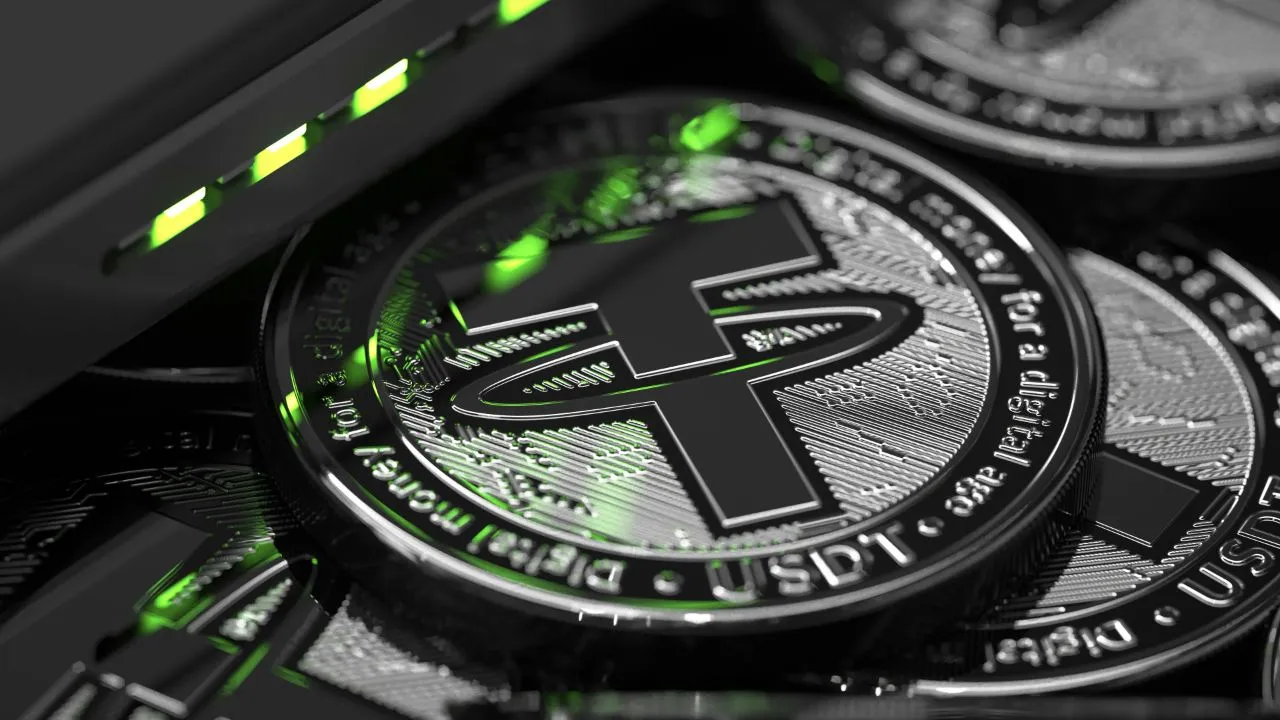
The Financial Services Regulatory Authority (FSRA), a regulatory body within the Abu Dhabi Global Market (ADGM) economic free zone and financial center in the United Arab Emirates (UAE), has fully approved USD₮, the world’s leading U.S. dollar stablecoin by market cap, as an accepted virtual asset (AVA).
https://asset.coinness.com/en/news/eaf08a1ad4bdf292be57387fe07c3323.webp
Photo by DrawKit Illustrations on Unsplash

Pre-approved USDT services

USDT issuer Tether publicized details of the approval via a statement published to its website on Dec. 10. The company outlined that the approval means that “Authorised Persons” operating and licensed by the FSRA can offer pre-approved services related to USDT.


The company stated that the approval facilitates the integration of USDT into regulated financial ecosystems in Abu Dhabi while also claiming that the move helps to advance the region’s leadership relative to digital asset innovation.


The FSRA has acknowledged acceptance of the leading stablecoin with recognition of its issuance on various blockchains including Ethereum, Solana and Avalanche.


Validating the importance of stablecoins 

With the ADGM regulator now fully accepting and recognizing the stablecoin, Tether CEO Paolo Ardoino said that the move goes beyond just “validating the importance of stablecoins as critical tools for modern finance,” as he believes it opens the door for collaboration and growth across the Middle East.


Stablecoins are increasingly playing a significant role in bridging the gap between traditional finance (TradFi) and the Web3 sector. In October, crypto asset fund manager Bitwise identified a number of key insights that point to the ongoing development and use of stablecoins. 


It outlined that the top five stablecoin projects are currently holding more U.S. Treasury bonds than some G20 countries. Tether recorded profits last year that surpassed those of BlackRock, the world’s largest asset manager. Bitwise identified that leading payments firms like Visa are adopting stablecoins and incorporating them into their platforms for the purpose of effecting transactions.


A month prior to that, Wall Street investment bank Bernstein highlighted the fact that stablecoins are playing an increasingly important role relative to the global financial system as a whole. 


It’s thought that this latest development in Abu Dhabi may act as a further driver of USDT’s market cap. At the time of writing, the stablecoin asset had a market cap in excess of $140 billion. Its inclusion as an AVA reinforces the crypto asset’s position as the most used stablecoin within the industry.


AE Coin licensing 

In a further boost for further roll-out of stablecoins in the Middle East, the Central Bank of the UAE (CBUAE) awarded the final license to fully approve AE Coin, a UAE dirham-denominated stablecoin. Commenting on the development, AE Coin General Manager Ramez Rafeek said, "AE Coin harnesses the speed and efficiency of blockchain technology, offering instant, secure, and cost-effective transactions. It simplifies transfers, making them faster and more seamless."


In an effort to bring about greater adoption of the stablecoin, the AE Coin project intends to engage in partnerships with payment gateways, financial institutions and technology providers going forward. Tether also has plans to launch a dirham-backed stablecoin, having recently partnered with UAE-based entities to bring that about.




More to Read
View All
Markets·

Apr 13, 2023

Shapella Upgrade to Have limited Impact on ETH’s Selling Pressure

Shapella Upgrade to Have limited Impact on ETH’s Selling PressureThe Shapella upgrade on the Ethereum network scheduled to take place on Wednesday will only have a limited impact on the selling pressure on ETH, according to a report by the research center at Korean cryptocurrency exchange Korbit.©Pexels/JievaniShapella upgradeOne of the key features of the Shapella upgrade is to allow withdrawal of staked ETH. This upgrade follows September’s Merge upgrade that switched the Ethereum network’s consensus algorithm from Proof of Work to Proof of Stake, significantly reducing electricity consumption.Impact on selling pressureTo predict the impact of the Shapella upgrade on the selling pressure on ETH, the analysts at Korbit Research calculated the amount of time it takes for all the ETH staked as of March 22 to be withdrawn. They believe this calculation is relevant because withdrawals of staked ETH could trigger bulk sales, potentially imposing a greater selling pressure on ETH.According to the findings, the daily sell volume for the first three days is expected to be 300,700 ETH, 0.254% of the circulating supply. This volume will gradually decrease to 43,000 ETH for the next six months and to 29,000 ETH for the following six months, each corresponding to 0.035% and 0.024% of the circulating supply, respectively.All in all, bulk selling of ETH is not likely, considering it will take about a year and five months for all the staked ETH to be withdrawn and that the amount of withdrawable ETH will stay relatively low for each period. Furthermore, since this analysis assumes an extreme case, the market will be able to effectively handle the volume over the six month to 18 month period.4 other reasonsIn addition, Korbit Research outlined four other aspects that limit the selling pressure on ETH.Firstly, there is some concern that the selling volume of ETH may increase due to unstaking resulting from the cessation of staking services at American crypto exchange Kraken. However, a decrease in the number of validators on the Ethereum network will raise the base reward. This may prompt those who unstaked ETH to stake them on other platforms, rather than selling them.Second, ETH locked up at liquidity staking protocols such as Lido Finance and Rocket Pool provide liquidity for representations of staked ETH. These platforms allow users to stake fewer than 32 ETH for rewards. According to a February Binance Research report, 57.7% of ETH stakers enjoy liquidity and rewards. Therefore, there may be a limited impetus to divest of staked ETH.Third, since only 41.1% of ETH stakers are seeing profits as of the time of writing the report, the remaining stakers would have to risk losses when withdrawing ETH. This suggests that those not yet seeing profits are more likely to keep ETH staked. Furthermore, Dune Analytics data shows that most of the ETH stakers with gains staked ETH when its price was relatively low, which indicates that they participated in staking in early days. Shivam Sharma, the author of the aforementioned Binance report, states that these ETH stakers are likely “some of the strongest Ethereum believers.”Lastly, despite the Shapella upgrade, ETH withdrawals at different staking pools may not be initiated immediately. This could limit the circulation of withdrawable ETH, which in turn would hinder the selling pressure on ETH.Macroeconomic factorsThe Korbit researchers concluded their paper with a note that the selling pressure on ETH will be more influenced by macroeconomic factors than technical factors. They added that a possible downturn in the overall economy and corrections in risky asset markets might lead investors to sell ETH.

news
Policy & Regulation·

Jun 26, 2023

Korea’s Chungcheongbuk-do to Foster Regional Blockchain Ecosystem

Korea’s Chungcheongbuk-do to Foster Regional Blockchain EcosystemChungcheongbuk-do, a South Korean province located 117km south of Seoul, has entered into a partnership with the Korea Internet and Security Agency (KISA) to launch a regional blockchain initiative. The province won the bid for this initiative, proposed by the Ministry of Science and ICT, with the goal of fostering a thriving blockchain ecosystem within the region. Spearheading this project will be the Chungbuk Innovation Institute of Science and Technology (CBIST).Photo by Suzi Kim on UnsplashComprehensive supportWith a budget of 1.4 billion KRW ($1.07 million), CBIST will spearhead the initiative by providing support to startups and creating a business-friendly environment. The province of Chungcheongbuk-do will offer consulting services to assist startups in exploring innovative blockchain solutions. They will also provide comprehensive support, including accommodations, infrastructure, equipment, and access to cloud computing platforms.Blockchain into other industriesFurthermore, Chungcheongbuk-do will extend funding opportunities and implement educational programs to nurture skilled individuals and develop a self-sustaining blockchain sector within the province. The goal is to catalyze the emergence of innovative business models that incorporate blockchain technology into various industries such as storage batteries, semiconductors, and parts and materials. This initiative is expected to boost the region’s economy and enhance its competitive advantage.Since the establishment of the Chungbuk Blockchain Promotion Center at CBIST in 2018, the provincial government has been actively involved in discovering and planning various blockchain projects and raising awareness. With the current blockchain initiative, Chungcheongbuk-do aims to build a comprehensive support system that will facilitate the growth of the regional blockchain sector.Kim Jin-hyung, Chief of the Science and Talent Bureau of the Chungcheongbuk-do government, expressed that this blockchain initiative aligns with the strategic vision of the elected local government to establish a high-tech region. The provincial government is dedicated to identifying software-focused projects that can strengthen startup ecosystems and empower young entrepreneurs.

news
Policy & Regulation·

May 30, 2023

Korea Bolsters Crypto Oversight and Anti-Fraud Efforts

Korea Bolsters Crypto Oversight and Anti-Fraud EffortsThe Korean National Police Agency (KNPA) is planning to build a system that allows for the swift suspension of wallet addresses on Binance, the giant global cryptocurrency exchange, during criminal investigations, according to a report by news outlet Edaily. This move comes as Binance is in the process of acquiring Gopax, one of the five major crypto exchanges in South Korea.Photo by Pixabay on PexelsPolice and crypto exchangesThe KNPA met today with these exchanges (Upbit, Bithumb, Coinone, Korbit, and Gopax) and Binance to discuss this matter. In October last year, the KNPA signed a business agreement with the five exchanges to establish a crypto exchange compliance management system.The system serves as a tool for the police to search wallet addresses that are under investigation and determine which of the five exchanges is managing them. Operating 24 hours a day, the hotline enables them to swiftly request freezes and execute warrants. As of May of this year, the system has been utilized by 2,086 investigators.The police are currently working on expanding the system to incorporate Binance. Hence, the focus of today’s agenda is to introduce additional functionalities to the system that would allow the police to thoroughly examine wallet addresses on Binance and initiate freezes when necessary. Until now, the police have been making verbal requests via the hotline before issuing formal letters.In addition to addressing the integration of Binance into the system, the police will engage in discussions regarding enhancements to the compliance system for crypto exchanges and the management of the hotline. Looking ahead, their goal is to extend the application of the compliance system to encompass all 36 crypto exchanges operating in Korea at present.Financial authority bolsters probe unitMeanwhile, the Korean Financial Supervisory Service (FSS) held a press conference today to announce its plan for enhancing its capacity to combat the escalating prevalence of unfair trade practices. Particularly rampant in unregistered investment entities and social media chat rooms, these practices have prompted the FSS to take decisive action.To address this pressing issue, the FSS has devised a plan to bolster its investigative prowess. It intends to augment the manpower of its three investigation units, increasing the number of investigation officers from the current 70 to 95. Furthermore, the establishment of three additional teams is on the horizon, further strengthening the FSS’s investigative capabilities.The Special Investigation Team will fully dedicate its efforts to combating severe unfair trading practices that have the potential to cause substantial losses for investors. The Information Collection Team will employ a multifaceted approach to gather pertinent information. Through both in-person interactions and online activities, this team will diligently collect data essential to uncovering and addressing unfair trade practices. The Digital Investigation and Response Team will delve into the intricacies of emerging digital assets, including cryptocurrencies and security tokens. Their primary objective is to develop and refine investigative techniques specifically tailored to these novel forms of digital assets.In order to enhance its responsiveness to unfair trading practices, the FSS will introduce a new system for sharing investigative information with cryptocurrency exchanges. This collaborative effort aims to foster closer cooperation between the FSS, the prosecution, and the police, ensuring swift and effective responses to any instances of misconduct.The Korean financial authority has affirmed its commitment to working closely with relevant agencies to strengthen investor protection and promote transparency in the capital market. Additionally, it has warned investors to exercise caution and avoid falling victim to investment frauds or engaging in excessive leveraging that may result in substantial losses.

news
Loading