Top

Confiscated crypto fund proposed in Russia

Policy & Regulation·March 24, 2025, 1:45 AM

While Russia had previously ruled out adding Bitcoin to its national reserves, the latest soundings from officials within the world’s largest country call for the creation of a crypto fund to hold and manage confiscated cryptocurrencies.


According to a report published by Russian state-owned news agency TASS, Evgeny Masharov, a member of the Civic Chamber of the Russian Federation, has put forward a proposal for the formation of a special fund that would hold and manage cryptocurrencies that had been confiscated as the proceeds of crime by the Russian authorities.
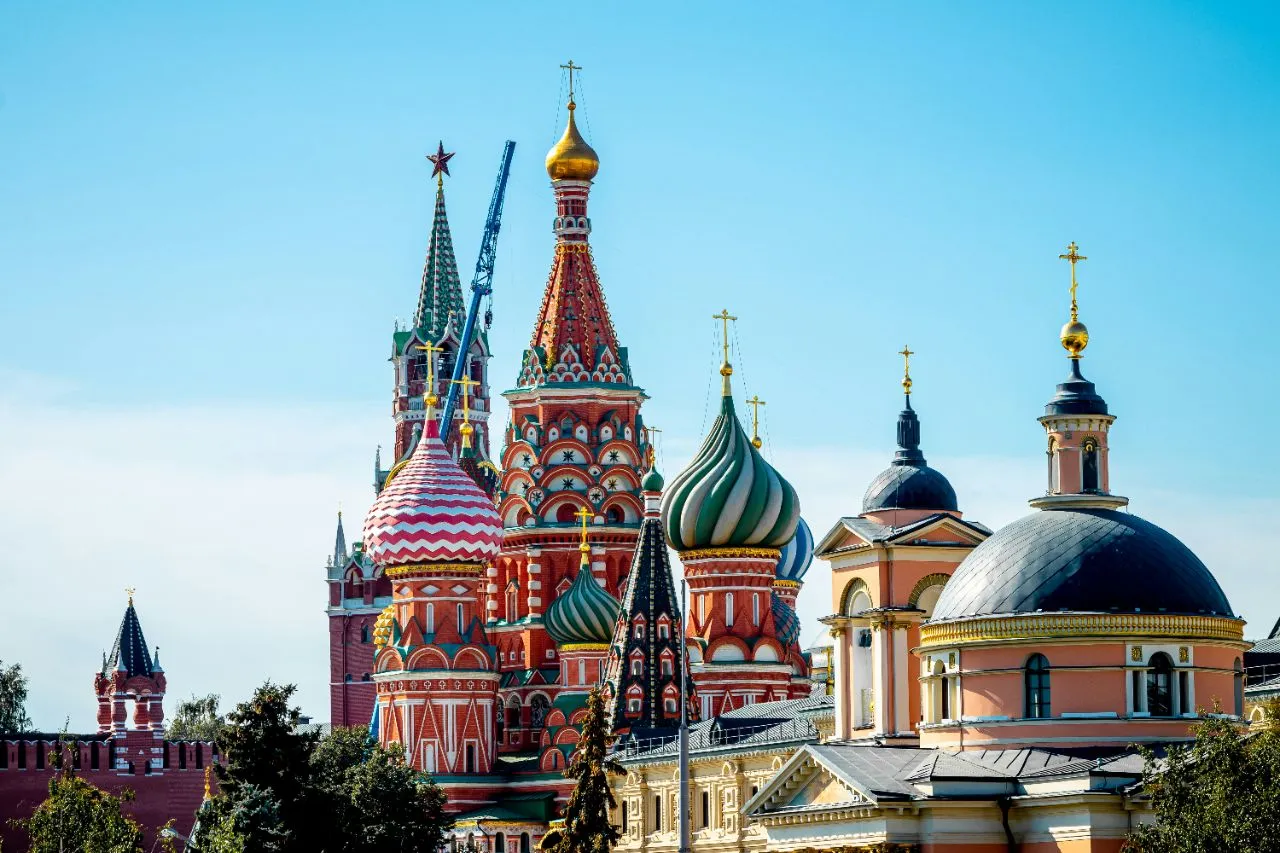
https://asset.coinness.com/en/news/bc2a17626289d15b5f6be1bb1856a54f.webp
Photo by Artem Beliaikin on Unsplash

Masharov told TASS:


"Cryptocurrency confiscated in criminal proceedings should work for the benefit of the state. For these purposes, a special fund can be created, on the balance sheet of which these cryptocurrencies would be located, the capitalization of which will significantly increase over time.”


In the future, Masharov proposes that the funds could eventually be used for educational, social and environmental projects.


Enabling asset confiscation

Masharov supported moves to define digital assets as property within the realm of criminal procedure legislation previously. Since 2021, legislation has been proposed to lay out a properly defined framework to enable the confiscation of such assets in criminal cases. As of last month, Russia’s Supreme Court is currently working towards establishing this.


The Civic Chamber official expressed his willingness to discuss his proposal with other stakeholders such as crypto industry representatives and officials from Russia’s Federal Taxation Service.


If this proposal was to be implemented, it would match a position taken in the U.S. with regard to a Bitcoin reserve. Earlier this month, U.S. President Donald Trump signed an executive order creating a strategic Bitcoin reserve which will be funded mainly by confiscated Bitcoin.


Central bank resistance

Russia’s central bank has been largely opposed to the use of cryptocurrencies within Russia in recent years. Last December, central bank governor Elvira Nabiullina stated that the bank had no plans to invest in cryptocurrencies. Earlier that month, Anton Tkachev, a member of Russia’s State Duma, had put forward a proposal to establish a national Bitcoin reserve.


With the onset of sanctions as a consequence of the conflict in Ukraine, the Russian government has softened its position with regard to cryptocurrencies. Digital assets such as Bitcoin are now seen as a mechanism to enable cross-border trade and cross-border payments, circumventing the international banking system.


It was reported last year that Russia’s central bank had changed course and with that, it was leading efforts to assist Russian companies to use cryptocurrency for international trade, bypassing Western sanctions. Earlier this month, Reuters reported that Russian oil firms are now using leading cryptocurrencies such as Bitcoin, Ethereum and Tether in oil trade deals with their counterparts in China and India.


In another development earlier this month, it emerged that the central bank is now allowing a limited level of crypto investment by investors.


Faced with sanctions and current geopolitical realities, it’s understood that Russia had been considering the use of Bitcoin for reserve purposes, but for the time being, it has opted to concentrate on adding gold and the Chinese yuan to its sovereign wealth fund. 


More to Read
View All
Web3 & Enterprise·

Sep 14, 2023

BitMEX Returns to Derivatives Arena with Prediction Market

BitMEX Returns to Derivatives Arena with Prediction MarketBitMEX, a name synonymous with the early days of crypto derivatives, has made a return to its core focus with the launch of a prediction market.Through this new product, the company aims to captivate traders by offering them the opportunity to wager on real-world events, effectively extending the boundaries of crypto derivatives trading.Photo by Amjith S on UnsplashBetting on the outcome of real-world eventsThis shift in direction is being overseen by Stephan Lutz who took the helm as CEO and group CFO in 2021.In a blog post announcing the product launch on Tuesday, the firm expressed its vision for the prediction market, asserting that it would introduce an entirely new dimension to crypto derivatives trading.The product is designed to diversify traders’ portfolios and yield returns based on predicting the outcomes of real-world occurrences, an offering that the company feels holds significant promise. Especially in bear markets characterized by subdued volatility, the prediction market could serve as a valuable instrument for traders seeking to enhance their strategies.Novel initial wagersBitMEX’s inaugural move into the prediction market sees the firm offer an array of contracts for traders to explore. Among those initial offerings are contracts enabling wagers on various outcomes, such as the percentage recovery rate of FTX’s bankruptcy claims and the likelihood of the US Securities and Exchange Commission (SEC) approving a Bitcoin exchange-traded fund (ETF) by October 17. These contracts underscore BitMEX’s intent in covering a wide spectrum of topics, with the firm promising to introduce more options in the near future.The prediction market holds the potential to revolutionize the way traders engage with real-world events, introducing a novel form of participation that transcends traditional trading boundaries. This launch has significant potential for BitMEX as it endeavors to reclaim its position in the competitive crypto derivatives market.Change of strategyUnder the stewardship of former CEO Alexander Höptner, BitMEX embarked on a diversification strategy termed “beyond derivatives,” delving into areas like spot trading and exploring new business avenues. However, the departure of Höptner in October ushered in a change in direction for the firm. The introduction of the prediction market now symbolizes BitMEX’s return to its foundational business model, with a renewed focus on derivatives.In May, the Seychelles-headquartered firm introduced perpetual contracts relative to SUI and PEPE tokens. Later that month, it launched a dedicated virtual asset service to Hong Kong-based customers. Hong Kong was its original center of operations when the company was first formed. It has since moved those operations to Singapore while maintaining its corporate presence in the Seychelles.BitMEX’s fresh foray into the derivatives space not only signifies a return to its roots but also presents traders with a means to trade relative to real-world events. By offering an eclectic range of contracts, the platform seeks to attract traders who crave more than conventional crypto trading. This strategic move could serve as a catalyst for BitMEX as it strives to regain its foothold in the competitive crypto sector.

news
Web3 & Enterprise·

Mar 07, 2024

Korean blockchain firms Creder and ITCEN partner with Malaysia STO exchange Green-X

South Korea’s blockchain venture Creder and IT solution company ITCEN Group (ITCEN) announced today their partnership with Green-X, a Malaysia-based exchange, local media outlet Decenter reported. Through the partnership, the three companies plan to launch a security token offering (STO) business, introducing tokenized real-world assets (RWAs) to investors. Creder is a joint venture founded in 2022 by ITCEN and blockchain service developer BPMG.  The planned business aims to tokenize various RWAs – including jewelry, real estate, rare earth, antique goods – and issue them in the form of NFTs, which will then be fractionalized and traded on Goldstation, the gold-pegged coin (GPC)-centered DeFi platform developed by Creder. Photo by Jingming Pan on UnsplashThe initial project of the RWA business would be to offer trading services for Dignity gold tokens (DIGNITY) on Goldstation, a digital token issued by Dignity Gold LLC. The company owns a gold mine valued at over $6 billion in Nevada, U.S., according to data from Green-X. As of March 26, gold reserves yet to be excavated from the mine reportedly stand at 3.44 million ounces. Green-X, a Malaysia STO exchange accredited by Sharia certificate The Malaysia-based STO exchange Green-X is a wholly owned subsidiary of Greenpro Captial Corp., a company listed on Nasdaq. In February 2022, Green-X received an STO exchange license along with Sharia certificate, a proof of compliance that is only given to firms that follow the Islamic law, Sharia. This religious certificate is known to serve as a significant criterion for Islamic investors.  James Lim, CEO of Creder, said that the company aims to expand its business to the global market by further introducing more RWAs in cooperation with Green-X.  

news
Web3 & Enterprise·

Sep 20, 2023

Busan to Merge Blockchain and Coffee through Smart Logistics Platform

Busan to Merge Blockchain and Coffee through Smart Logistics PlatformThe Korean southern port city of Busan and its regional institution for industrial innovation, Busan Techno Park, announced that they will begin developing a collaborative platform that facilitates smart logistics in the local coffee industry through the use of blockchain technology. The project is aimed at enhancing transparency and trust in the industry by tracking the entire logistics process — from the importation of raw coffee beans through Busan Port to distribution to businesses, then purchase by consumers.Photo by Theo Crazzolara on UnsplashTracking production and flavor profilingThe platform will use artificial intelligence (AI) technology to track the distribution of coffee beans as well as objectively analyze various types of coffee to arrange flavor profiles based on factors such as weather, storage conditions, and the environment. This would eliminate any room for subjective opinions that are usually associated with taste evaluation.“This project aims to develop blockchain technology that can be used to trace the background of coffee beans starting from their country of origin,” said Kim Hyung-kyun, Director of Busan Techno Park. Blockchain technology’s strength lies in its ability to solve the problem of a lack of transparency between coffee producers and consumers.The platform was selected in April as a technology commercialization initiative under the Korean Ministry of Science and ICT’s 2023 Special R&D Zone Development Project. It is set to receive a total of KRW 11.8 billion (approximately $8.9 million) in governmental, private, and municipal funding until December 2025.Fostering transparency and securing a competitive edgeA ceremony was held at the Asti Hotel in Busan on Tuesday to kickstart the project and form the Busan R&D Innovation Valley Committee — consisting of two subcommittees dedicated to distribution and technology, respectively — to carry out the initiative.“It will be possible to manage data on changes in ingredients and quality due to storage conditions and duration. This will give sellers a competitive advantage and allow consumers to enjoy better-quality coffee at reasonable prices,” explained Oh Dong-joon, who is in charge of the distribution subcommittee.After the platform has been developed over the next three years, it will be available for coffee businesses and startup entrepreneurs in Busan. “In the case of specialty coffee, traceability and transparency are important. When the platform is established, it will be a significant help in verifying objective data related to problems that may occur during the import and storage of coffee beans,” remarked Jeon Joo-yeon, CEO of Busan-based specialty coffee brand Momos Coffee.Jung Yo-han, leader of the business mining division under the project’s technology subcommittee, added that consumers will be able to buy coffee that they can trust after it has been traced through the distribution process. The city will also be able to stimulate startups by leveraging blockchain technology and take advantage of the project’s scalability by applying it to all agricultural and marine products that are imported through Busan Port.

news
Loading