Top

Ripple expands in UAE with new partners Zand Bank and Mamo

Web3 & Enterprise·May 20, 2025, 5:19 AM

Ripple, the blockchain company behind the XRP token, announced in a May 19 press release that it has added two new customers in the United Arab Emirates (UAE)—Zand Bank and Mamo. Both institutions will use Ripple Payments, the company’s blockchain-based platform for cross-border transactions. 
https://asset.coinness.com/en/news/51f9224fb031f465a197998805da8859.webp
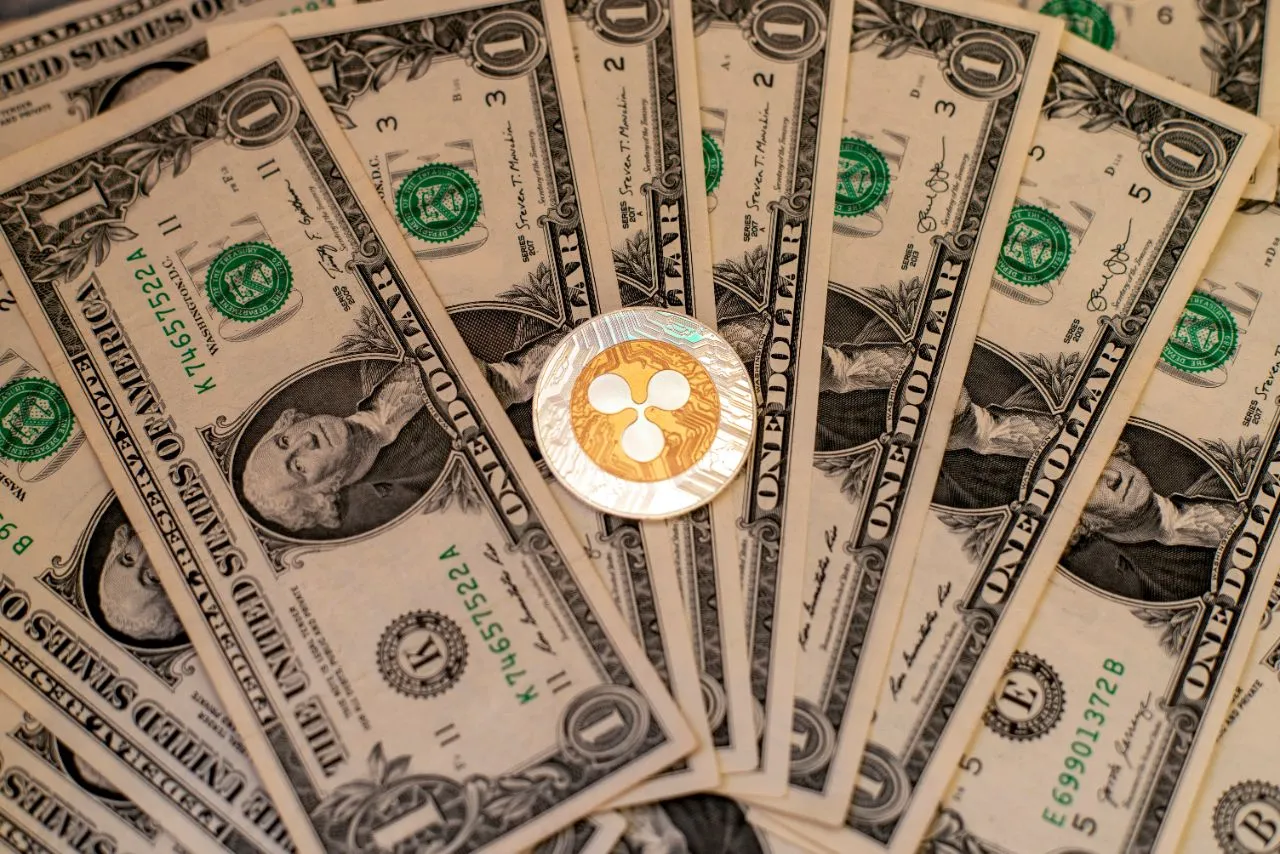
Photo by Dmytro Demidko on Unsplash

Expanding under Dubai license obtained in March

This partnership comes after Ripple’s obtainment of a license from the Dubai Financial Services Authority (DFSA) in March to offer regulated crypto payments and services in the Dubai International Finance Centre (DIFC). Ripple Payments facilitates end-to-end payment management for its customers. The platform enables funds to be transferred globally around the clock, with payments settled within minutes.


Ripple’s latest move follows growing demand for blockchain-powered payment solutions in the Middle East. Ripple’s 2025 New Value Report shows 64% of Middle East and Africa (MEA) finance leaders see faster payments as the main reason to adopt blockchain for cross-border transactions.


“Our new partnerships with Zand Bank and Mamo are testament to the momentum that the license has created for our business,” said Reece Merrick, Managing Director for the Middle East and Africa at Ripple.


Zand Bank, the UAE’s first fully licensed all-digital bank, will leverage Ripple’s technology to enhance its payment solutions. “Our collaboration with Ripple highlights our commitment to empowering global payment solutions through blockchain technology. Moreover, we are excited to soon launch an AED-backed stablecoin,” said Chirag Sampat, Head of Treasury and Markets at Zand Bank.


Meanwhile, Mamo, a company that helps businesses consolidate payment collection, corporate cards and expense management, sees the partnership as an opportunity to support the UAE’s growth. “The UAE is on an incredible growth path, with over a million businesses expected to call it home by 2030. At Mamo, we're proud to be at the forefront of this journey making global payments simpler and more accessible for everyone,” said Imad Gharazeddine, CEO and co-founder of Mamo.


Ripple faces legal setback in U.S.

While Ripple continues to expand its business globally, it is facing ongoing legal challenges in the U.S. On May 15, U.S. District Judge Analisa Torres rejected a joint request by Ripple and the U.S. Securities and Exchange Commission (SEC) to approve a proposed $50 million settlement. The settlement would have reduced Ripple's fine from $125 million to $50 million, effectively concluding a four-year legal dispute.


The case began in December 2020, when the SEC accused Ripple of raising $1.3 billion through unregistered XRP sales. In July 2023, Judge Torres ruled that Ripple’s institutional XRP sales violated securities laws, while sales on exchanges to retail investors did not. Despite the SEC easing its crypto enforcement activities under the Trump administration, Judge Torres rejected the proposed settlement, calling it “procedurally improper.”


Ripple’s bid to acquire USDC issuer

In a related development, Ripple made an offer to acquire Circle, the issuer of the USDC stablecoin. Circle, which is preparing for an initial public offering (IPO), is also exploring a potential sale and has reportedly engaged in informal discussions with both Coinbase and Ripple, seeking a valuation of $5 billion. However, Ripple’s offer was reportedly turned down. Meanwhile, XRP is trading at $2.39, up 2.57% over the past 24 hours, according to CoinMarketCap data at the time of publication.

More to Read
View All
Policy & Regulation·

Apr 12, 2024

DPK’s landslide win in general election stokes anticipation of spot Bitcoin ETFs approval in Korea

A couple of days have passed since the 22nd general election took place in South Korea, whose results have disappointed President Yoon Seok-yeol and the country's ruling People Power Party (PPP). The main opposition Democratic Party of Korea (DPK) won the election in a landslide, securing a total of 175 seats out of 300 in the National Assembly.   Now, with the DPK set to continue exerting control over the National Assembly, financial industry insiders are focusing on whether the liberal party will stick to its campaign pledges to ease regulations on cryptocurrencies and related products – most notably, approving investment and trading of spot Bitcoin exchange-traded funds (ETFs) within the country, according to media outlet Yonhap Infomax. Ever since the U.S. Securities and Exchange Commission (SEC) approved spot Bitcoin ETFs in January, interest surrounding such products has intensified among Korean investors. Photo by Alesia Kozik on PexelHowever, the Korean Financial Services Commission (FSC) has been reluctant to approve such spot ETFs, citing the potential risk of such approval violating the Financial Investment Services and Capital Markets Act. Various pledges to ease crypto regulations The DPK, in response, has introduced several campaign pledges aimed at easing crypto regulations, both to win votes from younger Koreans – especially those in their 20s and 30s who make up a significant portion of crypto investors in the country – and to bolster the local crypto market. Among these pledges was to include virtual asset ETFs in Individual Savings Account (ISA), which would enhance tax breaks for crypto gains. Another notable pledge was to deduct taxes on crypto gains worth up to KRW 50 million (approximately $36,560). Under the current law, only crypto gains within the limit of KRW 2.5 million qualify for the tax deduction. One local crypto insider commented on the outcome of the general election, saying that the industry will need to keep an eye on how the situation surrounding crypto regulations develops, as easing such regulations was one of the key promises the DPK made during the election campaign period.   Still, long way ahead for Korea to approve spot Bitcoin ETFsMeanwhile, CryptoQuant CEO Ki Young Ju left a comment yesterday on the X (formerly Twitter) post written by crypto analyst MartyParty, which reads, "South Korea has approved spot Bitcoin ETFs."  Ju pointed out that South Korea still has "a long way to go" when it comes to approving spot Bitcoin ETFs, noting that just because "the Bitcoin-friendly Democratic Party," or the DPK, won the general election doesn't mean that financial regulators have approved such products.  

news
Policy & Regulation·

Sep 26, 2025

Kazakhstan pilots tenge-backed stablecoin with Solana and Mastercard

Kazakhstan’s central bank has begun testing a stablecoin tied to the national currency, advancing a broader plan to modernize the country’s financial infrastructure. According to Cointelegraph, the pilot, run inside the National Bank of Kazakhstan’s Digital Assets Regulatory Sandbox, introduces Evo, a token with the ticker KZTE that is built on Solana and backed by the tenge. Intebix, a local crypto exchange, and Eurasian Bank are issuing KZTE. Mastercard is preparing connections that would link the token with major stablecoin issuers worldwide. The central bank is not minting the asset, but it is providing the regulatory framework that allows the token to be created and tested. Intebix founder Talgat Dossanov said the initiative is the first instance of the monetary authority directly engaging in the process of stablecoin issuance.Photo by GuerrillaBuzz on UnsplashBuilding a national crypto ecosystemEarly use cases focus on practical payments and on-ramps. The token is designed to widen the bridge between crypto and fiat, support conversions on exchanges, and enable spending through crypto cards. Officials described the pilot as a building block in a national digital asset ecosystem that aims to nurture new financial tools and deepen the local market. The program aligns with guidance from President Kassym Jomart Tokayev, who in a Sept.  8 address urged faster development of a comprehensive digital asset environment. He called for a new banking law to boost competition, attract new players, strengthen fintech, and ease the circulation of digital assets. Tokayev also cited progress with the digital tenge, already in use to finance projects through the sovereign wealth fund, and proposed creating a state crypto fund under the central bank’s investment arm to launch a strategic reserve of promising tokens. USD stablecoin accepted as regulatory feesRegulatory efforts extend beyond the sandbox. On Sept. 4, the Astana Financial Services Authority (AFSA), the independent regulator of the Astana International Financial Centre (AIFC), launched a pilot that lets companies based at the center pay regulatory fees using stablecoins backed by the U.S. dollar. More than 4,000 firms from over 80 countries are registered at the AIFC, and Bybit was the first to sign a multilateral memorandum of understanding with the regulator. Under the fee pilot, licensed Digital Asset Service Providers may join as Providers and act as agents for payers who choose to settle obligations to the regulator with stablecoins. AFSA chief executive Evgeniya Bogdanova said the initiative is meant to position the financial center as a hub for digital finance and to keep pace with global trends in stablecoin adoption. Together, the sandbox stablecoin, the digital tenge rollout, and the AIFC payments pilot signal a coordinated push to make digital assets a larger part of Kazakhstan’s financial system. Authorities are testing how these tools can operate within clear rules, with an eye to drawing investment and keeping the country connected to fast-moving changes in global finance. 

news
Policy & Regulation·

Jun 12, 2023

Legislator Invites Coinbase to Set Up Shop in Hong Kong

Legislator Invites Coinbase to Set Up Shop in Hong KongHong Kong continues to position itself as a favorable destination for the cryptocurrency industry, with the latest evidence of that coming in the form of an invitation to US-headquartered crypto exchange Coinbase to set up a base in the autonomous Chinese territory from one of its legislators.In a bold move showcasing its progressive stance on cryptocurrencies, Johnny Ng, a member of Hong Kong’s Legislative Council, has extended an invitation to Coinbase and other crypto exchanges to establish their operations in the region. Ng took to Twitter on Saturday to express his support and offer assistance to “all global virtual asset trading operators,” emphasizing the potential for stock listing opportunities.This invitation came at the end of a week which saw major industry players like Binance and Coinbase face legal action from the United States Securities and Exchange Commission (SEC).Photo by Ben Cheung on PexelsContrasting approachesHong Kong stands in stark contrast to the cautious approach adopted by many Western countries when it comes to cryptocurrencies. In January 2023, Paul Chan, Hong Kong’s Financial Secretary, reaffirmed the government’s commitment to building a robust ecosystem for crypto and fintech. Since then, Hong Kong has been actively developing regulations and implementing compliance measures to foster the growth of the cryptocurrency industry.Recently, the Hong Kong Monetary Authority (HKMA) announced its intention to lay the foundation for a retail central bank digital currency (CBDC). This initiative, revealed on June 9, aims to explore the benefits of CBDCs as a means of everyday payment transactions and to facilitate customer access to cryptocurrency exchanges.Crypto hub ambitionsNg’s invitation to Coinbase exemplifies Hong Kong’s ambition to become a leading digital hub for the crypto industry. Several crypto exchanges, including OKX and Huobi, have already applied for virtual asset service provider licenses in the region, demonstrating their confidence in Hong Kong’s favorable regulatory environment.Hong Kong’s crypto-friendly approach has also attracted interest from prominent international technology companies. In January, Samsung, the South Korean tech giant, announced plans to launch a Bitcoin futures active exchange-traded fund on the Hong Kong Stock Exchange.Furthermore, reports emerged in mid-February suggesting that Chinese government officials have granted strategic approval to Hong Kong’s pro-crypto initiatives. This recognition from Chinese authorities further underscores the significance of Hong Kong’s efforts in the crypto space and their potential impact on the broader digital currency landscape.Coinbase going globalLong before the arrival of last week’s lawsuit against Coinbase, the company had indicated that it was broadening its horizons. Some weeks back, SEC Chair Gary Gensler appeared on Capitol Hill in Washington, D.C., and Coinbase Founder and CEO Brian Armstrong chose that moment to outline that the company would look to operate overseas if the regulatory environment didn’t change in the US.In the intervening weeks, Coinbase has extended its product offering in Singapore, indicating its interest in establishing a base in Abu Dhabi while obtaining crypto licensing in Bermuda.With its proactive regulation, dedication to fostering industry growth, and growing interest from global players, Hong Kong is poised to become a prominent player in the cryptocurrency world. Despite the ongoing scrutiny faced by Coinbase and other exchanges in the United States, Hong Kong presents an attractive alternative for these companies to expand their operations and tap into the region’s thriving crypto ecosystem.

news
Loading