Top

Pakistan appoints crypto advisor to PM & allocates 2K MW to Bitcoin mining

Policy & Regulation·May 28, 2025, 12:47 PM

Recent weeks have seen a positive policy shift in Pakistan with regard to digital assets and blockchain and that initiative has gathered further momentum with the appointment of a special assistant on blockchain and crypto to the Pakistani prime minister and the allocation of 2,000 MW of surplus electricity to Bitcoin mining and AI data centers.

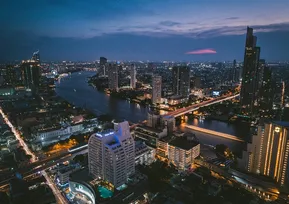
https://asset.coinness.com/en/news/e0dd22f46b106cb54a5f5c93ae048d88.webp
Photo by Abuzar Xheikh on Unsplash

On May 26, the Pakistan Observer, an English language daily newspaper, reported that Bilal bin Saqib has been appointed to serve as a special assistant on blockchain and crypto matters to Pakistani Prime Minister Shehbaz Sharif.


Forbes ‘30 under 30’ social entrepreneur

In this role, Saqib assumes the status of a minister of state under Rule 4(6) of the Rules of Business, 1973, with the appointment effective immediately. Saqib had been featured by Forbes through its “30 under 30” list of social entrepreneurs in Asia in 2020. He is the founder of Tayaba.org, a non-governmental organization (NGO) focused on the provision of clean drinking water to vulnerable communities in Pakistan.


Saqib came to prominence in the crypto sector earlier this year when he was appointed CEO of the newly formed Pakistan Crypto Council (PCC), an agency established to promote blockchain technology and digital assets within the South Asian country. In April he was added by World Liberty Financial, a crypto project connected with the family of U.S. President Donald Trump, as an advisor.


Earlier this month, Pakistan’s Ministry of Finance gave the go-ahead for the establishment of the Pakistan Digital Assets Authority (PDAA), a body that will be responsible for the implementation of regulations governing the crypto and blockchain sector. 


Utilizing surplus energy

At the time, one area of focus that had been highlighted in the announcement of the establishment of the PDAA was a desire to make better use of Pakistan’s surplus energy. The country runs an annual average surplus of 4,000 megawatts.


A report by 24 Digital on May 25 indicated that action has already been taken in this regard. It outlined that Pakistan has allocated 2,000 megawatts of surplus electricity for the exclusive use of operators of AI data centers and Bitcoin mining facilities. 


This plan is being rolled out in phases. The first phase makes surplus energy available to these operators. Phase 2 will focus on enabling crypto mining operators to avail of renewable energy to power their facilities, in an effort to develop the sector in Pakistan in an environmentally responsible manner.


According to the Ministry of Finance, interest has already been expressed by international operators in the crypto mining and AI data center sectors. A number of international firms are understood to have visited the country in an effort to explore potential collaboration opportunities. 


Earlier this month, Saqib claimed on social media that Pakistan “is moving at crypto speed.” He made the case that the country is a breeding ground for crypto innovation, citing the opportunity to exploit surplus electricity via crypto mining and the potential for crypto adoption given a $36 billion remittance market, millions of unbanked citizens and 64% of the population under 30.


More to Read
View All
Web3 & Enterprise·

Sep 29, 2023

Shanghai’s Blockchain Development Plan Paves the Way for Web3 Innovation

Shanghai’s Blockchain Development Plan Paves the Way for Web3 InnovationShanghai has set its sights on a global leadership role in blockchain technology by 2025. This commitment comes following the recent unveiling of an action plan by the Shanghai municipal government, designed to accelerate the city’s blockchain technical development.The plan, published on Wednesday, places emphasis on several critical aspects of the blockchain ecosystem, reaffirming Shanghai’s dedication to advancing Web3 technologies.Photo by Vin Jack on UnsplashTargeting key areas in blockchainUnder this comprehensive plan, Shanghai aims to achieve significant breakthroughs in multiple key areas within the blockchain realm. These include enhancing blockchain system security, advancing cryptographic algorithms, developing specialized blockchain processors, refining smart contract capabilities, achieving cross-chain interoperability, optimizing storage solutions, enhancing privacy computing, and establishing robust regulatory frameworks.These advancements will serve as pillars supporting the city’s digital transformation across various sectors, such as government affairs, cross-border trade, supply chain management, finance, the metaverse, and data element circulation.Human capital development stands as a central pillar of Shanghai’s blockchain strategy. To ensure a well-rounded and skilled workforce in the blockchain industry, the plan encourages research institutes and companies to leverage China’s foreign talent recognition standards to attract blockchain professionals.Furthermore, the city aims to guide educational institutions and businesses in nurturing young talents within the blockchain sector. Interdisciplinary and cross-industry platforms will be created to facilitate talent exchange and provide opportunities for growth and leadership.Zeroing in on ZK proofsOne notable objective within the plan is the advancement of zero-knowledge proofs, a cryptographic technique enabling parties to validate the authenticity of statements without disclosing specific information. Shanghai is committed to improving the efficiency and usability of zero-knowledge proof protocols, with a clear target of doubling efficiency by 2025.Major Chinese tech giants, including Alibaba and Tencent, have been actively developing their consortium blockchains while contributing significantly to the country’s leadership in blockchain innovation. Additionally, Beijing released a white paper in May with a strong emphasis on fostering growth and innovation in the Web3 industry. This positions the city as a global hub for digital economic advancements.Building upon 3-year action planShanghai’s determination to excel in blockchain development is not a recent occurrence. In June, the city unveiled a comprehensive document outlining its ambitious plans to enhance blockchain infrastructure by 2025. It also explored potential collaborations with international cities like Hong Kong and Singapore to test cross-chain applications. Despite China’s strict measures against cryptocurrency transactions in September 2021, the country remains optimistic about the potential of domestic blockchain technology.Shanghai’s ambitious blockchain development plan underscores China’s determination to lead in the blockchain space and reinforces its commitment to technological innovation and digital transformation. Leveraging its strengths in research, talent cultivation, and strategic partnerships, the city “on the sea” is positioning itself to make substantial contributions to the evolving landscape of Web3 technologies. By 2025, it aims to emerge as a global leader in blockchain innovation, setting a precedent for other cities worldwide.

news
Policy & Regulation·

Aug 29, 2025

Ex-PBOC governor warns on stablecoin speculation, questions case for yuan peg

China’s former central bank governor has warned that speculation in stablecoins could threaten financial stability, Bloomberg reported, citing a post from the Beijing-based think tank CF40 Research. His remarks run counter to calls from some economists and industry figures for a yuan-backed stablecoin as the U.S. advances its digital-asset policy agenda. Zhou Xiaochuan, who led the People’s Bank of China (PBOC) from 2002 to 2018, delivered the comments at a closed-door meeting in mid-July. He argued that China’s payment rails—spanning third-party platforms, the central bank digital currency (CBDC), digital wallets, and clearing infrastructure—are already highly efficient, leaving little scope for stablecoins to deliver meaningful cost savings. He also rejected the premise that conventional cross-border payments come at steep costs. Zhou identified price manipulation driven by speculative trading as the chief risk to financial and asset markets, adding that current safeguards in the U.S., Hong Kong, and Singapore remain inadequate.Photo by Mitchell Luo on UnsplashOnshore controls push yuan stablecoins offshoreAny debate over a yuan-linked token must also contend with China’s currency structure. The onshore yuan (CNY) is subject to strict capital controls and limited cross-border convertibility, while the offshore yuan (CNH) trades more freely. As a result, any prospective yuan stablecoin would likely reference the CNH; pegging directly to the CNY would conflict with Beijing’s capital rules. An earlier Reuters report has indicated that Beijing is weighing whether to authorize a yuan-pegged stablecoin to promote international use of the currency. Analysts caution that such a token would almost certainly be confined to offshore markets, even if regulators proceed. U.S. sets federal guardrails for stablecoinsMeanwhile, policy moves in the U.S. are gathering pace. In July, President Donald Trump signed the Guiding and Establishing National Innovation for U.S. Stablecoins (GENIUS) Act into law, creating a federal framework for stablecoins. A White House fact sheet says the law requires issuers to maintain 100% reserves in liquid assets such as U.S. dollars or short-term Treasuries and to publish monthly disclosures on reserve composition. The administration has argued that dollar-backed stablecoins could bolster demand for Treasuries and reinforce the dollar’s reserve-currency role. Hong Kong has emerged as comparatively receptive to digital assets. The special administrative region’s Stablecoins Ordinance entered into force on Aug. 1, establishing a licensing regime to oversee Hong Kong dollar–backed stablecoins. Earlier this month, CMB International Securities, a subsidiary of China Merchants Bank, became the first Chinese bank-affiliated institution to offer trading in Bitcoin, Ethereum, and Tether (USDT). Industry voices are also pressing the case for stablecoins. At the WebX conference in Tokyo on Aug. 25, Binance co-founder Changpeng Zhao (CZ) argued that CBDCs are becoming obsolete, while stablecoins—typically backed by real assets—enable wider transactions and are gaining market traction. He said CBDCs remain rarely implemented due to limited demand and suggested China appears more open to stablecoins after years of tighter oversight, pointing to Hong Kong’s efforts to build an ecosystem. Potential PBOC stimulus may lift cryptoChina remains a consequential force in global crypto markets. A recent report suggested that potential PBOC stimulus could fuel an altcoin rally. With China accounting for 19.5% of global GDP, shifts in its monetary stance are seen as important drivers of worldwide liquidity. Following July data showing a 0.1% month-on-month decline in retail sales, a 0.4% rise in industrial production, and an uptick in unemployment to 5.2%, analysts expect measures to support growth. Any additional liquidity could flow into risk assets, including cryptocurrencies, potentially pushing digital tokens toward new highs. 

news
Web3 & Enterprise·

Nov 24, 2023

Wemade CEO to attend Abu Dhabi Finance Week and Fortune Global Forum next week

Wemade CEO to attend Abu Dhabi Finance Week and Fortune Global Forum next weekHenry Chang, CEO of South Korean blockchain gaming publisher Wemade, will be traveling to the United Arab Emirates to speak at the second annual Abu Dhabi Finance Week — one of the biggest financial and economic events in the Middle East and North Africa (MENA) region — scheduled for Nov. 27 to 30.Photo by Kevin JD on UnsplashExploring the future of financeTouting the theme “Investing in the Transition Era”, this year’s ADFW is organized by Sheikh Khalid Abu Dhabi, Crown Prince of Abu Dhabi and Head of the Abu Dhabi Executive Council. Several organizations such as the Abu Dhabi Global Market (ADGM) and the Abu Dhabi Department of Economic Development are also participating as official partners. More than 10,000 visitors from over 100 countries across the world are expected to attend.Chang will participate as a panelist on Nov. 29 in the “Convergence: Media, Culture and Fintech” panel at Fintech Abu Dhabi, the flagship event of ADFW. The panel will cover topics like the impact of blockchain and decentralized finance (DeFi) technologies on fintech — more specifically, digital payment trends and the future of digital assets and currencies.Wemade’s expansion in the UAEHe will also partake in the Fortune Global Forum 2023, a global conference for CEOs of major global conglomerates also set to be held in Abu Dhabi from Nov. 27 to 29. The forum has been hosted by American business magazine Fortune since 1995 as a platform for member companies of the Fortune Global 500 list to gather and share insights on global issues like innovation and stability and their impact on economic progress. They will also be joined by government officials from various sectors in the UAE, including artificial intelligence, cybersecurity, oil and gas, industrial automation, healthcare and telecommunications.Wemade has been making strides to expand WEMIX3.0, its borderless Web3 mega-ecosystem, in the MENA region. The company opened an office in Abu Dhabi earlier this year.

news
Loading