Top

Hong Kong moves towards stablecoin licenses as Shenzhen warns of stablecoin scams

Policy & Regulation·July 08, 2025, 6:14 AM

The Chinese autonomous territory of Hong Kong is moving closer towards the issuance of stablecoin licenses, while 30 kilometers away on the Chinese mainland, the authorities in Shenzhen are warning against stablecoin investment scams.


Hong Kong has set Aug. 1 as the effective date for its incoming Stablecoin Ordinance. Firms such as JD.com and Ant Group, an affiliate company of Alibaba Group, are understood to be interested in seeking licensing. 
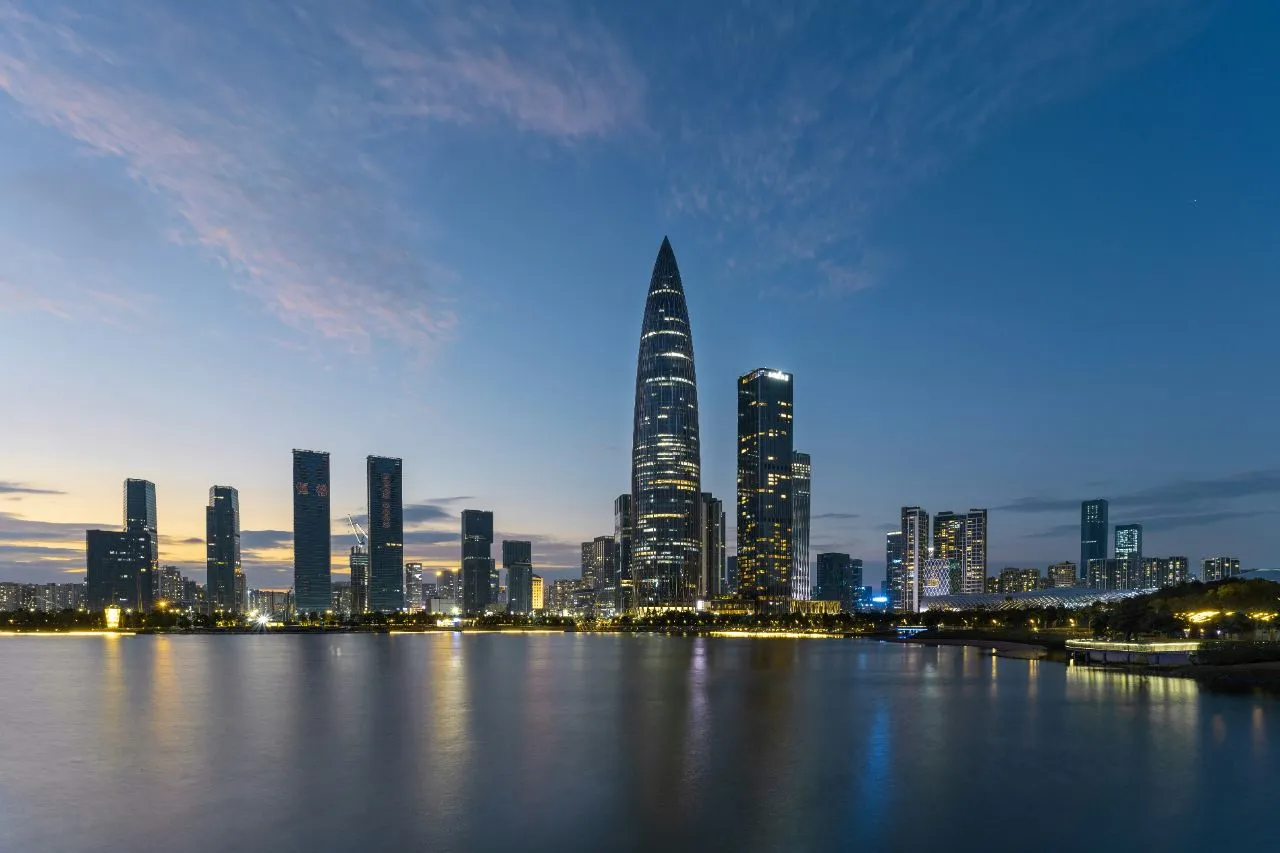
https://asset.coinness.com/en/news/c20b6e78fbc942ad4380f434984b9eba.webp
Photo by ダモ リ on Unsplash

Single-digit license issuance

In a recent interview with Chinese language newspaper Ming Pao, Christopher Hui, Hong Kong’s Secretary for Financial Services and the Treasury, outlined that stablecoin licenses are likely to be issued in 2025 following the passing of the Aug. 1 effective date, although he indicated that the number of licenses issued will remain in single digits.


Hui hopes that stablecoins can address some of “the difficulties and pain points in the real economy,” like cross-border payments involving volatile local currencies. The official said that stablecoins can reduce transaction costs and facilitate cross-border transactions when based on fiat currencies and serving as effective payment tools.


Yuan-based stablecoins

Hui stated that the issuance of a stablecoin in Hong Kong which is based on the sovereign currency of another jurisdiction would only be permitted following “discussions with the relevant authorities."  It’s understood that the aforementioned Chinese e-commerce firms have been lobbying government for the approval of offshore yuan-based stablecoins.


Last month, the Governor of the People’s Bank of China, Pan Gongsheng, acknowledged that stablecoins are disrupting global payments infrastructure. However, mainland China still has a mining and trading ban in place in relation to crypto, despite previous speculation that the country would open up to crypto.


Hui expressed the view that where a stablecoin implicates another sovereign currency, there are additional risk factors that would have to be taken into account.


Exploiting uninformed view of stablecoins

Meanwhile, 30 kilometers from Hong Kong, the authorities in Shenzhen have issued a warning to members of the public highlighting that scammers are exploiting the public’s uninformed view of stablecoins as a guise through which to lure victims into investment scams.


They asserted that scammers are using new concepts, in this case stablecoins, for hype in an effort to peddle illegal fundraising, gambling, fraud and money laundering schemes.

The Shenzhen Municipal Task Force Office for Preventing and Combating Illegal Financial Activities asked the public to report such schemes “engaged in illegal fundraising in the name of investing in stablecoins,” in order to enable the authorities to crack down on the illicit activity. The authorities added:


"We urge the general public to remain rational in their investment decisions, avoid blindly trusting extravagant promises, develop a correct understanding of money and investment, stay alert to financial risks and avoid falling victim to scams."


Last month, JD.com took to Weibo to warn the public that fraudulent JD stablecoins were being offered by scammers at a time when the company has yet to issue a stablecoin.


More to Read
View All
Web3 & Enterprise·

Oct 23, 2023

Infinite Block Selected For Tech Startup Incubator Program

Infinite Block Selected For Tech Startup Incubator ProgramSouth Korean blockchain fintech company Infinite Block announced Monday that it has been selected to participate in the Tech Incubator Program for Startups (TIPS) program.“Being selected for TIPS as the first domestic custodial services company to do so carries significant importance, as it acknowledges our technological capabilities and business viability on an international scale,” said the company’s CEO Jeong Gu-tae.Photo by Mimi Thian on UnsplashPaving the way for an innovative futureTIPS is a private investment-led technology entrepreneurship program organized by the Korea Business Angels Association and Korea Institute of Startup and Entrepreneurship Development (KISED) — two affiliated institutions under the Ministry of SMEs and Startups — to foster startups that possess innovative technology.The program appoints and designates venture founders to serve as angel investors and leaders of technological enterprises as a given startup’s incubator and/or accelerator. Throughout the two-year duration of the program, the startups can take advantage of angel investor networking and mentoring and receive KRW 500 million (approximately $370,000) in research and development (R&D) funding from the government. They can also receive an additional KRW 200 million in commercialization funds.Infinite Block, which specializes in custody services tailored to corporate-owned virtual assets, was selected for TIPS by attracting investment from the fintech innovation fund operated by venture company Infobank. This is part of a series of strategic investments that it secured within just six months of its establishment, including those from leading domestic financial institutions like banks and securities companies.Pioneering fintech developmentThe company has consistently been boosting efforts to expand into a prominent fintech platform, starting by receiving approval from Korea’s Financial Services Commission (FSC) to become a virtual asset service provider (VASP) and later on obtaining ISO 27001 certification for the information security management system of its blockchain platform. More recently, it launched a custody-based Ethereum staking service for corporate clients.“We will strive to provide trustworthy digital asset infrastructure by implementing a fintech platform that not only offers innovation through blockchain and cyber security technology but also meets regulatory requirements assigned by financial authorities,” Jeong stated.

news
Policy & Regulation·

Dec 27, 2023

Worldcoin withdraws verification service from Indian market

Worldcoin, the startup co-founded by OpenAI CEO Sam Altman, has encountered setbacks in its eye-scanning initiatives just six months after its international expansion. A recent report by TechCrunch indicates that the company’s signature orb eye-scanner is no longer available to users in the Indian market. According to that report, the Worldcoin Foundation clarified that its activities have also been suspended in France and Brazil. The company clarified that its offerings in those markets were only intended to be limited-time product previews as opposed to long-term roll-outs.Photo by Big G Media on UnsplashTemporary service haltIn India, the World App is experiencing widespread adoption, but the orb-verified proof of personhood services has been temporarily halted. The pause aims to allow the protocol to develop and implement a bespoke, safe and orderly process to meet the growing demand. The setback comes after Tools for Humanity, the organization behind Worldcoin, announced the expansion of World ID, its digital identity program linked to iris scans, in July. The startup had ambitious plans, intending to make 1,500 orbs available in over 35 cities globally. Recently, the company unveiled a program offering $5 million in grants to developers utilizing its eye-scanning technology. Regulatory investigationsSam Altman and his co-founders established Worldcoin in 2020 to help individuals prove their digital identity amidst the rise of AI. Over the years, Worldcoin has secured $250 million in funding from notable venture capitalists, including Andreessen Horowitz. However, the startup has faced regulatory challenges, including investigations by French and German regulators and an Argentinian government agency. Altman, himself, has navigated recent challenges. In November, the OpenAI board temporarily removed him as CEO, reinstating him two weeks later. More recently, Fortune reported that Altman quietly received $75 million from the University of Michigan for a new venture capital fund, raising questions about transparency, particularly following the launch of OpenAI’s signature product, ChatGPT. Asian tourIn recent weeks, the project development team behind Worldcoin had engaged in a tour of Asia. The objective of that mission was to gather market feedback prior to engaging in greater efforts to expand the reach of its World ID verification system within the region. To gauge market receptiveness to its product offering, the tour included meetups in major Asian cities such as Hong Kong, Seoul, Singapore and Tokyo. Up until mid-November, the Asian region accounted for 1.4 million World App sign-ups.The introduction of World ID 2.0 by the company on Dec. 13 led to a surge in the price of WLD. Over the course of the 48 hours that followed, it jumped from $2.47 to $4.23, a 71% increase. At the time of writing, the token unit price stood at $3.66. As Worldcoin navigates these challenges, the cryptocurrency industry will closely monitor developments, recognizing the broader implications for the startup’s innovative approach to digital identity verification.

news
Policy & Regulation·

Aug 29, 2023

Laos Halts Crypto Miners’ Electricity Amid Drought and Debts

Laos Halts Crypto Miners’ Electricity Amid Drought and DebtsLaos, a leading producer and exporter of hydroelectricity, has made the decision to suspend electricity supply to cryptocurrency mining operations within its borders.Photo by Ioana Farcas on UnsplashTackling a perfect stormThe decision comes as a result of a perfect storm of challenges, including a struggle to meet escalating power demands due to drought conditions, impending commitments to export electricity to Thailand, and the mounting debts of cryptocurrency mining companies.In a calculated move in 2021, Laos initiated a public-private pilot program aimed at delving into cryptocurrency mining and trading. The context for this move was China’s sweeping crackdown on mining activities, compelling miners to scout for alternative jurisdictions for their operations.In response, Laos granted authorization to a handful of entities, spanning construction conglomerates and a bank, to partake in the mining and trading of Bitcoin, Ethereum, and Litecoin. This led to a commitment to regulatory collaboration between government ministries, the Bank of Laos, and Electricité du Laos (EDL).Exploiting hydropowerLaos’ abundant and affordable electricity has placed it on the short list of locations for crypto miners to settle in. With an abundance of rivers and waterfalls, hydropower stands as one of the nation’s primary energy sources, offering a renewable source of cost-effective electricity.However, events in 2023 have disrupted that narrative. A persistent drought has hit the country during the first half of the year, which triggered an unprecedented surge in the demand for electricity from sources other than hydro.The dependence on hydropower, constituting 95% of the nation’s energy generation, struggled to keep pace with the demand. As a direct consequence, EDL, a state-owned electricity distributor, announced the cessation of electricity supply to crypto mining operations.The problem has compounded as Laos finds itself committed to exporting substantial quantities of electricity to the Electricity Generating Authority of Thailand (EGET), serving as a lifeline for Thailand’s power grid during the forthcoming dry season. This external commitment has, in turn, further strained the local capacity for electricity supply.Another Asian country, Bhutan, has also gotten involved with crypto mining in an effort to exploit its hydropower resources, where 99% of electricity supply comes from hydropower within the kingdom.Unpaid billsAnother dimension to the saga is the growing debt crisis faced by cryptocurrency mining operations. A representative of EDL cited the inability of these mining businesses to settle their accumulating electricity bills as a key factor in the decision for suspension. The Bank of Laos has further escalated matters by deciding to halt loans to cryptocurrency companies in January.Laos has had bold objectives to transform itself into Southeast Asia’s premier exporter of clean electricity. The nation’s topography, featuring mountainous terrain covering 70% of the country, has immense potential for hydropower, with over 26,000 megawatts of installed capacity and ambitious plans to double this figure.Hydroelectric dams like Nam Theun 2 have become conduits for substantial volumes of low-cost electricity, primarily directed towards neighboring Thailand and Vietnam. Meanwhile, projects like the Luang Prabang dam, boasting an installed capacity of 1,460 megawatts, underscore the country’s ambitions to develop hydropower further.Revenues from power exports have become a vital component in Laos’ gross domestic product (GDP), contributing almost 15%, as per a report from October 2022.

news
Loading