Top

Cango ramps up crypto production

Web3 & Enterprise·August 07, 2025, 8:56 AM

Cango, Inc., a Shanghai-headquartered Bitcoin mining business which is publicly listed on the New York Stock Exchange (NYSE: CANG), provided a mining operations update on Aug. 5, disclosing a significant increase in its crypto production.
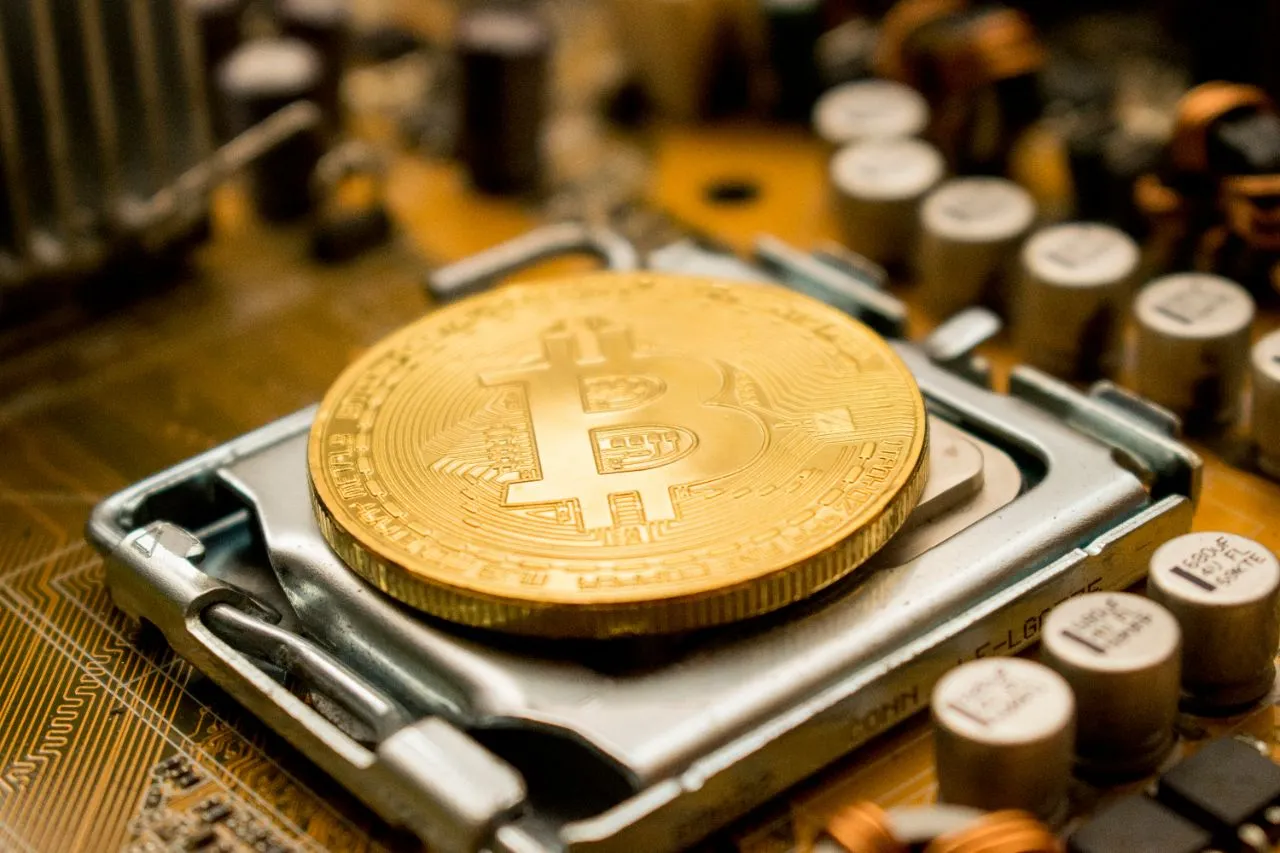
https://asset.coinness.com/en/news/62c6101df9c53245324d8fca0d61d869.webp
Photo by Dmytro Demidko on Unsplash

45% increase in output

The update outlined that in June, the firm mined 450 BTC, while holding 3,879.2 BTC, with a deployed hashrate of 32 EH/s. The figures for July show a considerable uptick, with 650.5 BTC having been mined. That Bitcoin was retained, bringing the firm’s overall Bitcoin treasury holding to 4,529.7 BTC, with a deployed hashrate of 50 EH/s.


Cango CEO Paul Yu outlined that the firm had added 18 EH/s in hashpower towards the end of June. This additional capacity accounted for the increased output experienced for the month of July, representing a 45% increase month-on-month. Yu stated:


“This strong performance not only demonstrates our commitment to execution but also fuels our ambition to accelerate future production.”


The Cango CEO added that a new and experienced management team is now in place, and with that, Cango is focusing on working towards transitioning to “a more diversified and resilient portfolio of mining sites and energy infrastructure."


Cango isn’t the only company in the Bitcoin mining sector to up its production. Cipher Mining, an American miner with facilities in Texas, also published an update, indicating that it produced 214 BTC in July with a hashrate of around 20.4 EH/s, up 21.43% month-on-month. Cipher outlined that Black Pearl Phase I, the initial 150 MW tranche of its Black Pearl facility, came on stream last month, accounting for the increased output.


Unlike Cango, Cipher sold 52 BTC as part of what it described as “its regular treasury management process.” In this respect, Cango bucked a trend in comparison with its industry peers. CryptoQuant reported that miners became significant sellers of Bitcoin in July, depositing 16,000 BTC to exchanges as of July 18.

Ranked by BitcoinTreasuries.net in order of Bitcoin held, Cango now holds 18th place among corporations holding BTC.

Originally an automotive transaction service platform operating within the Chinese market, Cango announced a new departure last November, with the signing of agreements to buy $400 million in crypto mining equipment from a number of vendors, including Bitmain. With crypto mining a banned activity in China, the company has deployed its mining operations at various locations across North America, South America, the Middle East and East Africa.


By January, the company was being referred to as a “Bitcoin mining powerhouse.” At that time, the company’s Communications Director, Juliet Ye, told CoinDesk that the firm’s entry into the Bitcoin mining sector had surprised people, given that “nobody has ever heard of Cango before.”


By April, Cango had sold its legacy auto-financing business for $352 million to a firm linked to Bitmain affiliate, Antalpha, allowing it to focus exclusively on mining. The company’s stock has surged 180% over the course of the last 12 months. Ye said that the Chinese firm’s pivot to Bitcoin mining has created a buzz around the company that had been absent previously.

More to Read
View All
Markets·

Sep 08, 2025

Asia-Pacific leads a wider crypto uptake as legal and security risks persist

A new report indicates that the global use of cryptocurrency is not only growing but also quickening, with the Asia-Pacific (APAC) region setting the pace. According to the sixth Chainalysis Global Crypto Adoption Index, released on Sept. 2, India has emerged as the new leader in overall adoption across 151 countries. The index analyzes where value is being transferred, how new users are entering the ecosystem, and which areas are experiencing the most rapid expansion.Photo by Naveed Ahmed on UnsplashIndia leads global crypto adoptionIndia now holds the top spot in the overall index, with the U.S. following in second place. The APAC region demonstrates significant momentum, with Pakistan (3rd), Vietnam (4th), Indonesia (7th), and the Philippines (9th) all securing positions in the top ten. Further down, South Korea and Japan are ranked 15th and 19th, respectively.2025 Global Crypto Adoption Index Top 20 Source: ChainalysisThe picture changes when the data is adjusted for per capita GDP, which highlights grassroots movements. By this measure, Ukraine ranks first, followed by Moldova, Georgia, and Jordan. Hong Kong comes in fifth, Vietnam sixth, while Singapore and South Korea rank 16th and 18th, respectively.2025 Global Crypto Adoption Index Top 20 (Pop. adjusted) Source: ChainalysisRegional transactions surge as APAC gains groundOn-chain transaction data confirms a shift in economic gravity. In the year ending June 2025, APAC's transaction value soared by 69% year-over-year, climbing from $1.4 trillion to $2.36 trillion. While Europe ($2.6 trillion) and North America ($2.2 trillion) still handle larger absolute volumes, growth is accelerating nearly everywhere. APAC's growth rate more than doubled from 27% to 69%, while Latin America's rose from 53% to 63%. In terms of capital entering the crypto market via centralized exchanges, the U.S. leads as the largest fiat on-ramp, processing over $4.2 trillion. This is approximately four times the volume of South Korea (over $1 trillion), while the EU recorded just under $500 billion. Asset preferences also show regional variations; Bitcoin accounted for 47% of purchases in the U.K. and 45% in the EU, but just over 20% in South Korea.  India's top ranking aligns with the latest domestic developments, such as the Independence Day launch of the Bitcoin Policy Institute India, which aims to focus on sovereign mining, policy, and education. Legal and security challenges in IndiaHowever, this rapid growth is accompanied by notable legal and security hurdles. In a high-profile case, an Indian anti-corruption court sentenced 14 individuals, including 11 police officers, to life in prison for a 2018 kidnapping and crypto extortion scheme. In another development, creditors of India's crypto exchange WazirX approved a new restructuring plan over a year after a $234 million hack allegedly linked to North Korea’s Lazarus Group. An earlier proposal was rejected by the Singapore High Court in April. The revised plan shifts oversight of recovery tokens—representing outstanding balances—from WazirX’s Singapore entity to Zanmai India, regulated by India’s financial authority, with repayments funded by profits and recovered assets. Some 150,000 creditors, representing $206 million in claims, voted between July 30 and Aug. 6 as WazirX also moved operations to a Panama-based unit called Zensui. Separately, on April 16, India’s Supreme Court dismissed a petition from 54 hack victims, ruling it lacked authority to legislate on crypto policy. While India’s headlines highlight the frictions of rapid growth, the broader picture is clearer. The Chainalysis index illustrates a global crypto market expanding across all income levels for varied reasons. In developed nations, clearer regulations and institutional involvement are key drivers. In many emerging economies, factors like remittances and access to U.S. dollars via stablecoins are more prominent. 

news
Policy & Regulation·

Mar 14, 2025

Korea’s Bithumb joins forces with Interpol to fight crypto crime

South Korean crypto exchange Bithumb is working with the International Criminal Police Organization (Interpol) to combat global criminal activities involving digital assets. According to Korean media outlet Joseilbo, Yoo Jung-ki, who heads Bithumb's Policy Support Office, met with Tomonobu Kaya, Assistant Director of Interpol's Financial Crime and Anti-Corruption Centre, during a recent meeting in Thailand. The gathering was part of a three-day event held from March 10 to 12, organized under Interpol's Project ViCTOR (Virtual assets-facilitated financial Crime – Trace, Obstruct and Recover), an initiative funded by Japan's Ministry of Foreign Affairs. During their meeting, the two officials explored ways to enhance cooperation while committing to maintaining a close, sustainable working relationship.Photo by rc.xyz NFT gallery on UnsplashExchange shares expertiseDuring his Bangkok visit, Yoo delivered a speech addressing emerging crypto crime trends and necessary regulatory changes to protect users. He also discussed the Financial Action Task Force's (FATF) guidelines and recommendations, along with South Korea's policies on anti-money laundering and combating terrorism financing (AML/CFT). His presentation resonated with the audience, particularly when he emphasized the importance of collaboration between the public sector and crypto exchanges on multiple fronts, including recovering stolen funds from criminals. Regarding the meeting, Yoo stated that he found it meaningful to participate, as a representative of South Korean crypto exchanges, in a gathering focused on developing global countermeasures against money laundering and digital asset crimes. He added that Bithumb is committed to supporting the international cooperative system aimed at preventing and recovering from crypto crimes. Interpol’s effortsThe event also covered recent updates on Interpol's Global Rapid Intervention of Payments (I-GRIP) stop-payment mechanism, launched in 2022, and Singapore's evolving crypto regulatory landscape. In June last year, Interpol reported that police across 61 countries had collectively intercepted approximately $135 million in fiat currency and $2 million in cryptocurrency, with I-GRIP helping authorities track illicit proceeds from both types of currencies.Interpol's involvement in investigating crypto crimes has been expanding recently. According to Cointelegraph, Argentine lawyer Gregorio Dalbon has requested that a prosecutor and judge issue an Interpol Red Notice for Hayden Davis, a co-creator of the LIBRA token allegedly linked to Argentine President Javier Milei. The controversial memecoin, launched last month, briefly reached a $4.5 billion market cap before its value collapsed.

news
Web3 & Enterprise·

Nov 21, 2023

NEOPIN and Sevenline Labs collaborate to boost Web3 gaming expansion

NEOPIN and Sevenline Labs collaborate to boost Web3 gaming expansionCentralized decentralized finance (CeDeFi) protocol NEOPIN has entered into a partnership with Sevenline Labs, a Korea-based company specializing in blockchain solutions. This collaboration is aimed at fostering expansion in the Web3 gaming ecosystem.Photo by Alicia Christin Gerald on UnsplashGames of different genres and platformsSevenline Labs is currently operating a Web3-powered esports tournament platform called Miracle Play. Leveraging application programming interfaces (APIs), the platform offers games of different platforms of genres on blockchain networks. It enables mobile, desktop, console and Web3 gamers to engage in diverse tournaments and earn rewards from competitions.Sevenline’s inaugural service, operating on the Polygon Network, has successfully completed a closed beta test specifically targeted at Indonesian communities. Currently, the company is in the process of conducting an open beta test. Looking ahead, Sevenline is planning to extend its support to various chains compatible with Ethereum virtual machines (EVMs). This expansion includes notable blockchain platforms such as Avalanche, Binance Smart Chain, Oasys, Solana and Klaytn. The ultimate objective of Sevenline is to orchestrate large-scale tournaments between different mainnets, with each of them representing a distinct faction.Through the collaboration between NEOPIN and Sevenline Labs, NEOPIN’s global partners will introduce their Web3 games to the Miracle Play platform. This move allows users to voluntarily host and participate in various tournaments, thereby enhancing the visibility and popularity of these games. Concurrently, Web3 gaming companies that have formed partnerships with Sevenline will be incorporated into the NEOPIN ecosystem.Native tokens to be supportedThe integration of the NEOPIN wallet with Miracle Play is a strategic move that aims to attract a global user base, particularly those who have completed Know Your Customer (KYC) and Anti-Money Laundering (AML) checks. This strategy presents a win-win scenario for both NEOPIN and Miracle Play. NEOPIN benefits by gaining access to a dedicated community of Web3 gamers who will actively organize and partake in tournaments on the Miracle Play platform. In return, Miracle Play taps into the decentralized finance (DeFi) user base associated with NEOPIN. Furthermore, both platforms plan to support their native tokens — the NEOPIN (NPT) token and the Miracle Play (MPT) token in the future.Ethan Kim, CEO of NEOPIN, expressed that the partnership will be beneficial in three aspects: attracting Web3 gaming partners, acquiring mutual users and expediting the adoption of the Web3 gaming ecosystem. He emphasized NEOPIN’s commitment to accelerating the global expansion of the NEOPIN ecosystem through these strategic efforts in promoting the Web3 gaming sector.

news
Loading