Top

UAE deepens its crypto push as Bybit wins full license and institutions move in

Policy & Regulation·October 13, 2025, 3:32 AM

The United Arab Emirates (UAE) advanced its push to become a leading digital asset hub as crypto exchange Bybit received a full virtual asset platform operator license from the Securities and Commodities Authority (SCA). The permit enables Bybit to provide its entire range of products to UAE residents, the company said in an Oct. 9 press release.


The clearance marks the culmination of a process that began when Bybit received preliminary approval from the SCA in February. The exchange says it is the first to complete the full licensing journey and notes that 2025 has been a year of major compliance wins, including new credentials in Europe and a return to the Indian market.
https://asset.coinness.com/en/news/b538930c9b8d9c9f15329b004d01b838.webp
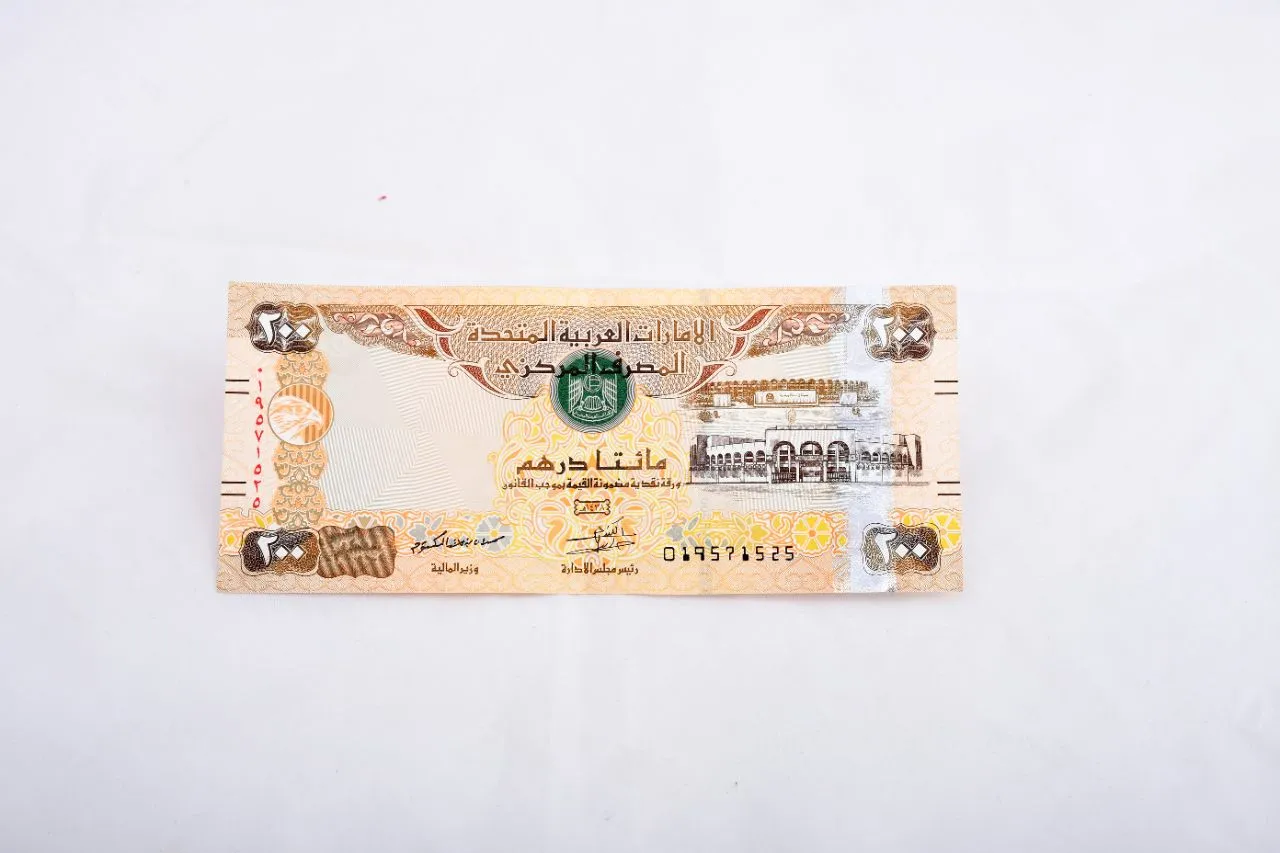
Photo by Atikah Akhtar on Unsplash

BitGo broadens institutional reach in Dubai

Institutional infrastructure is expanding alongside retail access. Crypto custody firm BitGo secured a broker-dealer license from Dubai’s Virtual Assets Regulatory Authority (VARA). The new authorization allows BitGo MENA to deliver regulated trading and intermediation services across the region through an integrated OTC desk and a digital platform supporting spot crypto trading in both dirhams and U.S. dollars.


The UAE’s welcoming attitude toward digital assets is changing how major investors think about wealth. The Bitcoin Historian said on X that The Kanoo Group, which oversees about $20 billion in assets, intends to invest in Bitcoin. Bloomberg has reported that affluent families across the region are gradually diversifying beyond real estate and private enterprises. With around $1 trillion expected to shift to younger generations soon, many heirs are looking to allocate more toward cryptocurrencies, tokenized funds, and tokenized real-world assets (RWAs).


New fund marks progress in tokenized finance

That growing appetite for digital exposure is now being met with new products. Last month Qatar National Bank (QNB) Group joined forces with Standard Chartered and DMZ Finance to launch the first regulated tokenized money market fund in the Dubai International Financial Centre. Using blockchain technology, the QCD Money Market Fund brings traditional financial assets on-chain, creating new yield opportunities for investors within the digital economy. The fund is managed by QNB Group, uses infrastructure provided solely by DMZ Finance, and has Standard Chartered serving as custodian of its assets.


As the UAE deepens its role in global finance, regulators are also working to align with international standards. By 2027, it expects to adopt the OECD’s Crypto-Asset Reporting Framework (CARF), with cross-border data exchanges to begin in 2028. The Ministry of Finance has already signed the Multilateral Competent Authority Agreement to make this happen. The framework promotes automatic sharing of crypto-related tax information among member countries, underscoring the UAE’s commitment to global transparency as it expands its financial footprint.


Recent developments show the jurisdiction striving for growth while strengthening oversight. Exchanges are gaining clarity on what they can offer, institutions are building trading rails, and investors are embracing tokenized products. They signal a market finding its balance between innovation and regulation. The coming years will reveal how well that balance can hold.

 

More to Read
View All
Web3 & Enterprise·

Oct 17, 2024

Hybrid exchange Cube lists Access Protocol (ACS)

CUBE, a hybrid crypto exchange that settles trades on-chain using secure multi-party computation, announced on its official X account that it has listed ACS, the native token of Solana-based monetization platform Access Protocol.  The hybrid exchange utilizes its custom rewards platform, Blocks, to engage users through unique packages for listing traders and token holders. Participants in the listing will be eligible for campaign rewards.  Bartosz Lipinski, CEO and co-founder at CUBE, recently revealed plans around Isometric (ISO), an intent-based transaction network, enabling cross-chain trading to eliminate the need for asset bridging.  “When we started building Cube, we wanted everything to be an intent… Everyone will be able to submit intents to the network and verify settlements on multiple chains using the decentralised MPC that we’ve built,” Lipinski said during his presentation at the Solana Breakpoint conference. “Through the decentralised MPC integration layer, you will be able to actually use the value on different layer ones without cannibalising it,” he went on to share.  ISO will be the platform token powering governance, staking, and decentralized custody, according to Cube's announcement. Both Token and Mainnet launch are expected to happen some time in Q2 2025.  In a related development on Monday, Cube announced its partnership with the Argentinian government. The company plans to explore leveraging the Isometric network as a catalyst for the South American nation’s financial system. 

news
Web3 & Enterprise·

Oct 31, 2023

Korean Crypto Exchange Giants Lead Market Expansion With Increased Listings

Korean Crypto Exchange Giants Lead Market Expansion With Increased ListingsSouth Korea’s top three cryptocurrency exchanges Upbit, Bithumb and Coinone have all increased the number of cryptocurrencies they listed for trading this year compared to last year, making them responsible for leading the market’s activity and expansion.Photo by Maxim Hopman on UnsplashDynamic shifts in listing and delisting trendsA recent analysis by local news outlet News1 on the number of cryptocurrencies listed and delisted this year on the country’s major fiat-to-crypto exchanges Upbit, Bithumb, Coinone, Korbit and Gopax — listed in order of market share size — revealed that Upbit and Coinone have increased their number of listings and delistings compared to last year.The remaining three exchanges, on the other hand, showed differing results. Bithumb increased its number of listings by 47 compared to the number listed last year, while delistings decreased by three, and Gopax listed eight fewer tokens and delisted one more token. Meanwhile, Korbit’s listings decreased by 37 tokens, while delistings decreased by only one.Among the five exchanges, Bithumb listed the highest number of new cryptocurrencies this year, with 80 new currencies in total added as of Monday (local time). This represents a more than double increase compared to the 33 currencies added last year. It is also 18 more than Coinone’s 62 new currencies and 50 more than Upbit’s 30.Differing approaches based on situational factorsGopax and Korbit have taken a more conservative approach compared to Upbit, Bithumb, and Coinone, which have been more aggressive in their listing strategies. In particular, as of Oct. 4, Bithumb has also been offering free transaction fees in an effort to regain its market share. This aggressive approach can be interpreted as an effort to weather the recent crypto winter, although it hasn’t been very successful.Conversely, the exchange that delisted the most cryptocurrencies this year was Coinone, with 38 taken down as of Monday, marking a significant increase compared to last year when it delisted 26. This can be accredited to the platform’s efforts to improve its reputation and operating system following an incident earlier this year where two former employees were booked for taking bribes in exchange for listing certain cryptocurrencies. Coinone CEO Cha Myung-hun subsequently issued an apology and pledged to take proper measures to prevent such an event from recurring. Since then, the exchange has been actively looking into carrying out delistings tied to issues like the amount of currency in circulation or market price manipulation.Bithumb and Upbit came in second and third for most delistings this year, with 22 and 18, respectively.However, Korbit showed the least fluctuation in the number of listings and delistings this year — nine and three, respectively — among the five exchanges. This is a sharp contrast owing to its conservative listing policy. Speculation suggests that the platform might adopt a more aggressive stance if market conditions improve in the second half of the year.On the other hand, Gopax listed 10 tokens and delisted eight tokens. The exchange has notoriously been dealing with operational difficulties due to regulatory roadblocks despite optimistic outlooks after its acquisition by Binance, one of the world’s most prominent exchanges. Along with the recent appointment of Cho Young-joong as the new CEO of CityLabs, the company that acquired an 8.55% stake in Gopax, the exchange has been working on resolving regulatory issues and improving the state of operations.

news
Policy & Regulation·

Aug 02, 2023

India Offers Suggestions in the Development of G20 Crypto Guidelines

India Offers Suggestions in the Development of G20 Crypto GuidelinesIndia submitted its Presidency Note on Tuesday, contributing to the global framework for cryptocurrency regulation under the auspices of the G20, a forum comprising the world’s 20 largest economies.The document aligns itself with the guidance provided by prominent entities including the Financial Stability Board (FSB), the Financial Action Task Force (FATF), and the International Monetary Fund (IMF).Photo by Swapnil Deshpandey on UnsplashKey Summit topicMany months in advance of September’s G20 Summit in New Delhi, it was clear that crypto regulation would be a key subject for discussion. The FSB’s guidelines, released in July, offer a comprehensive framework for regulating various crypto assets, particularly stablecoins, based on existing standards and principles. These guidelines encompass crucial aspects such as governance, risk management, disclosure, supervision, and cross-border collaboration.In May, the FSB’s Regional Consultative Group for Asia met in Cebu, in the Philippines. During that meeting, the FSB highlighted the risks implicated by digital assets.Published in June, the FATF guidelines put forth a universally applicable set of rules to combat money laundering and counter the risks of terrorist financing linked to cryptocurrencies. One of the main provisions is the “travel rule,” compelling crypto service providers to share customer information when conducting fund transfers.While the IMF guidelines are expected to be unveiled in August, they will encompass a synthesis paper that offers a comprehensive roadmap for crypto regulation. This roadmap is designed to reflect input from multiple stakeholders and jurisdictions.India’s supplementary additionsAmidst endorsing these global crypto guidelines, India also proposes supplementary additions, particularly highlighting the challenges faced by developing economies in the crypto realm. The document underlines that these nations may grapple with capacity and resource constraints when implementing effective crypto regulation and supervision.Furthermore, they might require more extensive access to reliable data regarding crypto activities and associated risks. Developing economies are also at a heightened risk of falling victim to illicit crypto use, including money laundering, tax evasion, and cyber-crime.In light of these concerns, India advocates for the inclusion of developing economy-specific considerations in the FSB’s guidelines. The country also urges for technical assistance and capacity-building support to be extended to these nations. Additionally, it proposes a global outreach initiative to raise awareness of the risks, commencing with nations experiencing higher levels of crypto adoption.Broadening the scopeAnother noteworthy suggestion from India is an extension of the regulatory approach beyond the G20’s scope, encompassing the broader digital economy. While recognizing that crypto is merely one facet of the sweeping digital transformation reshaping multiple sectors, India’s document underscores the need for enhanced cooperation and coordination among various stakeholders and authorities at both national and international levels.In this vein, India proposes that the G20 contemplate formulating a comprehensive framework for the digital economy. This framework should encompass a wide array of concerns, including data governance, digital taxation, digital identity, digital inclusion, and fostering digital innovation, according to the document.India’s exploration of diverse aspects related to cryptocurrency — ranging from legal status to taxation implications, central bank digital currency (CBDC) potential, and innovation possibilities — further underlines its desire to see greater international cohesion in relation to the regulation of digital assets.

news
Loading