Top

Suspects emerge in Taiwan in ongoing JPEX scandal fallout

Policy & Regulation·November 10, 2023, 12:43 AM

In the ongoing saga surrounding the collapse of Dubai-headquartered cryptocurrency exchange JPEX, Taiwanese prosecutors have identified new suspects, marking a significant development in the case.

The Taipei District Prosecutors Office (TDPO) has requested the custody of Chang Tung-ying, chief partner at JPEX’s Taiwan office, over allegations of fraud. That’s according to a report by local TV channel TVBS News on Thursday.
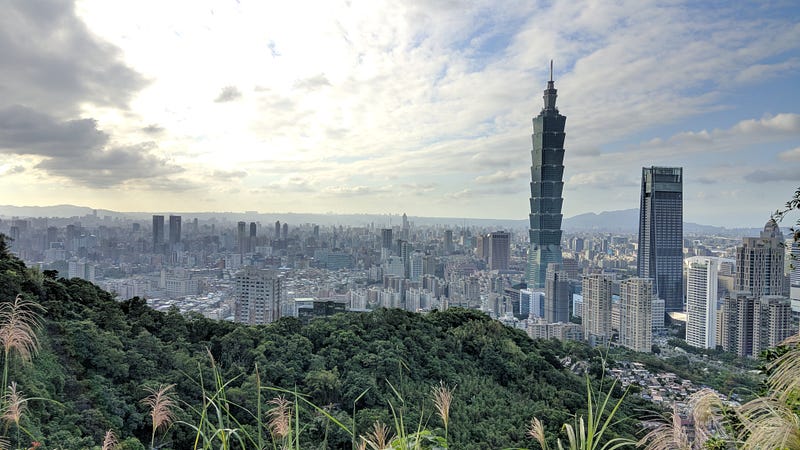
Photo by Ricky Zeng on Unsplash


Money laundering and Banking Act violations

This latest development brings a new twist to the scandal, which has largely been playing out in the Chinese territory of Hong Kong. The TDPO reportedly conducted searches at nine locations linked to the JPEX investigation. Chang, along with three other individuals, including JPEX lecturer Shih Yu-sheng (also known as Shi Yu), was summoned by the authorities. Chang and Shih are being investigated for violations of the Banking Act and the Money Laundering Control Act.

During the investigation, JPEX salespersons Liu Chien-fu and Niu Keng-sheng were released, with Liu being granted bail of 50,000 New Taiwan dollars ($1,550). Niu, the registered person in charge of JPEX Taiwan, was released after questioning.


Celebrity promoter focus

The report also revealed that Nine Chen, a Taiwanese celebrity and singer who previously served as a brand ambassador for JPEX, was summoned by prosecutors. He has cooperated with law enforcement in the role of a witness to the alleged fraud who has testified to illicit activity carried out by the platform. However, it is now understood that recent events have developed such that Chen is now being treated as a defendant.

This action resonates with actions taken by the authorities in Hong Kong some weeks ago in the earlier stages of investigation into this affair. In September, one of the first actions taken by Hong Kong law enforcement was the arrest and detention of social media influencer and former lawyer Joseph Lam, known to followers as “Jolamchok” on the Instagram platform.


Alleged liquidity crisis

JPEX, once a successful crypto exchange, abruptly halted some services in mid-September, citing a liquidity crisis triggered by alleged “unfair treatment” from institutions in Hong Kong. The sudden implosion led to accusations of misleading investors regarding the application for a crypto trading license and other issues.

The scandal surrounding JPEX has escalated into a major industry concern, prompting investigations by Hong Kong authorities. Over 2,000 complaints from JPEX users, reporting losses of nearly $180 million, have triggered significant regulatory attention.

As investigations progressed in Hong Kong, the authorities took the decision to block access to the platform, with the platform responding by advising customers to circumvent this restriction through the use of a virtual private network (VPN).

As of September 25, law enforcement has arrested at least 11 alleged suspects in the JPEX case, while the alleged masterminds remain at large. At that time, Hong Kong’s Securities and Futures Commission (SFC) pledged to renew its efforts to combat unregulated crypto platforms in Hong Kong.

A survey conducted by the Hong Kong University of Science and Technology (HKUST) business school has indicated that the affair has had a negative impact on public sentiment towards crypto more recently.

More to Read
View All
Policy & Regulation·

Feb 13, 2024

South Korea intensifies scrutiny on cryptocurrency exchanges

South Korea is ramping up its scrutiny on cryptocurrency exchanges, with the Financial Intelligence Unit (FIU) of the Financial Services Commission (FSC) announcing its intention yesterday to remove platforms that lack the necessary qualifications, according to the Korea Economic Daily.Unqualified exchangesIn its announcement yesterday, the FIU revealed its aim to block unqualified virtual asset service providers (VASPs) from facilitating trades in Korean won, the currency of the country. Those currently providing Korean won trading services will be eliminated from the market unless they can demonstrate they meet the required standards. With many exchanges set to renew their registrations in the latter half of this year, the FIU is gearing up for thorough evaluations through June to identify and remove unqualified VASPs. The FIU's assessments will focus on determining whether VASPs have adequate measures in place for user protection and are safeguarded against risks of money laundering. To bolster its efforts in preventing money laundering risks, the FIU intends to establish a framework where lawyers and accountants participate in crypto oversight activities.Photo by Andrea Piacquadio on PexelsExamining majority shareholder of VASPThe financial watchdog is also looking to propose amendments to the Financial Transaction Reports Act, aiming to raise the standards for VASP registration by introducing more stringent requirements. Beyond the current assessments of a VASP operator and its executives, the new regulations will involve close examination of its majority shareholder. This additional layer of scrutiny will evaluate the credibility of the major parties related to the VASP, taking into account factors such as their history of loan defaults. The FIU is set to create a system for analyzing cryptocurrency transactions and will strengthen its communication channels, not just with financial institutions but also with prosecutors and police forces. Furthermore, the agency is reviewing the Financial Action Task Force's (FATF) recommendation for freezing transactions in cases of suspicious activities. Once implemented, this will enable the FIU to temporarily halt suspicious transactions before bringing the issue to prosecutors.

news
Policy & Regulation·

Apr 12, 2023

Official Says Hong Kong Should Invest in Web3 Economy

Official Says Hong Kong Should Invest in Web3 EconomyAccording to Hong Kong’s financial secretary, Paul Chan, this is the perfect time for Hong Kong to promote the development of Web3, the next-generation version of the World Wide Web that is decentralized and distributed through the use of blockchain and similar technologies.©Pexels/Tara WinsteadLearning from the dot com boomDespite the recent instability of the virtual assets market and the collapse of some digital asset exchanges, Chan has pointed out that the quality of the real economy has improved since the dotcom bubble burst in 2000, and surviving market players have focused on technological innovation, applications and value creation.In remarks made via a blog post published on Sunday, Chan argues that the development of Web3 is going through the same process. He suggested that the next stage of development would be to focus on developing blockchain technology more deeply to find wider application for it, which would improve existing business models, ultimately benefiting users and improving the quality of the real economy.To accelerate the development of Web3, Chan allocated HK$50 million (US$6.4 million) to the Cyberport business park to organize major international conferences and youth workshops in his latest budget released in February.VASP licensingChan also announced that authorities would introduce a licensing regime for virtual asset service providers (VASPs) in June to ensure appropriate supervision and minimize risks in the innovation and development of Web3. Furthermore, the government is looking into regulating stablecoins or cryptocurrencies with their value pegged to another currency or commodity.According to some local experts, Hong Kong should not delay in pushing Web3 development, and the government should work out clear policies to attract overseas investors and Web3 developers to set up offices in Hong Kong.Working towards a Web3 hubFrancis Fong Po-kiu, honorary president of the Hong Kong Information Technology Federation, told the South China Morning Post that the government could help by building up infrastructure such as data and supercomputing centers to help small and medium-sized enterprises to adopt more advanced technology.Although IT sector veteran Joseph Leung Wai-fung agreed that Hong Kong was lagging Singapore in terms of Web3 development, he suggested that the government should step up efforts to attract overseas investors and Web3 developers by working out clear policies to support them in setting up offices in Hong Kong. He also pointed out that Web3 covers key areas such as artificial intelligence, the Internet of Things, blockchain technology, and metaverse augmented reality, and that every international smart city should explore this area.The recent fluctuations in virtual asset markets and the collapse of some online trading platforms have cast doubts on the future of Web3, but Chan believes that competent market players who survive a “burst bubble” can focus on innovation and make significant strides.The government’s efforts to accelerate the development of Web3 through the allocation of HK$50 million to the Cyberport business park, the introduction of a licensing regime for virtual asset service providers, and the regulation of stablecoins, are steps in the right direction. However, more needs to be done to attract overseas investors and Web3 developers to set up offices in Hong Kong and to build up infrastructure such as data and supercomputing centers to help small and medium-sized enterprises to adopt more advanced technology.

news
Web3 & Enterprise·

Dec 01, 2023

Hong Kong securities group proposes ICOs as growth opportunity

Hong Kong securities group proposes ICOs as growth opportunityKey stakeholders in Hong Kong’s financial world are contemplating a transformative shift in the Chinese autonomous territory’s digital asset strategy that concerns furthering initial coin offerings (ICOs).Photo by Qinyi Lian on UnsplashRoom for improvementIn a recent letter signed by Chen Zhihua, President of the Hong Kong Securities and Futures Professionals Association (HKSFPA) and published to the HKSFPA website on Wednesday, the introduction of an ICO mechanism as a potential catalyst for the city’s economic revival has been proposed.The letter, which provided the HKSFPA’s “opinions on the 2024–2025 budget,” included the ICO suggestion as recommendation №10 on a list of various proposals. The suggestion comes amid ongoing efforts to navigate the economic challenges posed by the pandemic. Zhihua acknowledges the developmental approach taken by Hong Kong Chief Executive John Lee where financial sector strategy is concerned, but emphasizes the industry group’s belief in the room for improvement that exists to stimulate Hong Kong’s financial sector further.Formalizing ICOsFormalizing ICOs in Hong Kong could establish a supportive environment for crypto startups and investors seeking regulated and secure opportunities. The proposal aligns with a broader call for government engagement in economic recovery and policy-making, emphasizing a collaborative approach toward the crypto sector. This inclusive stance signals a forward-thinking perspective that could lead to more supportive policies and frameworks, fostering a conducive environment for crypto innovation and growth.Reflecting on the history of ICOs, the letter acknowledges the fundraising method’s evolution since the attention garnered by the Mastercoin ICO in 2013 and Ethereum’s significant milestone in 2014. The ICO boom of 2017 saw projects like EOS and Tezos raising substantial funds, accompanied by both enthusiasm for fundraising ease and concerns about investor protection due to minimal regulation.Fraud concernsWhile the ICO boom faced regulatory scrutiny and witnessed instances of fraud and scams, a progressive approach by financial regions such as Hong Kong could reshape the global perception of ICOs. The letter suggests that, under favorable terms, ICOs could play a pivotal role in revitalizing the digital asset landscape.Zhihua underscores the importance of addressing potential challenges by urgently reviewing and enhancing anti-money laundering (AML) and counter-terrorist financing legislation. This cautious approach aims to ensure that ICOs in Hong Kong adhere to established frameworks, avoiding the pitfalls associated with unregulated fundraising.While that’s the HKSFPA’s position, the initial flurry of ICOs a number of years ago involved many projects proposed by scammers and fraudsters. At the time, the Hong Kong Securities and Futures Commission (SFC) recognized the development as “downright fraud” and put pressure on exchanges to delist many tokens.One other related element that the letter proposes is in integrating environmental, social and governance (ESG) and Islamic finance elements into investment immigration policies. This forward-thinking approach reflects a growing awareness of ethical and sustainable investment practices that could potentially position Hong Kong to set new standards for responsible investment.

news
Loading