Top

Ninety Eight launches web3 startup fund

Web3 & Enterprise·November 08, 2023, 2:42 AM

Ninety Eight, a dynamic ecosystem of Web3 innovators, has unveiled its latest venture, a $25 million ecosystem fund.

The company is headquartered in Ho Chi Minh City, Vietnam, with the objective of founding and funding blockchain companies that make Web3 accessible to everyone. The firm was founded by Le Thanh, alongside co-founder and CEO Nguyen Vinh.
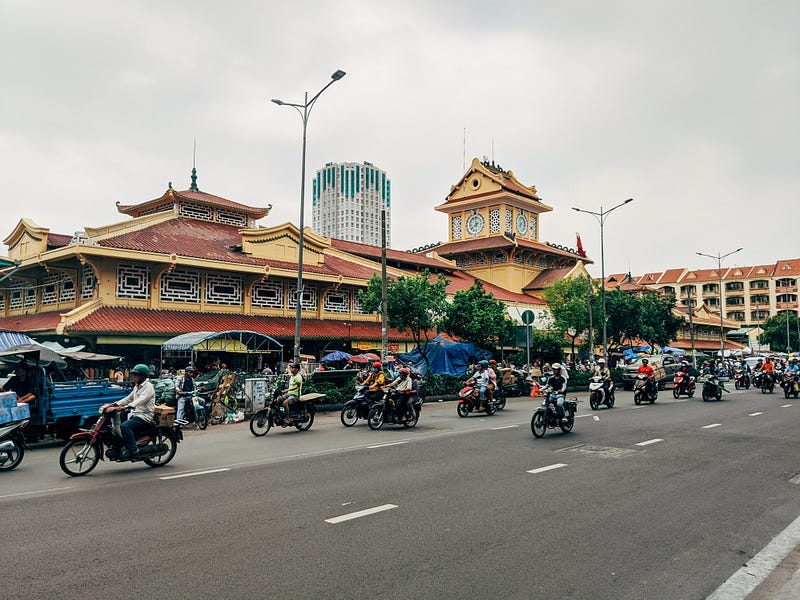
Photo by Markus Winkler on Unsplash


Focus on Asia

The announcement, made via a blog post to the company’s website on Tuesday, indicates that the fund will support the development of Web3 startups within the Asian region.

The project’s primary objective is to nurture the growth and advancement of Web3 startups within a crypto and blockchain sector in Asia that continues to progress and evolve. Ninety Eight takes an approach that encompasses both financial backing and strategic guidance for handpicked startups, with a dedicated team working in tandem to provide insights and facilitate access to its extensive network of industry collaborators.


Leveraging ecosystem infrastructure

Ninety Eight maintains that entrepreneurs can harness its infrastructure and draw upon the depth of its ecosystem. One of the key components of that ecosystem is Viction, formerly known as Tomochain.

Viction is a layer-1 blockchain boasting zero-gas transactions and cutting-edge security features. The project claims that Viction creates the ideal conditions for projects to broaden their horizons and enhance their prospects of success.


C98 token

A defining feature of the ecosystem fund is its emphasis on promoting the utility of its native token, C98. Originally conceived as a wallet token, C98 has since transformed into an instrument for propelling Web3 innovation. With its versatile applications, Ninety Eight claims C98 holds the potential to revolutionize the way Web3 applications are conceived, deployed and utilized. Through the ecosystem fund, the company mission is to bolster startups capable of harnessing C98 to craft inventive and impactful solutions.

Ninety Eight has incorporated Arche Fund within its offering, with it assuming the role of fund custodian. It also plays a part in overseeing the fund and closely collaborating with selected startups to unlock their full potential. Arche Fund offers value-added programs while equipping partnering businesses with essential tools, resources and invaluable networks.

By propelling their pioneering vision, we empower our partners to transform their aspirations into reality. CEO Thanh Le articulated the firm’s mission, stating:

“Our path forward is guided by one principle — we are builders backing builders. Thanks to the incredible community that has brought us to where we are today, we are determined to give back. We believe that by supporting talented builders and providing them with the necessary resources, we can drive the adoption of Web3 technologies and shape the future of the decentralized internet.”

The firm previously launched its Vietnam Future Fund earlier this year, with a view towards concentrating on propelling Vietnamese Web3 startups forward.

Prospective startups considering applying for funding from the Ninety Eight ecosystem fund are being encouraged to submit their applications via the Arch Fund’s submission form.


More to Read
View All
Policy & Regulation·

Sep 19, 2023

Rising Cryptocurrency Arbitrage Transactions Raise Concerns in South Korea

Rising Cryptocurrency Arbitrage Transactions Raise Concerns in South KoreaThe number of arbitrage transactions between South Korean and foreign cryptocurrency exchanges has been experiencing a notable uptick, according to a report by local media outlet Maeil Business Newspaper.In recent developments, foreign actors engaging in price manipulation have been transferring substantial amounts of cryptocurrency assets to Korean exchanges, driving up prices. Subsequently, they transfer these tokens from Korean exchanges back to overseas platforms, capitalizing on the price discrepancies to generate profits.Photo by Maxim Hopman on UnsplashBithumb’s case in H1According to documents submitted to Kim Hee-gon, a member of the ruling political party People Power Party, on Monday, KRW 3.4 trillion ($2.6 billion) worth of tokens were moved from Bithumb, a leading Korean cryptocurrency exchange, to foreign trading platforms during the first half of this year. Although this figure marks a 40% decrease compared to H1 2022’s KRW 5.7 trillion, primarily due to the significant decline in token prices across the cryptocurrency market, it’s noteworthy that the number of transactions has seen a significant increase.Other exchangesGopax, another major exchange in the nation, recorded token outflows totaling KRW 12.3 billion. On the other hand, Upbit, Coinone, and Korbit, which are also prominent exchanges, declined to provide data due to reasons like confidentiality concerns. However, given that Upbit holds an 82.0% share of the Korean crypto market, nearly four times larger than Bithumb’s share (14.2%), it is suspected that the volume of tokens transferred from Upbit to foreign platforms would likely have followed a similar proportion.While the value of tokens sent from Bithumb to overseas operators saw a year-over-year decrease, the number of transactions surged to 231,302, nearly doubling the figure of H1 2022’s 124,048 transactions. The average transaction size was KRW 14.7 million.Even though the overall enthusiasm for cryptocurrencies might have cooled off since last year, the spike in the number of transactions suggests that there’s been a surge in arbitrage trading between Korea and foreign markets.Kimchi premiumEarlier this month, a significant transaction caught the eye of cryptocurrency market observers in South Korea. On September 1, crypto data analytics firm Arkham identified that 170,000 CyberConnect (CYBER) tokens were transferred to Bithumb from a crypto wallet thought to be owned by DWF Labs, a firm specializing in cryptocurrency trading and investment. The timing of the transaction coincides with a period during which the Kimchi premium for CYBER exceeded 100%. The Kimchi premium refers to the crypto price gap between Korean exchanges and their foreign counterparts.The complicating factor here is that DWF Labs is a foreign entity that is managed by a foreign team.The use of corporate accounts is virtually prohibited in the Korean crypto market. The Travel Rule mandates that any transfers of tokens between Korean and international exchanges must go through accounts that have been verified under Know Your Customer (KYC) guidelines. Given these regulations, there are growing suspicions within the crypto community that foreign venture capitalists may have used accounts in borrowed names to conduct sales on Korean exchanges, which are restricted to Korean citizens. However, it’s worth noting that there is currently no legal basis for taking punitive action even if borrowed-name accounts were indeed used.Lawmaker Kim commented on the limitations of current financial regulations aimed at preventing money laundering in the cryptocurrency market. Despite efforts by financial authorities, including the introduction of the Travel Rule, Kim stated that these measures have not been very effective. He emphasized the urgency of enhancing the regulatory framework to curb potential illicit activities involving cryptocurrencies, such as those exploiting market arbitrage opportunities.

news
Policy & Regulation·

Feb 01, 2024

China to update AML rules with a focus on crypto transactions

Chinese authorities are gearing up for a significant amendment to the country's anti-money laundering (AML) regulations, with a specific emphasis on cryptocurrency-related transactions. Growing concerns about cryptoThe move, reported by Chinese business and financial news media outlet Jiemian on Wednesday, comes in response to growing concerns among policymakers in China about the need for heightened scrutiny within the burgeoning crypto industry. This marks the first substantial update to China's AML rules since their introduction in 2007. In 2021, China took a decisive step by imposing a comprehensive ban on cryptocurrency use, which included prohibiting offshore exchanges from offering services and putting a stop to all forms of mining. However, despite these restrictions, mainland users have managed to find avenues to access the crypto market. The upcoming amendment to AML regulations aims to introduce more stringent guidelines to address and mitigate these activities effectively. Prime Minister Li Qiang chaired an executive meeting of the State Council on Jan. 22 to deliberate on the revised AML law. The initial draft of the AML regulations was proposed in 2021. The revised version is set to become law by 2025 after being included in the legislative agenda of the State Council for 2023.Photo by Max van den Oetelaar on UnsplashDigital assets not clearly definedUrgency was stressed in addressing cryptocurrency money laundering at the legal level, as the current laws lack a clear definition of digital assets. Although the revised draft includes measures to prevent digital asset money laundering, concerns were raised about the absence of operational guidance on subsequent actions such as asset seizure, freezing, deduction and confiscation in money laundering cases involving digital assets. Experts noted that there is room for improvement in combating digital asset-related money laundering. China's existing AML law is designed not only to deter money laundering but also to protect fiscal order and combat related crimes. As a country with a deep understanding of money laundering and terrorist financing risks, China is not included in the Financial Action Task Force's (FATF) list of AML-deficient countries. However, a 2019 FATF report suggested that China should focus more on addressing the laundering of crime proceeds and expand its resources for national risk assessment. Circumventing the banDespite the formal ban on cryptocurrency circulation and mining by Chinese authorities, there are still avenues for Chinese nationals to access the digital asset ecosystem. BitMEX founder Arthur Hayes recently indicated that wealthy Chinese individuals have access to banking in Hong Kong, serving as the gateway for mainland China to global capital markets, including the cryptocurrency markets. While many crypto miners left the jurisdiction following the ban in 2021, Chinese companies account for a significant proportion of mining equipment manufacturing. Major exchanges like Binance and OKX have Chinese roots, underscoring the nation's influence in the global crypto landscape. Before the cryptocurrency trading ban in China, trading volumes on yuan-denominated crypto exchanges surpassed those of dollar pairs. As China prepares to fortify its AML regulations, the crypto industry awaits further clarity on how these changes will shape the landscape and influence the conduct of cryptocurrency-related activities within the country.  

news
Policy & Regulation·

Apr 26, 2023

Terraform Labs Co-Founder Indicted in South Korea

Terraform Labs Co-Founder Indicted in South KoreaTen individuals linked to the Terra USD collapse have been indicted in South Korea on charges associated with violations of capital markets law, including the Co-Founder of Terraform Labs, Daniel Shin. That’s according to a report published by Bloomberg on Tuesday.©Pexels/Donald TongTwo of the ten were charged with breach of trust while the remaining eight, including Shin, were charged with illegal trading. Prosecutors confirmed that all of the charged individuals have ties to Terraform Labs, the company responsible for developing the Terra protocol, and the Terra USD (TUSD) stablecoin and Luna cryptocurrency which collapsed in 2022.It’s understood that the ten individuals were also accused of illegal disclosure of clients’ payment information and the embezzlement of corporate funds. The authorities have claimed that the ten individuals are responsible for causing “astronomical damage” to investors. They estimate that all ten of them took 463 billion won, around $347 million, in profit.Business interestsShin co-founded Terraform Labs with Do Kwon in 2018. He left the project in 2020, long before its spectacular failure in 2022. However, he would have profited considerably from the project. Prior to co-founding Terraform Labs, Shin had founded lifestyle commerce company TMON in 2010. Two years later, he founded venture capital and private equity firm, Fast Track Asia while in 2017 he was a founding partner of another venture capital and private equity firm, Bass Investment.He remains involved in all of those other businesses. Furthermore, Shin founded integrated payments firm PortOne Global in January 2020, immediately upon exiting Terraform Labs. He remains CEO of PortOne Global today.$185 million frozenOn Tuesday, the Seoul Southern District Prosecutor’s Office outlined that it had frozen assets to the value of 246.8 billion won, approximately $185 million, belonging to those that it has brought charges against. South Korean authorities had previously acknowledged a difficulty in seizing assets related to Terraform Labs Co-Founder Do Kwon. It’s understood that a transfer of funds from Do Kwon to a prominent South Korean law firm is being investigated. Otherwise, the search for funds has led them overseas where it’s understood that Do Kwon purchased real estate in his mother’s name in the United States in a bid to evade asset confiscation.Free pending trialShin remains at liberty pending trial. Back in December, a South Korean court turned down a request to arrest him on the basis that he wasn’t likely to destroy evidence and wouldn’t pose a flight risk.That hasn’t proven to be the case where his former colleague Do Kwon is concerned. Do Kwon fled to Montenegro where he was recently charged with having entered the country on false documents. Both South Korea and the United States have formally applied for his extradition. In the United States, the Securities and Exchange Commission (SEC) has sued both Do Kwon and Terraform Labs. Terraform Labs subsequently submitted a request to the courts in the US to dismiss the lawsuit, claiming the SEC lacks jurisdiction.

news
Loading