Top

Crypto Exchange Korbit Raises Daily KRW Deposit Limits From 300K to 5M

Web3 & Enterprise·September 26, 2023, 5:15 AM

Korbit, one of the leading cryptocurrency exchanges in South Korea, raised the daily deposit limit for its customers as of 16:00 KST on September 25. This move aligns with the early implementation of the operation guidelines of real-name bank accounts for cryptocurrencies, which is scheduled to be introduced in January next year. Korbit collaborates with Shinhan Bank, utilizing its real-name accounts to facilitate Korean won transactions.

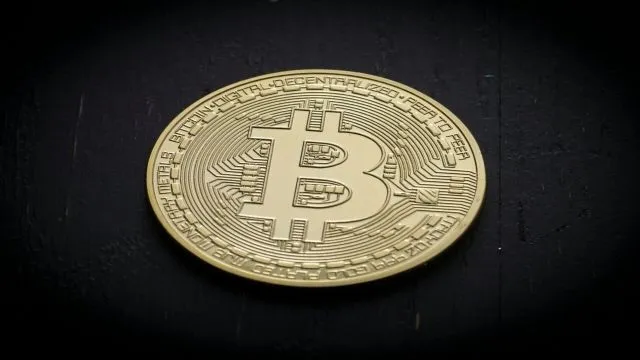
Photo by manseok Kim on Pixabay


User protection and AML

The operation guidelines have been established to fortify the protection of virtual asset users and to bolster efforts against money laundering. Financial authorities, the Korea Federation of Banks, and cryptocurrency exchanges have collaborated to initiate these measures at every local exchange starting next January. Meanwhile, exchanges are obliged to maintain reserves in their banks beginning this month, ensuring they are poised to provide compensation for involuntary losses in the event of hacking incidents or system failures.


Investor inconvenience and market confusion

Since the introduction of the real-name bank account system in 2018, banks and crypto exchanges have had different terms of use and user protection measures, leading to varied deposit and withdrawal limits as well as reserve levels across different exchanges. These inconsistencies have resulted in inconvenience to customers and have sown confusion in the market. In response, the entities in question have agreed to implement a shared set of guidelines for real-name bank accounts from January next year.


Daily limit of KRW 300K to KRW 5M

With the implementation of these guidelines, Korbit has elevated the current daily deposit limits from KRW 300,000 (approximately $222) and KRW 1.5 million to KRW 5 million. Moreover, once the bank authenticates the user’s transaction purpose — for instance, purchases of KRW 5 million or more in virtual assets in a month following the initial KRW deposit — and verifies the source of the funds, the constrained account can transition to a standard account. This adjustment allows the daily deposit and withdrawal limit of up to KRW 500 million.

The limitations associated with constrained and standard accounts apply solely to fund transfers between the crypto exchange and the bank. When holders of Shinhan accounts initiate fund transfers to accounts in other banks, the limitations imposed by Shinhan continue to apply.

Oh Sejin, CEO of Korbit, expressed enthusiasm that the higher deposit limit enabled by the new guidelines would improve investor convenience and draw in new customers. He added that the crypto exchange is committed to collaboration with Shinhan Bank, aiming to enhance user protection and anti-money laundering (AML) measures.

More to Read
View All
Policy & Regulation·

Jun 20, 2023

Korean Travel Rule Solution Provider CODE to Start Charging Monthly Fees Next Month

Korean Travel Rule Solution Provider CODE to Start Charging Monthly Fees Next MonthSouth Korean Travel Rule solution provider CODE, established in collaboration between local cryptocurrency exchanges Bithumb, Coinone, and Korbit, has announced the implementation of service fees starting next month. Up until this point, CODE has been offering its services free of charge. The notification regarding this change was issued to CODE’s clientele, which includes various crypto exchanges, as reported by local tech news outlet Digital Daily.Photo by Kenny Eliason on UnsplashTravel RuleThe Travel Rule regulations, set by the Financial Action Task Force (FATF) and Korean legislation, require Korean trading platforms to maintain records of both the sender and recipient’s information for virtual asset transactions exceeding 1 million KRW ($780). The FATF, founded in 1989 and headquartered in Paris, is an international financial watchdog dedicated to combating global money laundering and terrorist financing.More competitive priceCODE is anticipated to offer its services at a more competitive price of 1 million KRW ($780), in contrast to its rival VerifyVASP (VV), which introduced a monthly fee of $1,800 earlier this year. VV is a product developed by Lambda 256, a subsidiary of Dunamu, the parent company of Upbit, the largest cryptocurrency exchange in Korea.CODE launched its services in March last year. Among its crypto exchange members are Gopax, Cashierest, and Coredax. In December, the Travel Rule solution provider appointed Lee Sung-mi, the former compliance officer of Bithumb, as its new CEO, and since then, it has accelerated its monetization plan. Prior to Lee’s appointment, Coinone CEO Cha Myung-hun had been at the helm of CODE.

news
Policy & Regulation·

Feb 27, 2025

Local crypto firms in talks with Hong Kong’s SFC on crypto staking

Local crypto firms in Hong Kong are understood to be in “active” talks with the Securities and Futures Commission (SFC), with a view towards bringing about the integration of staking within crypto exchange-traded fund (ETF) products. Haiyang Ru, chief risk officer of HashKey Group, a leading Hong Kong-headquartered digital asset financial services firm, told The Block that the Chinese autonomous territory may shortly see the introduction of staking services relative to crypto derivatives trading products and crypto ETFs. He stated: "We are actively discussing with the SFC the introduction of ETF staking and tokenized money market funds, as well as launching an 'Earn' feature alongside spot trading."Photo by tommao wang on UnsplashFocus on staking in 2025HashKey is one of a number of well-known digital asset firms that is in regular contact with the regulator. Other firms are also paying attention to developments. Alessio Quaglini, co-founder and CEO of Hex Trust, a Hong Kong-based firm that offers regulated institutional digital asset custody and staking services, believes that staking will garner greater attention in 2025. He stated: “Institutions that move into crypto custody will naturally seek yield-generating opportunities for their clients."  OSL, one of the first entities alongside HashKey to be awarded digital assets-related licensing in Hong Kong, has also identified rising customer demand for yield-generating products in the crypto space within the Chinese autonomous territory.  Global competitionThe authorities in Hong Kong are likely to be watching developments overseas also. ETH ETFs in the United States have reeled in $3 billion in capital inflows without staking. Since the launch of these products, many industry commentators have suggested that in the event that staking is approved, big institutions, particularly pension funds and wealth managers, are going to be attracted to the passive yields on these ETFs.  Traditional finance (TradFi) loves yield, and in the case of Ether ETFs that include staking, an annual percentage yield (APY) of up to 5% should be possible. Last month, an S&P Global report suggested that there was growing interest from institutional investors with regard to crypto staking opportunities.  Cryptocurrency ETF issuer 21Shares has applied to the Securities and Exchange Commission (SEC) in the U.S. to include staking within its ETH ETF product. A similar application has been made by crypto asset manager Grayscale relative to its ETH ETF offering. With that activity ongoing in the U.S. and inter-jurisdictional competition in terms of digital asset growth opportunities, it’s likely that Hong Kong will be keen to enable this market offering. Staking ‘unparalleled’ in TradFi markets Earlier this week, the SFC introduced a new roadmap geared towards strengthening the digital assets sector in Hong Kong. One of the initiatives itemized is the enabling of crypto staking.  The explanatory document published by the regulator states that it is examining the introduction of staking with safeguards in respect to digital asset custody, liquidity risks and “ensuring that the operational processes for staking are transparent.” The SFC described crypto staking as a yield generation opportunity that is unparalleled in TradFi markets.

news
Web3 & Enterprise·

Sep 14, 2023

Sony Network Communications and Startale Labs to Launch Joint Blockchain Venture

Sony Network Communications and Startale Labs to Launch Joint Blockchain VentureProminent Japanese internet service provider Sony Network Communications and Singapore-based Web3 company Startale Labs are undertaking a new joint venture to develop a blockchain network for facilitating the worldwide adoption of Web3.Photo by CHUTTERSNAP on UnsplashCultivating an innovative Web3 ecosystemThis comes after Sony Network Communications’ initial $3.5 million investment in Startale Labs back in June. Both companies expressed their commitment to paving the way for revolutionary Web3 applications through the development of a solid blockchain infrastructure. To do so, they said that they would leverage Sony Group’s knowledge and expertise in various sectors, such as gaming, music, entertainment, and financial services, to apply a multifaceted approach to the joint venture.“By combining Sony Network Communications’ experience in communication, the Internet of Things (IoT), artificial intelligence (AI), and solution services with Startale Labs’ insights and technical prowess in Web3, we aspire to create a global infrastructure that underpins the Web3 era, driving innovation across existing industries,” said Jun Watanabe, President and Representative Director of Sony Network Communications.The new business will be established this month under the name Sony Network Communications Labs.“This joint venture is founded on the synergy created by our respective assets and knowledge, and it is aimed at collectively developing a leading blockchain ecosystem. We are determined to discern Web3 trends and drive them globally,” said Sota Watanabe, CEO of Startale Labs.Governmental supportSony Group, Sony Network Communications’ parent company, has consistently been making strides in the Web3 realm. Sony Bank, another affiliate of the group, joined hands with Mitsui & Co. Digital Asset Management (MDM) a few months ago to establish MDM’s security token service Alterna.These efforts have been encouraged by a backdrop of active support for Web3 and crypto businesses from the Japanese government. The Japanese National Tax Agency recently announced the revised corporate taxation rules for crypto assets, which renders companies exempt from taxes on unrealized gains from cryptocurrencies if the virtual assets were issued by the company and have been continuously held since issuance, or if they have remained subject to certain transfer restrictions since issuance.Startale Labs’ popular smart contract platform Astar Network also recently launched an Ethereum layer 2 scaling solution dubbed Astar zkEVM: Supernova with Polygon Labs in a strategic move to expand Web3 adoption in Japan and onboard more enterprise partners.

news
Loading