Top

Bitdeer announces new mining chip and Q4 results

Web3 & Enterprise·March 05, 2024, 2:51 AM

Bitdeer Technologies, led by Jihan Wu and based in Singapore, has unveiled the very latest development in the world of Bitcoin mining technology with the announcement of the successful testing of its proprietary Bitcoin mining chip, slated for integration into its forthcoming mining rig. In addition, the firm has followed up on March 4 with the publication of financial results for Q4 2023.
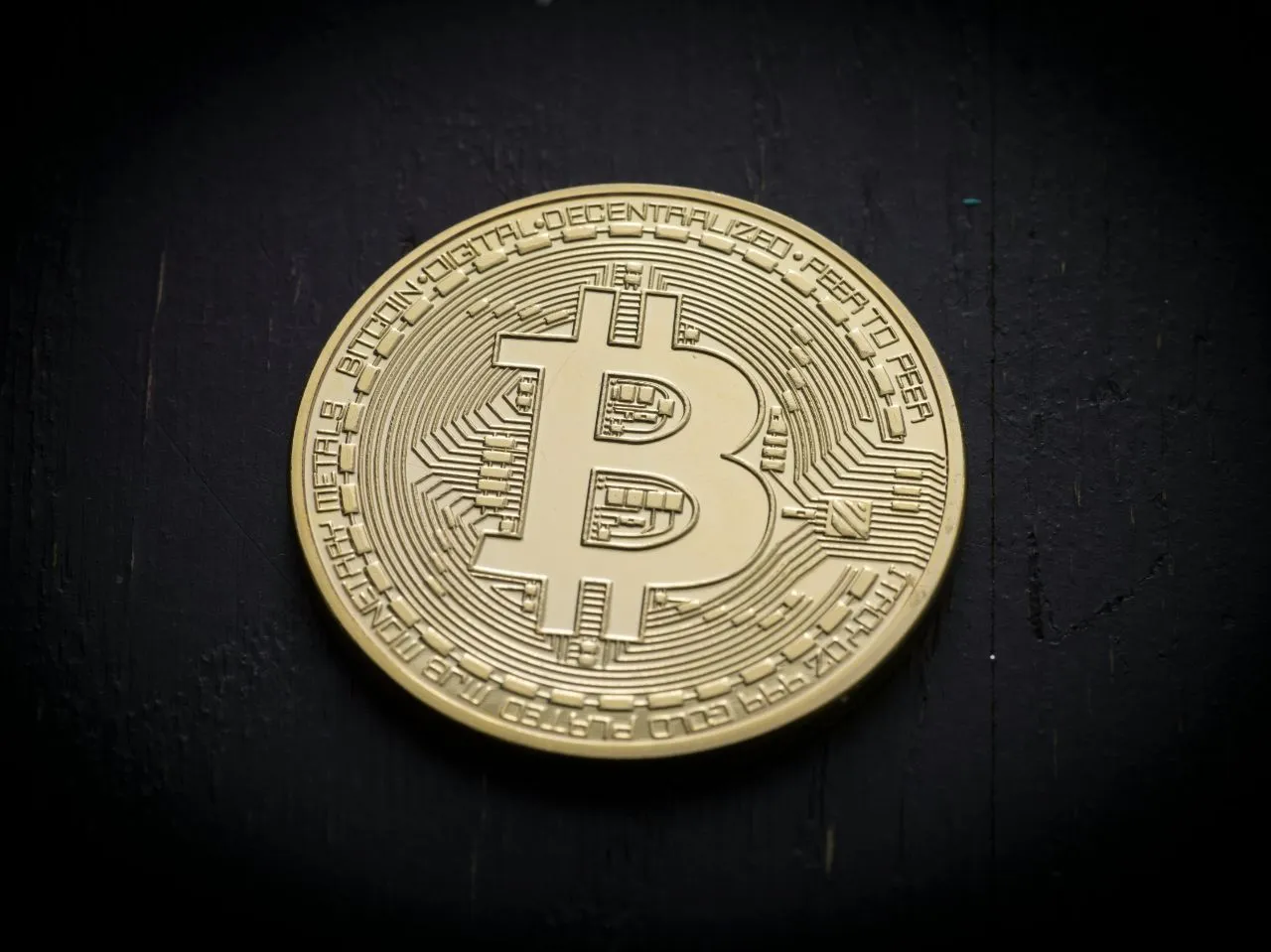
https://asset.coinness.com/en/news/81701fddf7c01f3af8b322ed63024a30.webp
Photo by Thought Catalog on Unsplash

Sealminer A1

The company revealed on X that its inaugural crypto mining chip, known as the SEAL01, destined to drive the Sealminer A1 mining rig, was engineered utilizing four-nanometer process technology, a feat achieved in collaboration with a semiconductor fabricator. Bitdeer boasts that this chip exhibits a power efficiency ratio of 18.1 J/TH.


At the heart of Bitdeer's latest achievement lies the SEAL01 chip, the culmination of years of dedicated research and development. By harnessing state-of-the-art technology and meticulous planning, Bitdeer aims to tackle the pressing challenges confronting Bitcoin miners, including skyrocketing operational costs and environmental implications.


The company claims that the efficiency of the SEAL01 chip not only promises a shift towards more sustainable mining practices but also holds the potential to significantly reduce energy consumption, thereby bolstering profitability and return on investment for miners.


"This powerful chip offers enhanced Bitcoin mining performance with minimized power consumption, leading to lower operating costs and a reduced environmental footprint for miners," Bitdeer affirmed in the X post. The firm stopped short of disclosing the launch timeline for its upcoming mining rig.


On the financial front, Bitdeer disclosed its financial results for Q4 2023, on March 4. The company reported a total of 111,966,634 outstanding ordinary shares as of Dec. 31, 2023, including class A and class V ordinary shares.


Additionally, Bitdeer revealed key operational metrics for Q4 2023, including total Bitcoin mined, power usage across its mining data centers, average cost of electricity and miner efficiency.


Bitdeer's shares closed up 2.11% at $6.76 on Nasdaq on Friday, indicating a positive market response to its recent newly developed Bitcoin mining chip. However, trading outside regular hours, going into March 4, have seen the share price peak at $7.52, yet having retraced to $6.9 at the time of writing. That may indicate that investors are not particularly enthralled by the firm’s Q4 2023 results.


Bitdeer emphasizes that the SEAL01 chip is engineered to meet the evolving demands of the cryptocurrency mining industry. As mining activities continue to gain traction and market dynamics evolve, the adaptability of hardware solutions becomes paramount. Bitdeer's strategic emphasis on innovation with the SEAL01 chip aims to pave the way for future advancements in cryptocurrency mining technology, ultimately fostering the growth and sustainability of the industry.


Moreover, Bitdeer asserts that the newly developed chip enables it to optimize efficiency, stability and performance in anticipation of the upcoming Bitcoin halving event slated for April.


Last month, the company’s founder Jihan Wu was installed as CEO, in a move that is understood to better position the company as it transitions to a growth phase.


More to Read
View All
Policy & Regulation·

Jun 07, 2023

SEC Lawsuit Stalls Binance’s Gopax Acquisition Deal in South Korea

SEC Lawsuit Stalls Binance’s Gopax Acquisition Deal in South KoreaNothing exists in a vacuum, and on that basis, it appears that ripples emanating from the recent lawsuit filed by the Securities and Exchange Commission (SEC) in the United States against global crypto exchange Binance have resulted in the company struggling to complete the acquisition of South Korea’s Gopax.Photo by Daniel Bernard on UnsplashSuspended pending reviewThe acquisition deal between Binance and South Korean crypto trading platform Gopax has hit a roadblock as a direct consequence of the lawsuit. The Financial Services Commission (FSC), the financial watchdog in South Korea, has put the acquisition on hold as it reviews the situation.Binance had acquired a majority stake in Gopax in February, with plans to re-enter the South Korean crypto market after a two-year absence. Gopax is a top five cryptocurrency exchange in South Korea, alongside Upbit, Bithumb, Coinone, and Korbit. However, according to a report by local news media, the FSC has suspended Gopax’s executive change report filed on Tuesday in light of the SEC lawsuit. The report outlined the nomination of three Binance members, including Leon Singh Poong, as inside directors of Gopax.The FSC cited the allegations of securities law violations against Binance and the SEC’s request to freeze Binance.US assets as the reasons for its cautious approach.Gopax revivalThe significance of Binance’s acquisition of Gopax goes beyond its re-entry into the South Korean market. It also aimed to revive the struggling local crypto trading platform. In November 2022, Gopax faced challenges when it suspended withdrawals of principal and interest payments from its decentralized finance service, GoFi, following the collapse of the Bahamas-based FTX crypto exchange and the bankruptcy of Genesis, a US digital assets financial services firm.Digital Currency Group, the parent company of Genesis, was reportedly the second-largest shareholder of Gopax and a key business partner providing the GoFi product. Binance’s acquisition deal intended to inject new capital into Gopax to facilitate customer withdrawals and interest payments for GoFi.The SEC lawsuit against Binance alleges the exchange’s commingling of customers’ funds and violations of various securities laws. The SEC has filed 13 charges against Binance, its subsidiaries, and its CEO, Changpeng Zhao.Acquisition strategyBinance appears to have been pursuing an acquisition strategy in attempting to carve out a greater market share in Asian markets. Binance entered the Japanese market via acquisition in November 2022 when it purchased local crypto platform, Sakura Exchange BitCoin. At the end of last month, Binance announced that it was rebranding the business as Binance Japan and launching it as a stand alone bespoke platform dedicated to the Japanese market.In Thailand, the global crypto exchange has varied its approach, entering into a joint venture rather than a full acquisition. It has partnered with Gulf Innova, with the new entity, Gulf Binance, recently having been awarded a trading license by the Thai regulator.The outcome of the SEC lawsuit and its impact on Binance’s operations in South Korea remains uncertain. The FSC’s review process will consider the allegations against Binance and the implications of the SEC’s actions before making a decision on the Gopax acquisition. The crypto industry will closely monitor the developments as they unfold, as no doubt the saga will have broader implications for Binance and its expansion plans.

news
Markets·

Sep 29, 2023

Hong Kong’s HashKey Adds AVAX Trading

Hong Kong’s HashKey Adds AVAX TradingHashKey Hong Kong, the Chinese autonomous territory’s first licensed retail crypto exchange, has unveiled an addition to its platform with the launch of Avalanche (AVAX) trading.According to an announcement published to its website on Wednesday, HashKey has listed Avalanche on Thursday with the caveat that access to AVAX trading will be reserved for professional investors, as defined by Hong Kong’s Securities & Futures Commission (SFC).Photo by Wance Paleri on UnsplashAccessible to professional investorsTo meet the criteria as a professional investor in Hong Kong, individuals must possess an investment portfolio valued at a minimum of 8 million Hong Kong dollars, roughly equivalent to $1 million. This decision sets AVAX apart from other widely traded cryptocurrencies, such as Bitcoin and Ether, which remain accessible to retail investors in Hong Kong. While Tether (USDT) enjoys retail status, the majority of altcoins on HashKey will remain the preserve of professional investors.This move is a direct result of the SFC’s proactive stance on regulating the rapidly expanding crypto market in Hong Kong. Since the introduction of regulated retail crypto trading in the Chinese autonomous territory in August, the SFC has imposed rigorous requirements on exchanges. HashKey mandates users to deposit a minimum of 10,000 Hong Kong dollars or $1,500 into their exchange accounts as part of the Know Your Customer (KYC) verification process.Low trading volumeAmid these regulatory challenges, HashKey Hong Kong currently reports a 24-hour trading volume of approximately $5.3 million, significantly lower than its global peers. This lower trading volume suggests that stringent regulations may be affecting the exchange’s ability to attract retail investors effectively.The path to regulatory compliance in Hong Kong has been anything but smooth for crypto exchanges. Reports indicate that these platforms have collectively invested over $25 million in establishing the requisite infrastructure for obtaining a Hong Kong Virtual Asset Service Provider (VASP) license. It was reported earlier this year that crypto firms are forking out between $2.55 million and $25.5 million in order to secure a VASP trading license.Despite the challenges, HashKey is looking at various avenues in bringing its offering forward. Earlier this month the firm signed a memorandum of understanding (MOU) with insurer OneDegree. That collaboration could be significant as it should lead to the assets of HashKey users being protected and insured on the platform. That would solve a major issue for participants in the crypto space amid the backdrop of ongoing platform failures and hacks.JPEX collapseEven as regulatory efforts intensify, the crypto industry in Hong Kong has not been impervious to bad actors. The recent collapse of the JPEX crypto exchange earlier this month serves as a stark reminder of the ongoing risks associated with the industry. Described as the largest financial fraud in Hong Kong’s history, JPEX faced allegations of embezzling over $178 million of investors’ funds. Notably, JPEX was operating without SFC registration at the time of the alleged embezzlement.In response to such incidents, the SFC has taken proactive measures by publishing a warning list of crypto exchanges considered non-compliant within the Chinese autonomous territory.

news
Web3 & Enterprise·

May 17, 2023

Superscrypt Backs Airstack’s Web3 Developer Platform

Superscrypt Backs Airstack’s Web3 Developer PlatformSingapore-based Superscrypt, an early stage blockchain investment company founded by state-owned global investment conglomerate Temasek, has led an investment round into Web3 developer platform, Airstack.Photo by Giorgio Trovato on UnsplashIndian influenceAirstack closed out the second tranche of its pre-seed funding round, having raised the largest portion of the $7 million raise via Superscrypt. Although based in Miami Beach, Florida, Airstack has a strong Indian influence. Three of its five founders, Deepesh Kumar, Vysakh Nair and Sarvesh Jain originate from the world’s most populous country.The firm’s main offering is to enable developers to be able to easily query on and off-chain data and integrate that same data into the Web3 apps that they are building. Airstack enables this functionality by featuring GraphQL, a query language for APIs and a runtime for fulfilling those queries with the user’s existing data, as a core component of its platform.Achieving greater functionality still, the start-up enhances that use of GraphQL by incorporating the use of artificial intelligence (AI). The company’s Miami Beach-based CEO and Co-Founder, Jason Goldberg, elaborated on the technology it is using in an interview with CoinDesk: “We did extensive interviews with developers over the past year, gaining insights into their previous tool usage and the challenges they faced. Airstack was built to directly address those pain points.”Recent platform launchThe product offering was launched last month and has already lured in over two hundred developers to use the platform. Those developers are harnessing the functionality of Airstack’s platform to assist them in their efforts to bring a broad range of dApps to market.Developer projects are grounded in areas such as marketing engines, decentralized finance (DeFi) portfolio optimizers, customer resource management tools, advertising platforms, and decentralized social media apps, together with messaging applications.With just a straightforward query and response approach, developers can use Airstack platform functionality to query, combine, and integrate on-chain or off-chain, cross-chain, and cross-application data. The offering applies to queries relative to the Ethereum and Polygon blockchain networks. The project intends to support additional blockchain networks going forward, while also intending to increase the level of query complexity made available to platform users.Joining Superscrypt on the Airstack cap table are Hashed Emergent, NGC, Primal Capital, UOB Ventures, Signum Capital, and others. Goldberg articulated the firm’s strategy going forward: “Our immediate focus is to onboard thousands of developers onto Airstack in the coming months. We aim to identify the areas where we add the most value and where genuine business use cases emerge before finalizing our pricing model.”Social app upgradeAt the same time as this funding announcement, Airstack also revealed a separate development related to its Jam social app. Taking to Twitter on Tuesday, Goldberg provided details on an update to the app which utilizes Airstack functionality in order to create social groups based on NFT ownership and collector status. That functionality can be extended further, so that data can be gathered across projects, creating bespoke user profiles relative to the user’s blockchain activity and presence.At the same time as this funding announcement, Airstack also revealed a separate development related to its Jam social app. Taking to Twitter on Tuesday, Goldberg provided details on an update to the app which utilizes Airstack functionality in order to create social groups based on NFT ownership and collector status. That functionality can be extended further, so that data can be gathered across projects, creating bespoke user profiles relative to the user’s blockchain activity and presence.

news
Loading