Top

Overseas Crypto Holdings Declared to Korean Tax Agency Amount to $98B

Policy & Regulation·September 21, 2023, 7:38 AM

In a recent press release from the South Korean National Tax Service (NTS), it was revealed that this year, a record 5,419 Koreans declared overseas financial assets amounting to KRW 186.4 trillion. This is a notable jump from the previous year, marking a 38.1% rise in the number of declarants and an impressive 191.3% increase in the declared amount.
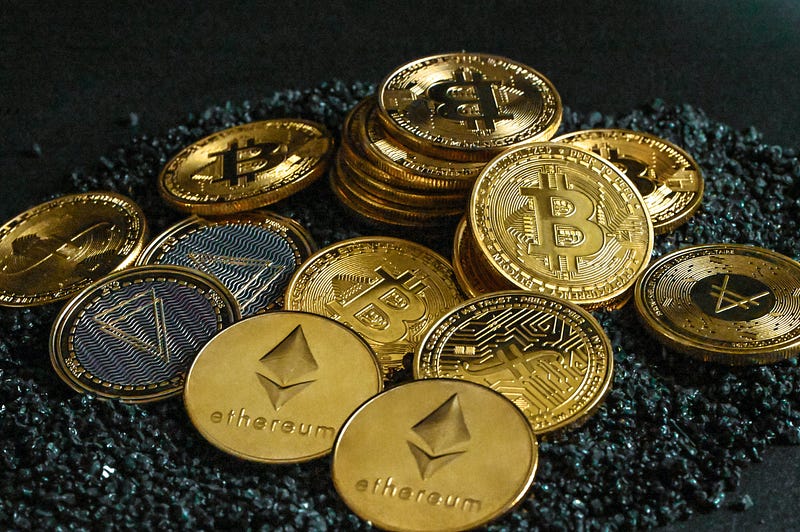
Photo by Traxer on Unsplash


Record-breaking declarations

These are the most significant figures reported since the 2011 inception of the overseas financial account reporting system, which requires Korean individuals and entities to disclose their foreign financial holdings, like savings, stocks, collective investment schemes, and derivatives, if their balance exceeds KRW 500 million.

The NTS attributed the record-breaking figures to foreign crypto accounts, a new addition to this year’s overseas account declaration.


Crypto’s dominance

Virtual assets comprised a staggering 70.2% of the total declared amount, overshadowing all other assets. 1,432 individuals and corporate entities reported crypto holdings amounting to KRW 130.8 trillion (approximately $98 billion).


Decline in non-virtual assets

For non-virtual asset accounts, including deposits, savings, and stocks, the reported figure stood at KRW 55.6 trillion, marking a year-on-year drop of KRW 8.4 trillion, or a 13.1% decline.


Call for compliance

In the future, the NTS plans to leverage data shared between countries to rigorously check for potential non-compliance in reporting overseas financial accounts. Those suspected of omissions can expect strict actions, including fines, criminal charges, public name disclosure, and the collection of related taxes.

After the reporting deadline, filers may be eligible for a penalty reduction of up to 90%. Importantly, tax agencies worldwide, including the NTS, are gearing up to share information like cryptocurrency transaction details under the Crypto Asset Reporting Framework. In light of this, the NTS strongly encourages those who haven’t yet reported but are obligated to to promptly declare their overseas virtual asset accounts.


More to Read
View All
Markets·

Mar 04, 2024

Korea’s crypto exchanges resume charging fees, shifting market shares

Korea’s prominent crypto exchanges Bithumb and Korbit have recently resumed charging trading fees, local media outlet Edaily reported. However, these changes in fee policies are reinforcing Upbit’s dominant market position while downsizing Bithumb’s and Korbit’s market shares. Meanwhile, the local banks affiliated with crypto exchanges are benefitting from an uptick in fee revenue from the recent bitcoin boom. According to crypto data intelligence platform CoinGecko on Feb. 28, Upbit accounted for 77.4% of the local market share in crypto transactions, followed by Bithumb (20.43%), Coinone (1.73%), Korbit (0.35%) and Gopax (0.09%). Photo by Markus Winkler on UnsplashShifts in market sharesAs of March 2, the market shares of Bithumb and Korbit decreased by 8.59 percentage points and 0.21 percentage points, respectively. Conversely, Upbit’s dominance grew to 86.57%, up by over 9 percentage points. A Korbit official said it’s too early to pass judgment on Korbit’s market performance, as the exchange’s policies on trading fees could change depending on the market sentiment. The person added that CoinGecko tracks only eight types of tokens traded on Korbit and does not cover all the transactions on the exchange.  Bithumb had previously benefited from charging no fees, driving up its market share to as high as over 40% in December. Following the decision to impose a fee of 0.04% on Feb. 6, however, the exchange has been experiencing a drop in transaction volume. Korbit also reinstated trading fees last Thursday, roughly four months after eliminating them on Oct. 10 as a promotional move. However, it's worth mentioning that the newly introduced trading fee is 0.07%, which is lower than the earlier rate of 0.2%. Meanwhile, Gopax currently exempts fees for users who trade BTC, ETH, XRP and USDC.  No local regulations on fees for crypto transactions At the moment, there are no local regulations on fees for crypto transactions, leaving the task of setting such fees to individual trading platforms. It is known that crypto exchanges in other countries, such as the U.S., set their own rates as well.  

news
Web3 & Enterprise·

Jul 20, 2023

Former FTX COO Finds New Role at Sino Global

Former FTX COO Finds New Role at Sino GlobalConstance Wang, previously known for her executive roles at FTX, has recently joined crypto venture capital firm Sino Global Capital.That’s according to sources Bloomberg cited in a recent report as being familiar with the matter. Wang held the role of Chief Operating Officer at FTX and was also the Co-Chief Executive Officer of FTX Digital Markets, the affiliate of the now-defunct crypto exchange, which was based in the Bahamas. Her responsibilities at FTX included overseeing global business expansion, token listings, and public relations and marketing.Following the collapse of FTX and its sister trading firm Alameda Research, Wang has reportedly spent a significant amount of time in China, according to an undisclosed source.Sino Global Capital, founded in 2015 by Beijing-based American investor Matthew Graham, had revealed its early investment in FTX after the exchange’s collapse. The management team stems from a background in consulting, Wall Street, private equity, government, and corporate spheres. A year prior, the venture capital firm launched a $200 million fund with FTX as a key investor. Sam Bankman-Fried, the Founder of FTX, expressed gratitude for Sino Global’s support, stating that they believed in the FTX vision from the beginning and assisted in making it a reality.Photo by Henry Kobutra on UnsplashLawsuitGraham was quite public in his support of FTX and Sam Bankman-Fried. He appeared frequently on podcasts, always explaining that the FTX founder was a genius. On investing in FTX and in projects in general, Graham stated repeatedly that Sino Global maintained a high level of due diligence. Most of the leading venture capital investors in FTX (including Sino Global) have been subject to class action lawsuits filed by creditors. It’s claimed that many of these investors didn’t simply invest capital but also got involved in actively marketing what turned out to be a fraud.In January, the court-appointed management team overseeing the FTX bankruptcy proceedings sought permission to subpoena Wang and other former executives of the company. Court filings indicate that Wang has not been accused of any wrongdoing in relation to the collapse of FTX or Alameda.Prior to her tenure at FTX, Wang briefly worked at the crypto exchange Huobi in Singapore as a Business Development Manager. She also spent two years as an analyst at Credit Suisse.New rolesIn recent months, other former FTX employees have also reappeared in new roles. Amy Wu, who left Lightspeed Venture Partners to lead FTX Ventures, announced her joining Menlo Ventures, one of the oldest venture firms in Silicon Valley. Brett Harrison, former President of FTX US until his sudden resignation in September 2022, has founded a startup with plans to provide a “GPT-4-powered trading algorithm code generator.”The transition of Constance Wang and her fellow FTX alumni into new positions at face value seems like a logical progression. However, all of the FTX c-suite executives remain under ongoing scrutiny. Having brought charges against Bankman-Fried, Caroline Ellison, and Nishad Singh some months ago, Southern District of New York (SDNY) Attorney Damian Williams stated clearly that more arrests would follow.

news
Web3 & Enterprise·

Jul 14, 2023

Bitget Claims Debt-Free Status via Proof of Reserves

Bitget Claims Debt-Free Status via Proof of ReservesBitget, the Seychelles-based cryptocurrency derivatives exchange, proudly announced that its total proof-of-reserves ratio has reached an impressive 223% in its latest report.Photo by Traxer on UnsplashReserve of $1.44 billionIn a press release published to its website on Thursday, the exchange revealed that it currently holds a reserve of $1.44 billion, encompassing 31 different crypto assets. The reserve ratios for popular cryptocurrencies such as Bitcoin (BTC), Tether (USDT), Ether, and USDC stand at 454%, 135%, 171%, and a staggering 2,604%, respectively.Bitget executives, in an interview with Cointelegraph, emphasized the exchange’s commitment to operating without relying on debt or user funds for transactions or investments. They stated that the company is debt-free and has no outstanding liabilities, nor is it listed as a creditor for any recently bankrupt companies.When questioned about the high collateralization for certain coins, the exchange clarified that the funds originate from profits generated through transaction fees and returns from investments and acquisitions. While Bitget does not have external insurance for its users, it maintains a robust $300 million User Protection Fund.Executives assert that this fund operates more effectively than third-party insurance, enabling them to efficiently safeguard users’ assets without being dependent on external bureaucracy or policy changes.Partnering with third-party auditorsAlthough not yet a regulatory requirement, Bitget aims to enhance transparency by increasing partnerships with third-party auditors to thoroughly examine its assets and reserves. The exchange diligently updates its proof-of-reserves every month, further reinforcing its commitment to accountability and trustworthiness.While proof-of-reserves has gained popularity as a means of disclosing information about exchange assets, experts have cautioned about its effectiveness. Jack Graves, a professor of law at Syracuse University, highlights the challenges in determining the portion of assets pledged as collateral unless one has access to an exchange’s financial services, books, and records.Bitget’s remarkable proof-of-reserves ratio and its commitment to being debt-free demonstrate a greater focus on behalf of cryptocurrency exchanges in providing the crypto trading public with an enhanced level of information relative to the real-time financial position of the exchange.Crypto loansThe move is significant and much needed, following a dreadful 2022 for crypto consumers that saw many of them lose funds due to a complete lack of transparency with regard to funds held on deposit on behalf of customers. That period saw the collapse of platforms such as Celsius, FTX, Voyager, BlockFi, and others as a direct consequence of the mismanagement of user funds.It’s interesting too, that most of the platform failures involved crypto lenders, a space that Bitget recently announced that it was entering. Earlier this month, the company outlined that it would begin to offer crypto lending products to meet a need from users who are seeking alternative funding solutions, backed by digital assets.By diligently managing its funds and actively seeking audits, Bitget is making an effort to foster trust within the cryptocurrency community and ensure the safety of users’ assets.

news
Loading