Top

Welcome Savings Bank Implements Blockchain-based Bank ID for Enhanced Customer Convenience

Web3 & Enterprise·August 03, 2023, 9:21 AM

Welcome Savings Bank, one of the mutual savings banks in South Korea, has announced a significant step towards enhancing identity security and customer convenience with the incorporation of Bank ID, a blockchain-based decentralized identity (DID) solution operated by the Korea Financial Telecommunications and Clearings Institute (KFTC), a payment services institution.
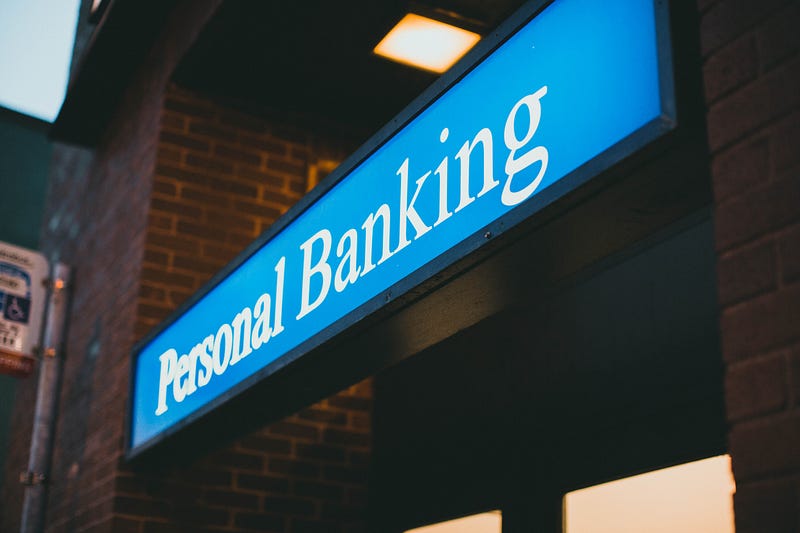
Photo by Jonathan Cooper on Unsplash


DID technology to prevent identity fraud

The utilization of DID technology marks a notable stride in preventing identity fraud. By storing user data on a secure distributed ledger, the system becomes highly resilient to counterfeiting or forgery attempts, ensuring a safer environment for customers’ personal information.


Single sign-on functionality

With this initiative, Welcome Savings Bank has become the first savings bank in the country to implement Bank ID, a solution predominantly adopted by prime commercial banks. This strategic move bolsters the bank’s digital competitiveness and improves customer convenience. With Bank ID, users can enjoy seamless access to their accounts across 18 Korean financial institutions without the hassle of logging in separately for each one, streamlining their banking experience.

Customers of Welcome Savings Bank can utilize the bank’s mobile app to acquire a Bank ID by undergoing a verification process through a one-time password or security card. For existing Bank ID holders, adding Welcome Savings Bank to their list of banks is a straightforward procedure.

The decision to embrace this innovative technology highlights the bank’s commitment to meeting the high standards set by prime commercial banks. By aligning with industry trends and bolstering their digital capabilities, savings banks like Welcome and other subprime banks can deliver improved convenience and a seamless banking journey to their valued customers.


More to Read
View All
Web3 & Enterprise·

Oct 19, 2023

OSL Parent Company Denies Sale Plans

OSL Parent Company Denies Sale PlansBC Technology Group, a Hong Kong-based investment holding company, has firmly denied recent reports suggesting it is exploring the sale of its licensed digital asset business, OSL, for up to HK$1 billion (US$137.3 million).Photo by Nextvoyage on PexelsCompany stock plummetsThis comes in response to a report that emerged via Bloomberg on Monday. The news of the possible sale had a significant impact on the company’s stock, which plummeted by over 22% to HK$3.35 the following day.BC Technology Group, which has been listed on the Hong Kong stock exchange since 2012, is the parent company of OSL. The reports hinted at the possibility of selling off parts of the business, citing undisclosed sources.In response to these rumors, BC Technology Group issued a formal statement to clarify the situation, deeming the article “factually inaccurate and highly misleading.” It vehemently refuted any intention to sell OSL, a key player in the cryptocurrency exchange sector.First licensed exchangeOSL was the first cryptocurrency exchange to be licensed by the Securities and Futures Commission (SFC) in Hong Kong in 2020, initially operated under a voluntary scheme and was limited to serving professional investors. However, the recent licensing requirement broadened its scope, allowing it to cater to retail investors as well, including popular cryptocurrencies like Bitcoin and Ethereum.Both OSL and HashKey had their licenses upgraded this year, enabling them to serve retail investors as per the new policy. However, the reception to this new regulatory framework has been somewhat lukewarm, with only five local exchanges applying for the new virtual asset trading platform (VATP) license. The SFC had to publish a list of applicants following a financial scandal involving the JPEX crypto exchange, which led to over 2,500 complaints and losses totaling approximately HK$1.5 billion.The backdrop of this unfolding situation is Hong Kong’s efforts to establish itself as a significant virtual asset hub. The city announced its ambition to transform into a hub for digital assets a year ago, drawing considerable attention from cryptocurrency exchanges. These efforts included implementing new regulations in June that mandated licensing for cryptocurrency exchanges.Several companies with connections to Hong Kong and mainland China have expressed their intent to obtain a license, potentially taking advantage of Hong Kong’s favorable stance toward virtual assets when compared to mainland China’s strict regulations.High compliance costsNonetheless, high compliance costs in Hong Kong continue to pose a barrier, potentially preventing the city from becoming the primary base of operations for crypto businesses. Industry insiders estimate that the cost of compliance from start to finish can be as high as HK$60 million for a company. Firms have reported that obtaining a trading license in Hong Kong can involve an outlay of between HK$20 million and HK$200 million.As per BC Technology Group’s mid-year report, the company reported a net loss of HK$94.7 million in the first half of 2023. This marked a notable improvement compared to the HK$312.1 million in losses during the same period the previous year. OSL remains a significant source of income for the company.

news
Web3 & Enterprise·

Apr 11, 2023

Chinese Insurer Founds 2 Crypto Funds in Hong Kong

Chinese Insurer Founds 2 Crypto Funds in Hong KongChina has been in the headlines lately as the country continues to take a growing interest in cryptocurrencies in spite of a previous clampdown. According to a blog post published last Thursday, a Chinese state-owned insurance company launched two crypto funds, further solidifying the country’s stance on digital assets.©Pexels/Charlie JinChinese crypto resurgenceChinese insurance behemoth, the China Pacific Insurance Company (CPIC) has launched the two cryptocurrency funds in Hong Kong. The funds will be managed by the firm’s asset management unit, CPIC Investment Management, and have been established in conjunction with venture capital and blockchain start-up investment firm, Waterdrip Capital. Furthermore, they will focus on investments in cryptocurrencies and related assets, with a particular emphasis on Bitcoin and Ethereum.Waterdrip was originally founded in Shanghai in 2017, and has previously invested in the Chinese crypto mining sector, together with other blockchain-related projects. The move comes as China continues to make strides towards becoming a leader in the digital currency space. Last year, the country’s central bank announced plans to create its own digital currency, which is currently in the testing phase. The move is seen as a way for China to gain more control over its financial system and reduce its reliance on the US dollar.Hong Kong crypto hubChina’s growing interest in cryptocurrencies has been driven in part by the country’s rapidly growing tech industry. Companies like Tencent and Alibaba are leading the way in digital payments and e-commerce, and many believe that cryptocurrencies will play a key role in the future of online transactions.The launch of these two crypto funds by a state-owned insurance company is just the latest indication of the formative development of Hong Kong as a crypto hub. Its believed that China is treating crypto development in Hong Kong as a manner in which it can determine how digital assets can be utilized subsequently on mainland China.It’s not the first time a state-owned entity has gotten involved in cryptocurrency. Earlier this year, a state-owned company launched two crypto funds in Hong Kong, with a focus on investing in Bitcoin and other digital assets.Previous crypto crackdownDespite China’s growing interest in cryptocurrencies, the country has also taken a tough stance on the industry in the past. In 2017, the Chinese government banned initial coin offerings (ICOs) and shut down local cryptocurrency exchanges. However, it appears that the country’s stance is shifting, with the launch of these two crypto funds serving as a clear indication of China’s growing interest in digital assets.While China’s embrace of cryptocurrencies is seen by many as a positive development for the industry, there are also concerns about the country’s growing influence in the space. With China’s central bank developing its own digital currency, some worry that the country could use it to further extend its financial reach and influence around the world.Despite these concerns, it’s clear that China’s interest in cryptocurrencies is only growing. As the country continues to make strides in the digital currency space, it will be interesting to see how it impacts the global economy and the future of finance.

news
Policy & Regulation·

Oct 13, 2025

UAE deepens its crypto push as Bybit wins full license and institutions move in

The United Arab Emirates (UAE) advanced its push to become a leading digital asset hub as crypto exchange Bybit received a full virtual asset platform operator license from the Securities and Commodities Authority (SCA). The permit enables Bybit to provide its entire range of products to UAE residents, the company said in an Oct. 9 press release. The clearance marks the culmination of a process that began when Bybit received preliminary approval from the SCA in February. The exchange says it is the first to complete the full licensing journey and notes that 2025 has been a year of major compliance wins, including new credentials in Europe and a return to the Indian market.Photo by Atikah Akhtar on UnsplashBitGo broadens institutional reach in DubaiInstitutional infrastructure is expanding alongside retail access. Crypto custody firm BitGo secured a broker-dealer license from Dubai’s Virtual Assets Regulatory Authority (VARA). The new authorization allows BitGo MENA to deliver regulated trading and intermediation services across the region through an integrated OTC desk and a digital platform supporting spot crypto trading in both dirhams and U.S. dollars. The UAE’s welcoming attitude toward digital assets is changing how major investors think about wealth. The Bitcoin Historian said on X that The Kanoo Group, which oversees about $20 billion in assets, intends to invest in Bitcoin. Bloomberg has reported that affluent families across the region are gradually diversifying beyond real estate and private enterprises. With around $1 trillion expected to shift to younger generations soon, many heirs are looking to allocate more toward cryptocurrencies, tokenized funds, and tokenized real-world assets (RWAs). New fund marks progress in tokenized financeThat growing appetite for digital exposure is now being met with new products. Last month Qatar National Bank (QNB) Group joined forces with Standard Chartered and DMZ Finance to launch the first regulated tokenized money market fund in the Dubai International Financial Centre. Using blockchain technology, the QCD Money Market Fund brings traditional financial assets on-chain, creating new yield opportunities for investors within the digital economy. The fund is managed by QNB Group, uses infrastructure provided solely by DMZ Finance, and has Standard Chartered serving as custodian of its assets. As the UAE deepens its role in global finance, regulators are also working to align with international standards. By 2027, it expects to adopt the OECD’s Crypto-Asset Reporting Framework (CARF), with cross-border data exchanges to begin in 2028. The Ministry of Finance has already signed the Multilateral Competent Authority Agreement to make this happen. The framework promotes automatic sharing of crypto-related tax information among member countries, underscoring the UAE’s commitment to global transparency as it expands its financial footprint. Recent developments show the jurisdiction striving for growth while strengthening oversight. Exchanges are gaining clarity on what they can offer, institutions are building trading rails, and investors are embracing tokenized products. They signal a market finding its balance between innovation and regulation. The coming years will reveal how well that balance can hold. 

news
Loading