Top

Incheon City Creates Metaverse Representation of Incheon Landing Operation Within The Sandbox

Web3 & Enterprise·September 13, 2023, 8:21 AM

Incheon Metropolitan City announced Wednesday that the metaverse representation of the Incheon Landing Operation, the turning point of the Korean War, will be accessible on virtual gaming platform The Sandbox. Incheon is the first public organization in South Korea to collaborate with The Sandbox.

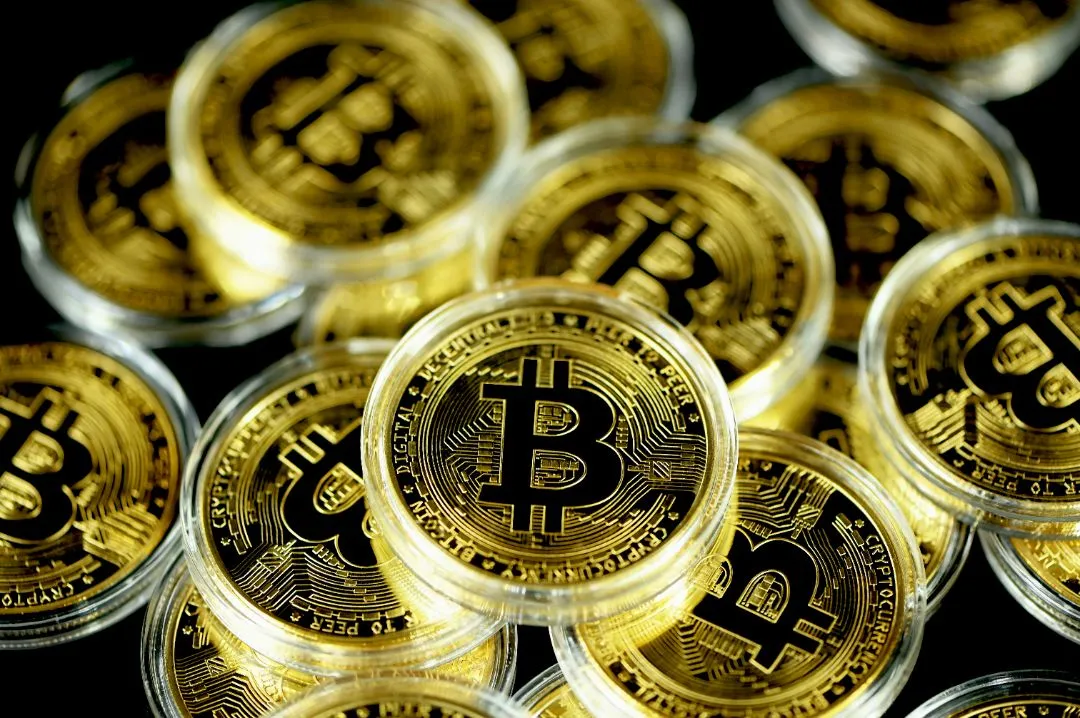
Photo by Ian Hutchinson on Unsplash


Honoring veterans

The metaverse content depicting the military operation has been developed to commemorate the 70th anniversary of the Korean War Armistice Agreement and to honor the soldiers who protected the freedom and peace of the Republic of Korea.

This urban experiential content aims to offer virtual gamers the opportunity to gain a deeper understanding of the Incheon Landing Operation and engage in interactions with historical figures. Additionally, the platform will feature a variety of mini-games.


Support through NFTs

As part of this initiative, Incheon will create and release a limited NFT collection, with all proceeds from the sales being donated to support Korean War veterans, both domestically and abroad, through the Korean War Veterans Association.

The NFT collection will be available for purchase on the Sandbox Marketplace. Moreover, NFT buyers will have the opportunity to win Incheon tourism products like hotel vouchers and passes to tourist destinations.

Meanwhile, Incheon is creating more content within The Sandbox, with the objective of showcasing the city to a global audience. It also plans to explore avenues for inviting metaverse users to Incheon, providing them with chances to enjoy its urban landscape.

More to Read
View All
Policy & Regulation·

Jan 16, 2024

United Nations report cites popularity of USDT for fraud in Southeast Asia

USDT, the leading U.S. dollar stablecoin issued by Tether, has been highlighted as a major conduit for money laundering and scams in Southeast Asia, according to a United Nations report released on Monday.Photo by Mathias Reding on UnsplashIllicit stablecoin useThe report has been titled “Casinos, Money Laundering, Underground Banking, and Transnational Organized Crime in East and Southeast Asia: A Hidden and Accelerating Threat.” It points out that online gambling platforms, particularly those operating illicitly, are among the favored channels for cryptocurrency-based money launderers, with a notable emphasis on the use of Tether or USDT. In a foreword to the report, Jeremy Douglas, the UN’s Regional Representative for Southeast Asia and the Pacific, noted that technology had aided crime networks in Asia, and in particular, the Mekong Delta region. Developing upon that idea, he added:”This has necessitated a revolution in the regional underground banking architecture, resulting in the development of systems and infrastructure capable of moving and laundering massive volumes of state-backed fiat and cryptocurrencies.”The report itself asserts that illegal and under-regulated crypto exchanges have become “foundational pieces of the banking architecture used by organized crime.” The document highlights law enforcement efforts in disrupting multiple money laundering networks linked to the illicit transfer of Tether funds. Last August, Singaporean authorities dismantled a network through an operation, recovering approximately $735 million in both cash and cryptocurrency. ‘Pig butchering’The UN report further suggests that USDT has been extensively employed in various underground fraud activities, including so-called "pig butchering" romantic scams. Last November, Tether froze $225 million in stolen USDT following investigations by Tether in collaboration with crypto exchange OKX and the U.S. Department of Justice. The money had been held in self-custodied wallets associated with an international human trafficking group in Southeast Asia orchestrating a pig-butchering scam. In December, Tether CEO Paolo Ardoino informed U.S. legislators in a shared letter that the company has enlisted the U.S. Secret Service and Federal Bureau of Investigation onto its platform. Later that month, the Chinese authorities uncovered a massive underground banking operation that was designed to evade the country’s foreign exchange controls. There was more related activity in December when it emerged that USDT has been integrated into the shadow economy in Cambodia, against a backdrop of the currency being prohibited for the purpose of trade within the Southeast Asian country. TRM Labs reportIn July of last year, a report by blockchain analytics firm TRM Labs, found that pro-ISIS terrorist groups in Central and Southeast Asia and the Middle East are increasingly using cryptocurrency, with a particular preference for USDT transacted over the Tron blockchain network. The UN report cites the popularity of USDT among those engaged in cyber-fraud and online casino operations, located in Myanmar, along the border with Thailand. Throughout 2023, Tether witnessed a notable expansion in its share of the global stablecoin supply, growing from 50% to 71%. At the time of writing, USDT has a market cap of $95 billion with stablecoins having an overall market capitalization of $134 billion. The UN's findings raise concerns about the stablecoin's role in facilitating illicit activities and underscore the need for enhanced regulatory scrutiny within the rapidly evolving crypto landscape.

news
Policy & Regulation·

Apr 11, 2023

India Looks to Boost CBDC With 1 Million Users in 3 Months

India Looks to Boost CBDC With 1 Million Users in 3 MonthsThe project team responsible for India’s retail central bank digital currency (CBDC) is aiming to increase its user base to one million users, while also prioritizing the challenge of creating an offline version.©Pexels/Sohel PatelAlthough the Reserve Bank of India (RBI), India’s central bank, publicly stated in March that they were aiming for 500,000 users by July, they are privately looking to double that amount. According to sources familiar with the matter cited by CoinDesk, the architects behind the centralized digital currency are confident that India’s population, being the world’s largest, will enable them to reach one million users easily. Tentatively the project team is aiming to achieve this within three months.Retail and Wholesale CBDCsThe RBI is currently conducting both retail and wholesale CBDC pilot programs. The retail CBDC pilot is active in at least 15 cities, with more than 13 banks participating. The digital rupee pilot began on December 1, 2022, and has seen over 100,000 customers participate in the four months since.India’s digital rupee gained significant attention at a recent meeting of the Group of 20 (G-20), which was hosted by India in Bengaluru, according to RBI Governor Shaktikanta Das. The central bank received positive feedback, with praise received for the design of the CBDC.Multiple challengesThe RBI initiated a Hackathon in 2023 to find solutions to some of the challenges around retail CBDC, including improving scalability, increasing transactions per second, and enabling offline transactions. However, achieving all three technical objectives at once is nearly impossible at present. Experts believe that it is only possible to achieve two out of the three objectives, but the hope is that technological innovation will address this in the future.Offline transactionsFacilitating offline transactions is crucial to improve financial inclusion in emerging economies such as India. The RBI is testing various methods to enable offline transactions, including wearables, debit and credit cards, Bluetooth technology, and smartphones. The central bank is also looking to address the risk of double-spending.More than 50 proposals were submitted to the RBI to solve the problem of offline transactions. The RBI has also been interacting with private companies to consider solutions to improving scalability, even though no partnership has been initiated with any prominent blockchain-related entities.News of India’s ambitious CBDC project fast-tracking has led some to speculate as to what technology lies behind it. Some have suggested Ripple as a possible partner but the suggestion is entirely speculative at this point.The RBI has not announced a timeline for rolling out a full-scale retail CBDC but has indicated previously that it was aiming for the end of the year. The development of a digital rupee has the potential to transform India’s economy by providing greater financial inclusion to its population, which is why the RBI is taking the time to ensure that the CBDC is as robust as possible.

news
Policy & Regulation·

Jan 20, 2025

Thailand’s SEC considers Bitcoin ETF approval

Thailand’s Securities and Exchange Commission (SEC), the Southeast Asian nation’s securities regulator, is believed to be considering moving towards approving spot Bitcoin exchange-traded fund (ETF) products.  In an interview with Bloomberg, the Thai SEC’s Secretary-General, Pornanong Budsaratragoon, said that the agency is weighing up whether to allow individual investors and institutions to access spot Bitcoin ETFs. Budsaratragoon stated: “We have to adapt and ensure that our investors have more options in crypto assets with proper protection.”Photo by Photo By: Kaboompics.com on PexelsMoving along with global crypto adoptionJanuary 10 marked the first anniversary of the approval of spot Bitcoin ETFs in the United States. Given that the U.S. is home to the world’s largest capital markets, that decision has had an impact internationally. That reality is borne out by one of Budsaratragoon’s comments. She stated: “Like it or not, we have to move along with more adoption of cryptocurrencies worldwide.” While the SEC Secretary-General’s comment suggests that she feels a compulsion to move forward in line with developments elsewhere, that wasn’t the agency’s position in January 2024 following spot Bitcoin ETF approval in the U.S.  Shortly afterwards, the regulator, alongside its regional counterpart in Singapore, outlined that it had no plans to approve the product in Thailand, stating: "The SEC has been following these developments closely but we do not have a policy to allow spot Bitcoin ETFs to be established in Thailand for the time being.” Initial access to overseas productsIn March of last year, the agency had warmed to the Bitcoin ETF product offering to a greater extent, by approving access to such products listed overseas to high-net-worth individuals and institutions. Off the back of that approval, One Asset Management (ONEAM) launched a fund of funds in June 2024, enabling Thai investors to gain exposure to Bitcoin ETFs which had been publicly listed overseas. Back in October, Nirun Fuwattananukul, CEO of Binance Thailand, stated in an opinion piece published by the Bangkok Post that he felt that the Thai crypto market was moving from retail towards a focus on the institutions. He stated:“By allowing more institutional funds to participate, the SEC is enabling a diverse range of investment strategies and helping digital assets gain broader acceptance in the mainstream.” Fuwattananukul suggested that the local regulator had made some changes on Oct. 9, paving the way for institutional-grade mutual and private funds to invest in crypto products. The approval of locally listed Bitcoin ETF products would broaden investor access to digital assets in Thailand, particularly in relation to institutional investors, which is in line with the thinking of the Binance executive. Earlier this month, Thailand’s Deputy Prime Minister, Pichai Chunhavajira, announced that a pilot program was being launched to help foreign tourists pay for goods and services using crypto within the Thai resort city of Phuket.  Meanwhile, former Thai Prime Minister Thaksin Shinawatra expressed a bullish view on crypto in a speech he made in Bangkok last week. Shinawatra called on the country’s institutions to be more open to cryptocurrency, while citing regulatory developments in the U.S. relative to the emerging asset class.

news
Loading