Top

Hana Financial Group Joins Hands with Netmarble to Attract Digitally Savvy Youths to the Metaverse

Web3 & Enterprise·September 05, 2023, 9:20 AM

Korean financial holding company Hana Financial Group has formed a strategic partnership with game publisher Netmarble, aiming to capture the attention of digitally savvy youths in South Korea. Their strategy involves introducing innovative financial services and identifying opportunities for joint business projects, as reported by local news outlet Consumer Times.

Photo by Andre Taissin on Unsplash


Financial services in the gaming realm

The two sides intend to launch Hana Financial Group’s services within the realm of Grand Cross: Metaworld, a 3D animated massively multiplayer online (MMO) game. Grand Cross is being developed using Unreal Engine 5 and is a project led by Metaverse World, an affiliate of Netmarble.

While the companies strive to collaborate on joint marketing promotions that encompass both gaming and financial aspects, the specific plans for executing these initiatives are still in the process of being developed.

Some industry experts anticipate that the two entities will leverage their respective strengths within the virtual world to create synergistic outcomes.


User interaction and advertising benefits

According to a tech insider who spoke to Consumer Times, there are indications that Netmarble will initially empower Hana to feature the financial group’s affiliated entities on the gaming company’s metaverse platform. This strategic step holds the potential for fostering user interaction and reaping advertising benefits. Additionally, the source mentioned that subsequent to this phase, Hana might take steps to enable customers to access banking services within the virtual domain.

If, in the future, in-game goods were to establish themselves as a dependable form of currency due to potential policy reforms, it’s believed that Hana Financial Group would play an even more substantial role, leading to increased business opportunities for both partners, the source noted. These offerings would primarily cater to digital native generations.


More to Read
View All
Web3 & Enterprise·

Oct 28, 2023

Bitmain’s Latest Air-Cooled Antminer Set to Ship in Q1 2024

Bitmain’s Latest Air-Cooled Antminer Set to Ship in Q1 2024Bitmain, the prominent Chinese Bitcoin mining equipment manufacturer, has officially unveiled its latest innovation, the Antminer T21.Photo by Traxer on UnsplashHeat toleranceThe company confirmed in an announcement made on Thursday that the state-of-the-art air-cooled Bitcoin miner will ship during the first quarter of 2024. The Antminer T21 is expected to make waves in the world of cryptocurrency mining given that it can withstand scorching temperatures of up to 45 degrees Celsius.During a facility tour, the firm tweeted out on Friday: “Although it is so hot here, ANTMINER is still running stable!”The context of the comment relates to an installation of the new miner’s predecessor at a Moonwalk Systems facility in the arid heat of the United Arab Emirates (UAE). Moonwalk is utilizing water cooling to overcome the local conditions. However, it’s in environments like this one that Bitmain is likely to envisage its latest Antminer performing well.Energy efficiencyAnother standout feature of the Antminer T21 is its energy efficiency. With a stellar energy efficiency ratio of 19 joules per terahash (J/TH), it outpaces its predecessor, the Bitcoin Miner S21 Hyd, which offers an energy efficiency of 16.0 J/TH. This efficiency means miners can maximize their returns while minimizing their energy costs. Additionally, the Antminer T21 boasts an impressive processing power of 190 terahashes per second (TH/s), a crucial factor in the competitive world of Bitcoin mining.The compatibility of the Antminer T21 with the SHA256 mining algorithm, used in the proof-of-work (PoW) consensus mechanism for cryptocurrencies like Bitcoin, Bitcoin Cash, and Bitcoin SV (BSV), adds to its appeal.Notably, Bitmain has extended a helping hand to pre-order buyers of the Antminer T21 by offering Bitmain’s Price Protection Plan. This plan, available until November 25, aims to support miners in times of cryptocurrency market volatility. The plan shields customers from price fluctuations in Bitcoin for periods of one, three, or six months.Company difficultiesFounded in Beijing in 2013, Bitmain swiftly rose to prominence as a global leader in producing Bitcoin (BTC) mining ASICs. However, the company faced internal turmoil due to a power struggle between its co-founders, Wu Jihan and Ketuan Zhan. The situation was eventually resolved in 2021, with Jihan Wu stepping down from his roles as chairman and CEO of Bitmain and selling his ownership share to Zhan for $600 million.ASIC miner manufacturers like Bitmain have also had to grapple with the backdrop of a challenging market environment that has seen plummeting prices paid for mining equipment over the past two years.Bitmain has faced scrutiny regarding its treatment of employees. Recent reports from local sources and Bitmain employees revealed that the company issued a notification in September indicating negative operating cash flow. In response to these financial challenges, Bitmain delayed the disbursement of a portion of its employees’ September salaries, raising concerns about the financial stability of the organization. In April of this year, it emerged that the Chinese authorities had imposed a fine on the company due to tax irregularities.

news
Policy & Regulation·

Apr 28, 2023

Hong Kong to Issue Digital Asset Licensing Guidelines in May

Hong Kong to Issue Digital Asset Licensing Guidelines in MayAccording to Hong Kong’s Securities and Futures Commission (SFC), the Commission will issue new guidelines for virtual asset exchanges within the Chinese autonomous special administrative region (SAR).© Pexels/Jimmy ChanSFC CEO Julia Leung made that announcement while speaking at an event in the city on Thursday, indicating that the guidelines are due to be released next month. Additionally the autonomous region intends to introduce a new licensing system from June 1 onwards, enabling the retail investors among Hong Kong’s populace to trade leading cryptocurrencies like Bitcoin and Ethereum.Hong Kong authorities had provided an insight into this approach back in February, when plans to provide retail access to digital assets were first set out. At the time, they outlined the need for retail customers to pass a knowledge test relative to digital assets or otherwise only being allowed to trade such assets once the customer had completed a certain level of training relative to digital assets, provided by a regulated crypto service provider.This latest announcement has arrived amid a backdrop of a series of recent indications that signify the intent of authorities in Hong Kong to make the autonomous region a major financial hub centered around digital assets.Leung articulated that the further development of this digital assets framework follows a consultation process that attracted more than 150 responses. Although virtual asset service providers (VASPs) will need to await the complete rollout of the licensing system, a handful of crypto businesses such as OSL and Hashkey, under the supervision of the Hong Kong regulator, have already started to offer their services.Crypto as propertyA Hong Kong court recently recognized cryptocurrency as property. The ruling emerged in a bankruptcy hearing pertaining to failed cryptocurrency exchange Gatecoin. In presiding over the case, Justice Linda Chan outlined that the autonomous region takes a broad view of what constitutes property. In finding crypto to meet the definition of property, she went on to clarify that it therefore has the capability of being held in trust.The finding has particular relevance in the crypto world right now given the consequences of an “in trust” custodianship of customer’s digital assets relative to numerous ongoing bankruptcy processes involving failed crypto businesses, and the pecking order of creditors in those instances, in their efforts to recover their digital assets.Positive approachWhile mainland China remains an adverse territory relative to digital assets, Hong Kong has taken to welcoming the sector and with that, enticing crypto firms to relocate to the autonomous region from the mainland. Leadership in the city has been making all the right soundings to demonstrate that it is actively trying to nurture the nascent sector.While recent months have seen the Biden administration in the United States attempt to close off banking from the crypto sector, in contrast, Hong Kong’s largest virtual bank, ZA Bank, was recently given permission to act as a settlement bank for regulated Web3 businesses located within Hong Kong.

news
Policy & Regulation·

Sep 19, 2023

Kazakhstan Launches NPC With CBDC Implementation by 2025

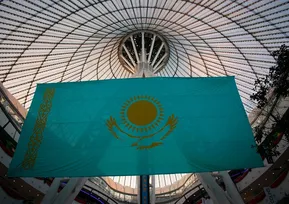
Kazakhstan Launches NPC With CBDC Implementation by 2025Kazakhstan’s National Bank (NBK) has unveiled the National Payment Corporation (NPC), a dedicated entity responsible for spearheading the development and launch of the country’s central bank digital currency (CBDC), known as the digital tenge.In a press release published last Friday, the NBK set out that the launch of the NPC is effectively a restructuring of the Kazakhstan Center for Interbank Settlements. The new entity has been entrusted with overseeing the national payment system.This mandate includes overseeing critical functions like interbank clearing services, facilitating money transfers, and managing digital identification. However, the NPC’s central mission revolves around establishing a robust “digital financial infrastructure” with a primary focus on realizing the digital tenge.Photo by Uladzislau Petrushkevich on Unsplash2025 targeted launch dateThe journey toward the digital tenge began in February of this year, with an ambitious launch date set for 2025. Deputy Governor of the NBK, Berik Sholpankupov, initially articulated a vision centered on a “collaboration between traditional finance and DeFi,” aimed at significantly improving financial inclusion and strengthening international trade.As of now, the CBDC pilot in Kazakhstan has advanced to a controlled environment pilot phase involving actual consumers and merchants. One of the key partners in this venture is Binance, the world’s largest cryptocurrency exchange. Binance is actively supporting the pilot through its technical solution, BNB Chain, marking a convergence between traditional financial institutions and the blockchain-based cryptocurrency sector.Kazakhstan’s pursuit of CBDCs aligns with a global trend as numerous countries worldwide explore the potential of CBDCs. An astounding 105 countries, representing a substantial 95% of the global gross domestic product (GDP), are currently exploring the concept, highlighting the collective recognition of the transformative potential of digital currencies in shaping the future of finance.Last week it emerged that the NBK had entered into a collaboration with the global financial messaging service SWIFT relative to the beta-testing of a CBDC.Attracting global exchangesIn a move that bolsters the development of crypto in the central Asian country, Binance launched a regulated digital asset platform in collaboration with the local Freedom Finance Bank. Around the same time, Bybit secured in-principle approval to trade within the country from the local regulator.Kazakhstan’s proactive stance toward cryptocurrency is also evident in its taxation policies. In 2022, the government collected approximately $7 million in tax payments from cryptocurrency mining entities following the implementation of revised regulations governing the fiscal responsibilities of cryptocurrency mining.Additionally, the government introduced legislation aimed at curbing excessive energy consumption by domestic crypto miners, instituting licensing requirements, and making minor adjustments to the taxation framework.Kazakhstan’s steps in establishing the National Payment Corporation and venturing into the realm of CBDCs reflect the country’s interest in embracing the digital era and staying at the forefront of financial innovation. As the industry looks on, Kazakhstan’s digital tenge project could serve as a model for others seeking to bridge the gap between traditional finance and the exciting possibilities of DeFi.

news
Loading