Top

Bitmain’s Latest Air-Cooled Antminer Set to Ship in Q1 2024

Web3 & Enterprise·October 28, 2023, 12:24 AM

Bitmain, the prominent Chinese Bitcoin mining equipment manufacturer, has officially unveiled its latest innovation, the Antminer T21.
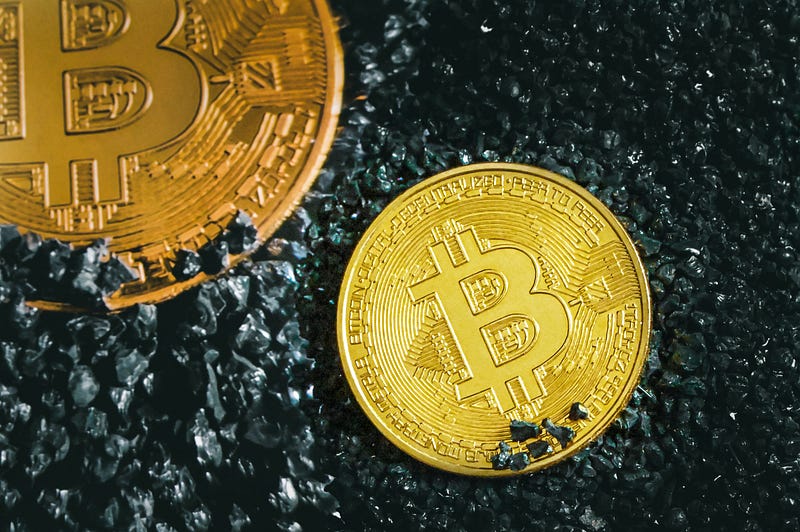
Photo by Traxer on Unsplash


Heat tolerance

The company confirmed in an announcement made on Thursday that the state-of-the-art air-cooled Bitcoin miner will ship during the first quarter of 2024. The Antminer T21 is expected to make waves in the world of cryptocurrency mining given that it can withstand scorching temperatures of up to 45 degrees Celsius.

During a facility tour, the firm tweeted out on Friday: “Although it is so hot here, ANTMINER is still running stable!”

The context of the comment relates to an installation of the new miner’s predecessor at a Moonwalk Systems facility in the arid heat of the United Arab Emirates (UAE). Moonwalk is utilizing water cooling to overcome the local conditions. However, it’s in environments like this one that Bitmain is likely to envisage its latest Antminer performing well.


Energy efficiency

Another standout feature of the Antminer T21 is its energy efficiency. With a stellar energy efficiency ratio of 19 joules per terahash (J/TH), it outpaces its predecessor, the Bitcoin Miner S21 Hyd, which offers an energy efficiency of 16.0 J/TH. This efficiency means miners can maximize their returns while minimizing their energy costs. Additionally, the Antminer T21 boasts an impressive processing power of 190 terahashes per second (TH/s), a crucial factor in the competitive world of Bitcoin mining.

The compatibility of the Antminer T21 with the SHA256 mining algorithm, used in the proof-of-work (PoW) consensus mechanism for cryptocurrencies like Bitcoin, Bitcoin Cash, and Bitcoin SV (BSV), adds to its appeal.

Notably, Bitmain has extended a helping hand to pre-order buyers of the Antminer T21 by offering Bitmain’s Price Protection Plan. This plan, available until November 25, aims to support miners in times of cryptocurrency market volatility. The plan shields customers from price fluctuations in Bitcoin for periods of one, three, or six months.


Company difficulties

Founded in Beijing in 2013, Bitmain swiftly rose to prominence as a global leader in producing Bitcoin (BTC) mining ASICs. However, the company faced internal turmoil due to a power struggle between its co-founders, Wu Jihan and Ketuan Zhan. The situation was eventually resolved in 2021, with Jihan Wu stepping down from his roles as chairman and CEO of Bitmain and selling his ownership share to Zhan for $600 million.

ASIC miner manufacturers like Bitmain have also had to grapple with the backdrop of a challenging market environment that has seen plummeting prices paid for mining equipment over the past two years.

Bitmain has faced scrutiny regarding its treatment of employees. Recent reports from local sources and Bitmain employees revealed that the company issued a notification in September indicating negative operating cash flow. In response to these financial challenges, Bitmain delayed the disbursement of a portion of its employees’ September salaries, raising concerns about the financial stability of the organization. In April of this year, it emerged that the Chinese authorities had imposed a fine on the company due to tax irregularities.


More to Read
View All
Policy & Regulation·

Dec 14, 2025

Terraform Labs co-founder Do Kwon sentenced to 15 years for ‘generational’ fraud

Do Kwon, a South Korean national and the central figure in the 2022 collapse of the Terra blockchain ecosystem, was sentenced to 15 years in prison on Dec. 11, capping a federal case that exposed a multibillion-dollar scheme built on false promises and secret market manipulation. According to a U.S. Department of Justice press release, District Judge Paul A. Engelmayer handed down the sentence in Manhattan federal court, finding that the 34-year-old orchestrated a scheme that inflicted substantial losses on both retail and institutional investors.Photo by Tingey Injury Law Firm on Unsplash"This was a fraud on an epic, generational scale. In the history of federal prosecutions, there are few frauds that have caused as much harm as you have, Mr. Kwon," Engelmayer said, according to Reuters. Kwon, who was extradited to the U.S. in December 2024 following his arrest in Montenegro, pleaded guilty in August. Addressing the court, he acknowledged the devastation caused by the collapse. "All of their stories were harrowing and reminded me again of the great losses that I’ve caused. I want to tell these victims that I am sorry," Kwon said. A house of cardsAccording to court filings, Kwon’s deception ran from 2018 through 2022, misleading investors regarding the stability of the algorithmic stablecoin TerraUSD (UST), the LUNA token, and the independence of the Luna Foundation Guard. Prosecutors outlined a pattern of fabrication across Terraform’s products. When UST lost its $1 peg in May 2021, Kwon claimed an automated "Terra Protocol" restored balance. In reality, investigators found the company secretly utilized a high-frequency trading firm to prop up the price, creating a "false impression" of the system’s resilience. The fraud extended to Terraform’s partnerships and applications. Investigators said Kwon lied about the South Korean payments platform Chai, claiming its transactions were settled on the Terra blockchain. Instead, Chai used traditional payment networks, with Terraform simply copying data to the blockchain to feign integration. Similarly, Kwon allegedly manipulated the Mirror Protocol, a platform for synthetic stock trading. While touting it as decentralized, prosecutors said he used bots, funded by stablecoins he created, to inflate volume and manipulate asset prices. The collapse and captureBy spring 2022, the ecosystem’s value exceeded $50 billion. However, when UST broke its peg again in May 2022, Terraform could not artificially restore it. The resulting crash erased at least $40 billion in value and triggered a contagion across digital-asset markets. While Kwon publicly claimed cooperation with authorities during the fallout, prosecutors introduced recordings suggesting he privately explored seeking political protection to avoid accountability. He was eventually arrested in Montenegro in March 2023 for traveling on a fraudulent passport. In addition to the prison term, Judge Engelmayer ordered Kwon to forfeit over $19 million, including interests in Terraform and its digital assets. The case was investigated by the Federal Bureau of Investigation (FBI) with assistance from Montenegrin and South Korean authorities. The Securities and Exchange Commission (SEC) has filed a separate civil action. Global crackdown widensWhile the U.S. concludes the Kwon case, scrutiny of the crypto sector is intensifying abroad. DL News, citing the Belarusian outlet Onliner, reported that Belarusian authorities have blocked access to digital asset trading platforms Bybit, Bitget, and OKX. The Ministry of Information cited the Mass Media Act for the decision, though KuCoin and Binance remain accessible. The step contrasts with President Alexander Lukashenko’s earlier support for developing a national crypto reserve and mining sector. Meanwhile, the Belarusian arm of Russia’s Sputnik reported that State Control Committee chairman Vasily Gerasimov recently put in place a record system identifying wallets authorities suspect are used for criminal money laundering. 

news
Web3 & Enterprise·

Dec 14, 2023

Crypto exchange Foblgate unites with HKVAC to expand global reach

Crypto exchange Foblgate unites with HKVAC to expand global reachSouth Korean cryptocurrency exchange Foblgate has taken a step onto the global stage by signing a business agreement with the Hong Kong Virtual Asset Consortium (HKVAC), a private institution committed to building and sustaining Hong Kong’s cryptocurrency market, according to an article by local news outlet ZDNET Korea.“We look forward to strengthening our leadership in the global blockchain market with Hong Kong,” said Ahn Hyun-jun, CEO of Foblgate. “Korea has one of the most competitive markets in the world, and this partnership will further strengthen our presence in the global market.”Photo by Erika Fletcher on UnsplashInternational cooperationThrough this agreement, the two companies will provide opportunities for their respective business partners to expand their projects into Hong Kong and South Korea. They also plan to work together within the crypto and real asset markets and explore new business opportunities with companies in the security token sector.Pioneering the future of the crypto industryEstablished in May, the HKVAC is a private consortium consisting of a professional credit rating agency as well as big data firms, institutional investors and cryptocurrency exchanges like HTX (formerly Huobi) and KuCoin. It offers services like exchange and crypto asset ratings as well as data and research geared towards investors.In particular, its credit ratings — issued by licensed rating agency FrancXav Asia Ratings — are aimed at reducing information asymmetry and promoting fair competition. They also serve to guide regulatory authorities in their own assessment of potential risks in the crypto industry.

news
Policy & Regulation·

Sep 26, 2023

Japan’s Cryptoasset Group Proposes Self-Regulatory Reforms for IEO System

Japan’s Cryptoasset Group Proposes Self-Regulatory Reforms for IEO SystemThe Japan Cryptoasset Business Association (JCBA) has revealed a preliminary draft advocating for reforms in self-regulation to bolster the soundness of the initial exchange offering (IEO) system. This draft has been submitted to the Japan Virtual and Crypto Assets Exchange Association (JVCEA).IEOs serve as a mechanism enabling various enterprises to accrue funds and broaden their user base by orchestrating token sales on cryptocurrency exchanges for Web3 projects. This fundraising method holds the potential to enhance trust as crypto exchanges, supervised by the Japanese Financial Services Agency, undertake evaluations of project feasibility and maintain ongoing oversight.Photo by Takashi Miyazaki on UnsplashPositive regulatory developmentsThe ameliorating regulatory landscape is also a positive development, highlighted by this year’s tax law amendment, which grants exemptions to enterprises’ self-issued tokens from year-end corporate taxation. In Japan, four IEOs have been conducted so far, with the inaugural IEO amassing over 900 million yen (approximately $6 million). The cumulative amount from the four IEOs has surpassed 4.4 billion yen. However, given that the IEO is a relatively nascent fundraising method, improvements in token price stability and operational modalities are required to ensure that businesses and users can engage with it confidently.Enhanced user protectionAgainst this backdrop, JCBA, an organization comprised of various enterprises involving virtual assets and Web3, has been discussing the direction of the IEO system from a corporate viewpoint since May of this year. Establishing price stabilization measures and selling restrictions within the Japanese IEO system will contribute to user protection by allowing investors to manage their assets under domestic regulations. JCBA stated that users will find domestic exchanges more secure in comparison to foreign ones.As this proposal represents an initial draft, deliberated and formulated only within the JCBA, the group intends to consult and assess the feasibility of the self-regulatory rules with each pertinent organization as necessary.Four key pointsThe document submitted by JCBA to JVCEA presented four key points concerning the IEO. Pertaining to pricing, it suggested the diversification of calculation methods customized to each project and the specification of price-related disclaimers. On liquidity, it posited that liquidity objectives should be established at the time of listing, and an environment conducive to securing liquidity should be developed. JCBA also pointed out the necessity of establishing rules for price stabilization measures at the time of listing. Finally, regarding selling restrictions, it was noted that both token issuers and exchanges should adhere to a minimum three-month lock-up period for tokens.

news
Loading