Top

HashKey Gears Up to Offer Trading Service to Retail Traders

Web3 & Enterprise·August 26, 2023, 12:11 AM

HashKey is gearing up to launch its services to retail traders in Hong Kong with the intention of offering them Bitcoin and Ether trading products initially.

The Hong Kong-based digital asset management platform received full licensing approval from the local regulator, the Securities Futures Commission (SFC), earlier this month. It’s anticipated that the platform will launch to retail on August 28.

That’s according to a report from a local media source earlier this week. Financial publication Investing.com stated: “General investors in the period can only trade Bitcoin (BTC) and Ethereum (ETH), because these two currencies currently account for most of the trading volume in the market.“

It’s worth noting, however, that investors will be subject to a cap, permitted to allocate only up to 30% of their net worth into the realm of cryptocurrencies while utilizing the platform.
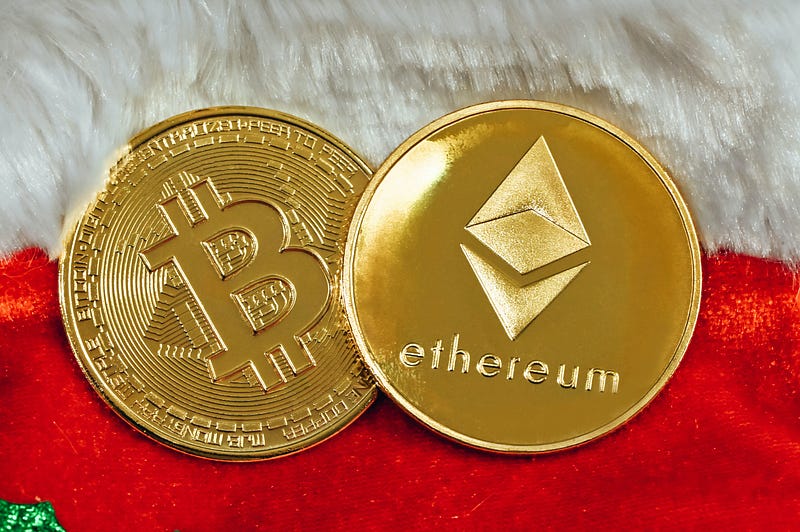
Photo by Traxer on Unsplash


Serving retail clients

It’s a significant milestone for both HashKey and the regulator, given that Hong Kong has been making huge efforts to further the development of digital asset innovation within the Chinese autonomous territory over the course of the past twelve months. Hashkey, alongside brokerage and exchange business OSL (also successful in obtaining a license), has been collaborating with regulators from an early stage in the lead-up to both receiving full licensing.

HashKey got to this point by focusing on two pivotal licenses offered by the SFC. The first of these licenses, known as Type 1, paved the way for HashKey to initiate a virtual asset trading platform, aligning seamlessly with the regulatory framework laid out under Hong Kong’s securities laws. The second license, Type 7, empowers the crypto platform to furnish automated trading services to both institutional and retail clientele.


Nurturing digital asset innovation

Hong Kong has maintained a resolute focus on cultivating a crypto-friendly environment within its borders in 2023. Echoing this sentiment, Financial Secretary Paul Chan asserted the government’s and regulatory bodies’ determination to incubate a robust crypto and fintech ecosystem throughout the year.

By March, over 80 crypto enterprises signaled their intent to establish a presence in Hong Kong, with several major players in the crypto industry among them. In April, the Hong Kong Monetary Authority (HKMA) issued a call to banks, urging them to extend their services to cryptocurrency companies.

Banking remains a difficulty in Hong Kong for crypto businesses despite the HKMA’s efforts. However, in the case of both HashKey and OSL, both are being banked by Hong Kong’s largest virtual bank, ZA Bank.

In May, the HKMA unveiled a comprehensive licensing framework tailored for crypto platforms, imposing a deadline of June 1 for compliance. As August rolled in, a select few crypto platforms clinched the green light to offer crypto trading services to an eclectic client base encompassing both retail and institutional participants.

This regulatory framework, designed to safeguard the interests of investors, is playing a large part in Hong Kong’s recent success in developing the sector. In this particular instance, it will mean that retail traders will be granted access to Bitcoin and Ethereum exclusively. This curtailed selection provides a good starting point for retail trading, and it’s likely that we will see HashKey’s trading offering being extended to cover additional digital assets as soon as local regulators permit it.


More to Read
View All
Policy & Regulation·

Jun 02, 2025

Thailand’s SEC moves to block five exchanges to protect investors

Thailand’s Securities and Exchange Commission (SEC), an independent state agency responsible for the supervision of capital markets including the digital assets sector within the Southeast Asian nation, has moved to block five cryptocurrency exchange platforms. In a statement published by the agency to its website on Thursday, May 29, the SEC outlined that it deems the five exchanges, namely OKX, Bybit, CoinEx, XT.com and 1000X.Live, to be unauthorized crypto trading platforms.Photo by REY MELVIN CARAAN on UnsplashCountering money laundering activityIt is acting against these platforms “to protect investors” and to prevent their use for money laundering purposes. In offering services to Thai users on an unauthorized basis, the exchanges were found to be in breach of Thailand’s Digital Asset Business Act B.E. 2561 (2018). The agency has asked the Ministry of Digital Economy and Society (MDES) to take measures to block local access to these online platforms. That block will be put in place on June 28. On that basis, the SEC has advised Thai users of such platforms to proceed to remove their assets from them before that June 28 deadline.  An updated version of the Royal Decree on Measures to Prevent and Suppress Technology-related Crime, (No. 2) B.E. 2568 (2025), was introduced by the Thai government in April. It facilitated the establishment of the Committee for the Prevention and Suppression of Technological Crime.  Following practices overseasThe committee met with the MDES in April, with the parties setting out the process through which unauthorized digital asset platforms would be restricted and blocked. On that occasion, similar practices carried out in other jurisdictions within the Asian region were referred to.  In December 2023 India’s Financial Intelligence Unit (FIU) moved to block nine offshore crypto exchanges, having issued them with compliance show-cause notices.  In April 2024 the Philippines SEC requested that Google and Apple remove apps associated with global exchange Binance from the local versions of their application stores. Japan’s Financial Services Agency (FSA) similarly ordered both companies to remove apps belonging to unregistered crypto exchanges in February of this year. Back in March, the Thai SEC filed a lawsuit against Aux Cayes FinTech Co. Ltd., an OKX affiliate company. The complaint alleged that OKX had been running an unlicensed exchange in Thailand, and was filed with the Economic Crime Suppression Division of the Thai police force. The SEC outlined on March 21 that a similar criminal complaint had been filed against XT.com. It’s understood that Bybit, CoinEx and 1000X.Live have also been recipients of complaints on the same basis. Earlier this year, the Economic Crime Suppression Division considered taking action against Polymarket, a crypto-based prediction market, on the basis that the platform violated Thailand’s gambling laws, and in doing so, posing a risk to economic and social stability in Thailand. In April 2024, the SEC issued a warning to crypto exchange platforms against the use of misleading advertising, drawing their attention to the fact that advertising of that nature would potentially place those platforms in breach of regulatory guidelines. 

news
Policy & Regulation·

Mar 01, 2024

Hong Kong broadens e-CNY testing with focus on cross-border payments

Having made significant strides in undertaking testing of the digital yuan in recent times, Hong Kong is expanding its e-CNY pilot testing while at the same time crafting its own central bank digital currency (CBDC), dubbed the e-HKD.Photo by Simon Zhu on UnsplashIntegrating e-CNY with FPSDuring a recent budget speech Hong Kong’s Financial Secretary Paul Chan unveiled plans to empower Hong Kong residents to bolster their digital yuan wallets through the local “Faster Payment System” (FPS), marking another move forward in bolstering cross-border payment efficiency.FPS is a real-time payment settlement system which enables the user to complete payments across banks through the use of recipient mobile phone numbers and email addresses. The move dovetails with the Hong Kong Monetary Authority's (HKMA) successful completion of the inaugural phase of its e-HKD pilot, propelling it into the second phase. The e-HKD pilot is focusing on retail applications such as programmable payments, offline transactions and tokenized deposits. At the same time as the e-CNY garners momentum, the HKMA is progressing the e-HKD in terms of unlocking the full potential of CBDCs in everyday financial transactions. This consists of the exploration of retail applications in the initial phase, coupled with the transition towards more intricate functionalities in the subsequent phase, underscoring Hong Kong's intent towards driving ever greater CBDC innovation within the Chinese autonomous territory. Streamlining transactionsThe integration of the e-CNY with Hong Kong's FPS promises to streamline transactions and elevate the fluidity of cross-border payments between Hong Kong and mainland China. This initiative follows on from an announcement back in September of last year to expand the e-CNY pilot program in Hong Kong. Financial Secretary Paul Chan aims to forge a bridge between mainland China and international markets, potentially setting a global precedent for CBDC interoperability and utilization. Furthermore, Hong Kong's issuance of the world's premier multi-currency tokenized bond, followed by a subsequent batch of tokenized green bonds, signifies the city's leadership in fusing digital finance with sustainable investment strategies, drawing significant interest from global institutional investors. mBridge initiativeThe collaborative efforts of the HKMA with the Bank for International Settlements and other central banks on the mBridge CBDC project further demonstrate Hong Kong's proactive stance in shaping the trajectory of international finance. Last month, authorities in China outlined yet another initiative that is designed to bring about cross-border use of the e-CNY with Hong Kong. The mBridge initiative, a multi-CBDC platform to support cross-border payments is being harnessed to bring about greater trade using digital currency across various jurisdictions. The project involves the central banks of China, Hong Kong, the United Arab Emirates (UAE) and Thailand. This concerted endeavor, coupled with Hong Kong’s array of digital currency ventures, positions the city at the forefront of CBDC innovation. All of this development comes as China has established new milestones recently, with the completion of an international oil deal using the digital yuan together with similar deals involving gold and iron ore. 

news
Web3 & Enterprise·

Feb 22, 2024

Marking its 10th anniversary, Coinone’s cumulative trading volume hits $339B

Coinone, one of the leading cryptocurrency exchanges in South Korea, unveiled an infographic on Monday that captures the company’s decade-long history, according to local newspaper Busan Ilbo. Founded on Feb. 20, 2014, the exchange platform commemorates its 10th anniversary this year. As of Feb. 20 of this year, Coinone’s cumulative trading volume stands at KRW 452 trillion ($339.4 billion) with a total of 213 employees. The business significantly grew in size compared to 2015: its aggregate trading volume has increased by 645,000 times, while its user base and workforce have expanded by 944 and 25 times, respectively. Photo by m_____me on UnsplashVision for the future: Prioritizing investor protection and blockchain innovationCoinone is dedicated to continuing its pursuit of investor protection and blockchain innovation over the next 10 years. Since its establishment, Coinone operated its service without experiencing any security-related accidents. The company has proven its security capacity by winning the top prize at “the 22nd Information Protection Award.” The company further solidified its commitment to security by enrolling in “Personal Information Protection Reimbursement Insurance” in 2017 and has been renewing it annually. From the Wild West to the leading crypto exchange The exchange began to offer an Ethereum trading service in 2016 and a virtual asset staking service in 2018, suggesting a new way of investment back in the days when the market centered around trading.  Cha Myeong-hun, CEO of Coinone, said, “The cryptocurrency market was deemed the Wild West a decade ago. It fills me with pride to see how Coinone navigated the market and witnessed all the ups and downs of the crypto industry until it positioned itself as a well-established industry in Korea. In particular, 2024 marks the inaugural year of the Virtual Asset Act’s implementation. We are committed to leading a healthy virtual asset market by focusing more on investor protection and regulatory compliance.” 

news
Loading