Top

BIT Exchange Unveils XRP Options Trading

Web3 & Enterprise·August 18, 2023, 2:16 AM

BIT Exchange, a cryptocurrency derivatives platform, has announced the introduction of XRP options trading in a move that provides for more advanced trading dynamics within the digital assets space.

The development, disclosed via a blog post published to the company’s website on Thursday, offers users the unprecedented opportunity to engage in XRP options trading without the need to possess the actual cryptocurrency.
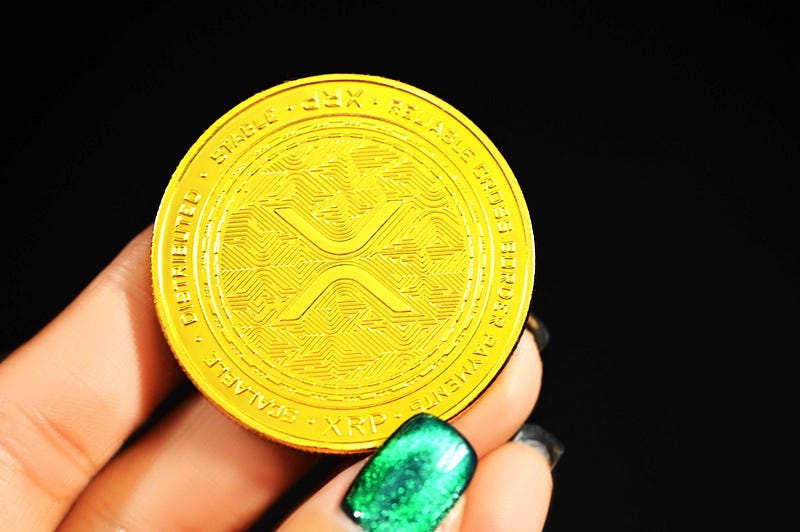
Photo by Kanchanara on Unsplash


US dollar settlement

A distinguishing feature of this initiative is that profit and loss settlements will be conducted in US dollars. To ensure a seamless experience, BIT Exchange has partnered with OrBit Markets to maintain robust order book liquidity. This expansion of offerings complements the exchange’s existing suite, which already includes stalwarts like Bitcoin (BTC), Ether (ETH), Cardano (ADA), Toncoin (TON), and Milady (LADYS).


Facilitating hedging

For the uninitiated, options are derivative contracts that empower the holder with the right to buy or sell the underlying asset at a predetermined price before a specified date. Call options grant the holder the buying privilege, while put options provide the selling prerogative. Typically deployed for hedging purposes, options play a pivotal role in mitigating bullish or bearish risks, and they can also act as a supplementary revenue source when traders “write” options alongside their spot market holdings.

Justin Buitendam, BIT Exchange’s Global Head of Institutional Sales, remarked on the milestone, stating: “We’re excited to be among the early platforms offering XRP options trading to institutional and retail traders, providing both long and short options trading opportunities.”


XRP boost

As of now, XRP boasts a market capitalization of $26.5 billion, positioning it as the world’s fifth-largest cryptocurrency. Notably, XRP, akin to several other alternative cryptocurrencies, exhibits greater volatility compared to the more established Bitcoin and Ether.

The native token of the Ripple global payments network has experienced a market resurgence in recent weeks, following a positive outcome to a lawsuit taken by the Securities and Exchange Commission (SEC) against Ripple Labs in the United States. In the wake of that decision, many cryptocurrency exchanges that had delisted the token immediately reinstated it. BIT Exchange’s strategic move to introduce XRP options aligns with those recent legal developments.

Ripple, as the issuer of the XRP token, garnered a partial victory in its ongoing legal battle against the SEC. The court ruled that XRP is not classified as a security when traded on centralized exchanges. However, a different classification may apply when XRP is directly sold to institutions.

The matter is far from settled, however. More recently, the SEC has sought permission to challenge the court’s verdict, underscoring the dynamic and evolving landscape of cryptocurrency regulations.

BIT Exchange was spun out of Singapore-based crypto financial services platform, Matrixport. Both have been co-founded by Jihan Wu, better known for having founded leading Chinese crypto mining outfit Bitmain.


More to Read
View All
Policy & Regulation·

Nov 19, 2025

Hong Kong advances tokenization as institutions continue building amid market pullback

Hong Kong last week entered the pilot phase of Project Ensemble, an initiative focused on developing infrastructure for a tokenized market and creating a sandbox where institutions can test blockchain systems in real business environments. Set to run through 2026, the pilot involves the Hong Kong Monetary Authority (HKMA), several banks, and other industry participants. Its early work will examine how tokenized deposits can be used in money market fund transactions and how these tools might support real-time liquidity and treasury management. Interoperability key to tokenizationCommenting on the development, Hong Kong Securities and Futures Commission (SFC) CEO Julia Leung said, “To scale tokenisation of investment products, interoperability is key.” She added that the measure announced on Nov. 13 by the HKMA “will gradually allow interbank settlement of tokenised deposits in real time 24/7.”Photo by Ibrahim Rifath on UnsplashFollowing the HKMA’s announcement, Ant International, the global arm of Ant Group, revealed that it is joining Project Ensemble’s Architecture Community. As part of this digital finance effort, Ant International will help design and advance the tokenization ecosystem in the special administrative region, contribute to defining industry standards, and support broader industry adoption. Corporate initiatives in digital financeSeparately, Ant International also signed a memorandum of understanding with Swiss bank UBS to explore new opportunities in tokenized deposits, leveraging Ant’s blockchain platform Whale. Under this partnership, UBS Digital Cash, a blockchain-based payment solution developed by UBS, will be used to support Ant International’s global treasury operations. Young Jin Yee, Co-Head UBS Global Wealth Management Asia Pacific and Country Head UBS Singapore, said the collaboration with Ant aims to achieve “a real-time, multi-currency payment solution that sets standards for transparency and efficiency.” Hong Kong has been seeing a noticeable pickup in crypto-related activity more broadly. According to a post on X by Unfolded, AMINA, a Swiss-regulated institution, is now the first international banking group to roll out full crypto trading and custody services in Hong Kong. Adding to this momentum, companies are stepping up their Bitcoin accumulation. In its third-quarter results announcement, Boyaa International, a Hong Kong–listed firm specializing in online card and board games, reported a quarter-over-quarter increase of 738 Bitcoin. As of Sept. 30, its total holdings stood at 4,091 Bitcoin at an average cost of about $68,114 per coin. Adoption trends and market contractionThis push into the crypto sector aligns with broader digital asset adoption across Asia. A recent survey by CoinDesk and Protocol Theory of 4,020 individuals aged 18 to 64 in 10 Asian countries found potential crypto ownership of around 25% among respondents with internet access. The survey also noted that roughly half of adults familiar with crypto plan to use it within the next year or so. Despite the uptick in activity and interest, the market itself is currently in a downturn, with Bitcoin falling below the $90,000 mark on Nov. 18 for the first time since April 22. Analyzing the move, CoinDesk’s Omkar Godbole said Bitcoin looks oversold, as the 14-day relative strength index (RSI) has slipped under 30, indicating the drop may be steep enough to trigger a pause or a possible rebound. Godbole drew a parallel with price action earlier in the year, noting that February was the last time the RSI fell below 30, when Bitcoin was trading under $80,000. After that decline, the market bottomed out at around $75,000 in April, a pattern that traders may be watching closely as they assess the current pullback. At the time of publication, Bitcoin was trading around $90,400 against USDT on Binance. 

news
Policy & Regulation·

Oct 23, 2023

Bithumb Live Files for Bankruptcy

Bithumb Live Files for BankruptcySouth Korean cryptocurrency exchange Bithumb’s live commerce platform Bithumb Live — an attempt at business diversification — has filed for bankruptcy. The platform entered bankruptcy proceedings last year, brought on by business difficulties and various suspicions of embezzlement involving its CEO.Photo by Melinda Gimpel on UnsplashAccording to legal sources on Monday, the Seoul Bankruptcy Court declared Bithumb Live’s bankruptcy last Monday. The court plans to hold creditor meetings and inspections on November 28 to incorporate creditors’ opinions into the bankruptcy proceedings and assess the status of the company. Major companies like LG Uplus, SK Telecom, SK Magic, and Lotte Card are among the platform’s creditors.Bithumb Live’s backgroundBithumb Live was founded in September 2021 by Bithumb and Bucket Studio, who each invested KRW 6 billion (approximately $4.4 million). Bucket Studio is a content distribution company that gained considerable attention with the global success of the Netflix original series “Squid Game” last year because it holds a 15% stake in Artist Company, an entertainment planning agency co-founded by “Squid Game” lead actor Lee Jung-jae and actor Jung Woo-sung. In particular, Bucket Studio’s CEO Kang Ji-yeon is the sister of Kang Jong-hyun, who is embroiled in allegations related to the ownership of Bithumb.Bithumb and Bucket Studio each hold a 37.5% share of Bithumb Live, making a combined ownership of over 75%. Bithumb Live, led by Kang Ji-yeon, had been established with the intent to create a commerce platform with various features like a metaverse, non-fungible tokens (NFTs), and cryptocurrency payments. After its establishment, it announced that it would challenge its key competitor Naver’s prominent live shopping platform by preparing to sign deals with 15 different companies.Financial hardshipsHowever, the platform hit a roadblock just one year after its establishment and found itself unable to escape financial difficulties. According to last year’s business report, Bithumb Live’s liabilities exceeded its assets by approximately KRW 248 million and the platform recorded a net loss of KRW 10.2 billion. Unable to withstand such losses, it announced an indefinite temporary closure via its internal messenger to employees in October of last year. The employees ended up working only four hours a day, resulting in a more than 50% reduction in working hours. Subsequently, the number of employees, which was 73 in September, plummeted to just four in January of this year, essentially signaling a total stop to business operations. In the first half of this year, Bithumb Live’s net loss amounted to almost KRW 1.1 billion.Management entanglementsOn top of these financial strains, the company was also plagued by Kang Ji-yeon and her brother Kang Jong-hyun’s owner’s risk, which encompassed allegations of embezzlement and misappropriation. In July of this year, Kang Ji-yeon was sent to trial on charges of embezzlement and misappropriation at Bucket Studio. Along with her brother and former Chorokbaem (CRB) Group Chairman Won Young-sik, she was accused of granting call options on convertible bonds held by Bithumb affiliates Vidente and Bucket Studio for free to companies controlled by Won’s children between December 2021 and July 2022, inciting damages worth approximately KRW 58.7 billion to the respective companies. In the process, she was also found to have received KRW 32.2 billion in acquisition payments. Kang Jong-hyun had been detained and on trial since February of this year.Bithumb Live’s largest shareholder, Bucket Studio, is also in a tight spot. Back in June, the Korea Exchange imposed a penalty of three points on Bucket Studio for reversing its disclosure. The company had been penalized five points the previous month after withdrawing its decision to issue convertible bonds. In particular, the studio also recorded an operating loss of KRW 7 billion and a net loss of KRW 195.6 billion last year based on consolidated financial statements. In the first half of this year alone, it suffered an operating loss of KRW 896 million, raising red flags for its management.

news
Web3 & Enterprise·

Sep 02, 2023

OKX Entering Indian Market With a Focus on Web3

OKX Entering Indian Market With a Focus on Web3Cryptocurrency exchange OKX is gearing up to make its presence felt in the Indian market.Local recruitmentThat’s according to a discussion between a company executive and CoinDesk, as explained by the publication in a report published on Friday. The firm plans on recruiting local employees in its endeavor to conquer the market within the world’s most populous nation.OKX intends to rely on local employees who will spearhead its initiatives in the country. Haider Rafique, Chief Marketing Officer at OKX explained:“We’re trying to identify who’s who in the zoo and what is their contribution. There’s a large developer community. How do we help them? Build a relationship with them.”He believes that adopting a community-centric approach will pave the way for a successful entry into the local market. Rafique emphasized:“We’re going to learn about the community. We’re going to work with local folks — figure out where we can add value.”Photo by Naveed Ahmed on UnsplashFocusing on Web3 applicationsThe company also intends to take on the challenge by placing emphasis on the use of Web3 applications. Rafique revealed the company’s ambitious plans to scale up its wallet services “exponentially” by engaging with India’s developer community. Currently, there are approximately 200,000 OKX Wallet users in India, accounting for just 5% of the country’s Web3 user base.In a recent collaboration, OKX partnered with the blockchain platform Neo for an APAC Hackathon held in Bengaluru, a city in southern India. Rafique described this move as a strategic test to validate assumptions, understand the local culture, and support the burgeoning Web3 ecosystem.The global exchange already has a physical presence in world centers such as Hong Kong, Singapore, Dubai, and the Bahamas.Indian crypto environmentTrading cryptocurrencies is currently legal in India, albeit with no established regulatory framework by a central authority. Ironically India has been very active in working towards the establishment of global regulatory standards relative to crypto while coming in for criticism from its Supreme Court recently for the government’s failure to provide regulatory clarity at home.Cryptocurrencies are used and traded at the investor’s risk in India and do not hold legal tender status for banking purposes. Additionally, a 30% tax is imposed on cryptocurrency transactions in the country.Rafique believes that Indian regulators are gradually distinguishing Web3 from centralized finance (CeFi). He remarked: “They’re more concerned about venues that have fiat on-ramps, which we do but don’t offer it in India.” He expressed a readiness for the company to become a front-runner once India establishes a regulatory framework for cryptocurrencies.It’s interesting to note that while OKX embarks on expanding its footprint within the Indian market, Indian crypto market incumbents have been looking to downsize. Indian cryptocurrency exchanges like CoinSwitch and CoinDCX have faced layoffs amid the current market downturn.Notwithstanding current market conditions, it’s likely that OKX is taking a long-term view and positioning itself for future success in what should be a very important crypto asset marketplace in the future.Ryan Selkis, CEO and Founder of crypto market intelligence firm Messari expressed this view, stating: “I love to see companies like OKX expanding in India. The largest democracy in the world should be a haven for crypto innovation in the years to come.”

news
Loading