Top

Binance Initiates Registration Process for AML Compliance in Taiwan

Policy & Regulation·August 11, 2023, 11:34 PM

Global crypto exchange Binance has set in motion the process of registering under Taiwan’s Money Laundering Control Act, the sole crypto-related regulatory framework currently established in Taiwan.

In a confidential gathering on Tuesday, Taiwan’s Financial Supervisory Commission (FSC) conveyed to numerous domestic crypto service providers that Binance is in the process of applying for registration to ensure compliance with anti-money laundering (AML) regulations, according to a local media report.

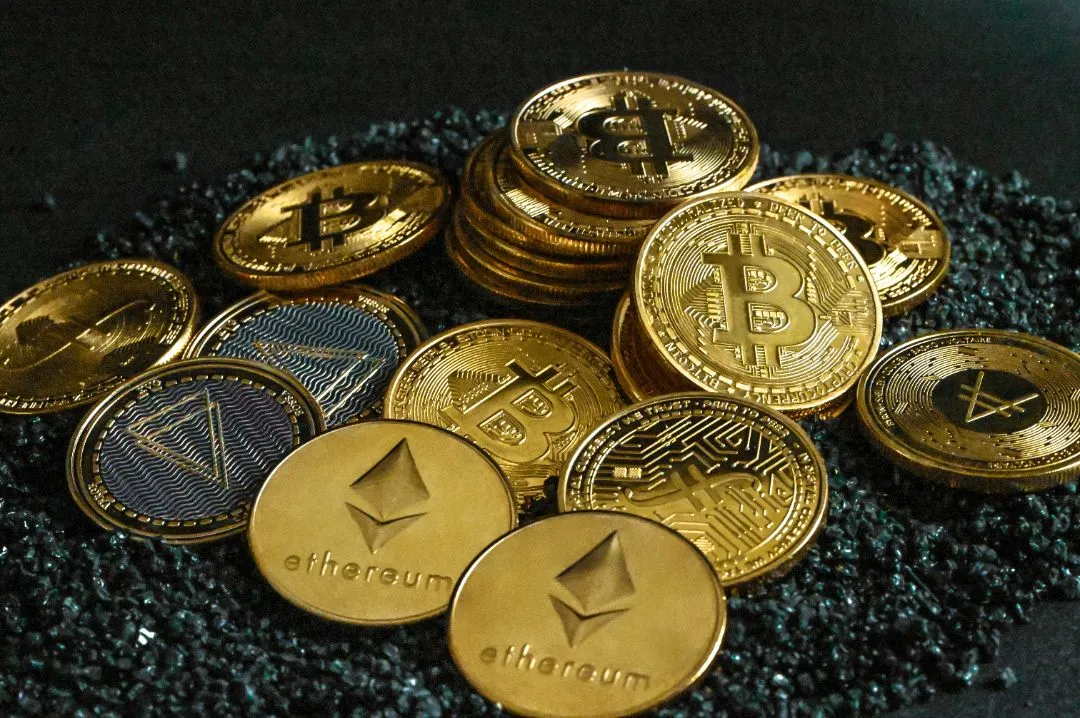
Photo by Thomas Tucker on Unsplash


Importance of AML compliance

Taiwan has mandated that virtual asset service providers (VASPs) adhere to its anti-money laundering statutes since the FSC introduced AML rules in July 2021. Outside of these measures, the cryptocurrency industry in the country remains largely unregulated.

Speaking to The Block on Friday, an FSC official refrained from confirming whether Binance had already submitted the necessary documentation to register with the regulatory body. However, the official did emphasize the importance of offshore crypto platforms operating in Taiwan abiding by the local AML regulations.

While Binance is not yet regulated in Taiwan, it has established a local entity named “Binance International Limited Taiwan Branch (Seychelles),” as per records from the Department of Commerce’s database. The registration particulars indicate that the Taiwanese government endorsed Binance’s company registration on May 12, 2023, with a registered capital of NT$30 million ($944,000) within Taiwan.


Cooperation with law enforcement

Binance has taken steps to cooperate with local law enforcement agencies to combat cybercrime in Taiwan. In June, the exchange revealed its collaboration with Taiwan’s Criminal Investigation Bureau, leveraging its expertise to assist over 200 Taiwanese law enforcement officers in addressing digital asset-related criminal activities.

Damien Ho, Head of Global Partnerships at Binance, remarked in a blog post at the time:

“As an increasing number of individuals in Taiwan show interest in cryptocurrency, ensuring a secure and comfortable crypto ecosystem for users becomes crucial.”


Growing Asian influence

Binance’s influence is growing across Asia. This month, it officially launched operations in Japan after its acquisition of the local exchange Sakura Exchange BitCoin in November 2022, paving the way for regulatory oversight by the Japan Financial Services Agency (JFSA). Earlier this month, an investigative report carried out by the Wall Street Journal revealed that Binance is thriving in China in spite of the fact that crypto trading is a banned activity there.


Regulatory guidelines anticipated

Taiwan’s FSC, which assumed the role of the primary regulator overseeing the crypto industry in March, is currently formulating comprehensive guidelines for trading and payments involving cryptocurrencies for VASPs.

The FSC has disclosed plans to release the VASP guidelines by the end of September. Kevin Cheng, a Director at the Taiwan Fintech Association, revealed that the FSC intends to implement a stringent regulatory approach for crypto platforms in Taiwan, similar to its oversight of traditional financial institutions.

Cheng noted: “The FSC plans to require VASPs to keep their own crypto assets separate from the clients’ crypto assets and to have accounting firms audit such assets every year.” However, Cheng highlighted the potential difficulty of this requirement, as many accounting firms might hesitate to serve crypto clients due to the specialized nature of crypto-related information.

More to Read
View All
Policy & Regulation·

Nov 15, 2023

Libeara gears up to offer tokenized Singapore dollar government bonds

Libeara gears up to offer tokenized Singapore dollar government bondsStandard Chartered’s fintech investment subsidiary SC Ventures has unveiled Libeara, a platform set to cause a stir with the introduction of the first-ever tokenized Singapore-dollar government bond fund.Once launched, the offering would provide for a significant departure from traditional bond funds, offering a sleek and digital twist to the stable investment option. There’s no fixed date for the product offering as yet, as it will need to be approved by the local regulator, the Monetary Authority of Singapore (MAS).Photo by Zhu Hongzhi on UnsplashGreater accessibility and liquidityLibeara’s emergence signifies yet another instance of the convergence of traditional financial instruments in combination with blockchain technology. Through the tokenization of government bonds, Libeara not only aligns with the evolving preferences of modern investors but also promises greater accessibility and liquidity in the bond market.Within Libeara’s distributed ledger-based innovation, each token mirrors a unit of the bond fund, embodying its value and ownership rights. This approach streamlines the investor experience, ensuring a seamless process from onboarding to subscription and redemption of tokenized units. Libeara’s model addresses historical inefficiencies, enhancing the efficiency, transparency and security of bond trading that has long been plagued by cumbersome processes and intermediaries.Aaron Gwak, Founder and CEO of Libeara, provided further details on the new startup’s market offering:“This will be the first time a Singapore-dollar government bond fund will be offered in token format. At Libeara, we care deeply about not only creating a token representing an asset but also about how close the token is to the actual asset. Ensuring that FundBridge’s investors can buy native tokens, where each token represents a unit of the fund, is central to the infrastructure of the tokenisation solution that we have created for FundBridge.”Catering to accredited investorsLibeara’s product proposition caters to accredited investors and is positioned as a collaborative effort with industry leaders. The new start-up is emerging in Singapore, wholly owned by SC Ventures while partnering with FundBridge Capital, both headquartered in the city-state.The firm has partnered with enterprise-grade platform Fireblocks for digital asset infrastructure. There’s further Singaporean involvement by way of partnerships with local entities such as digital assets services group Fazz and digital asset payments infrastructure firm StraitsX for crypto-to-fiat conversions. Chainalysis has been contracted for its on-chain AML capabilities, Hong Kong’s Chekk for KYC solutions and local firm Letsbloom for cloud deployments and compliance.Sue Lynn Lim, CEO and COO of FundBridge Capital, emphasized the transformative potential of the venture, stating:“By partnering with Libeara, we are ensuring that we can provide additional investment opportunities enabled by lower operating costs, higher transparency and higher operational efficiency.”The move not only involves creating a digital representation of an asset but reimagining the asset itself in a digital format for increased accessibility, ease of trade and potential profitability.

news
Policy & Regulation·

Feb 22, 2024

Efforts continue in Japan to bring about optimized regulation

Japan’s Financial Services Agency (FSA) has moved recently to address concerns related to peer-to-peer (P2P) transactions while in a separate development, the country’s GameFi community is calling for regulatory change to enable greater liquidity. The two distinct developments both relate to getting the balance right in terms of crypto regulation from the perspectives of regulators and lawmakers and crypto sector entrepreneurs and participants.Photo by Manuel Cosentino on UnsplashAddressing concernsIt emerged last week that the FSA had proposed a number of measures to safeguard users against “unlawful transactions,” causing alarm that any such moves would inhibit the P2P transactions market. Responding to a query from Cointelegraph, the FSA elaborated that its recommendation does not encompass "transactions from one individual to another." Instead, it aims to bolster measures against illicit money transfers, particularly instances where an individual deposits cash from their bank account into an account belonging to a crypto asset exchange service provider. The regulator clarified that under the new recommendations, banks would intercept suspicious transactions where the sender seeks to alter their name for the purpose of depositing funds into the crypto platform. The FSA outlined that this situation arises where a fraudster convinces an innocent exchange user to effect the name change, so that exchange rules can be circumvented and the fraudster can receive funds from the scam victim. According to the FSA, numerous financial institutions have already implemented these measures, although the agency has not received any reports of specific cases raising concerns regarding crypto asset markets. Notably, the FSA emphasizes that its recommendations are not universally mandated for all financial institutions, with banks expected to devise and implement measures tailored to their specific circumstances. Solving crypto market liquidity issuesWith that clarification, it appears that the measures won’t have the negative impact on P2P crypto markets as many market participants originally feared. Meanwhile, in a distinct development, Japan's blockchain gaming community has approached the Liberal Democratic Party (LDP) to seek assistance in bolstering liquidity within Japan's crypto asset market. Taking to the X social media platform on Wednesday, Ryo Matsubara, director of Oasys, a GameFi blockchain, outlined that he had visited the LDP's digital society promotion headquarters on behalf of Japanese blockchain gaming projects to raise concerns about stringent regulations impeding liquidity in Japan, which directly impedes the growth of the GameFi ecosystem. Matsubara advocates for regulations that incentivize safe cryptocurrency investment, positing that increased liquidity, marked by a surge in buyers and sellers, could result from such measures. Oasys intends to continue collaborating with the government to enhance Japan's global competitiveness in the Web3 market, with Matsubara expressing confidence in Japan's potential to reclaim its illustrious gaming legacy on Web3. While Japan initially harbored skepticism toward crypto adoption, its stance has softened in recent times. Matsubara acknowledged the positive impact of a recent crypto-related tax reform which was enacted in December. In September 2023, the Japanese government commenced planning to permit startups to raise public funds through crypto asset issuance. That bill was approved last week and now goes forward to the Japanese parliament for further deliberation. These recent developments demonstrate that Japan is navigating regulatory complexities as it seeks to balance innovation with consumer protection in the burgeoning crypto space.

news
Web3 & Enterprise·

Mar 08, 2024

Silicon Valley blockchain firm Gluwa becomes partner in Nigeria’s CBDC project

Gluwa, a San Francisco-based blockchain firm, has become a key partner in Nigeria’s central bank digital currency (CBDC) project, the eNaira, Korean media outlet Seoul Economic Daily reported.   Tapping into Nigeria’s 226M populationGluwa, the issuer of Creditcoin (CTC), announced yesterday that its Nigerian branch Gluwa Nigeria signed a memorandum of understanding (MOU) with the Central Bank of Nigeria (CBN). Through the MOU, Gluwa Nigeria aims to facilitate the adoption of digital currency in Africa’s largest economy with a 226 million population, by connecting eNaira to Credal, the native API for Gluwa’s Creditcoin network. This integration is expected to enhance Nigeria’s financial ecosystem by recording loan and payment transactions on the Creditcoin network.Photo by Emmanuel Ikwuegbu on UnsplashMaking the financial system more inclusive and efficient The partnership is anticipated to boost financial inclusiveness among many Nigerians who are financially isolated due to their lack of access to traditional financial services. Moreover, the CBN expects that the adoption will improve the eNaira’s functionality and spur innovation in the country’s financial system. Among other objectives of the project is to create an efficient financial infrastructure in the country so that Western fintech firms can easily enter the Nigerian financial market.   Oh Tae-lim, CEO of Gluwa, said the company plans to lay out the project’s blueprint by the end of this year and eventually broaden the acceptance of the eNaira, taking the potential of the digital currency to a new level.  Meanwhile, Gluwa’s native token, CTC, is a real-world asset (RWA) network with a loan transaction volume of KRW 106.8 billion ($80 million) and a user base of 337,000.  

news
Loading