Top

NS Studio and Factor Labs to Enhance Military Security with Blockchain Technology

Web3 & Enterprise·August 11, 2023, 2:28 AM

Korean game developer NS Studio announced on Thursday its collaborative research effort with blockchain-based security solutions company Factor Labs to boost the security system of its specialized virtual reality simulator used in military training centers and multinational security firms.
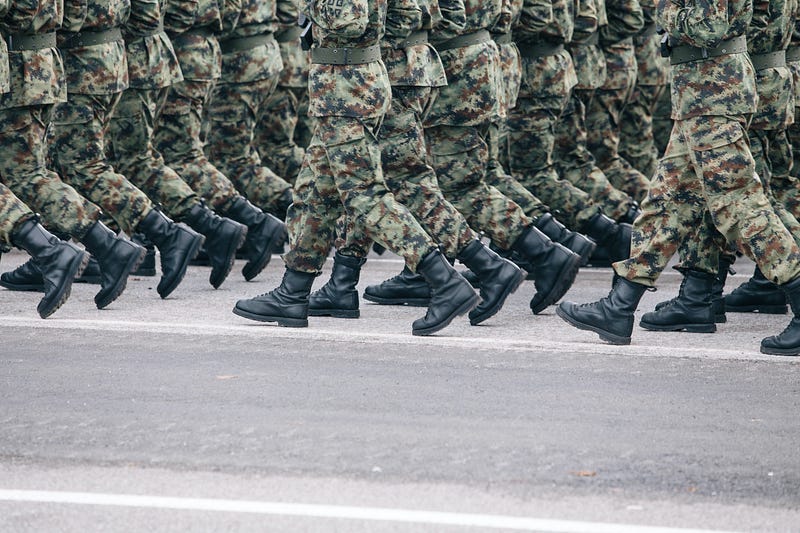
Photo by Filip Andrejevic on Unsplash


Protecting special combat forces

The two companies signed a memorandum of understanding (MOU) to develop a blockchain-based security system to be integrated into military training equipment that aims to safeguard the identity and behavioral data of special combat forces. Factor Labs’ security technology and blockchain expertise will be integrated into NS Studio’s military training programs, facilitating safer training sessions.

“Given the fact that special combat forces are important assets whose identities are considered national secrets, we want to amp up the security of the simulation programs that keep a record of their identities and behavioral patterns using blockchain technology,” the two companies said in a joint statement.

“We have begun developing the necessary technology for this project and are preparing to implement the security program starting in the latter half of this year.”


Blockchain’s role in military security

This collaboration underscores the increasing role of cutting-edge technologies like blockchain in ensuring the security and privacy of sensitive data not just in the financial context but also in military and security contexts. The combined efforts of NS Studio and Factor Labs are poised to contribute to the advancement of secure training simulations for special operations personnel.


More to Read
View All
Policy & Regulation·

May 29, 2024

Korean regulators pressured to approve crypto ETFs following ETH ETF approval in the U.S.

The recent 19b-4 approval of spot Ethereum exchange-traded funds (ETFs) by the U.S. Securities and Exchange Commission (SEC) is putting pressure on South Korean financial regulators to revisit their policies on digital assets. The SEC's decision to allow ETFs for Ethereum, the world's second-largest cryptocurrency, on May 24, 2024, follows its earlier endorsement of Bitcoin ETFs in January 2024. This move is seen as a significant step in merging traditional finance with the digital asset sector.Photo by DrawKit Illustrations on UnsplashKorean regulatory cautionIn contrast to the progressive stance in the U.S., the Korean Financial Services Commission (FSC) and the Financial Supervisory Service (FSS) have maintained a cautious approach regarding the integration of crypto assets into traditional securities markets. According to current regulations under the Capital Markets Act, ETFs in Korea are limited to traditional underlying assets such as financial instruments, securities, international currencies and commodities. These foundations are crucial for the creation of financial derivatives, leaving little room for digital assets under current laws. Calls for regulatory reforms and market implicationsThe decision by the SEC is expected to influence the Korean regulators to update their views on digital assets, according to local media and industry experts. Jung Eui-jung, the head of the Korean Stockholders’ Alliance, has advocated for Korea to emulate the U.S. by approving Bitcoin and Ethereum ETFs. He expressed concerns that continued regulatory hesitance could lead to investor funds migrating to more progressive markets like the U.S., potentially positioning the U.S. to broaden its crypto market further. Xangle, a digital currency data provider in Seoul, has also criticized the current regulations as outdated, emphasizing the need for revisions to accommodate the increasing relevance of digital assets in global finance. 

news
Markets·

Jan 02, 2024

Mixed opinions on crypto as investment instruments revealed in Korean surveys

When Samsung Securities surveyed its high-net-worth clients about which investment assets they believed would be most effective for wealth growth in the future, only a small fraction, 1.9%, pointed to virtual assets, as reported by South Korean news outlet Newsis. The majority favored domestic and foreign stocks, which garnered a significant 45.4% of the vote. Following this, domestic and foreign bonds were chosen by 18.1% of respondents, and real assets like real estate and gold were also considered favorable, with 16.8% backing these options.Photo by Lukas on PexelsInvestment preferences of high-net-worth clientsThe survey conducted by Samsung Securities involved a select group of 368 participants, each with assets totaling KRW 3 billion ($2.3 million) or more. It focused on their perspectives regarding this year’s stock market trends and their individual investment strategies. This specific demographic provided insights into the investment preferences and outlooks of high-net-worth individuals. In the survey, when these individuals were queried about the methods they’ve used to accumulate their wealth, the most prevalent answer was investment in financial instruments such as stocks and funds, with 35.9% indicating this as their primary method. Business income was the second most common source of wealth, cited by 29.9% of participants. Wage income was also a significant contributor, mentioned by 19.6%. Additionally, gifts and inheritance played a role, accounting for 7.1% of wealth growth. Meanwhile, real estate investments were the least common, with only 6.5% of the respondents identifying it as a key wealth growth strategy. Regarding the optimal timing for stock purchases this year, a notable portion of the investors expressed a preference for the beginning of the year, with many pinpointing the first quarter as the ideal time, as indicated by 51.6% of respondents. This preference was followed by the second quarter, favored by 27.7%, the third quarter at 13.6% and the fourth quarter being least favored with only 7.1%. In terms of promising industries for investment, over half of the respondents, 50.6%, identified artificial intelligence (AI) and semiconductors as the most prospective sectors. These technologies are viewed as pivotal in shaping the future of the tech industry. Following AI and semiconductors, rechargeable batteries, which were the top-performing segment in the previous year, garnered notable interest, with 16.7% of respondents favoring them. The survey identified key figures likely to impact the stock market this year: former U.S. President Trump (30.4%), U.S. Federal Reserve Chair Powell (15.8%), U.S. President Biden (7.1%) and Saudi Prime Minister Mohammed bin Salman (3.3%). Business leaders like Tesla’s Elon Musk (6.0%), OpenAI’s Sam Altman (5.4%) and Novo Nordisk’s Lars Fruergaard Jorgensen (2.4%) were also mentioned for their influence. When asked about the most important issue of the financial market for the new year, 51.1% pointed to “interest rate cuts in major economies” as their top concern. Following this, 15.2% highlighted the outcome of the U.S. presidential election as a significant issue. Additionally, the advancement of new industries such as AI and robotics was flagged as an important topic by 10.3% of those surveyed. Stock market experts’ crypto optimismIn contrast, a 2024 stock market outlook survey by local media outlet Money Today, which polled 225 stock market experts, showed a more optimistic stance towards investing in cryptocurrencies this year. When questioned about their willingness to invest in crypto assets like bitcoin, 20% responded very affirmatively, and an additional 34.2% expressed a similar interest, totaling over half of the respondents showing readiness to invest in cryptocurrencies. Meanwhile, 18.7% were unsure, and 27.1% had negative views, including 16.4% saying “no” and 10.7% opting for “strongly no”. In the newspaper survey, when specifically asked about bitcoin’s future value, 24.9%, the largest group of respondents for this question, predicted that bitcoin’s price would reach or exceed KRW 70 million, the highest estimate provided in the survey’s options. Meanwhile, 17.8% of the experts estimated that the price would range between KRW 60 million and 70 million. 

news
Policy & Regulation·

Oct 30, 2023

KISA Seeks Partners for Regional Blockchain Innovation Support Center Project

KISA Seeks Partners for Regional Blockchain Innovation Support Center ProjectThe Korea Internet & Security Agency (KISA) announced on Monday (local time) that it is working with the Ministry of Science and ICT to recruit metropolitan local governments to participate in the 2024 Regional Blockchain Technological Innovation Support Center Establishment Project, which seeks to aid the balanced development of the nation’s blockchain industry and the exploration of technology and services.Photo by Shubham Dhage on UnsplashWith the establishment of the support center, KISA plans to seek out blockchain services linked to regional industries and provide support for the development of blockchain technology and services to foster local businesses.Funding opportunities and application processThe metropolitan local governments selected for this project will be able to leverage KRW 1.8 billion (approximately $1.3 million) in government funding as well as regional expenses to pursue activities such as verifying related services and supporting blockchain and service development through incubation, workforce training, investment endorsement and legal consultations.Applications are open to 14 metropolitan local governments nationwide, excluding those in the country’s largest cities, Seoul, Busan and Daegu. Each applicant is required to form a consortium with one local information technology and communication (ICT) organization that the government invested in or funded and submit their applications through the KISA website by December 5 at 4 p.m. KST.Envisioning the future of Korea’s blockchain industryKISA President Lee Won-tae expressed his hopes that the support centers would become central hubs for blockchain technology within regions nationwide, ultimately contributing to regional economic prosperity. “KISA will continue our efforts to promote balanced regional development and nurture the blockchain industry ecosystem,” he said.

news
Loading