Top

Newly Published CoinGecko Index Tracks Alleged Crypto Securities

Web3 & Enterprise·August 08, 2023, 3:08 AM

Kuala Lumpur-based crypto data aggregator CoinGecko has unveiled a ground-breaking index spotlighting prominent cryptocurrency tokens that the US Securities and Exchange Commission (SEC) has earmarked as potential securities.

Through its “Top Alleged Securities Coins by Market Cap” page, the Malaysian aggregator categorizes a spectrum of cryptocurrency assets based on their market capitalization. At the forefront of this classification stands BNB, the native token of the Binance exchange and the BNB blockchain. It is closely followed by other prominent names such as Cardano, Solana, and Tron.
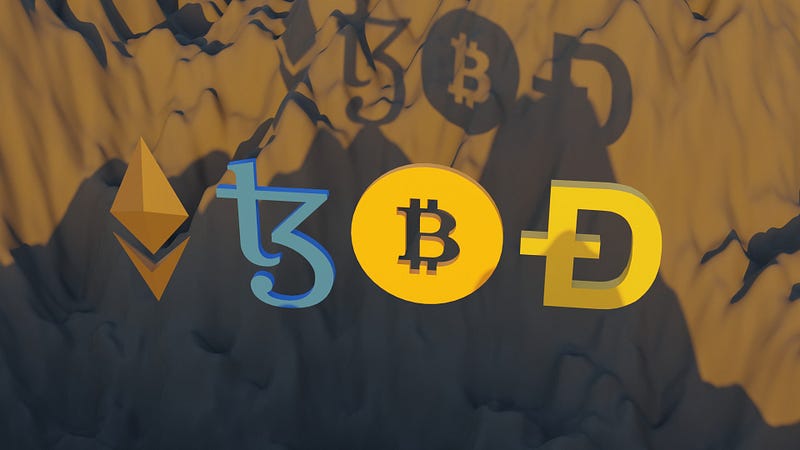
Photo by Shubham Dhage on Unsplash


$90 billion in value

The alleged securities amount to a whopping $90 billion in value according to their combined market capitalization right now. Putting this in context, the overall market capitalization of the entire crypto market currently stands at $1.2 trillion, of which Bitcoin accounts for over half a trillion dollars. This estimation paints a vivid picture of the immense scale of the cryptocurrency market and the potential reverberations of regulatory interventions.

CoinGecko’s index came to fruition in the first week of August, meticulously pooling the tokens that the SEC has previously classified as securities during legal proceedings. The decision to consolidate these tokens into a single index underscores the increasingly intricate interplay between the cryptocurrency market and regulatory frameworks.


Lack of clarity

When project teams and other market participants have asked for explicit clarity, SEC Chair Gary Gensler has frustratingly indicated that people need to make a simple determination based on the Howey Test — a historic securities case that has been used in the US to determine what constitutes a security. The case dates back to 1946, long before the onset of digitization let alone digital currencies.

Another issue is that the SEC is simply expressing an opinion based on its interpretation of existing securities law and securities case law. Without legislation in the US, clarity can only be provided in the courts. This is a flawed approach, as market participants have to wait for actions taken by the SEC against crypto entities to be adjudicated in the US courts in order to get a better understanding of the legal standing of these assets.

This comprehensive analysis provided by CoinGecko’s new index presents invaluable insights into the dynamic terrain of cryptocurrency regulation. It underscores the intricate dynamics between the digital currency market and the regulatory bodies that seek to govern it.

Taking the regulation of derivatives as a case in point, their emergence led to a very messy process of arriving at regulatory clarity. The very same thing is playing out with digital assets. While it is imperfect, there is no doubt that clarity will eventually be reached.

In the meantime, as the US fumbles where digital assets are concerned, regional authorities in East Asia and the Middle East are capitalizing on US regulatory shortcomings, implying that we will likely see further growth in crypto and Web3 in these locations until the US recovers.

More to Read
View All
Policy & Regulation·

Oct 31, 2025

Bybit halts new user onboarding in Japan as regulators advance crypto rules

Dubai-based crypto exchange Bybit said it will temporarily pause the onboarding of new users in Japan as it adjusts to regulatory changes under the country’s Financial Services Agency (FSA). In a statement released on Oct. 30, the company explained that the suspension is part of its effort to reassess compliance obligations and align with upcoming local standards. Starting Oct. 31 at 12:00 p.m. UTC, Bybit will no longer accept new account registrations from Japanese nationals or residents. The company added that the change will not affect existing customers, whose services will remain uninterrupted for now. The decision landed amid a shifting domestic policy backdrop. Policymakers at the FSA have been weighing the treatment of crypto assets under the Financial Instruments and Exchange Act, viewing digital tokens through the lens of investment products. Officials have pointed to sharp price volatility and cyber-theft risks as reasons to strengthen safeguards for depositors and insured individuals.Photo by Cosmin Georgian on UnsplashBanks and insurers face ban on crypto salesAccording to an Asahi Shimbun report cited by Yonhap News, the FSA is set to prepare a draft framework that would bar banks and insurance companies from selling crypto directly, while permitting sales through brokerage firms. The draft was said to be slated for submission to the regular Diet session next year. In order to preserve a level competitive field, the authority plans to allow securities arms of banks and insurers to distribute tokens, given that online brokerages already offer crypto exposure. The same report suggested that banks and insurers could be allowed to hold and manage crypto assets once adequate risk management systems were in place. Market developments have continued alongside the policy work. Reuters reported that a yen-pegged stablecoin called JPYC launched on Oct. 27, issued by a company of the same name and backed by domestic savings and Japanese government bonds. An earlier Nikkei article had signaled that regulatory approval was expected, leaving timing as the main open question until the debut. Economic stimulus at odds with rate hike talkBroader macroeconomic policy has also been in focus for crypto investors. Some analysts have argued that an economic stimulus package announced by Japan’s newly elected Prime Minister Sanae Takaichi could channel fresh capital into markets and, by extension, provide a tailwind for Bitcoin. On social media platform X, BitMEX co-founder Arthur Hayes suggested that additional government support for households and businesses might propel the largest cryptocurrency toward the $1 million mark. Monetary policy remains a counterweight. The Bank of Japan kept its benchmark rate at 0.5% on Oct. 30, which led to a weaker yen and boosted demand for government bonds. According to Reuters, Governor Kazuo Ueda indicated that wage trends would guide the next step, leaving open the possibility of a rate increase as early as December. Higher interest rates typically raise borrowing costs and can damp risk appetite, dynamics that often weigh on speculative assets such as cryptocurrencies. Investors are watching how Japan’s evolving rulebook, fiscal support, and cautious monetary tightening intersect—and how that mix ultimately shapes crypto participation and pricing in one of Asia’s most closely observed markets. 

news
Web3 & Enterprise·

Jun 21, 2023

Academia, Industry Collaborate on Crypto Accounting Research in Korea

Academia, Industry Collaborate on Crypto Accounting Research in KoreaThe Korean Accounting Association (KAA) and Samil PwC, the South Korean member firm of global accounting company PwC, have joined forces to conduct collaborative research on accounting for cryptocurrency assets, according to a report by local news outlet Maeil Business Newspaper.Photo by Pixabay on PexelsCollaborative effortsUnder this newly formed partnership, the KAA’s crypto asset committee will work closely with Samil PwC to explore a wide range of crypto assets, facilitate the development of financial statements pertaining to these assets for businesses, and implement accounting policies that align with the characteristics of cryptocurrencies.Leading the crypto asset committee is Roh Hee-chun from Soongsil University, while Partner Lee Jae-hyeok from Samil PwC will participate in the study. Until 2028, this collaboration is poised to yield insights and findings on crypto asset accounting.First seminarThe committee is set to hold its first seminar on June 27, serving as a platform for knowledge exchange and fostering deeper understanding among industry professionals. Furthermore, the accountants involved anticipate publishing a paper in an academic journal next year.PwC’s Assurance Leader Oh Kee-won emphasized the accounting firm’s commitment to leveraging its extensive resources in order to produce outcomes that positively impact society.Meanwhile, KAA President-elect Kim Gap-soon highlighted the relative novelty of crypto asset accounting, acknowledging that there is much ground to be covered. The association aims to establish a solid foundation that offers optimal guidance in the field of crypto asset accounting.

news
Web3 & Enterprise·

Jul 25, 2023

Top Korean Crypto Exchanges Witness Surge in Listings and Delistings During H1

Top Korean Crypto Exchanges Witness Surge in Listings and Delistings During H1In the first half of this year, South Korea’s top five cryptocurrency exchanges experienced notable growth in the number of newly added cryptocurrencies to their platforms. However, they also observed a significant surge in the number of cryptocurrencies being delisted.Photo by Shubham Dhage on UnsplashDelisting and listingAccording to a report by local news outlet Etoday, the nation’s five leading exchanges Upbit, Bithumb, Coinone, Korbit, and Gopax ceased trading for a total of 51 cryptocurrencies during the first six months of this year. This marked an 88% increase compared to the 27 cryptocurrencies delisted in the previous six-month period. During the first half of last year, the number of delisted tokens was 48.Among the five exchanges, Coinone took the lead by delisting the highest number of cryptocurrencies, totaling 24. Bithumb followed with 14 delisted tokens, Gopax with six, Upbit with five, and Korbit with two. Notably, Coinone continued its delisting spree this month, removing an additional five cryptocurrencies from its platform. Most cryptos were delisted because their projects and services were not operating normally.The significant number of delisted tokens at Coinone appears to be linked to the involvement of its former employees in the unlawful listing of certain tokens. These individuals reportedly received bribes in exchange for listing a total of 46 cryptocurrencies on the trading platform. Among these tokens were PICA and PURE, which are no longer traded on the exchange.Only five cryptocurrencies were delisted according to the decision made by the Digital Asset eXchange Alliance (DAXA), a self-regulatory group consisting of the aforementioned five crypto exchanges. The delisted tokens were REP, BASIC, OMG, SRM, and PCI. This indicates that most of the affected cryptocurrencies were exclusively traded on one of the DAXA member exchanges, indicating that DAXA’s listing and delisting guidelines were largely ineffective.Meanwhile, there has been a notable surge in the number of newly added cryptocurrencies. Bithumb, for instance, took the lead by listing an impressive 63 new tokens, nearly three times the number listed by Upbit (22). In the same vein, Coinone added 14 tokens, while Korbit and Gopax followed with six and three new listings, respectively.Profit squeezeLast year, crypto trading platforms adopted a conservative approach when it came to listing and delisting procedures, prioritizing investor protection. However, their stance shifted as the global crypto market encountered a significant decline in trading volume amid crypto winter. This decrease in trading activity subsequently led to reduced operating profits, compelling the platforms to list more cryptocurrencies.With the exception of Upbit, which maintains a dominant market share in the nation, the outlook on crypto exchanges appears more or less grim. In particular, Coinone, Korbit, and Gopax are in the red. Bithumb, while still in profit, saw its operating profit last year falling 80% year-over-year to 163.5 billion KRW ($127.9 million). This trend continued this year, with Bithumb’s operating profit In the first quarter of this year recording 16.2 billion KRW, an 80% decrease compared to the same period last year.In light of this development, an industry insider, who wished to stay anonymous, told Etoday that while the market’s total trading volume is witnessing a considerable decline, Upbit’s dominance is still growing. This individual also noted that the decrease in trading volume and the resulting deficit are exerting pressure on exchanges to expand their cryptocurrency listings.

news
Loading