Top

Ripple and the Republic of Palau Collaborate to Mint First PSC Stablecoin

Policy & Regulation·July 27, 2023, 12:10 AM

In a groundbreaking partnership, the Republic of Palau has teamed up with Ripple Labs to introduce its inaugural stablecoin, the Palau Stablecoin (PSC).

This occasion was shared by Jay Hunter Anson, the Director of Palau’s Digital Residency Program and a member of Palau’s Ministry of Finance, who took to Twitter on Wednesday to shed light on the collaboration between the Palau National Treasury and Ripple Labs.

The event unfolded at the National Capitol in Ngerulmud, Palau, where representatives from both the Palau National Treasury and Ripple gathered to celebrate the successful launch of the Palau Stablecoin. Anson emphasized that this marks a significant step in their joint exploration of the stablecoin’s potential use cases within the Micronesian island nation.
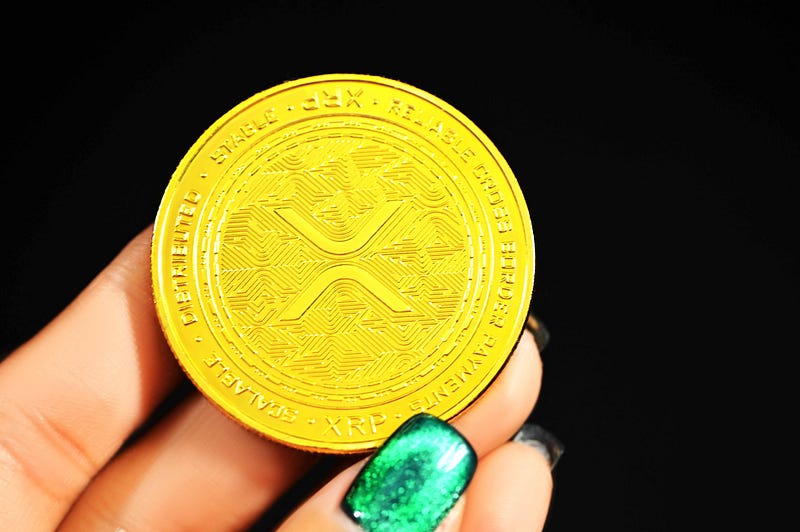
Photo by Kanchanara on Unsplash


Reducing payment costs

Palau’s Ministry of Finance initiated the Stablecoin project to address specific needs within the nation’s financial landscape. By sponsoring this project, the ministry aims to reduce payment costs within the Republic of Palau and enhance access to financial services, especially for underserved communities and various socio-economic groups, utilizing digital solutions.

Notably, the Palau Stablecoin operates on the XRP Ledger (XRPL), demonstrating Ripple’s technology as the backbone of this financial initiative.

Anson’s tweets also shed light on the meticulous approach taken in developing the Palau Stablecoin. Controlled and limited PSC pilot tests have been conducted to assess the effectiveness and efficiency of the solution co-designed with Ripple. These pilot experiments provide valuable insights into the stability and usability of the Palau Stablecoin before its potential public release.


Extensive testing

Already, the Palau Stablecoin pilot program has seen volunteer users actively participating in the testing phase. Videos shared by Anson on Twitter showcased smooth transactions at partner vendors in Palau, promptly confirming the transaction receipts.

The successful implementation of the Palau Stablecoin pilot program has drawn attention from the XRP community, and anticipation is building for the official joint press release scheduled for July 27, Thursday morning in Ngerulmud, Palau, as Anson revealed.

The collaboration between Ripple and the Republic of Palau was initiated at the end of 2021, with launch originally scheduled to take place in 2022. Ripple has claimed to be in dialogue with in excess of twenty governments relative to enabling central bank digital currency (CBDC) issuance.

Given that the island state lacks a functioning central bank and the US dollar is recognized as the primary medium of exchange throughout the country, the creation of a USD-backed stablecoin is a significant achievement resulting from the national stablecoin initiative. The president described this as a “step towards our own central bank digital currency.”

There has been plenty of activity in Micronesian nations relative to cryptocurrency in recent times. Tonga is understood to be considering introducing bitcoin as legal tender. The Marshall Islands is considering issuing a CBDC although it is being discouraged by the International Monetary Fund (IMF) in that endeavor. Meanwhile, the government of Vanuatu announced its support for the Satoshi Island project.

With a strategic focus on addressing financial needs and enhancing accessibility within Palau, this partnership sets the stage for a new era of digital financial solutions for the Micronesian nation.

More to Read
View All
Policy & Regulation·

Jul 27, 2023

Korean Banks Impose Crypto Exchanges to Maintain a Reserve of at Least 3B KRW

Korean Banks Impose Crypto Exchanges to Maintain a Reserve of at Least 3B KRWIn a significant step towards regulating the cryptocurrency market and ensuring the safety of virtual asset users, South Korea’s Federation of Banks (KFB) has collaborated with financial authorities and virtual asset exchanges to establish the “Guidelines for the Operation of Real Name Accounts for Virtual Assets.” The KFB, as a group of banks and financial institutions, facilitates cooperation between its members and promotes the development of the financial industry.Photo by rc.xyz NFT gallery on UnsplashThe guidelines come as a response to the increasing need for stronger money laundering prevention measures and standardization in the crypto industry. The first step towards this was taken in 2018 when crypto exchanges became obliged to establish a real name account at a bank in order to provide Korean Won (KRW) deposit and withdrawal services to their customers. Currently, the exchanges that won such bank accounts are Upbit, Bithumb, Coinone, Korbit, and Gopax.However, this policy brought with it a set of challenges, including differing practices among various cryptocurrency exchanges, leading to inconveniences for users. Additionally, varying user protection measures, such as reserve requirements, caused confusion in the market.3 billion KRW in reservesTo address these issues, the new guidelines aim to clarify how banks operate cryptocurrency real-name accounts and bolster overall security. One of the key changes is the requirement for crypto exchanges to maintain a reserve of at least 3 billion KRW ($2.36 million). This reserve fund serves as a precautionary measure to address potential financial losses resulting from hacking incidents or system failures at crypto exchanges.Furthermore, the guidelines mandate banks to manage deposit and withdrawal limits by categorizing user accounts into limited and normal accounts. A limited account will not be converted to a normal account, which grants higher deposit and withdrawal limits, until the user’s transaction purpose and the source of funds are verified.Enhanced due diligenceIn addition, banks will perform annual enhanced due diligence (EDD) for individual account holders. This thorough review will encompass users’ identification, transaction purposes, and the origin of funds.User asset segregationTo safeguard users’ funds, crypto exchanges will be required to ensure that customer deposits are held separately or placed in trust. Regular due diligence at crypto exchanges will also be conducted by banks, with mandatory visits occurring at least once a month. Moreover, third-party services will be engaged to perform independent due diligence every quarter on crypto exchanges, providing an additional assessment of their operations.The official launch of these new guidelines is scheduled for January of next year. However, the requirement of depositing at least 3 billion KRW will come into effect earlier, starting in September of this year. Additionally, the implementation of guidelines for expanding deposit and withdrawal limits is anticipated in March of next year.

news
Web3 & Enterprise·

Mar 20, 2025

Crypto.com faces criticism for forcing through 2021 token burn rollback

Recent developments relative to governance of the CRO token, a native token belonging to the Cronos blockchain, have proven controversial, with many in the community unhappy with the actions of Singapore-headquartered Crypto.com.Photo by Markus Winkler on UnsplashProposal controversyThe controversy surrounds a proposal put forward by Crypto.com, which originally developed the Cronos blockchain in 2021, to mint 70 billion CRO tokens. The move would effectively roll back a CRO token burn that took place in 2021. The governance process applicable to the proposal meant that CRO token holders could vote on the proposal between March 2 and March 16. For the majority of that voting period, the outcome appeared to be uncertain. The “yes” vote had a narrow lead, but it would have been insufficient to reach the required 33.4% quorum of eligible votes. Exceeding the quorumHowever, at 14:00 UTC on Sunday, a last-minute influx of 3.35 billion tokens tipped the balance firmly in favor of the proposal while well exceeding the minimum turnout as 70.18% of eligible votes were cast. 61.18% voted in favor, with 17.61% against. Many CRO token holders who opposed the proposal are aggrieved at the manner in which this late voting surge came about. It’s understood that these last-minute votes came from blockchain validators controlled by Crypto.com. Crypto.com is understood to hold in the region of 80% of the voting power. In exercising that voting clout, many CRO holders feel that it has undermined the will of the community. Some commentators believe that increasing the token supply will result in a loss of trust in the project, damaging investor confidence going forward. Earlier this month, Crypto.com CEO Kris Marszalek responded to community pushback against the proposal. Marszalek suggested that the proposal ties in with an overall strategy for the success of the Cronos blockchain and its CRO token in the long term.  He pointed to four items that are relevant in achieving success for an altcoin like CRO. These included finding product-market fit, the need to redeploy free cashflows, successfully launching exchange-traded funds (ETFs) and participating in reserve-building initiatives.  ‘Free to vote and free to sell’The strategy relies upon building demand in order to achieve longer-term success. On X, Marszalek wrote: “People who do not agree that this is the right approach are free to vote & free to sell. We will stay laser focused on building towards new ATHs [all-time-highs].” In another X post on March 19, the Crypto.com CEO outlined that the company generated $1.5 billion in revenue in 2024 while servicing the needs of 140 million users on the platform. The company spent $700 million on branding, user acquisition and user incentives in 2024. Its operations turned a net profit of $300 million.  Crypto.com has also made further headway on the compliance front over the course of the past week. The company received licensing approval in Dubai to offer derivatives from the Virtual Assets Regulatory Authority (VARA). On March 17 the company announced that it had successfully achieved Virtual Asset Service Provider (VASP) registration with the Argentine regulator.

news
Web3 & Enterprise·

Jan 29, 2024

Wemade ramps up excitement for upcoming games at Taipei Game Show

South Korean gaming publisher Wemade attended this year’s Taipei Game Show – the largest gaming exhibition in Taiwan – from Thursday to Sunday, where it showcased its upcoming games Night Crows and Fantastic 4 Baseball, according to news site Bridge News.Photo by Mateo on UnsplashUnveiling upcoming blockbustersAt the event, Wemade operated an exclusive booth with game demos and promotional videos. There was also a cosplay of characters from the Night Crows game and a special performance by the TSG Hawks' cheerleading team, the Wing Stars. The TSG Hawks is a professional baseball team that joined the Chinese Professional Baseball League (CPBL) last year. The Wing Stars are led by the famous Korean cheerleader Ahn Ji-hyun. In addition, Lee Jung-wook and Lee Kun-hee, the CEOs of Night Crows developer Madngine, and Fantastic 4 Baseball developer Round One Studio, took to the stage to interact directly with gamers. "Night Crows is the first MMORPG developed with Unreal Engine 5, and you can enjoy top-notch visuals with Mad Engine's unique know-how," said Lee Jung-wook. "We promise to provide new fun and stable services to our global users." "While developing Fantastic 4 Baseball, we put a lot of thought into capturing the essence of baseball and making the players' faces and batting forms look realistic," Lee Kun-hee added. "We plan to bring the game to the global market when the Taiwanese baseball league begins." Market-dominating releasesNight Crows has been popular among gamers in South Korea, where it launched in April last year, topping the popularity and revenue rankings on major app markets. The global version of the game utilizes blockchain technology to implement an advanced tokenomics ecosystem. Global pre-registration will open on Jan. 11. On the other hand, Round 1 Studio’s Fantastic 4 Baseball is a realistic baseball game where players can create their own team with famous players from various leagues, including the CPBL. The demo version includes single-player and home run derbies. Both games are slated for global release in March.

news
Loading