Top

LINE Xenesis and Crypto.com Unite Efforts to Explore Global Blockchain Business Opportunities

Web3 & Enterprise·July 26, 2023, 5:49 AM

LINE Xenesis, a blockchain developer of Tokyo-based messaging app giant LINE Corporation, has signed a memorandum of understanding (MOU) with Singapore-based cryptocurrency exchange Crypto.com to explore new global business opportunities in the blockchain industry.

With the establishment of LINE Blockchain Lab in April 2018, LINE Corporation has conducted research and development on blockchain-based decentralized applications (dApps), peer-to-peer networking systems, and cryptographic techniques. Thanks to this endeavor, LINE not only developed the Finschia blockchain and its native token FNSA, but also launched crypto exchange LINE Bitmax and non-fungible token marketplace LINE NFT.

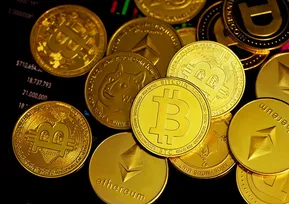
Photo by Shubham Dhage on Unsplash


Synergistic goals

Through this partnership, the two entities will bring together their respective expertise to advance and innovate crypto-related business solutions in Asia and beyond. They will collaborate to increase the liquidity of LINE Bitmax, strengthen crypto payment functions, and promote NFT initiatives.

Founded in 2016, Crypto.com has been expanding its services worldwide. In a recent interview, Patrick Yoon, General Manager of Crypto.com Korea, shared the company’s plan to launch its services in South Korea this year. Thus far, Crypto.com has achieved virtual asset service provider registration from the Bank of Spain and secured a major payment institution (MPI) license from the Monetary Authority of Singapore. Meanwhile, despite global progress, the company ceased its institutional offering in the United States last month due to insufficient demand.


Asia and beyond

Commenting on this agreement, LINE Xenesis CEO Lim Inkyu said, “LINE Xenesis is exploring various ways to collaborate with the world’s leading companies in the virtual asset industry. We are excited to see the synergies created by our partnership with Crypto.com, which has more than 80 million enthusiastic users worldwide, with LINE Xenesis’ blockchain business in Japan. Starting with this collaboration in the Japanese market, we hope to work towards new business opportunities globally based on the technology and knowledge of our two companies.”

Crypto.com CEO Eric Anziani echoed this sentiment, saying, “We are excited to partner with such an established and innovative brand in the APAC market and a leader in blockchain technology development in Japan. Enabling real-world utility is critical to our mission of mainstreaming crypto. Through our collaboration with LINE Xenesis, we will facilitate this utility by leveraging our respective expertise with a highly tech savvy base throughout the APAC region.”

More to Read
View All
Policy & Regulation·

Jul 04, 2023

DAXA Implements Virtual Asset Alert System to Enhance Investor Protection

DAXA Implements Virtual Asset Alert System to Enhance Investor ProtectionThe Digital Asset eXchange Alliance (DAXA), a consortium consisting of the top five cryptocurrency exchanges in South Korea, has made an announcement today regarding the introduction of a standardized virtual asset alert system.That’s according to a report by local news outlet Edaily. This system aims to tackle the problem of information asymmetry and safeguard the interests of investors.Badging of assetsUnder this new initiative, member exchanges will continuously monitor the market in real time to operate their respective alert systems. Whenever a virtual asset meets certain predetermined criteria, the trading window for that asset will be labeled with a badge. While DAXA members have collectively agreed to run the alert signal for a maximum of 24 hours, each exchange will have the autonomy to determine specific durations based on their individual requirements.Photo by Sigmund on UnsplashFive categoriesThe alert system will cover five distinct categories, notifying users of market movements related to price fluctuations, trading surges, deposit surges, price gaps, and whale trades. Price fluctuations refer to instances where the prices of virtual assets experience a rise or drop of over 50 percent within a 24-hour period. Trading surges indicate an increase in trading volume by more than 100 percent over the past ten days. Deposit surges signify an increase in deposit volume by over 100 percent during the same ten-day period. Price gaps occur when virtual asset prices on DAXA exchanges differ by more than 5 percent from their corresponding prices on crypto information website CoinMarketCap. Lastly, whale trades refer to situations where specific individuals or entities account for more than 40 percent of the total transaction volume within the past 24 hours.It is worth noting that the guidelines pertaining to the alert system will be customized by each member exchange according to their specific trading volumes and requirements. While adhering to the aforementioned framework, the member exchanges will establish their own rules and regulations.The formulation of this initiative involved the collaboration of all five members, who collected valuable input from DAXA advisors since the alliance’s inception in June of last year. The alert system also underwent a trial test phase to ensure its stability before being implemented.DAXA Vice Chairman Kim Jae-jin said the DAXA alert system would address information asymmetry issues by promptly providing data that ordinary investors previously couldn’t find on charts or order books. Kim added that the alliance is committed to further improving the alert system.

news
Policy & Regulation·

Jan 09, 2025

Bhutan’s GMC to establish strategic crypto reserve

Bhutan’s Gelephu Mindfulness City (GMC), a special administrative region (SAR) within the Kingdom of Bhutan, plans to establish a strategic cryptocurrency reserve.Photo by Ameya Sawant on UnsplashBitcoin, Ether & BNBThat’s according to an announcement published by the new administrative region on Jan. 8. In that statement the GMC SAR outlined that it has the intention to “recognise digital assets such as Bitcoin (BTC), Ether (ETH) and BNB as part of its strategic reserves.” The SAR acknowledged that the move would result in it becoming one of the first jurisdictions to officially put in place the holding of digital assets as part of strategic reserves. While it cited Bitcoin, Ether and BNB, the SAR outlined that it has the intention to recognize digital assets with large market capitalizations and deep liquidity. That requirement has been set out so that it can easily trade in and out of these assets without impacting asset prices on the open market. The Kingdom of Bhutan is no stranger to cryptocurrency. It emerged in 2023, through court filings in the bankruptcies of crypto lenders Celsius and BlockFi, that Bhutan had cryptocurrency holdings managed by Druk Holding and Investments, the commercial arm of the Royal Government of Bhutan.  An evolution of Bitcoin mining activityShortly afterwards, it was revealed that Bhutan had been mining Bitcoin since it was priced at $5,000. Crypto mining was deemed to be a good fit for the Kingdom, given its considerable hydroelectric resources. Bhutan has entered into partnerships with Singapore-headquartered crypto mining firm Bitdeer to jointly develop green digital asset mining operations. Given this background, the SAR stated that adding crypto as part of a strategic reserve would be “an evolution of the jurisdiction’s involvement in bitcoin mining.” Crypto rather than Bitcoin-onlyTaking to the X social media platform, the BNB network project described the move as “a major milestone for blockchain adoption.” It added that the SAR’s inclusion of BNB suggests the existence of global trust in the BNB Chain ecosystem and belief in its utility. Binance founder Changpeng Zhao (CZ) also chimed in, pointing out that the Bhutan GMC SAR isn’t just considering a Bitcoin reserve but one which includes crypto more broadly. CZ added that this demonstrates that Bhutan is open-minded and open to the consideration of cryptocurrencies beyond Bitcoin. The Binance founder said that this development “opens the door for BNB (and other crypto) to be included in other countries' National Strategic Reserves.” He believes that this will be the first of many strategic crypto reserves to be established. “This is a smart move by the country to attract crypto companies, investments, and innovation,” he added. The GMC SAR covers an area of 1,000 square kilometers, making it larger geographically than the city-state of Singapore. Its objective is to become a global leader in sustainable development, with a specific emphasis on holistic living, mindfulness and economic development.  The Bhutanese authorities intend for GMC to become a gateway for tourists visiting the area and Bhutan more broadly. It’s also seen as an initiative which can garner further foreign direct investment. According to data published by on-chain analytics firm Arkham Intelligence, the Kingdom of Bhutan holds 11,688 BTC ($1.1 billion) and 656 ETH ($2.18 million). 

news
Markets·

Feb 07, 2025

HAQQ Network co-founder points to Indonesia’s crypto hub potential

Mohammed AlKaff AlHashmi, co-founder of the HAQQ Network, has expressed the view that Indonesia has considerable potential to establish itself as Asia’s largest crypto hub. AlHashmi made the comments in a discussion with Crypto.news. HAQQ Network claims to be a scalable proof-of-stake-based blockchain, capable of high throughput. The network is fully compatible and interoperable with Ethereum. The project also focuses on the development of a Sharia-compliant Web3.  While the project is headquartered in Niqa Al Dheeb in the United Arab Emirates (UAE), Indonesia is also a significant market for the company, given that it has just received regulatory approval for the HAQQ Network’s native token from the Indonesia Financial Services Authority (OJK). Islamic Coin (ISLM) is the network’s native token. It is being offered as a Sharia compliant digital currency, with Sharia law being the Islamic legal system that governs the lives of millions of Muslims throughout the world.Photo by Nick Agus Arya on UnsplashGateway marketOffering his thoughts on the Indonesian crypto market, AlHashmi stated: “When we look at Indonesia as a market, I would say it is incomparable. It can be number one to be honest. Because I have seen statistics of growth happening in a very big volume. The volume of trade, transactions and users, I think Indonesia can be very soon one of the top 3 countries in the world.” Indonesia takes on added importance for the HAQQ Network project. The project’s co-founder sees the Southeast Asian nation as a gateway into a broader market given that it has the largest Muslim population in the world. He said that if his project is successful in Indonesia, then there will be no barrier to enter markets in other predominately Muslim nations. The entrepreneur believes that Indonesia is on the cusp of realizing its potential within the crypto sector. He said that Indonesia has a “competitive edge” when compared with other nations. Population size and rapid economic growth feed into that potential, with AlHashmi claiming that Indonesia is primed to become the largest crypto hub in Asia. Smooth regulatory processFrom a regulatory perspective, he also feels that Indonesia is outperforming other jurisdictions. The HAQQ Network project team experienced a smooth process in acquiring regulatory approval for ISLM recently. He believes that although the process was detailed, it was completed quicker than he would expect in other countries.  AlHashmi added that “regulations are flexible enough to enable project owners to do good business to protect the community as well.” Local regulator, the OJK, has expressed an interest in exploring the development of Sharia-compliant crypto assets. Earlier this month, Hasan Fawzi, OJK's executive head overseeing crypto assets supervision, told local media that the regulator is open to advancing Sharia-based cryptocurrencies.  Hasan stated: “Globally and regionally, this is a common practice. It is not unusual to create crypto assets that adhere to Sharia principles.” The OJK executive is particularly interested in tokenization of real-world assets (RWAs). He believes that if this proves to be successful, it could lead to further Sharia-complaint crypto products being launched. The OJK is currently testing tokenized RWAs within a sandbox environment.

news
Loading