Top

Bitget Launches Crypto Loans Product

Web3 & Enterprise·July 05, 2023, 12:26 AM

Bitget, the Seychelles-based platform known for its crypto derivatives and copy trading services, is venturing into the cryptocurrency loan market with the introduction of its Crypto Loans product.

The move, which the company announced via a press release published on Tuesday, is aimed at attracting users who are seeking alternative funding solutions backed by digital assets, as an option beyond traditional credit institutions.
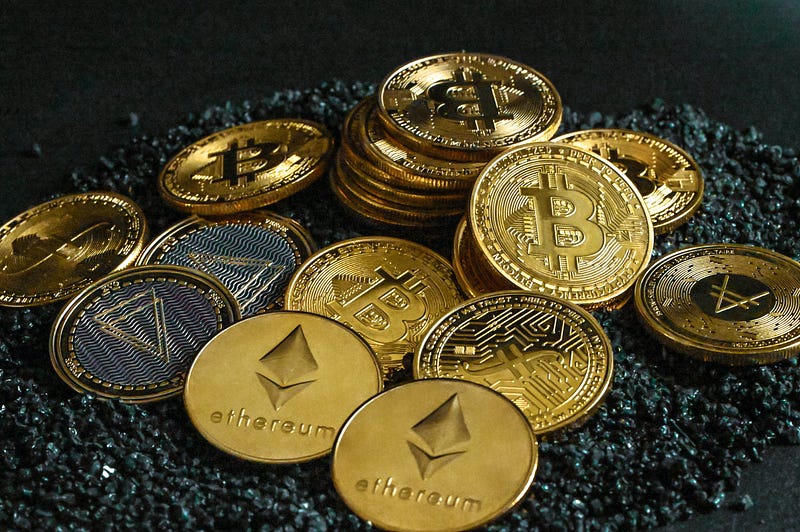
Photo by Traxer on Unsplash


Dual coin approach

The Crypto Loans product employs a dual-coin approach, allowing users to stake one digital asset as collateral and borrow an equivalent amount in another asset. Bitget believes that crypto loans have been gaining popularity in recent years, with the overall digital lending sector surpassing $8.5 billion in 2022 and experiencing a compound annual growth rate of 20.5%, as reported by Global Market Insights.

Despite the overall growth in the digital lending area, the crypto loan sector faced significant setbacks in 2022, particularly with the troubles surrounding centralized crypto lending services. Major firms like Celsius, BlockFi, and Voyager Digital suffered collapses and bankruptcy, raising concerns about the trustworthiness of such services in the future.

Bitget, however, is confident in its Crypto Loans product, emphasizing that it has streamlined the loan process to ease user onboarding. The amount users can borrow is determined by the market value of the collateral staked, and the loan is automatically disbursed with a specific interest rate. Borrowers have the flexibility to utilize the funds as needed and adjust the collateral based on their requirements.


Swift loans process

It also has the option to repay the loan before or at the predetermined deadline. To further encourage user adoption, Bitget promises support for withdrawals and a swift review process for loan applications. The feature is expected to provide added convenience and ease of use for users.

Bitget’s Managing Director, Gracy Chen, highlighted the advantages of the Crypto Loans product, noting that users can now stake less-demanded coins and obtain loans in more liquid assets for investment purposes. The platform’s flexible borrowing and repayment mechanism is designed to accommodate the needs of all users, ensuring convenience and accessibility.

Notably, Bitget has been expanding its presence in the crypto market. In March, the platform acquired a controlling stake in BitKeep, a crypto wallet that has been rebranded as Bitget Wallet. Additionally, Bitget unveiled a $100 million venture fund in April, following a $10 million investment from Dragonfly Capital. In May, it announced the launch of its Blockchain4Youth program, recognizing the importance of the younger demographic in achieving crypto mass adoption.

As Bitget ventures into the crypto loan market, it’s aiming to go one further than previous crypto lending providers who have largely failed, to provide a secure and user-friendly platform for borrowing and lending digital assets. The success of the product will depend on user trust and confidence, especially given the setbacks experienced by those other players in the sector in the past. Nonetheless, with its growing user base and strategic investments, Bitget is certainly showing some potential relative to making a mark in the cryptocurrency loan market.


More to Read
View All
Web3 & Enterprise·

Nov 16, 2023

Full operating license approval for Hex Trust in Dubai

Full operating license approval for Hex Trust in DubaiIn yet another instance of progress for the cryptocurrency sector, Hex Trust MENA FZE, the Dubai-incorporated subsidiary of Hong Kong-headquartered institutional-grade crypto custodian Hex Trust, has successfully secured an operating license from the Dubai regulator, the Virtual Assets Regulatory Authority (VARA).Photo by Mohammed Nasim on UnsplashExtending regional presenceThis regulatory milestone, acknowledged by the firm in a statement it made public on Wednesday, not only solidifies Hex Trust’s presence in the Middle East but also marks a strategic move to extend its crypto custodial services to institutional clients and sophisticated investors in Dubai. While based in Hong Kong, Hex Trust has offices in Dubai, Singapore, Vietnam and Italy.This full operating license signifies the successful conclusion of the approval process within VARA’s regulatory framework for crypto service providers, which came into effect earlier this year. Initially granted a minimum viable product (MVP) operational license in February, Hex Trust’s latest achievement grants it the official authorization to continue its operations in the region, marking a pivotal moment in the company’s expansion strategy.With an increased footprint in Dubai, Hex Trust is now poised to deliver comprehensive crypto custodial services to both institutional clients and sophisticated investors. This strategic move is in line with the company’s aspiration to meet the escalating demand for secure and regulated digital asset storage solutions in the Middle East.Filippo Buzzi, Hex Trust’s MENA regional director, underscored the company’s dedication to expanding its reach in the Middle East, stating:“Hex Trust is fully committed to expanding into the Middle East and sees enormous potential for digital asset growth given the progressive regulations, welcoming governments, and thriving crypto ecosystem in the region.”This statement not only highlights the favorable regulatory environment but also emphasizes the increasing interest in cryptocurrencies within the Middle Eastern market.$88 million funding roundHex Trust’s recent success in Dubai comes on the heels of its $88 million Series B funding round last year, showcasing the company’s proactive approach to securing regulatory approvals on a global scale.In August, the firm received regulatory clearance in France, enabling it to offer a spectrum of services, including digital asset custody, purchasing, selling and trading. These regulatory triumphs position Hex Trust as a reputable and compliant entity in the competitive crypto custodial space.Series of approvalsWhile Hex Trust has demonstrated its adept navigation through regulatory processes in Dubai, it’s one of many companies to obtain licensing in the emirate in recent weeks.It emerged yesterday that CRO DAX Middle East, the Dubai-registered subsidiary company of Singapore-headquartered Crypto.com, received a trading license from VARA.Last week, Korean Web3 company CarrieVerse clarified that it had joined the Dubai Multi Commodities Center (DMCC) as a metaverse service provider. The DMCC is a United Arab Emirates (UAE) government agency which has developed into a hub for investors and Web3 startups. CarrieVerse and the DMCC have not as yet revealed details regarding the roadmap for the partnership.At the start of this month, VARA awarded Singapore’s WadzPay, a business-to-business (B2B) technology firm that focuses on enabling digital asset-based transaction processing and settlement, a license to trade within the emirate. Meanwhile, on Nov. 1, it emerged that crypto wallet project Backpack had received a license from the Dubai regulator.

news
Web3 & Enterprise·

Dec 07, 2023

HashKey on-boards market makers to boost liquidity

HashKey on-boards market makers to boost liquidityHashKey, a licensed crypto exchange in Hong Kong, has unveiled plans to onboard individual and enterprise market makers to enhance liquidity on its platform.Photo by engin akyurt on UnsplashMarket maker programIn an announcement on Tuesday, the exchange disclosed that interested parties, whether individuals or entities, can apply to become market makers on HashKey. To qualify, applicants need to engage in cryptocurrency trading worth a minimum of $5 million per month on the exchange.The exchange outlined that the program aimed to “recognize and incentivize users actively contributing to the liquidity” of the platform.Upon submitting their business plans for review, successful applicants will be invited to enter into a contractual agreement with the exchange’s due diligence team, commencing trading activities from Dec. 28 onwards when the program goes live.Commission free tradingThe exchange aims to encourage liquidity providers by offering a commission ranging between 0.005% and 0.015% of the transaction value, determined by monthly rankings or trading volumes, falling within a tiered structure set out within the program. Market makers demonstrating a trading volume of at least $100 million per month stand to enjoy the highest tier of commission revenue. Notably, all market makers will be exempt from commission fees on their trades.Market makers who participate via the program will be on trial for an initial two-month period. Those who are participating in market maker programs on other platforms currently will be able to avail of equivalent trial fee rates through the HashKey exchange.Service expansion trendThe move by HashKey follows a broader trend in Hong Kong, where regulated exchanges have been expanding their services and forming strategic partnerships since the issuance of the first licenses in August. In a recent development, OSL, another Hong Kong licensed exchange, collaborated with Interactive Brokers on November 28, enabling Hong Kong clients to buy Bitcoin through Interactive Brokers’ investment accounts.Additionally, on November 30, OSL welcomed Victory Securities for crypto trading services on its platform. That move came about following Victory’s acquisition of a retail crypto trading license some days beforehand. Notably, OSL received a $90 million investment from blockchain entity BGX in November.While HashKey has been extending its altcoin offerings, exclusively available to accredited investors meeting a $1 million portfolio requirement, the exchange has been proactive in enhancing user security. On Nov. 16, the platform introduced comprehensive insurance coverage for users’ and enterprise assets stored within its digital wallets in collaboration with fintech firm OneDegree.Earlier this week, it emerged that the platform had experienced an unprecedented surge in daily trading volumes. The surge had been attributed to a token rewards program that the exchange is currently running, that offers the distribution of HSK tokens or EcoPoints.As HashKey opens its doors to market makers, the move is poised to contribute to increased liquidity on the exchange, aligning with the broader trend of Hong Kong’s regulated crypto exchanges expanding their offerings and forming strategic partnerships.

news
Markets·

Aug 28, 2025

Crypto rally drives surge in South Koreans’ offshore disclosures

Fueled by a crypto rally and higher overseas stock balances, South Korea’s National Tax Service (NTS) reported a sharp jump in disclosures of offshore accounts. On Aug. 26, the agency said 6,858 taxpayers declared overseas financial accounts this year, with a combined balance of 94.5 trillion won ($67.6 billion), up 38.3% in filers and 45.6% (29.6 trillion won or $21.2 billion) in value from last year.Photo by Piotr Łaskawski on UnsplashCrypto gains drive offshore filingsWithin that, reports of overseas bank deposits and cryptocurrency accounts rose to 46.4 trillion won ($33.2 billion) this year, more than 12% above 2024. That figure excludes stock accounts, which alone totaled 48.1 trillion won ($34.4 billion). Tax officials attributed the increase largely to the surge in crypto prices and higher balances in overseas stock holdings. The trend is underscored by CoinMarketCap data: the crypto market cap now stands roughly at $3.87 trillion, up 86% from $2.08 trillion a year ago. By asset type, the largest share of filers reported overseas bank deposits (3,197 people), followed by cryptocurrency (2,320) and stocks (1,992). By value, stock accounts dominated with 48.1 trillion won ($34.4 billion), compared with 23.5 trillion won ($16.8 billion) in bank deposits and 11.1 trillion won ($7.94 billion) in cryptocurrencies. Korean law requires residents and domestic corporations to disclose foreign financial accounts if their combined balance exceeds 500 million won ($358,000) on any month-end date during the year. Reports must be filed with the local tax office by June of the following year. The NTS said it will step up enforcement against suspected non-filers, using cross-border information-exchange data to verify offshore holdings. Penalties will include administrative fines, penalty notices, criminal referrals, public naming of violators and the collection of back taxes. The agency added that it is preparing to share crypto transaction data under the OECD’s Crypto-Asset Reporting Framework (CARF) and urged anyone subject to the rules to promptly file amended or late reports for overseas crypto accounts. The recent bullish sentiment in crypto, which fueled the uptick in foreign financial disclosures, has also been driving public interest in digital assets and boosting expectations for altcoins. A survey by CoinNess and Kratos conducted between Aug. 18 and 22 with 2,000 respondents found that 38.5% expect a limited bull run in a handful of altcoins, either with strong real-world use cases or serving as the underlying assets of launched ETFs. Another 28.5% predicted gains would remain centered on Bitcoin and Ethereum, while 20.7% anticipated a broader altcoin season reminiscent of past cycles. The remaining 12.3% forecast the end of the rally and the start of a downturn. Won stablecoins: policy and risksPolicy momentum around stablecoins is also picking up in South Korea. The Financial Services Commission (FSC) plans to introduce a bill in October governing won-pegged stablecoins as part of the second phase of the Virtual Asset User Protection Act. The legislation is expected to set rules for issuance, collateral management and internal controls. Amid these changes, companies are showing growing interest in launching won-based stablecoins. Kaia, an EVM-compatible, layer-1 blockchain, recently signed a memorandum of understanding (MOU) with blockchain solutions provider Open Asset to collaborate on projects tied to Korean won–backed stablecoins. The partnership will focus on issuance, distribution, service launches and developing practical use cases. Circle President Heath Tarbert has recently joined calls for a won-backed stablecoin. In an interview with The Korea Economic Daily, he underscored South Korea’s world-class payments infrastructure and said a digital won could help the country play a leading role in blockchain finance. Blockchain transactions, he noted, operate differently from traditional payment rails, making some form of digital currency, whether a stablecoin or a central bank digital currency (CBDC), a necessity. Meanwhile, at a recent meeting with top executives from the country’s four major financial groups, Tarbert ruled out collaborations on won-denominated stablecoins. Instead, he promoted Circle’s dollar-pegged stablecoins and suggested exploring joint initiatives centered around them. Not everyone sees stablecoins as a net positive. NICE Investors Service, a local credit rating agency, warned in a recent report that if banks issue won-based stablecoins, their interest income could suffer. The agency said adoption would likely weigh on banks, benefit securities firms and leave credit card companies largely unaffected. It added that a large shift of funds into stablecoins could shrink banks’ deposit base and weaken their intermediary role. Still, banks that issue stablecoins directly could soften the blow by tapping new fee-based revenue streams. 

news
Loading